Power outages don't have to mean sitting in the dark, watching your refrigerator warm up while your solar panels are perfectly capable of generating electricity. That's where a backup battery for solar system comes in, bridging the gap between sunshine and actual usable power when you need it most. Whether you're tired of grid dependency, want to maximize your solar investment, or simply need reliable backup during storms, a solar battery backup system transforms your solar panels from a daytime-only power source into a 24/7 energy solution. In this guide, you'll learn exactly what solar battery backup systems are, how to choose the right one for your home or business, and how to get the most value and performance from your investment. Let's jump into everything you need to know about achieving true energy independence.
Key Takeaways
- A backup battery for solar system stores excess solar energy for use during nighttime, cloudy days, or power outages, transforming your panels into a 24/7 energy solution.
- Lithium iron phosphate (LiFePO4) batteries offer the longest lifespan with 4,000-6,000+ cycles and superior safety, making them the gold standard for solar energy storage.
- Battery backup systems provide instant, automatic power during grid outages while helping you avoid expensive peak electricity rates through self-consumption.
- Most residential systems require 10-20 kWh capacity for whole-home backup, with installed costs ranging from $7,000-$15,000 before the 30% federal tax credit.
- Professional installation by licensed electricians is essential for safety, warranty protection, code compliance, and optimal performance of your backup battery for solar system.
- Proper placement in temperature-controlled environments (50-80°F) and regular monitoring can extend battery lifespan to 10-15 years with minimal maintenance required.
What Is a Backup Battery for Solar System?
A backup battery for solar system is essentially a rechargeable energy storage unit that captures and holds excess electricity generated by your solar panels. Instead of sending surplus power back to the grid or letting it go to waste, the battery stores it for later use, during nighttime, cloudy days, or power outages.
Think of it as a savings account for electricity. When your solar panels produce more power than you're using, that extra energy gets deposited into your battery bank. When the sun isn't shining or the grid goes down, you withdraw that stored energy to keep your lights on, your refrigerator running, and your devices charged.
How Solar Battery Backup Systems Work
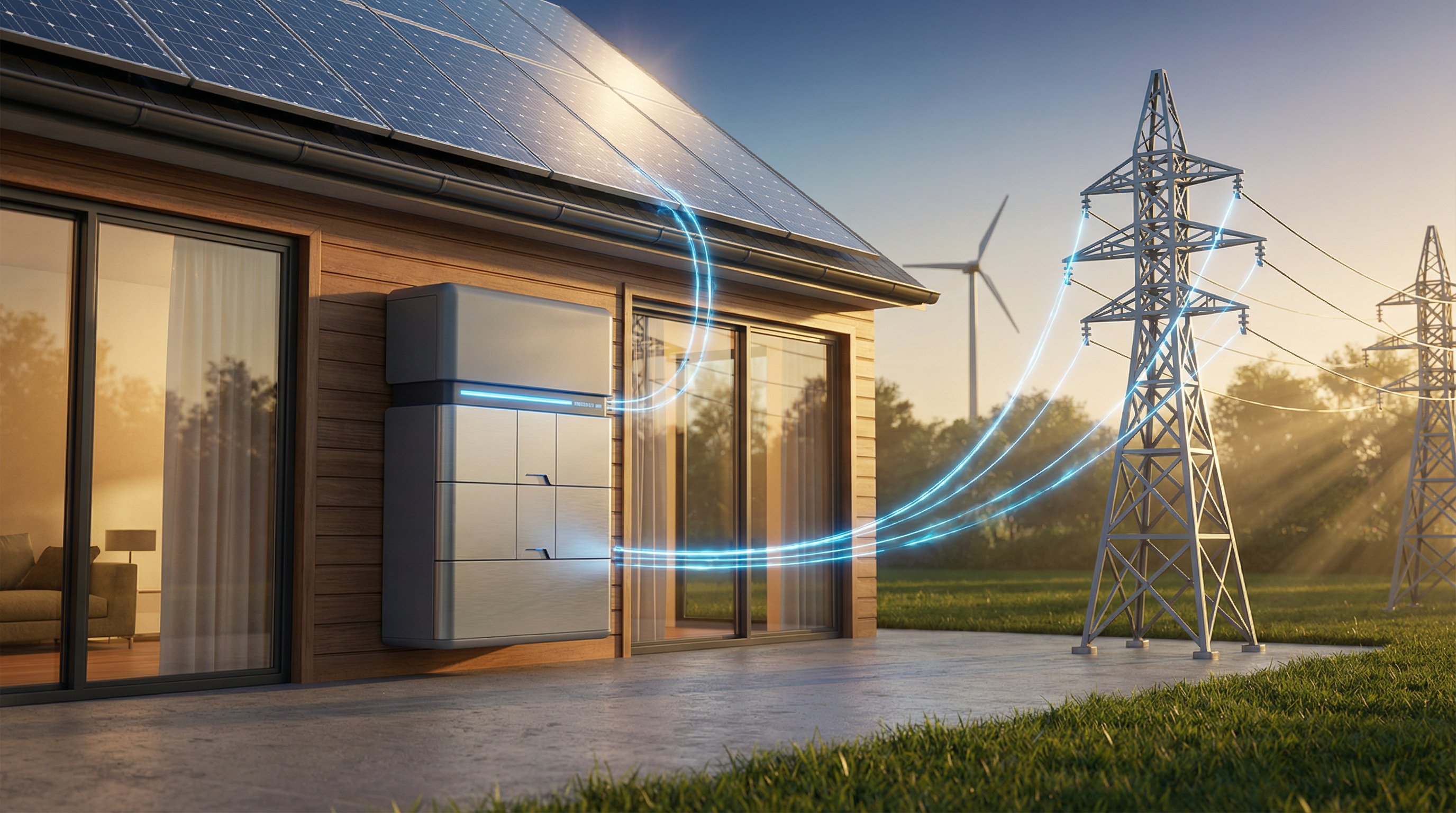
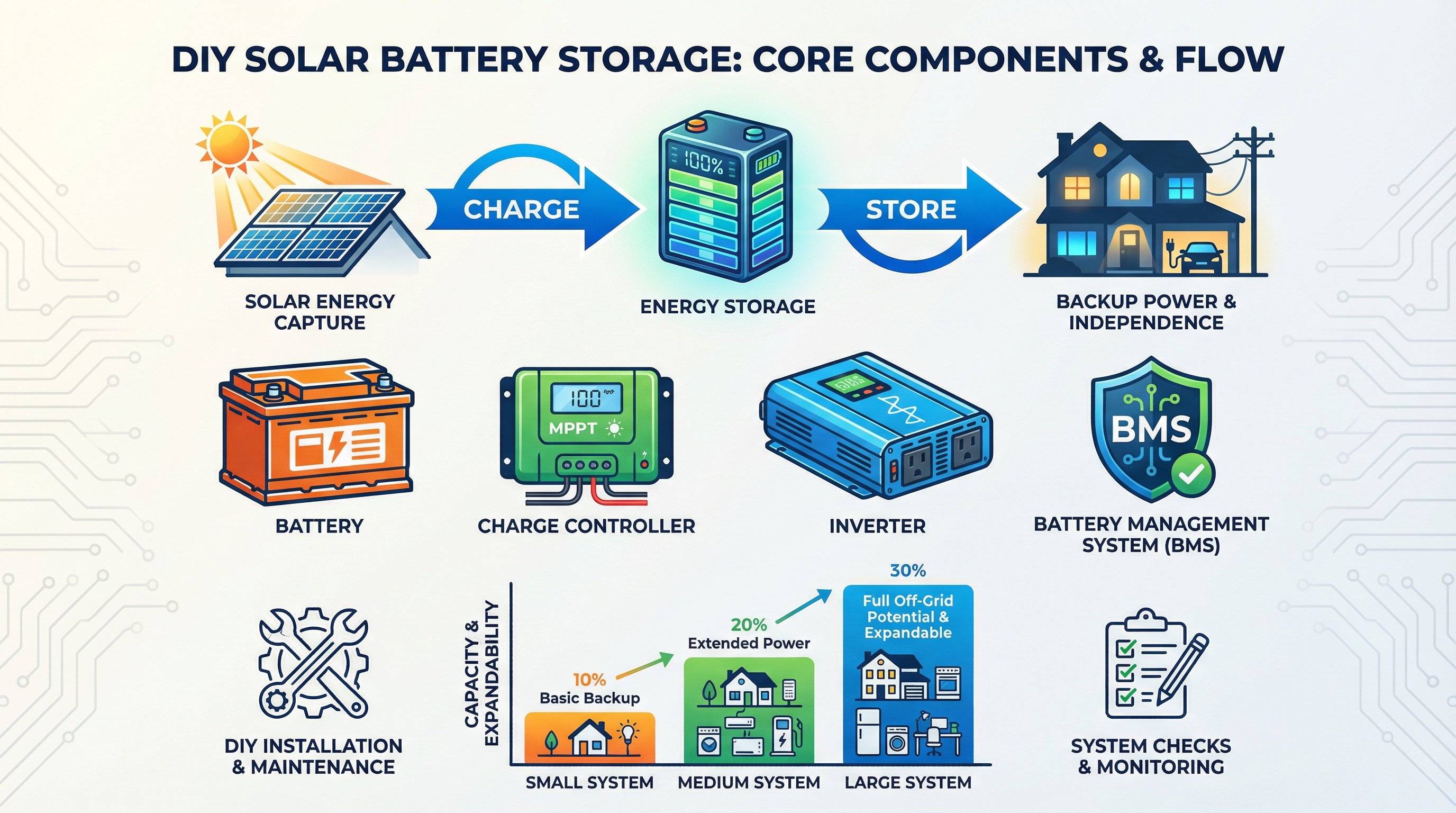
The process is more elegant than you might think. Your solar panels generate direct current (DC) electricity when sunlight hits them. This DC power flows to an inverter, which converts it into alternating current (AC), the type of electricity your home appliances use.
Here's where the battery comes in: A charge controller manages the flow of electricity, directing surplus power into your battery bank while preventing overcharging or over-discharging (which can damage batteries). When you need power and the sun isn't cooperating, the system reverses, drawing stored DC power from the batteries, converting it back to AC through the inverter, and delivering it to your home.
Modern systems are smart. They monitor your energy production, consumption, and storage levels in real-time, automatically deciding whether to use solar power directly, charge the batteries, draw from the batteries, or pull from the grid.
Key Components of a Solar Battery Backup System
Every solar battery backup system relies on four essential components working in harmony:
Solar Panels – These are your power generators, converting sunlight into electricity. The size and efficiency of your array determine how much energy you can generate and store.
Inverter – This converts DC electricity from your panels and batteries into AC power your home can use. Some systems use hybrid inverters that handle both solar conversion and battery charging in one unit.
Battery Bank – The heart of your backup system. This can be a single large battery (like the Tesla Powerwall) or multiple batteries wired together. Common chemistries include lithium iron phosphate (LiFePO4), lithium-ion, or traditional lead-acid.
Charge Controller – This regulates the charging and discharging cycles, protecting your batteries from damage while optimizing performance and lifespan. It's the traffic cop of your energy system, ensuring power flows safely and efficiently.
Together, these components create a seamless energy ecosystem that operates quietly in the background, providing power security and independence.
Why You Need a Solar Battery Backup System
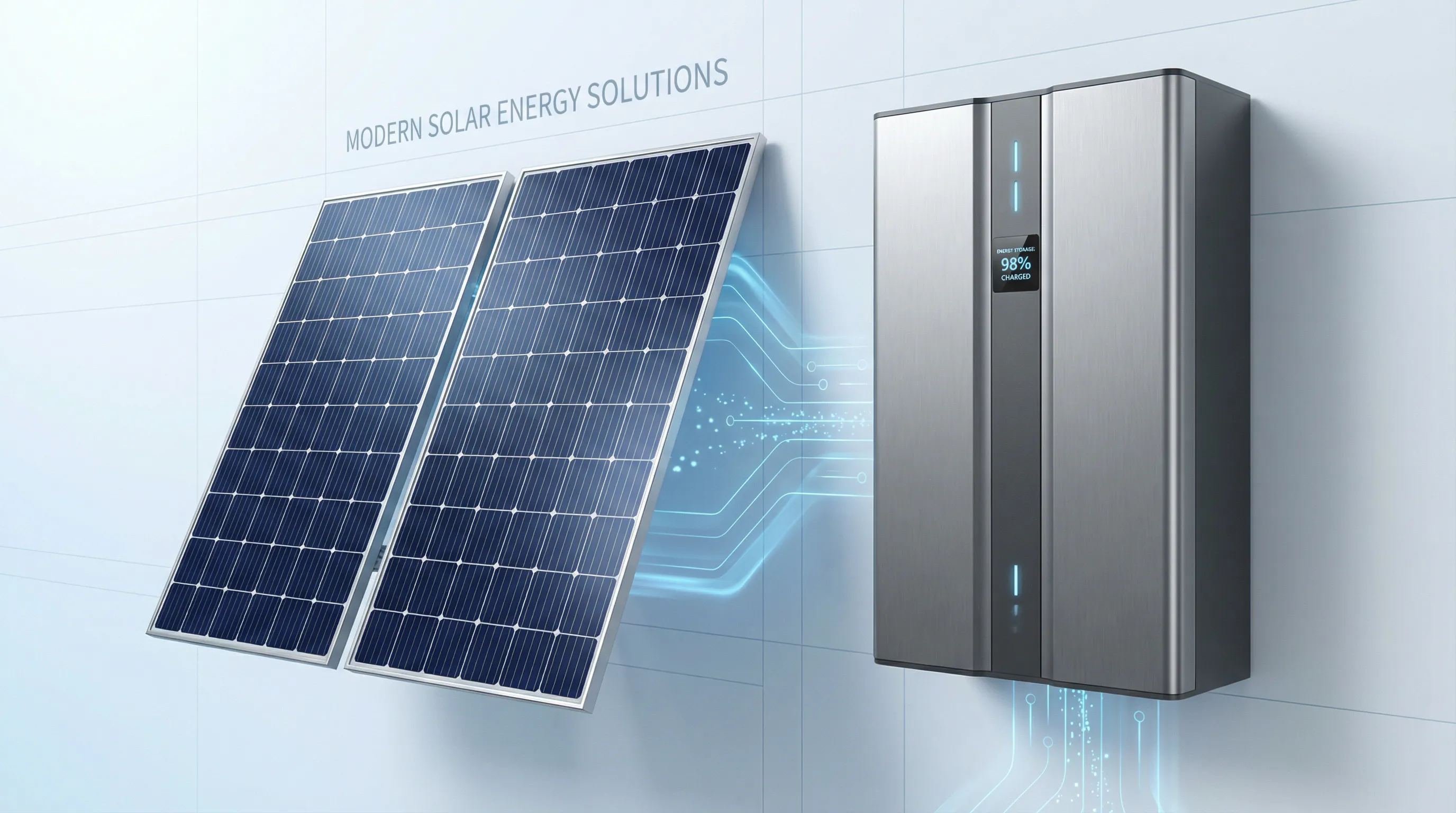
You've already invested in solar panels, so why add batteries? Because solar panels alone don't provide power during outages, and they can't store energy for nighttime use. A battery backup system transforms your solar installation from a partial solution into complete energy resilience.
Energy Independence and Grid Outage Protection
When the grid goes down, standard grid-tied solar systems shut off automatically (a safety feature to protect utility workers). But with a solar battery backup system, you're no longer at the mercy of the grid. Your essential appliances, refrigerator, lights, medical equipment, internet router, keep running as if nothing happened.
This isn't just about convenience. For homeowners in areas prone to hurricanes, wildfires, or winter storms, battery backup can be genuinely life-saving. Unlike generators, batteries provide instant, automatic switchover with no need to fumble with extension cords in the dark or store volatile fuel.
The independence factor extends beyond outages, too. With sufficient battery capacity, you can reduce or even eliminate your reliance on utility companies, insulating yourself from rising electricity rates and time-of-use pricing schemes.
Maximizing Solar Investment and Reducing Energy Costs
Solar panels are an investment, and batteries help you squeeze every dollar of value from them. Without storage, excess daytime solar production often gets sold back to the utility at wholesale rates through net metering, if your area even offers it. You're essentially giving away your cheapest electricity.
With a battery backup system, you keep that energy for yourself. Use it during expensive evening peak hours when utility rates spike. This practice, called self-consumption, can dramatically cut your electricity bills, especially in regions with time-of-use rates or poor net metering policies.
The math is compelling: Instead of buying expensive grid power at $0.30/kWh in the evening, you're using your own stored solar energy that effectively costs you nothing after the initial investment. Over the 10-15 year lifespan of a quality battery system, those savings add up significantly.
Environmental and Long-Term Benefits
Beyond dollars and reliability, batteries deliver environmental wins that align with why you chose solar in the first place. Traditional backup generators burn fossil fuels, spewing emissions and noise pollution. Solar batteries? Silent, clean, and emission-free.
Here's a quick comparison:
| Feature | Solar Battery Backup | Gas Generator |
|---|---|---|
| Noise Level | Silent operation | 60-80 decibels (loud) |
| Ongoing Costs | Minimal (no fuel) | High (fuel + maintenance) |
| Emissions | Zero | Significant CO₂ and pollutants |
| Maintenance | Low | Regular oil changes, repairs |
| Runtime | Limited by capacity | Limited by fuel supply |
Long-term, batteries also hedge against energy uncertainty. As grids age and climate events increase, power reliability will only become more precious. Installing a battery backup system now means you're prepared for whatever the future brings, whether that's more frequent outages, higher electricity prices, or stricter environmental regulations.
Types of Backup Batteries for Solar Systems
Not all batteries are created equal. The chemistry you choose affects everything from lifespan and safety to cost and performance. Here's what you need to know about the three main types.
Lithium Iron Phosphate (LiFePO4) Batteries
LiFePO4 batteries represent the gold standard for solar energy storage, especially for homeowners and businesses prioritizing safety and longevity. These batteries offer exceptional cycle life, often 4,000 to 6,000 cycles or more, meaning they can charge and discharge daily for 10-15 years without significant degradation.
What sets LiFePO4 apart is thermal stability. Unlike other lithium chemistries, they're extremely resistant to thermal runaway (the battery equivalent of a meltdown), making them one of the safest options available. They also perform well across a wide temperature range and maintain consistent voltage throughout their discharge cycle.
Humless has been pioneering LiFePO4 battery energy storage systems since 2010, offering UL-certified solutions that seamlessly integrate with solar, grid, wind, and generator power sources. Their systems are designed for both residential and commercial applications, providing reliable backup power backed by 15+ years of proven field experience.
The main trade-off? Higher upfront cost. But when you factor in longevity and minimal maintenance, the total cost of ownership often beats cheaper alternatives.
Lithium-Ion Batteries
Lithium-ion batteries, the same chemistry powering your smartphone and electric vehicle, are extremely popular in residential solar installations. They pack high energy density into compact units, making them ideal when space is at a premium.
Products like the Tesla Powerwall have made lithium-ion synonymous with home solar storage. These batteries offer excellent efficiency (often 90-95% round-trip), good cycle life (typically 3,000-5,000 cycles), and sleek designs that won't offend your HOA.
But, standard lithium-ion batteries require more sophisticated thermal management than LiFePO4 and can be more sensitive to extreme temperatures. They're also typically more expensive than lead-acid options, though prices have been dropping steadily as production scales up.
Lead-Acid and AGM Batteries
Lead-acid technology is the old reliable of energy storage, proven, understood, and significantly cheaper upfront than lithium options. Absorbent Glass Mat (AGM) batteries are a sealed, maintenance-free variation of traditional flooded lead-acid batteries.
The appeal is straightforward: lower initial investment. For off-grid applications where you need substantial capacity on a budget, lead-acid can make sense. They're also easily recycled and widely available.
But you pay for that lower cost in other ways. Lead-acid batteries typically last only 500-1,000 cycles (2-5 years in daily use). They're much heavier and bulkier than lithium options, require proper ventilation (flooded types), and should only be discharged to about 50% capacity to avoid damage, meaning you need twice the rated capacity to get usable storage.
For modern grid-tied backup systems, most installers now recommend lithium chemistries even though the higher initial cost. The improved performance, longer life, and lower maintenance usually justify the investment.
How to Choose the Right Solar Battery Backup System
Choosing a battery isn't like picking out a new appliance. Get it wrong, and you'll either overpay for capacity you don't need or find yourself short on power when it matters most. Here's how to make the right choice.
Determine Your Energy Storage Capacity Needs
Start by understanding two crucial specs: capacity (measured in kilowatt-hours, or kWh) and power (measured in kilowatts, or kW).
Capacity is how much energy the battery can store, think of it as the size of your gas tank. Power is how fast it can deliver that energy, like your engine's horsepower. You need sufficient capacity to run your essentials for your desired duration, and sufficient power to run them all simultaneously.
Here's a practical approach: List your critical loads, refrigerator, lights, internet, maybe a sump pump. Note each device's wattage and how many hours per day you'd need to run it during an outage. Add it all up, and that's your minimum daily capacity requirement.
For example:
- Refrigerator: 150W × 24 hours = 3.6 kWh
- Lights (LED): 50W × 6 hours = 0.3 kWh
- Internet/router: 20W × 24 hours = 0.48 kWh
- Phone charging: 10W × 4 hours = 0.04 kWh
- Total: ~4.5 kWh per day
That's your baseline. Most homeowners targeting whole-home backup look at systems in the 10-20 kWh range, while those focused on critical loads might be fine with 5-10 kWh.
Evaluate Battery Lifespan and Warranty
Don't just look at the sticker price, examine the total cost of ownership over the battery's lifetime. A $5,000 battery lasting 15 years delivers better value than a $3,000 battery needing replacement after 5 years.
Key metrics to compare:
Cycle life – How many full charge/discharge cycles before capacity drops to 80% of original. Quality lithium batteries offer 4,000-6,000+ cycles: budget options might deliver only 2,000-3,000.
Depth of discharge (DoD) – How much of the battery's capacity you can safely use. Lithium batteries typically allow 80-100% DoD: lead-acid only 50%. A 10 kWh lithium battery provides more usable storage than a 10 kWh lead-acid battery.
Warranty terms – Look for at least 10 years or 4,000 cycles, whichever comes first. Read the fine print, some warranties require specific usage patterns or professional maintenance.
Check for UL Certification and Safety Standards
This isn't optional. UL certification (specifically UL 1973 and UL 9540 for energy storage systems) means the battery has passed rigorous safety testing for fire risk, electrical hazards, and system integration.
With battery energy storage systems becoming more common, building codes and insurance companies increasingly require UL certification. Installing a non-certified system can void your homeowner's insurance, violate local electrical codes, and create genuine safety hazards.
Reputable manufacturers like Humless ensure their battery energy storage systems meet or exceed UL standards, providing peace of mind along with reliable performance. Don't cut corners here, the few hundred dollars you might save aren't worth the risk.
Consider Integration and Compatibility
Your battery needs to play nicely with your existing (or planned) solar setup. Key compatibility questions:
- Inverter compatibility – Does the battery work with your current inverter, or do you need a new hybrid inverter?
- Expandability – Can you add more battery capacity later if your needs grow?
- Monitoring and control – Does it include smartphone apps or web interfaces for tracking performance?
- Grid-tied vs. off-grid – Is the system designed for your application?
Some batteries come as all-in-one systems with integrated inverters and controls (like the Tesla Powerwall or Humless BESS units). Others are modular, requiring separate components. All-in-one systems typically cost more but offer simpler installation and warranty support.
Installing Your Solar Battery Backup System
You've selected your battery, now it's time to get it installed and operational. This phase is critical because even the best battery won't perform properly if it's incorrectly installed.
Working with Professional Installers vs. DIY
Let's be honest: installing a battery backup system isn't a typical weekend DIY project. You're dealing with high-voltage DC power, complex electrical codes, and expensive equipment. Most homeowners should work with licensed professionals.
Professional installation offers several advantages:
Safety – Licensed electricians understand arc flash hazards, proper grounding, and electrical codes. One mistake with DC wiring can create serious fire risks.
Warranty protection – Most manufacturers require professional installation to honor warranties. DIY installation often voids coverage.
Permitting and inspections – Pros handle the paperwork, code compliance, and utility interconnection agreements. They know local requirements and have existing relationships with inspectors.
System optimization – Experienced installers can properly size conductors, configure settings for your specific situation, and troubleshoot issues that would stump a novice.
That said, experienced off-grid homeowners with electrical knowledge sometimes opt for DIY installation of smaller portable systems. If you go this route, thoroughly research electrical codes (especially NEC Article 706 for energy storage), obtain proper permits, and have your work inspected.
For whole-home grid-tied systems? Hire a pro. The $2,000-$4,000 installation cost is money well spent.
Placement and Environmental Considerations
Where you install your battery matters almost as much as which battery you choose. Batteries are sensitive to temperature extremes, and poor placement can significantly reduce lifespan and performance.
Ideal locations are:
Temperature-controlled spaces – Garages, basements, or utility rooms that stay between 50-80°F year-round. Avoid attics, which can exceed 120°F in summer.
Dry, well-ventilated areas – Even sealed batteries benefit from airflow. Avoid damp basements prone to flooding.
Close to your electrical panel – Shorter wire runs reduce costs and electrical losses.
Protected from direct sunlight – UV exposure and heat degrade battery components over time.
Some outdoor-rated systems can mount on exterior walls, but they typically require additional protective enclosures in extreme climates. If you live in a region with harsh winters or blazing summers, indoor installation is usually worth the space.
Also consider future access. You'll need to monitor the system, and technicians may need to service it. Don't bury it behind boxes in the back of your garage.
Once installed, your system should include monitoring capabilities, usually via smartphone app or web portal. This lets you track energy production, battery charge levels, and system performance in real-time. Take advantage of these tools: they're your early warning system for potential issues.
Maximizing Performance and Longevity
Your battery backup system is installed and running, great. But getting the full 10-15 year lifespan and optimal performance requires a bit of attention. Here's how to protect your investment.
Proper Maintenance and Monitoring
The good news: modern lithium battery systems require minimal maintenance compared to older technologies. But "minimal" doesn't mean "zero."
Regular monitoring is your first line of defense. Check your system's app or monitoring portal at least weekly. Look for:
- Unusual drops in capacity or runtime
- Error messages or fault codes
- Abnormal temperature readings
- Unexpected changes in charge/discharge patterns
Most quality systems include alerting features that notify you via email or push notification when something's wrong. Enable these alerts, they catch problems before they become expensive.
Physical inspections should happen quarterly. Look for:
- Dust buildup on ventilation openings (clean with compressed air)
- Loose or corroded connections
- Signs of moisture or pests
- Any unusual sounds or smells
If your system uses flooded lead-acid batteries (rare in modern installations), you'll need to check electrolyte levels monthly and add distilled water as needed. AGM and lithium batteries are sealed and require no such maintenance.
Professional service visits every 1-2 years help catch issues your monitoring might miss. A qualified technician can test connections, verify calibration, update firmware, and ensure everything meets manufacturer specs.
Optimizing Charge and Discharge Cycles
How you use your battery directly impacts its lifespan. These practices help maximize cycle life:
Avoid extreme depth of discharge – While lithium batteries can handle deep discharges, regularly draining them to 0% stresses the cells. Try to keep your state of charge above 20% when possible.
Don't keep batteries at 100% constantly – Lithium batteries stored at full charge for extended periods experience faster degradation. If you're not expecting outages and have grid power, some systems offer a "storage mode" that maintains charge around 50-80%.
Manage temperature – Every 15°F above optimal operating temperature can cut battery lifespan by 20-30%. If your battery room gets hot in summer, consider a fan or air conditioning.
Use time-of-use optimization – If you have TOU electricity rates, program your system to charge from solar during the day and discharge during expensive peak evening hours. This maximizes savings while keeping the battery actively cycling (which is actually healthier than sitting idle).
Most modern battery management systems (BMS) handle these optimizations automatically, but understanding the principles helps you make informed decisions about system settings and usage patterns.
Common Challenges and Troubleshooting Tips
Even well-designed systems encounter occasional hiccups. Here are the most common issues homeowners face and how to address them.
Insufficient backup duration during extended outages – This is the most frequent complaint. Your 10 kWh battery provides 10 hours of power at 1 kW draw, but only 5 hours at 2 kW. During long outages, ration usage: unplug non-essentials, minimize heating/cooling, and avoid running multiple high-draw appliances simultaneously. Consider adding battery capacity or supplementing with a small backup generator.
Battery not charging from solar – Check that your system is properly configured for solar charging. Verify the charge controller settings match your panel specifications. Look for tripped breakers, blown fuses, or error codes. If panels are producing power but the battery isn't charging, the charge controller or inverter may need attention from a technician.
Faster-than-expected capacity degradation – If your battery's capacity drops noticeably in the first few years, temperature is often the culprit. Check your installation environment. Batteries operating consistently above 85°F will age prematurely. Other causes include excessive deep cycling or manufacturing defects (which should be covered under warranty).
System not providing backup during outages – Most grid-tied systems require specific settings to enable backup mode. Verify your system is configured for off-grid operation during outages. Some systems need dedicated backup loads panels that separate essential circuits from non-essential ones. If you've recently had electrical work done, someone may have inadvertently changed settings.
Error messages and fault codes – Don't ignore these. Consult your system manual or contact technical support. Common faults include ground faults (potentially dangerous, address immediately), communication errors (often resolved by rebooting the system), and temperature warnings (improve ventilation or cooling).
For persistent issues, contact your installer or manufacturer's support line. Companies like Humless offer 24/7 technical support for their battery energy storage systems, take advantage of this resource rather than trying to DIY complex electrical troubleshooting.
Most challenges have simple solutions, but don't hesitate to call in professionals for anything involving high-voltage components or persistent fault conditions. Your safety, and your warranty, are worth the service call.
Cost Considerations and ROI for Solar Battery Backup Systems
Let's talk money. Battery backup systems represent a significant investment, but understanding the full financial picture helps you make an well-informed choice.
Initial Investment and Available Incentives
As of 2026, residential battery backup systems typically cost between $7,000 and $15,000 installed, depending on capacity, brand, and complexity. A 10 kWh lithium system averages around $10,000-$12,000 with professional installation. That breaks down roughly to:
- Battery unit: $5,000-$8,000
- Inverter (if needed): $1,000-$2,500
- Installation labor: $1,500-$3,000
- Permits and electrical work: $500-$1,500
The good news? Multiple incentive programs can significantly reduce your out-of-pocket costs:
Federal Investment Tax Credit (ITC) – Currently at 30%, this credit applies to battery systems installed with solar panels or added to existing solar installations. On a $12,000 system, that's $3,600 back on your taxes.
State and local incentives – Many states offer additional rebates or tax credits. California's SGIP program, for example, provides substantial rebates for battery storage. Check DSIRE for incentives in your area.
Utility programs – Some utilities offer rebates for batteries that can be tapped during peak demand events (virtual power plant programs).
Low-interest financing – Specialty solar lenders often provide attractive financing terms that can make monthly payments lower than your electricity savings.
After incentives, your net cost might be 30-50% lower than the sticker price, making the investment considerably more attractive.
Calculating Your Return on Investment
ROI on battery backup systems comes from multiple sources, some easier to quantify than others.
Direct electricity savings – This is your most concrete return. If you're avoiding $80/month in peak electricity charges through self-consumption, that's $960/year or $9,600 over 10 years. With a net system cost of $8,000 after incentives, your simple payback is about 8-9 years, with another 5-6 years of savings beyond that.
Avoided generator costs – If you would otherwise need a backup generator, factor in what you're saving. A whole-home generator costs $5,000-$10,000 installed, plus $200-$500 annually in maintenance and fuel. Over 10 years, that's $7,000-$15,000, making the battery cost-competitive even without the solar benefits.
Energy security value – This is harder to quantify but real. What's it worth to keep your refrigerator running during a 3-day outage, preserving $300 of food? To keep your home office operational so you don't lose income? To avoid hotel costs during extended power failures? For most homeowners, this peace of mind adds $1,000-$3,000 of annual value.
Home value increase – Studies suggest solar-plus-storage systems can increase home values by 3-4%, though this is location-dependent.
Run your own numbers based on your electricity rates, usage patterns, and local incentives. Most homeowners targeting energy independence find their ROI pencils out to 8-12 years, with clear financial benefits beyond that.
Next Steps: Moving Toward Energy Independence
You now have a solid foundation for understanding backup batteries for solar systems, from basic concepts to selection criteria, installation considerations, and financial implications. But knowledge only becomes valuable when you act on it.
Your next step depends on where you are in your journey. If you already have solar panels but no storage, get quotes from at least three certified installers for battery retrofits. Provide them with your average daily energy usage and your critical backup loads. If you're starting from scratch, look for installers offering integrated solar-plus-storage systems, these often provide better value and simpler installation than adding batteries later.
For those serious about true energy independence, consider partnering with proven industry leaders. Humless has been pioneering battery energy storage systems since 2010, offering UL-certified solutions that integrate seamlessly with solar, grid, wind, and generator sources. Their systems are backed by 15+ years of proven field reliability and 24/7 technical support, crucial factors when your power security depends on your equipment.
Start with an energy audit of your home. Track your usage patterns, identify your critical loads, and calculate your backup needs. Then reach out to qualified installers in your area for site assessments and proposals. Ask about their experience with battery installations, request references from recent customers, and verify their licensing and insurance.
The path to energy independence starts with a single step. Whether you're motivated by blackout protection, environmental concerns, or financial savings, the technology is mature, the incentives are strong, and the time to act is now. Your future self, sitting comfortably with the lights on while your neighbors are in the dark, will thank you.
Frequently Asked Questions About Solar Battery Backup Systems
What is a backup battery for solar system and how does it work?
A backup battery for solar system stores excess electricity generated by your solar panels for later use during nighttime, cloudy days, or power outages. The battery captures surplus DC power, which is managed by a charge controller and converted to AC electricity through an inverter when needed, providing continuous power even when the sun isn't shining.
Why do I need a solar battery backup system if I already have solar panels?
Solar panels alone shut off during grid outages and can't store energy for nighttime use. A battery backup system provides energy independence by keeping essential appliances running during outages, maximizes your solar investment through self-consumption, and reduces electricity costs by avoiding expensive peak-hour utility rates.
How long do solar backup batteries typically last?
Quality lithium batteries, especially LiFePO4, typically last 10–15 years with 4,000–6,000+ charge cycles. Lead-acid batteries last only 2–5 years with 500–1,000 cycles. Lifespan depends on battery chemistry, depth of discharge, temperature management, and proper maintenance practices.
What size battery backup system do I need for my home?
Calculate your critical loads by listing essential devices and their daily energy consumption. For example, a refrigerator, lights, internet, and phone charging typically require about 4.5 kWh daily. Most homeowners targeting whole-home backup choose 10–20 kWh systems, while critical-load-only setups need 5–10 kWh.
Can solar batteries work during a power outage?
Yes, solar battery backup systems provide automatic power during grid outages, unlike standard grid-tied solar systems that shut off for safety. The battery instantly switches over to supply stored energy to your essential appliances, lights, and devices without manual intervention or noisy generators.
Are solar battery backup systems eligible for tax credits?
Yes, the Federal Investment Tax Credit (ITC) currently offers a 30% credit on battery systems installed with or added to existing solar panels. Many states and utilities also offer additional rebates and incentives. After incentives, your net cost can be 30–50% lower than the sticker price.