Going solar is a smart move. But if you're still relying entirely on the grid after sunset, or worse, losing power during an outage while your panels sit idle, you're missing half the equation. That's where battery backup for solar power comes in. It transforms your solar setup from a daytime-only energy source into a true 24/7 power solution. Instead of watching excess electricity vanish into the grid for pennies on the dollar, you're banking it for the moments that matter most: evenings, emergencies, and those sweltering afternoons when utility rates spike.
For homeowners chasing real energy independence, solar installers designing resilient systems, and off-grid enthusiasts who refuse to compromise, understanding battery backup isn't optional anymore, it's essential. This guide walks you through exactly how solar power battery backup systems work, what benefits they deliver, and how to choose, size, and maintain the right setup for your specific needs. Whether you're retrofitting an existing array or planning a ground-up installation, you'll find the clarity you need to make confident decisions.
Key Takeaways
- Battery backup for solar power transforms your panels into a 24/7 energy solution by storing excess daytime production for use during nights and outages.
- LiFePO4 (lithium iron phosphate) chemistry offers superior thermal stability, safety, and 5,000–10,000+ cycle lifespan compared to traditional lithium-ion batteries.
- Adding battery backup enables energy independence, automatic outage protection, and time-of-use rate optimization that can significantly reduce electricity costs.
- Proper sizing requires calculating your daily energy consumption and determining backup duration needs, typically ranging from 10 kWh for overnight coverage to 40+ kWh for whole-home resilience.
- Always choose UL 9540-certified battery backup systems and work with experienced installers to ensure safe integration and compliance with electrical codes.
- Modern solar power battery backup systems require minimal maintenance and can deliver 10–15+ years of reliable performance with routine monitoring and professional inspections.
What Is Battery Backup for Solar Power?
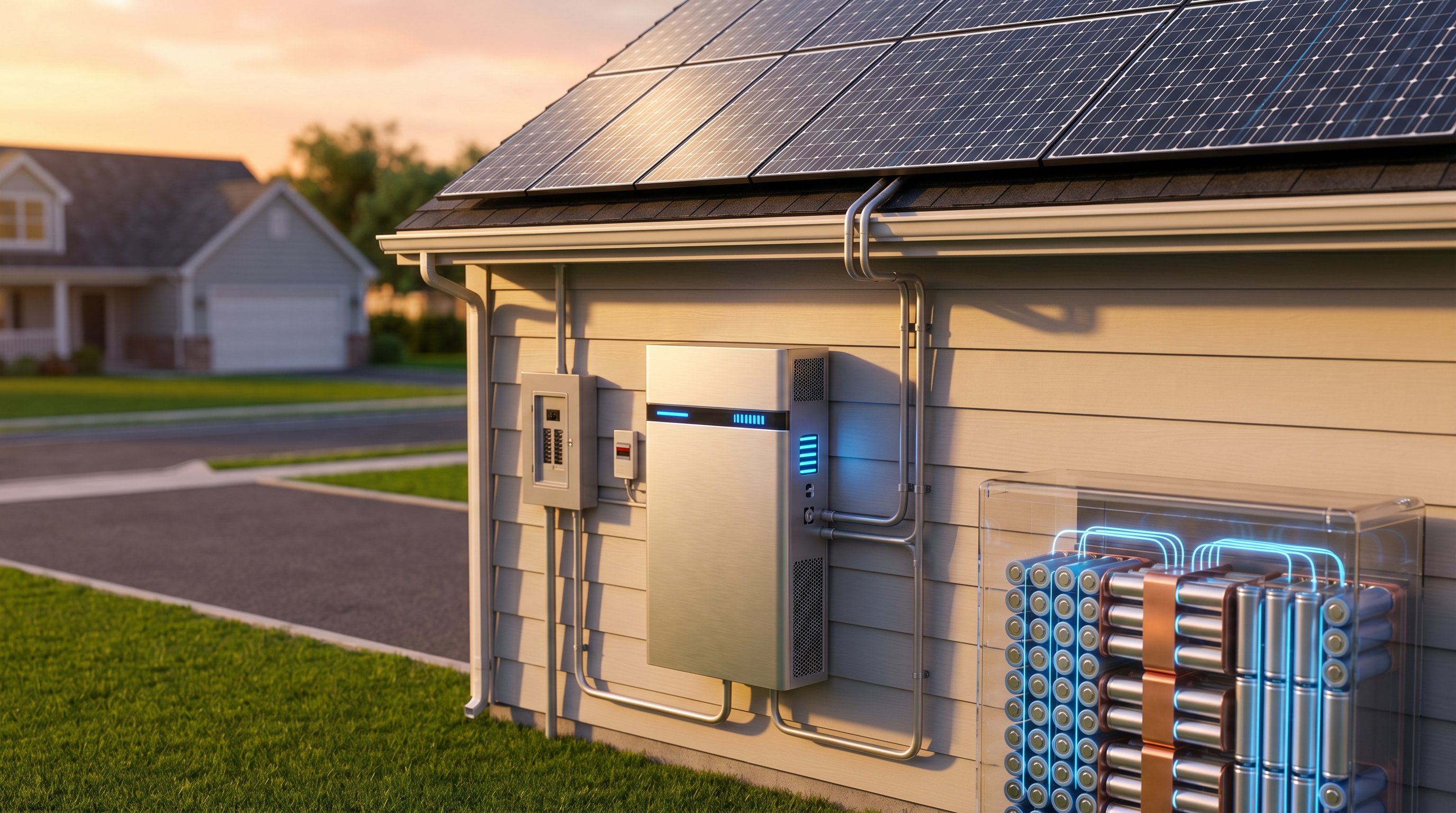
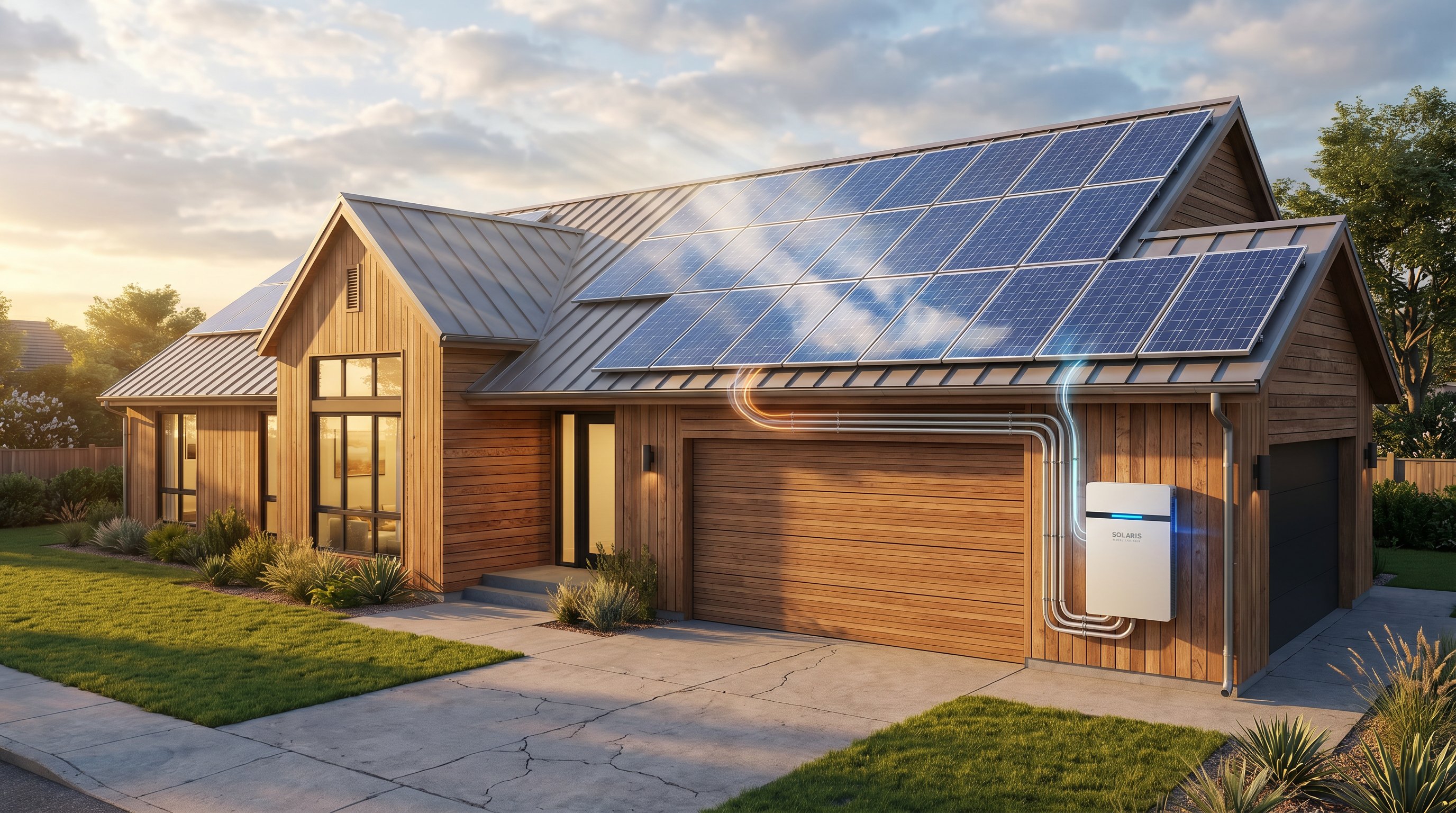
At its core, battery backup for solar power is a storage system that captures the surplus energy your solar panels produce during sunny hours and holds it for later use. Think of it as a reservoir for electricity, when your panels are cranking out more power than your home needs in the moment, that excess doesn't disappear. Instead, it charges a battery bank installed on-site, ready to discharge whenever demand exceeds production.
This setup changes the game during nighttime, cloudy stretches, or unexpected grid outages. Rather than defaulting back to utility power (or going dark entirely), your home draws from stored solar energy. You're no longer at the mercy of the grid's reliability or rate structure.
The dominant battery chemistry in today's market is lithium-ion, prized for its energy density, cycle longevity, and relatively compact footprint. Within that family, LiFePO4 (lithium iron phosphate) has emerged as a standout, especially for stationary residential and commercial applications, thanks to its thermal stability and extended lifespan. Companies like Humless have been pioneering LiFePO4-based battery energy storage systems (BESS) since 2010, delivering solutions that integrate seamlessly with solar arrays, wind turbines, generators, and grid connections.
In short, battery backup turns your solar investment into a resilient, self-sufficient energy ecosystem. You're not just generating clean power: you're controlling when and how you use it.
How Solar Power Battery Backup Systems Work
Understanding the mechanics behind a solar battery backup system demystifies the technology and helps you make smarter choices about configuration and capacity.
Energy Collection and Storage Process
Solar panels capture photons from sunlight and convert them into direct current (DC) electricity. That raw DC power flows to a charge controller, a critical component that regulates voltage and current to prevent overcharging, and the battery damage that comes with it.
From there, the system follows a logical priority hierarchy:
- Immediate consumption: Solar power first meets your home's real-time electrical demand, lights, appliances, HVAC, whatever's running at that moment.
- Battery charging: Any surplus after covering immediate loads flows into your battery bank, topping up stored reserves.
- Grid export: If your batteries are fully charged and you're still generating excess, that energy can be sent back to the utility grid (assuming you're in a grid-tied setup with net metering).
This orchestration happens automatically, managed by an inverter or integrated energy management system. Modern setups often include monitoring dashboards, accessible via smartphone or web browser, so you can track energy flow in real time and optimize usage patterns.
Automatic Backup Power Switching
When the grid goes down, your battery backup system doesn't just sit there waiting for you to flip switches. It detects the outage in milliseconds and automatically isolates your home from the utility supply to prevent backfeeding (which could endanger line workers).
Once isolated, the system seamlessly transitions to battery mode, feeding stored power through a critical loads sub-panel. This sub-panel is pre-wired to prioritize essential circuits, think refrigerator, well pump, medical equipment, or home office, while non-critical loads (like pool pumps or electric dryers) stay offline to conserve battery capacity.
The switchover is so fast you might not even notice. Lights stay on, routers keep humming, and life continues more or less uninterrupted. When grid power returns, the system automatically reconnects and resumes normal operation, recharging the battery from solar or grid as needed.
This intelligent, hands-free operation is a defining advantage of modern solar battery backup systems, no fumbling with transfer switches or firing up a noisy generator in the rain.
Key Benefits of Adding Battery Backup to Your Solar System
Sure, solar panels alone are a great step. But adding battery backup elevates the value proposition considerably, both in practical and financial terms.
Energy Independence and Grid Resilience
The most compelling reason for many homeowners and businesses is simple: you're no longer hostage to the grid. Whether it's a wildfire-related public safety power shutoff, a hurricane knocking out transmission lines, or routine maintenance outages, your battery keeps critical systems running.
This resilience isn't just about convenience. For families with medical equipment, home-based businesses, or properties in rural areas with spotty grid reliability, battery backup can be genuinely life-changing. You gain peace of mind knowing that when the lights go out for your neighbors, your home remains a safe, functioning refuge.
Off-grid property owners take this independence even further, relying entirely on solar plus storage (and perhaps a backup generator for extended cloudy spells). With a properly sized battery bank, you can live comfortably without ever connecting to utility infrastructure.
Financial Savings and Time-of-Use Optimization
Beyond resilience, batteries unlock tangible cost savings. Many utilities now employ time-of-use (TOU) rate structures, charging more for electricity during peak demand hours (typically late afternoon and evening) and less during off-peak times.
With a battery, you can charge during the day when solar production is high and grid rates are low, then discharge stored energy during expensive peak hours, avoiding costly grid purchases. Over time, this "load shifting" adds up, especially in states like California where TOU rate differentials can be significant.
If your utility offers net metering, you can also strategically decide when to export surplus solar versus storing it. Some homeowners find it more lucrative to store energy for self-consumption during peak hours rather than selling it back to the utility at wholesale rates.
And let's not forget the demand charge reductions available to commercial customers. Batteries can shave peak demand spikes, lowering monthly bills and improving overall energy economics.
Humless battery energy storage systems integrate seamlessly with existing solar setups, providing the flexibility to optimize for resilience, savings, or both, backed by 24/7 support and UL-certified safety standards.
Types of Solar Battery Backup Systems
Not all battery backup systems are created equal. The right choice depends on your goals, existing infrastructure, and how much autonomy you want from the utility grid.
LiFePO4 vs. Traditional Lithium-Ion Batteries
Within the lithium-ion family, there's an important distinction worth understanding.
Traditional lithium-ion (often using nickel-manganese-cobalt or NMC chemistry) offers high energy density and has dominated the consumer electronics and electric vehicle markets. These batteries pack a lot of power into a small space, but they can be more temperature-sensitive and carry slightly higher thermal runaway risk under abusive conditions.
LiFePO4 (lithium iron phosphate) batteries, on the other hand, trade a bit of energy density for exceptional safety, thermal stability, and cycle life. They're less prone to overheating, tolerate deeper discharge cycles, and often deliver 5,000–10,000+ cycles before significant capacity degradation. For stationary home energy storage, where space isn't as constrained as in a vehicle, LiFePO4 has become the chemistry of choice among quality-focused manufacturers.
Humless pioneered residential LiFePO4 battery energy storage systems over 15 years ago, and the company's track record speaks to the technology's durability and reliability. If longevity and safety are priorities (and they should be), LiFePO4 is the smarter long-term investment.
Grid-Tied vs. Off-Grid Battery Solutions
Your relationship with the utility grid shapes which system architecture makes sense.
Grid-tied with battery backup is the most common residential configuration. You remain connected to the utility, exporting surplus solar (often via net metering) and importing power when needed. The battery acts as a backup during outages and a tool for load shifting and TOU optimization. This setup balances independence with the safety net of grid access.
Off-grid systems cut the cord entirely. Every watt of electricity you consume must come from your solar panels, batteries, or a backup generator. Off-grid requires larger battery banks to weather multi-day cloudy stretches and careful load management to avoid depleting reserves. It's ideal for remote properties where grid connection costs are prohibitive, or for those who simply refuse to depend on utility infrastructure.
Hybrid systems offer a middle path, designed to operate in both grid-tied and off-grid modes. They can intelligently switch between selling power back to the grid, storing it, or running entirely independent based on economic or resilience priorities. Hybrid setups provide maximum flexibility but tend to be more complex and costly upfront.
Choosing the Right Battery Capacity for Your Needs
Sizing a battery system isn't guesswork, it's math informed by your unique consumption patterns and backup goals. Get it right, and you'll enjoy reliable, cost-effective storage. Get it wrong, and you'll either overspend on unused capacity or run out of juice when you need it most.
Calculating Your Daily Energy Consumption
Start by understanding how much electricity you actually use. Pull a few months of utility bills and look for your average daily kilowatt-hour (kWh) consumption. Most households fall somewhere between 20 and 40 kWh per day, but yours could be higher or lower depending on home size, climate, appliances, and lifestyle.
For a more granular view, make a list of critical loads you want backed up during an outage:
- Refrigerator: ~1–2 kWh/day
- Wi-Fi router and modem: ~0.2 kWh/day
- LED lighting (a few rooms): ~0.5 kWh/day
- Laptop/phone charging: ~0.3 kWh/day
- Well pump (if applicable): varies, often 1–3 kWh/day
- HVAC or space heater: can be 5–20+ kWh/day depending on use
Add up the daily consumption of everything you consider essential. That's your baseline storage target for outage scenarios.
If you're aiming for year-round self-sufficiency (especially in an off-grid setup), you'll also need to account for seasonal solar production variability. Winter months with shorter days and frequent clouds demand more stored capacity to bridge the gap.
Sizing for Backup Duration Requirements
Next, decide how long you want your battery to sustain your home without solar input or grid power. Common targets include:
- Overnight autonomy: 8–12 hours, covering typical evening and nighttime usage (~5–15 kWh)
- Full-day backup: 24 hours for critical loads (~10–20 kWh)
- Multi-day resilience: 48–72 hours to ride out extended outages or storms (~30–60+ kWh)
Residential battery systems typically range from 10 kWh (a single unit, good for overnight or essential-load backup) up to 40+ kWh (multiple units or large-capacity models for whole-home, multi-day coverage).
Keep in mind that most lithium-ion batteries shouldn't be discharged below 10–20% capacity to maximize lifespan, so factor in a usable capacity buffer. A 10 kWh battery might realistically provide 8–9 kWh of safe, repeatable discharge.
Humless offers modular BESS configurations that scale to meet diverse needs, from compact portable power stations to expansive whole-home systems, with UL certification and industry-leading support to guide your sizing decisions.
Installation and Integration Considerations
Even the best battery won't perform well if it's installed poorly or incompatibly with your existing solar setup. Careful planning during the installation phase pays dividends in safety, efficiency, and longevity.
First, determine whether you're installing a DC-coupled or AC-coupled system.
- DC-coupled: Solar panels connect directly to the battery via a charge controller, minimizing conversion losses. Efficiency runs 94–96%, and the architecture is elegant for new installations or ground-up designs.
- AC-coupled: Solar panels feed an inverter first, converting DC to AC for home use, then a separate battery inverter converts AC back to DC for storage (and DC back to AC on discharge). It's less efficient (90–94%) but far more flexible for retrofitting existing grid-tied solar systems.
Your existing equipment, inverter type, panel configuration, electrical panel capacity, will often dictate which coupling method makes sense. A qualified solar installer or integrator can assess compatibility and recommend the best path forward.
Safety Standards and UL Certification Requirements
Safety isn't negotiable. Lithium-ion batteries store significant energy, and improper installation or substandard equipment can lead to overheating, fire, or system failure.
Look for batteries that carry UL 9540 certification, the North American safety standard for energy storage systems. UL 9540 addresses electrical, fire, and mechanical hazards, ensuring the product has been rigorously tested. For even higher assurance, UL 9540A evaluates thermal runaway and fire propagation risks at the cell, module, unit, and installation levels.
Humless battery energy storage systems meet these rigorous UL standards, providing peace of mind alongside performance.
Beyond certifications, consider physical installation factors:
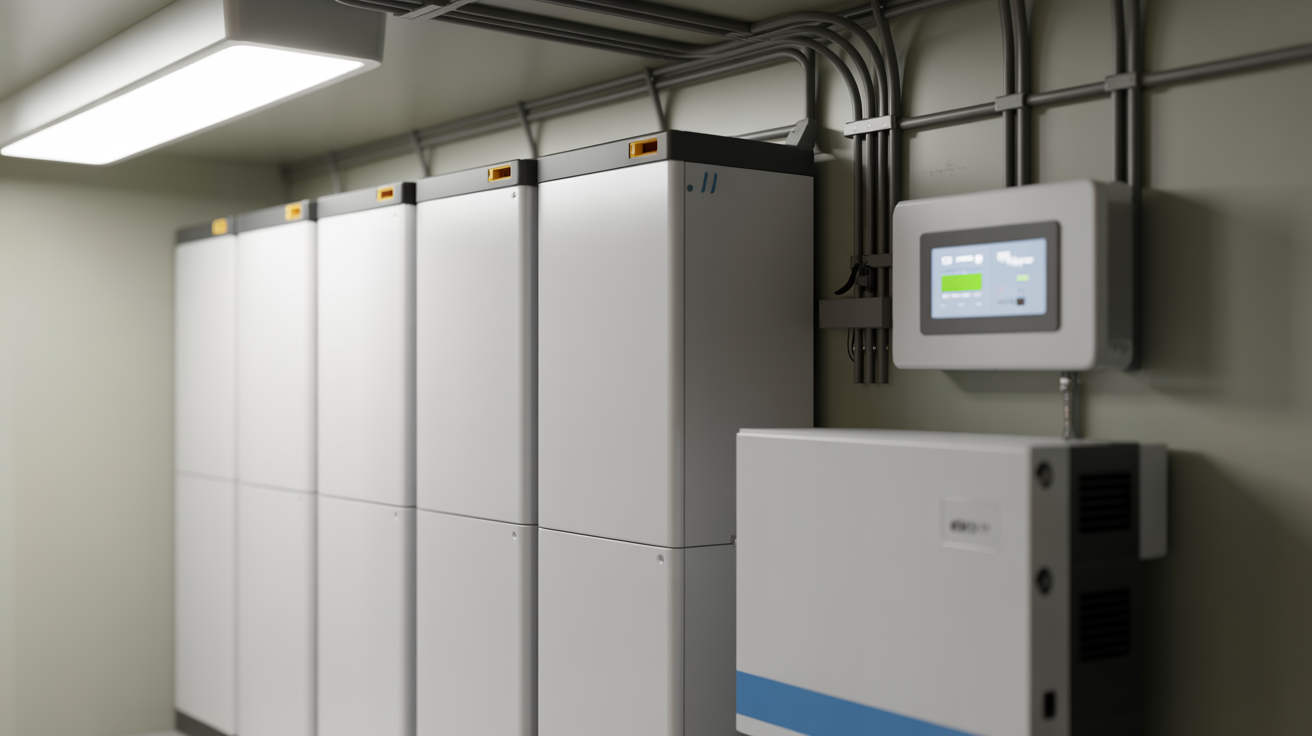
- Location: Install indoors (garage, utility room) or in a weatherproof outdoor enclosure. Avoid extreme temperature environments: most lithium batteries prefer 32–95°F.
- Ventilation: While LiFePO4 is safer than other chemistries, proper airflow prevents heat buildup.
- Electrical code compliance: Work with a licensed electrician to ensure your installation meets National Electrical Code (NEC) Article 706 requirements and local amendments.
- Permits and inspections: Most jurisdictions require permits for energy storage installations. Factor in lead times for approval and final inspection.
Finally, confirm that your installer has experience with battery integration. Solar-only installers may lack the expertise to properly configure energy management systems, load sub-panels, or automatic transfer switches. Choose a partner with a proven track record in solar-plus-storage projects.
Maintenance and Lifespan of Solar Battery Backup Systems
One of the appeals of modern lithium-ion battery systems is that they're remarkably low-maintenance compared to legacy technologies like flooded lead-acid. Still, a little attention goes a long way toward maximizing performance and lifespan.
Monthly tasks are minimal but valuable:
- Review monitoring data: Check your app or web dashboard for anomalies, unexpected drops in capacity, unusual charge/discharge patterns, or error codes.
- Visual inspection: Look for signs of physical damage, corrosion on terminals, or moisture intrusion. Make sure ventilation isn't obstructed.
Annual maintenance should include:
- Professional inspection: Have your installer or a qualified technician review electrical connections, firmware versions, and overall system health.
- Software updates: Manufacturers periodically release firmware updates that improve efficiency, add features, or patch bugs. Staying current ensures optimal performance.
- Performance analysis: Compare current capacity and efficiency against baseline metrics. A well-maintained LiFePO4 battery should retain 80%+ of its original capacity after 10–15 years.
Most quality residential battery systems come with warranties spanning 10–15 years or a specified number of charge cycles (often 5,000–10,000+). LiFePO4 chemistry, in particular, excels in cycle longevity, often outlasting the warranty period with proper care.
Temperature management is key. Batteries that consistently operate within their ideal thermal range will deliver better cycle life and capacity retention. If your installation is in a hot garage or uninsulated shed, consider adding climate control or relocating the system.
Humless backs its battery energy storage systems with industry-leading warranties and 24/7 customer support, ensuring you're never left guessing when questions or issues arise. With 15+ years pioneering LiFePO4 technology, Humless has refined not just the hardware but the entire ownership experience, from initial sizing through decades of reliable operation.
Bottom line: treat your battery backup system like the critical infrastructure it is. A bit of routine attention and professional oversight will keep it humming for years, delivering energy independence and peace of mind when you need it most.
Conclusion
Battery backup for solar power isn't just a nice-to-have accessory, it's the linchpin that turns a solid solar investment into a resilient, self-sufficient energy system. By capturing and storing surplus solar production, you gain control over when and how you use clean energy, insulate yourself from grid outages and rate hikes, and unlock financial optimization strategies that weren't possible with solar alone.
Whether you're a homeowner chasing energy independence, an installer designing cutting-edge systems, or an off-grid pioneer building from scratch, the fundamentals remain the same: understand your consumption, choose proven technology (like LiFePO4 chemistry), size appropriately for your backup goals, and work with experienced professionals who prioritize safety and integration quality.
Humless has been at the forefront of battery energy storage innovation since 2010, delivering UL-certified, LiFePO4-based solutions that seamlessly integrate with solar, wind, grid, and generator sources. With a proven track record, 24/7 support, and a commitment to true energy independence, Humless empowers you to take control of your power, today and for decades to come.
Now's the time to move beyond daytime-only solar and embrace the full potential of energy storage. Your future self, powered, protected, and independent, will thank you.
Frequently Asked Questions
What is battery backup for solar power and how does it work?
Battery backup for solar power stores excess energy your solar panels generate during the day for later use. A charge controller regulates electricity flow from panels to batteries, first powering your home's immediate needs, then charging the battery bank, with any surplus sent to the grid.
How long do solar battery backup systems last?
Most quality lithium-ion solar batteries come with 10-15 year warranties and deliver 5,000-10,000+ charge cycles. LiFePO4 batteries often retain 80% or more of their original capacity after 10-15 years with proper maintenance and temperature management.
What are the benefits of adding battery backup to solar panels?
Battery backup provides uninterrupted power during outages, enabling energy independence and grid resilience. It also delivers financial savings through time-of-use optimization, allowing you to use stored energy during expensive peak hours and reduce monthly electricity bills.
How do I size a solar battery for my home?
Calculate your daily energy consumption from utility bills (typically 20-40 kWh for homes) and identify critical loads you want backed up. Residential systems range from 10 kWh for overnight backup to 40+ kWh for whole-home, multi-day coverage during extended outages.
What is the difference between LiFePO4 and traditional lithium-ion batteries?
LiFePO4 (lithium iron phosphate) batteries offer exceptional thermal stability, safety, and longer cycle life (5,000-10,000+ cycles) compared to traditional lithium-ion. While slightly less energy-dense, LiFePO4 is the preferred chemistry for stationary home energy storage due to superior durability and reliability.
Can solar batteries work during a power outage?
Yes, solar batteries automatically detect grid outages within milliseconds, isolate your home from utility supply, and seamlessly switch to battery power. The system feeds stored energy through a critical loads sub-panel, keeping essential circuits running without interruption during blackouts.