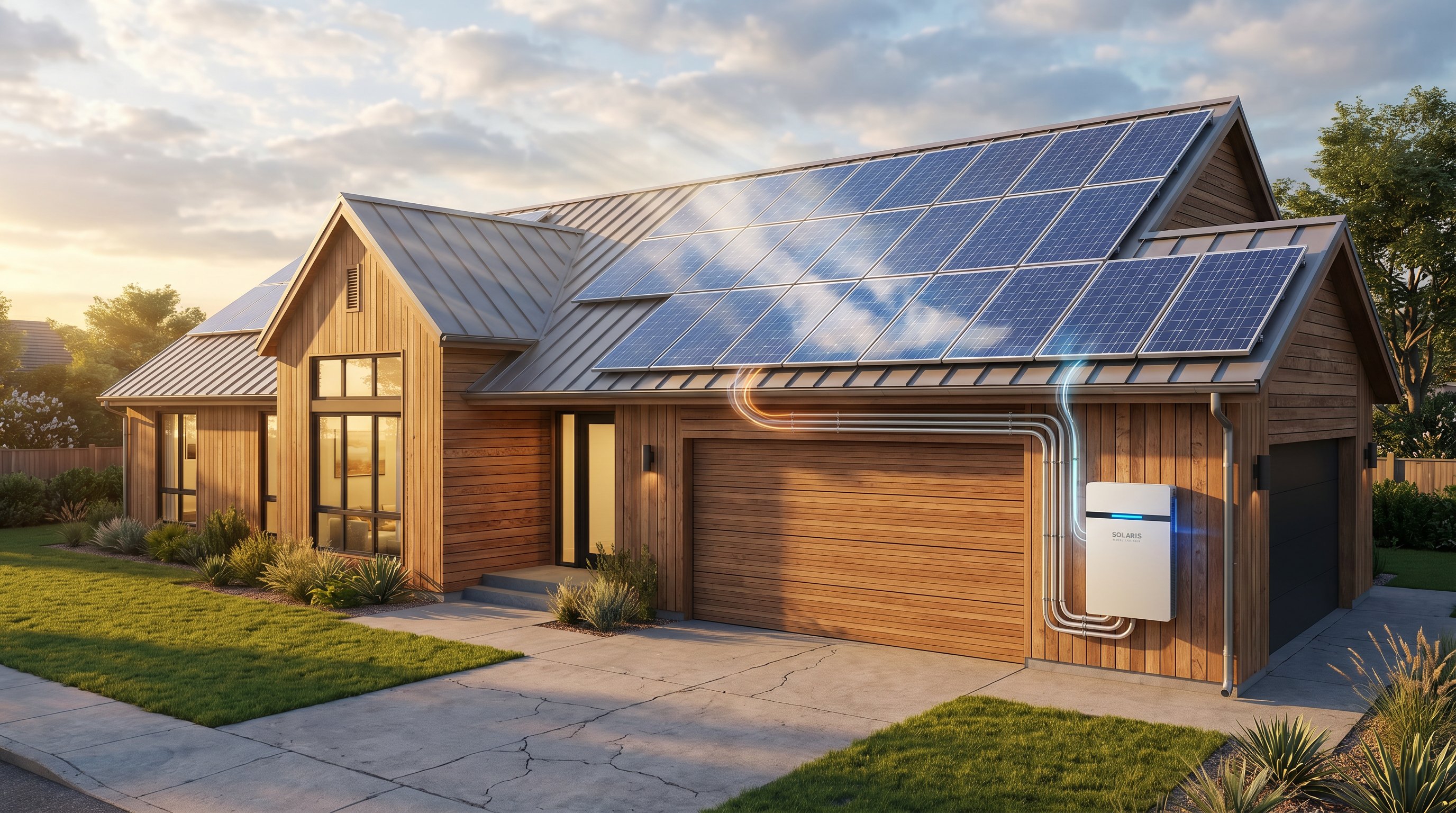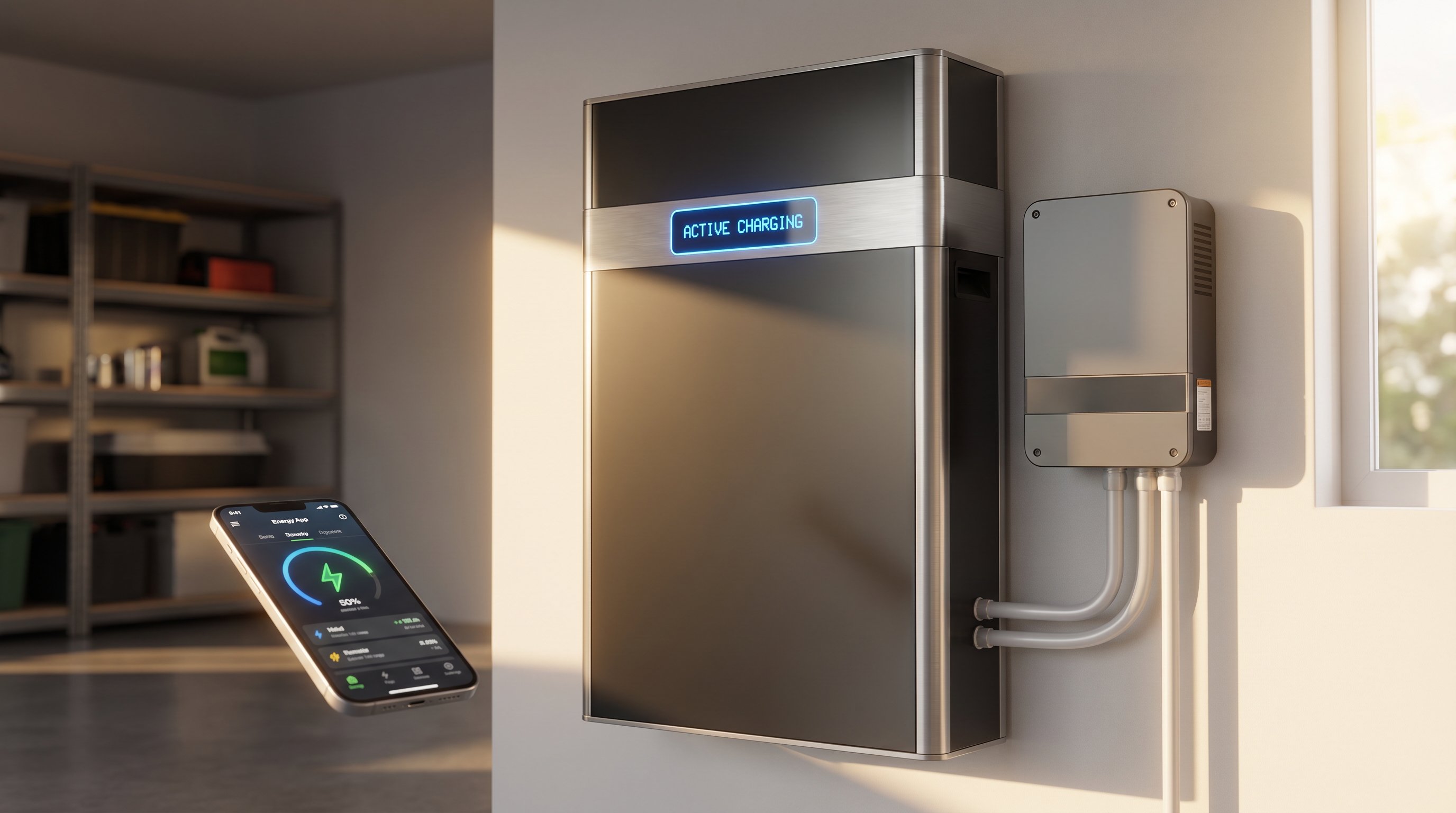
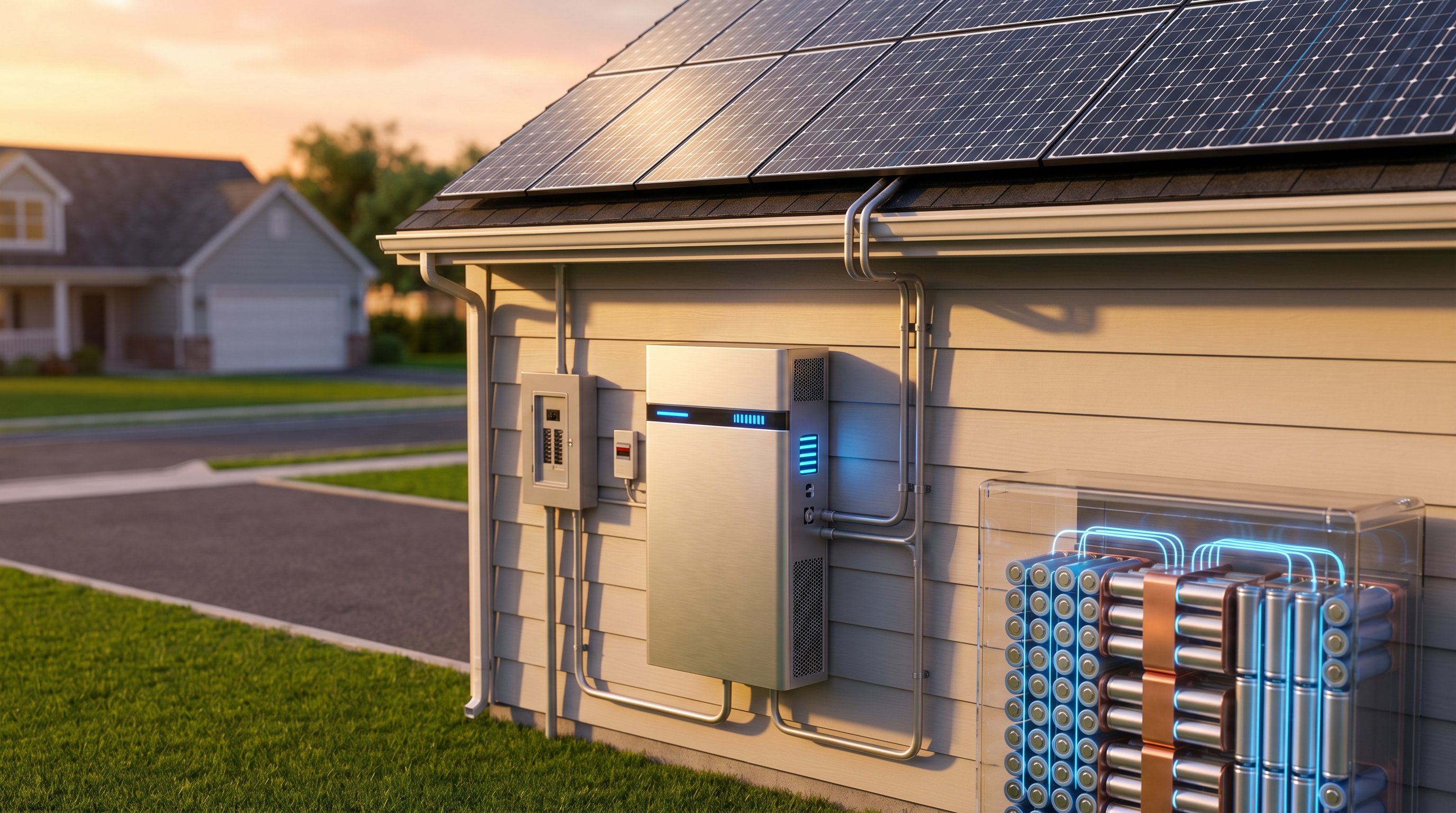
The sun sets, your solar panels stop producing, and your home still needs power. That's where a home solar battery changes everything. In 2026, battery energy storage systems have evolved from expensive curiosities into practical, essential components of modern home energy systems. Whether you're tired of rolling blackouts, looking to slash your electricity bills, or dreaming of true energy independence, a solar battery can transform your relationship with power. This guide walks you through everything you need to know, from how these systems actually work to choosing the right one for your home and understanding the real costs and benefits.
Key Takeaways
- A home solar battery captures excess daytime solar electricity for use during peak evening hours or grid outages, maximizing self-consumption and reducing reliance on utility power.
- LiFePO4 lithium-ion batteries are the gold standard for residential solar battery systems, offering 10,000+ cycle life, exceptional safety, and 10–15 year warranties with minimal maintenance.
- Most homeowners need 10–20 kWh of usable storage capacity to power essential loads like refrigerators, lighting, and medical equipment for a full day during outages.
- Federal tax credits up to 30% and state rebates significantly reduce home solar battery costs from $8,000–$15,000+, with payback periods of 7–10 years through bill savings alone.
- DC-coupled systems offer maximum efficiency for new solar-plus-storage installations, while AC-coupled systems provide the most practical retrofit option for existing solar arrays.
- Battery-backed homes gain energy independence, protection from rate hikes, and increased property values while avoiding costs associated with extended outages like spoiled food and lost productivity.
What Is a Home Solar Battery and How Does It Work?
A home solar battery is essentially a rechargeable energy storage unit that captures excess electricity your solar panels generate during the day and holds it for later use. Think of it as a buffer between your rooftop solar array and both your home's electrical demands and the utility grid.
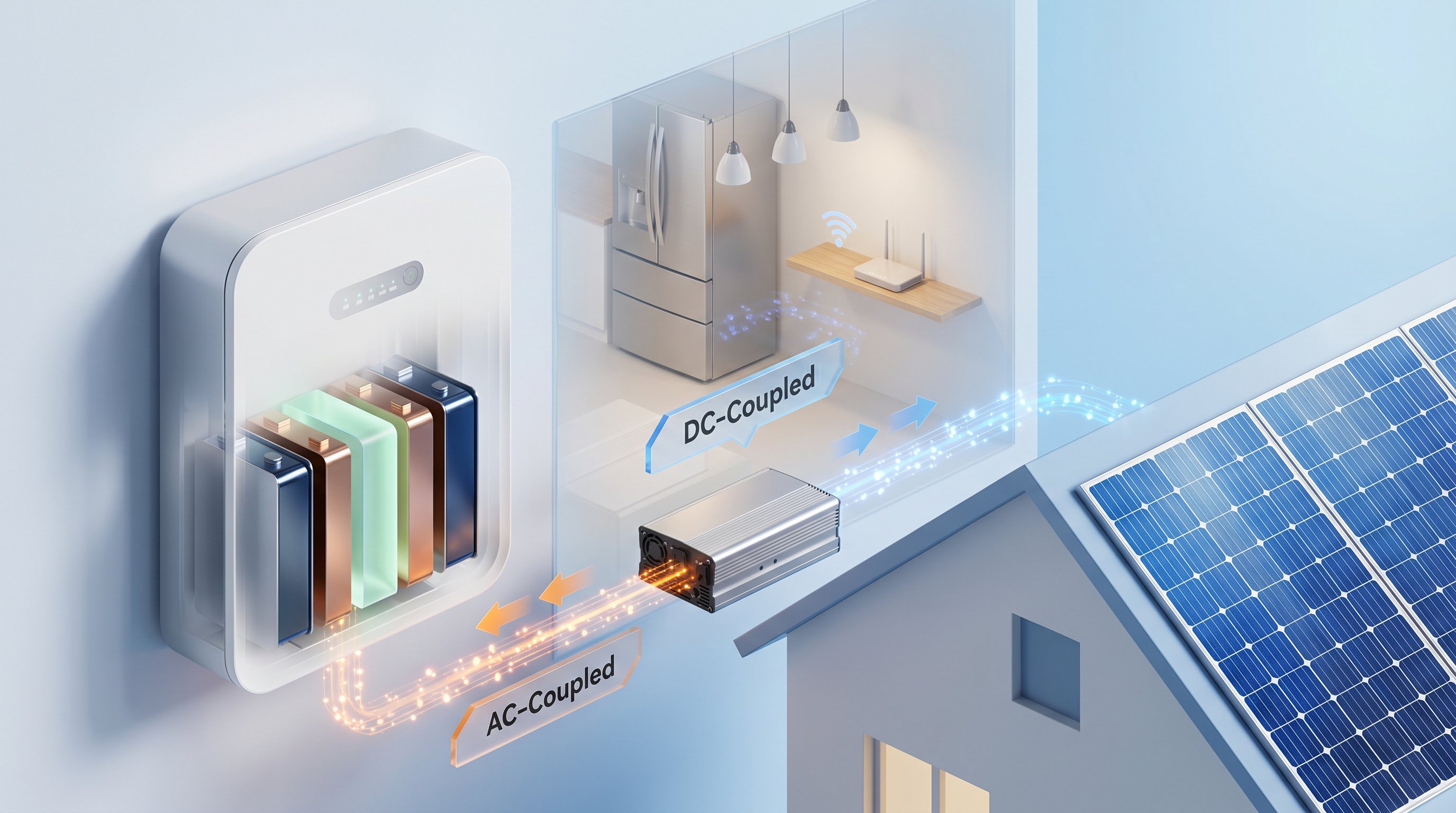
Solar panels produce direct current (DC) electricity through the photovoltaic effect, when sunlight hits silicon cells, it knocks electrons loose, creating an electrical flow. But here's where things get interesting: how that DC power gets to your battery depends on your system's architecture.
In DC-coupled systems, the DC electricity flows straight from your panels into the battery for storage before being converted to alternating current (AC) for household use. This approach minimizes energy conversions, making it more efficient. In AC-coupled systems, the process is reversed, DC from the panels is first inverted to AC, then converted back to DC for battery charging. While this involves an extra conversion step (and slightly more energy loss), AC-coupled setups work beautifully for retrofitting batteries onto existing solar installations.
The battery itself, typically lithium-ion chemistry, works through the movement of lithium ions between an anode and cathode through an electrolyte. During discharge, ions flow one direction, releasing electrons that power your home. Charging reverses the process. It's elegant chemistry that's proven remarkably reliable.
During a grid outage, your battery system really shines. A gateway or transfer switch automatically isolates your home from the grid and powers a critical loads sub-panel, a separate circuit board that feeds essential appliances like your refrigerator, lights, medical equipment, and Wi-Fi router. You won't power your entire home indefinitely, but you'll keep the important stuff running.
Key Benefits of Installing a Solar Battery System
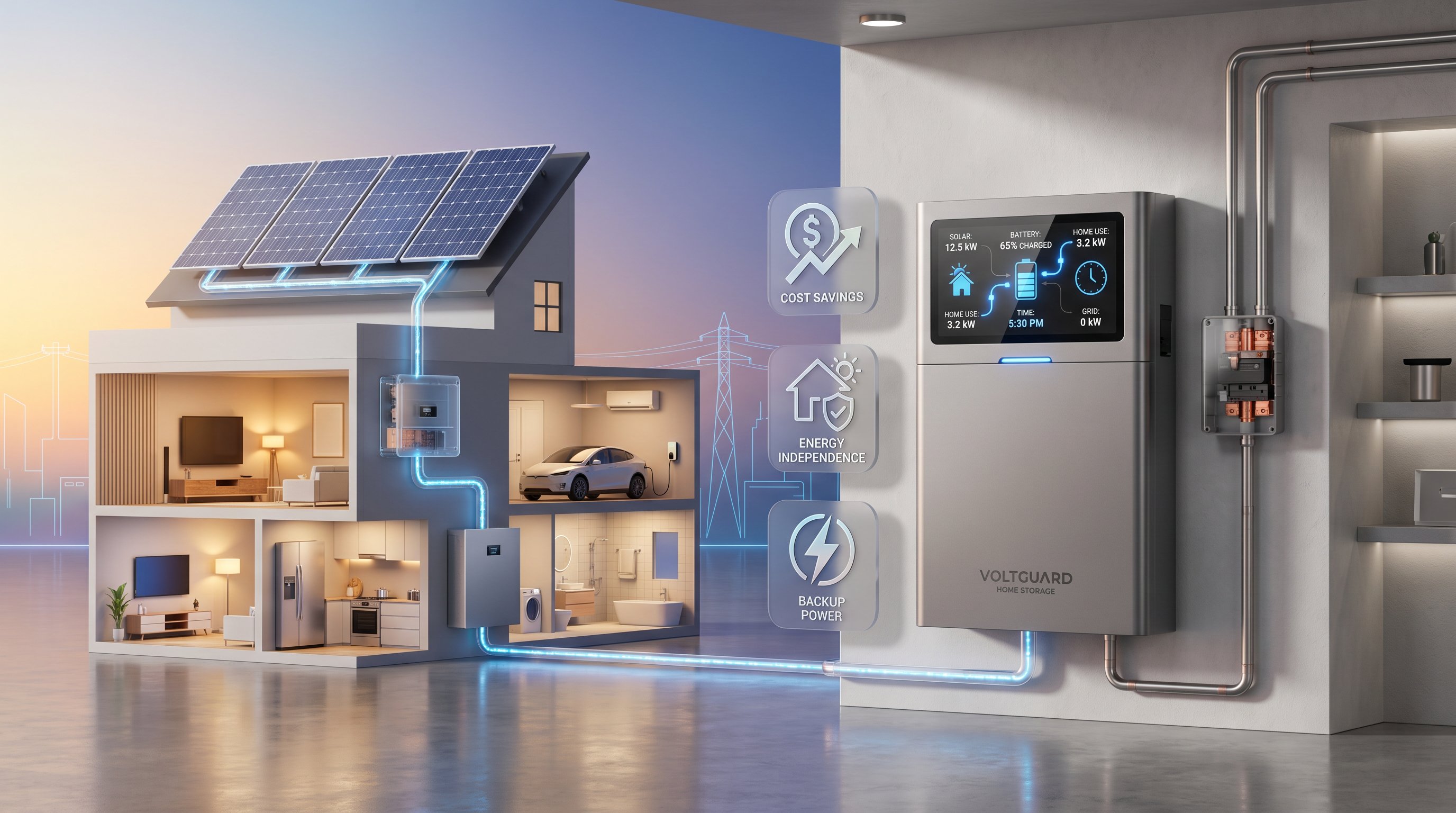
Solar batteries deliver multiple layers of value that extend well beyond simple backup power. The financial and practical benefits stack up quickly, especially as grid electricity rates continue climbing and extreme weather events become more frequent.
First, there's cost savings through time-of-use optimization. Many utilities charge more for electricity during peak evening hours when everyone's home cooking dinner and running air conditioning. With a battery, you can store cheap (or free) solar electricity generated midday and use it during those expensive peak periods, effectively arbitraging the utility's rate structure. Over years, that adds up to serious savings.
Then there's increased self-consumption. Without a battery, excess solar production gets exported to the grid, often for minimal credit under net metering programs that have been scaled back in many states. A battery lets you capture and use nearly 100% of what your panels produce, maximizing your return on the solar investment.
You're also creating a personal microgrid, a self-contained energy ecosystem that can operate independently when needed. This isn't just about hurricanes and wildfires (though that's important). Even routine grid maintenance or equipment failures won't leave you sitting in the dark.
Energy Independence and Backup Power
Energy independence is perhaps the most compelling benefit, especially for those who've experienced extended outages. A properly sized battery system paired with solar panels can keep your critical loads running for days, not just hours. You're no longer at the mercy of utility restoration schedules or vulnerable to cascading grid failures.
For off-grid property owners, batteries aren't optional, they're the foundation of the entire energy system. But even grid-connected homes gain meaningful independence. You reduce reliance on fossil fuel power plants, insulate yourself from rate hikes, and gain control over your energy future. Companies like Humless have pioneered battery energy storage systems specifically designed for this kind of resilience, with solutions that seamlessly integrate solar, grid, and even generator or wind sources to ensure you've always got power when you need it.
Types of Home Solar Batteries: Which Is Right for You?
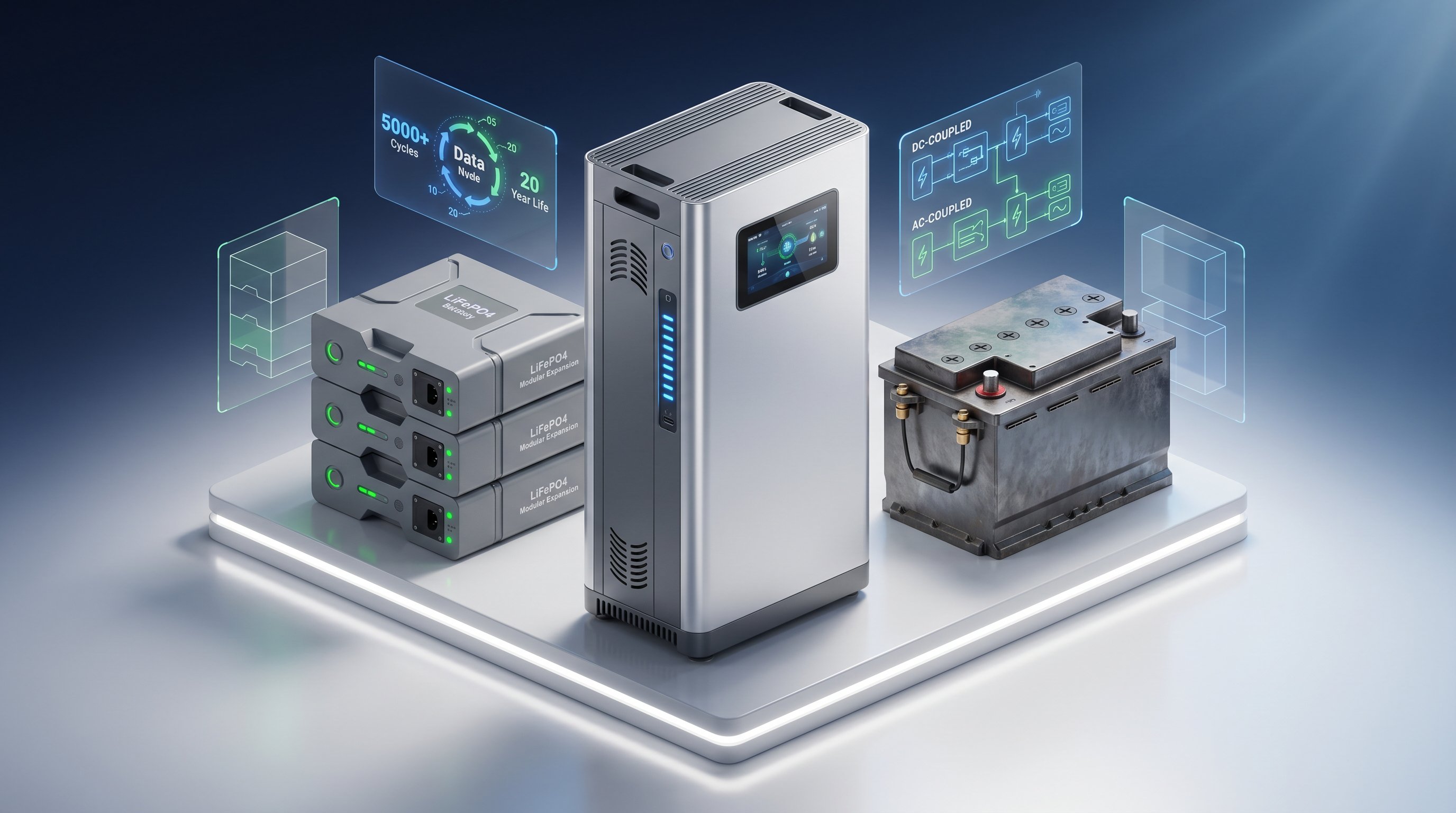
When shopping for a home solar battery, you'll encounter several chemistry types and system architectures, each with distinct characteristics.
Lithium-ion batteries dominate the residential market in 2026, and for good reason. They offer high energy density (lots of storage in a compact footprint), excellent cycle life (typically 4,000–6,000+ cycles), and efficient charge/discharge performance. Within the lithium-ion family, LiFePO4 (lithium iron phosphate) has emerged as the gold standard for home energy storage. It's exceptionally safe, tolerates temperature extremes better than other lithium chemistries, and delivers even longer cycle life, often exceeding 10,000 cycles under proper conditions.
You'll also see lead-acid batteries mentioned, particularly in older systems or budget-conscious installations. While cheaper upfront, they have significantly shorter lifespans, require maintenance, and offer lower depth-of-discharge (you can't drain them as deeply without damage). For most homeowners in 2026, lithium-ion is the clear winner.
Beyond chemistry, the DC-coupled vs. AC-coupled distinction matters. DC-coupled systems are more efficient and work best for new solar-plus-storage installations where everything's designed together from the start. AC-coupled systems excel at retrofits, you can add a battery to existing solar without replacing your current inverter.
There's also the question of modular vs. all-in-one systems. Modular batteries like those offered by Humless let you start with a smaller capacity and expand over time as needs or budgets change. All-in-one units are simpler but less flexible.
Eventually, the "right" type depends on whether you're building new or retrofitting, your budget, your capacity needs, and how much you value expandability and long-term performance.
How to Choose the Best Solar Battery for Your Home
Choosing a solar battery isn't about picking the biggest or cheapest, it's about matching system specifications to your home's unique energy profile and goals.
Start by calculating your essential load requirements. Walk through your home and identify what you absolutely need during an outage: refrigerator, a few lights, phone chargers, medical equipment, your internet router, maybe a sump pump. Add up their wattage and estimate daily kilowatt-hour (kWh) consumption. That's your baseline capacity requirement. Most homeowners find they need between 10–20 kWh of usable storage for a full day of backup power.
Power density matters too, that's how much the battery can output at once, measured in kilowatts (kW). A battery might store 15 kWh but only deliver 5 kW continuously. If you try to run your dryer, oven, and AC simultaneously, you'll trip the limit. Make sure the continuous power rating covers your peak simultaneous loads on the critical circuits.
Compatibility with your solar inverter and electrical panel is non-negotiable. Some batteries only work with specific inverter brands or models. If you're retrofitting, verify compatibility before buying. DC-coupled systems require a hybrid inverter that manages both solar and battery: AC-coupled systems use a separate battery inverter.
Prioritize cycle life and warranty. A battery rated for 4,000 cycles at 80% depth of discharge will last roughly 10–15 years with daily cycling. Look for warranties that guarantee at least 10 years or a minimum throughput (total energy delivered over the battery's life). LiFePO4 chemistry consistently outperforms here.
Certifications matter. UL 9540 and UL 1973 certifications ensure the battery meets rigorous safety and performance standards. Don't cut corners on safety, these are large energy storage devices in your home.
Finally, consider the manufacturer's track record and support. Humless, for instance, has been pioneering battery energy storage since 2010 and offers 24/7 support, that kind of experience and backing matters when you're depending on the system during emergencies.
Installation and Integration with Existing Solar Systems
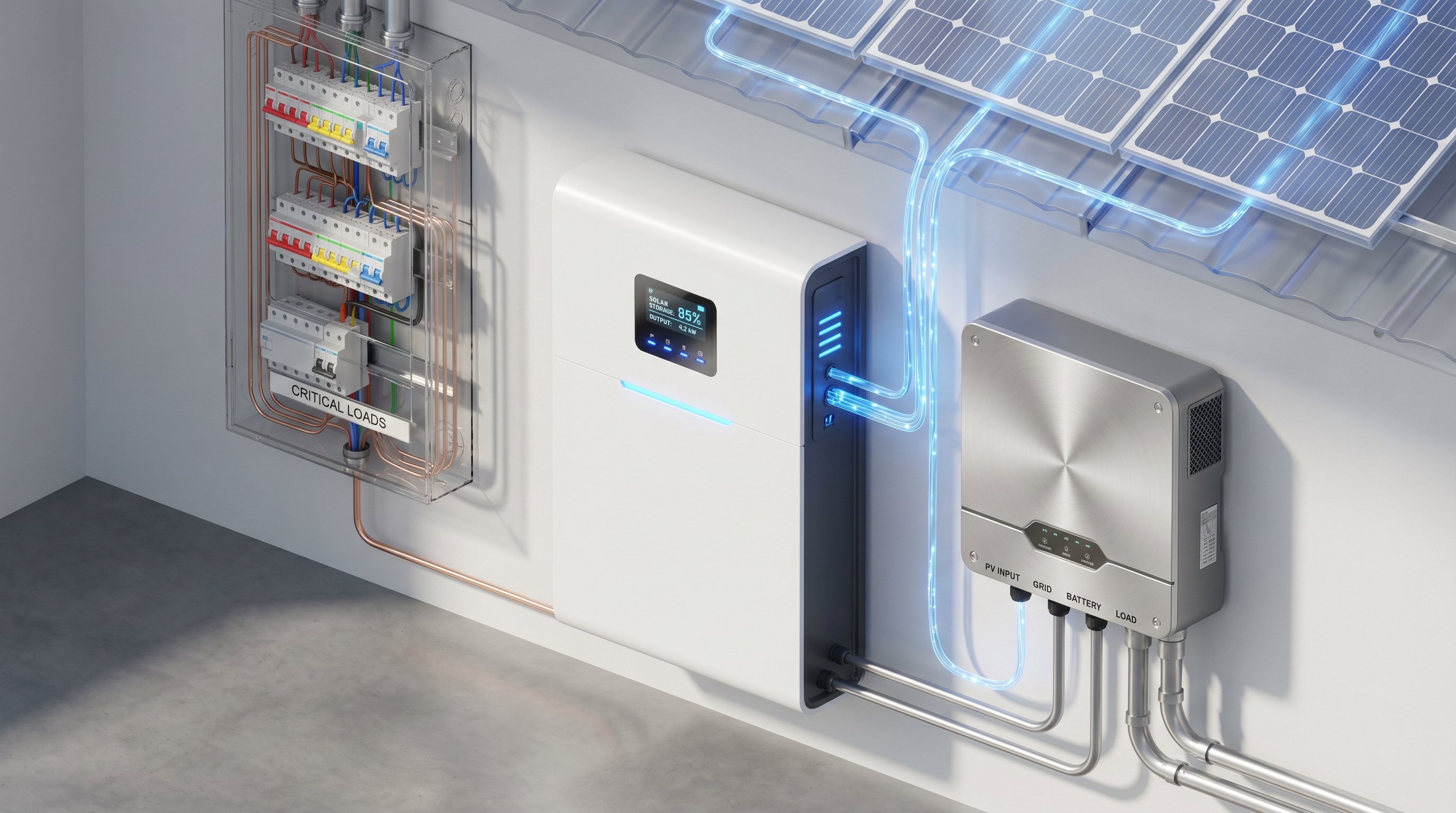
Installing a home solar battery isn't a DIY weekend project, it requires licensed electricians and, often, permit approvals. But understanding the process helps you plan and budget appropriately.
If you're adding a battery to existing solar panels, AC-coupled integration is typically the path of least resistance. Your current solar inverter stays in place, and a separate battery inverter gets added to manage charging and discharging. The battery connects to your main electrical panel, and a critical loads sub-panel is installed to designate which circuits get backup power during outages.
For new solar-plus-storage installations, DC-coupled systems offer better efficiency. A hybrid inverter handles both solar production and battery management, streamlining the system and reducing conversion losses. The installation process involves mounting the battery (often in a garage or utility room), running conduit and wiring, installing the hybrid inverter and gateway device, and setting up the critical loads panel.
Installation timelines vary but typically take 1–3 days for straightforward residential setups. Permitting can add weeks or months depending on your local authority having jurisdiction (AHJ). Some jurisdictions have streamlined solar-plus-storage permits: others still treat each component separately.
One often-overlooked aspect: system programming and optimization. Your installer should configure charging schedules, backup reserves, and grid export settings to match your goals, whether that's maximizing self-consumption, maintaining a reserve for outages, or participating in utility demand-response programs.
Modern battery systems from companies like Humless are designed to integrate seamlessly with solar, grid, wind, and even generator inputs, giving you maximum flexibility. Whether you're grid-tied or off-grid, the right system can manage multiple power sources intelligently.
Cost, Incentives, and Return on Investment
Let's talk money. A quality home solar battery system typically costs between $8,000 and $15,000+ installed, depending on capacity, brand, and complexity. That's not small change, but several factors dramatically improve the financial picture.
Federal incentives remain strong in 2026. The Investment Tax Credit (ITC) currently offers a 30% federal tax credit on battery storage when installed alongside or added to an existing solar system. That immediately knocks thousands off your net cost. Some states and utilities offer additional rebates or performance incentives, California's SGIP program, for instance, has provided substantial per-kWh rebates, though funding varies year to year.
Return on investment depends heavily on your utility rate structure and usage patterns. If you're in a market with high time-of-use rate spreads or frequent outages, payback periods can hit 7–10 years through bill savings alone. That doesn't account for the value of backup power, how much is it worth to keep your food from spoiling, your home office running, or your medical equipment operational during multi-day outages?
Batteries also increase home value. Studies show homes with solar-plus-storage command premium resale prices, particularly in markets where energy resilience is a growing concern.
Don't forget avoided costs. Hotels during extended outages, spoiled food, lost productivity, generator fuel, these add up quickly. A battery system eliminates or drastically reduces these expenses.
For off-grid installations or those in areas with expensive grid extensions, batteries aren't just cost-effective, they're often the only practical option.
Finally, battery costs continue trending downward while grid electricity costs rise. The economics get better every year. Companies with proven track records like Humless offer reliable systems backed by real support, ensuring your investment delivers value over the full 10–15+ year lifespan. When you're spending this much, reliability and support matter as much as the upfront price.
Frequently Asked Questions About Home Solar Batteries
What is a home solar battery and how does it work?
A home solar battery stores excess electricity generated by your solar panels for later use, acting as a buffer between your home and the grid. In DC-coupled systems, solar DC electricity charges the battery directly before converting to AC for home use. In AC-coupled systems, DC converts to AC first, then back to DC for battery charging. During outages, a gateway automatically isolates your home and powers essential appliances through a critical loads sub-panel.
How much does a home solar battery system cost installed?
A quality home solar battery system typically costs $8,000 to $15,000+ installed, depending on capacity and brand. However, federal tax credits offer 30% off the total cost, and many states provide additional rebates. When combined with long-term bill savings and avoided outage costs, payback periods often range from 7–10 years.
What are the key benefits of installing solar battery storage?
Solar batteries provide multiple benefits: backup power during outages for essential appliances, cost savings through time-of-use optimization (using cheap solar energy during expensive peak hours), increased self-consumption of solar generation, and energy independence from the grid. They also protect against rate hikes and grid failures while increasing home value.
What type of solar battery is best for residential homes?
Lithium-ion batteries, particularly LiFePO4 chemistry, dominate the residential market in 2026. They offer high energy density, exceptional cycle life (4,000–10,000+ cycles), excellent efficiency, and superior safety. While lead-acid batteries are cheaper upfront, lithium-ion delivers far better long-term value and performance for most homeowners.
Can I add a solar battery to my existing solar panels?
Yes, you can retrofit a battery to existing solar panels using an AC-coupled system. Your current inverter stays in place while a separate battery inverter is added to manage charging and discharging. A critical loads sub-panel designates which circuits receive backup power. Installation typically takes 1–3 days, though permitting may add weeks.
How long will a solar battery power my home during an outage?
A properly sized battery system can keep critical loads running for a full day or longer. Most homeowners need 10–20 kWh of usable storage to power essentials like refrigerators, lights, medical equipment, and internet routers for 24 hours. The actual duration depends on your battery capacity and the wattage of devices you're running.