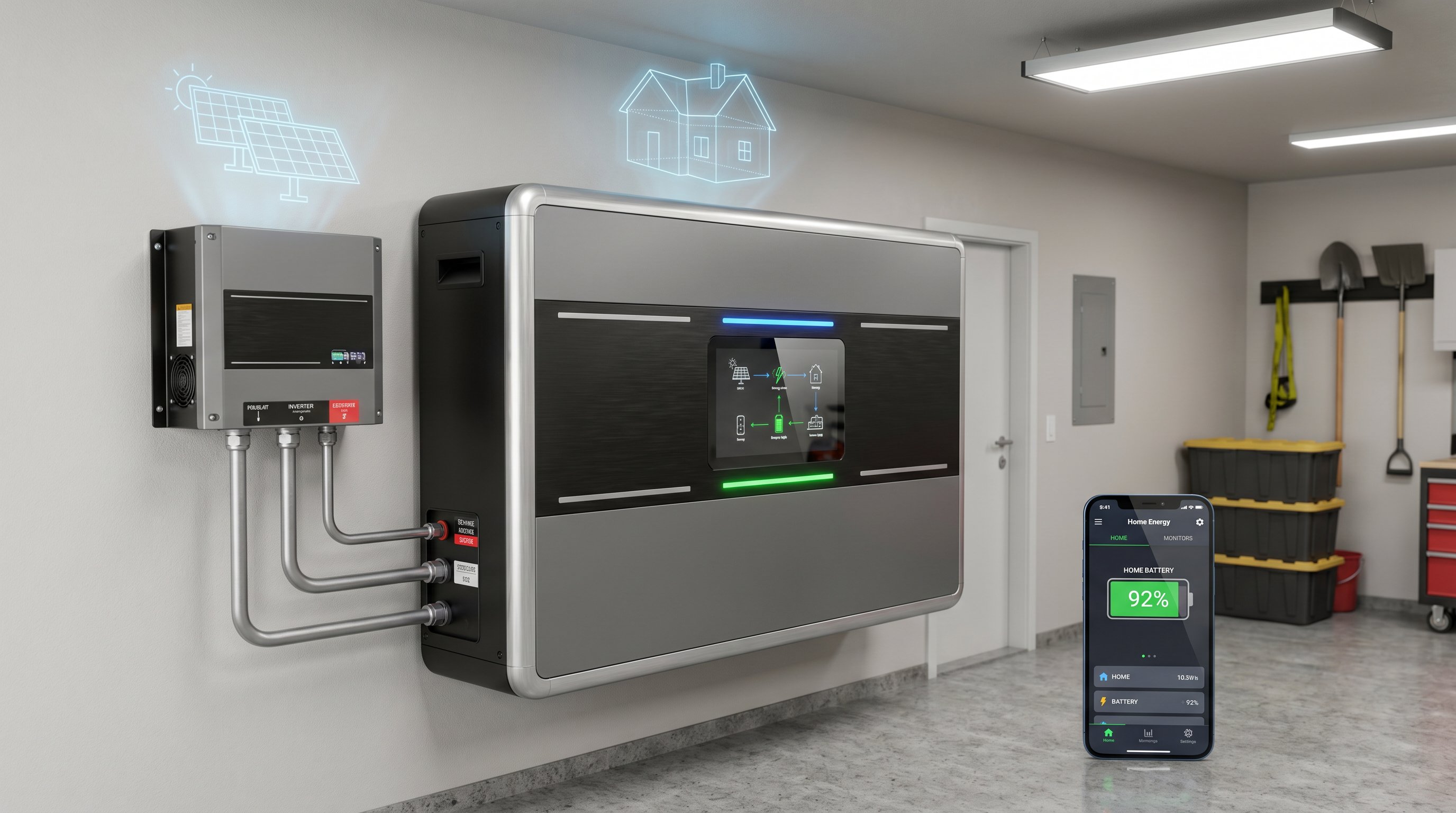
Power outages don't announce themselves. Neither do sky-high utility bills during summer peaks. But if you've watched your neighbor's lights stay on during the last blackout, or you're tired of watching excess solar energy vanish into the grid for pennies, you've probably started researching home energy storage systems. These aren't just batteries: they're your ticket to genuine energy independence, seamless backup power, and control over when and how you use electricity. With technology advancing rapidly and costs becoming more accessible, 2026 is the year homeowners, solar installers, and off-grid pioneers are making the switch. Here's everything you need to know.
Key Takeaways
- A home energy storage system uses rechargeable batteries to store solar energy or grid electricity for use during peak hours or outages, providing instant backup power without fuel or emissions.
- LiFePO4 (lithium iron phosphate) is the safest and most reliable battery chemistry for residential use, offering 10-year warranties, 6,000+ charge cycles, and thermal stability without fire risk.
- Home energy storage systems reduce utility bills by storing cheap off-peak electricity and deploying it during expensive peak hours, while maximizing solar investment by capturing every watt generated.
- When selecting a home energy storage system, prioritize smart battery management, IP-rated enclosures, remote monitoring, modular design, and UL certifications for safety and expandability.
- A typical residential home energy storage installation costs $5,000–$10,000 per battery unit, with federal tax credits and state incentives potentially reducing costs by 30% or more in 2026.
What Is a Home Energy Storage System?
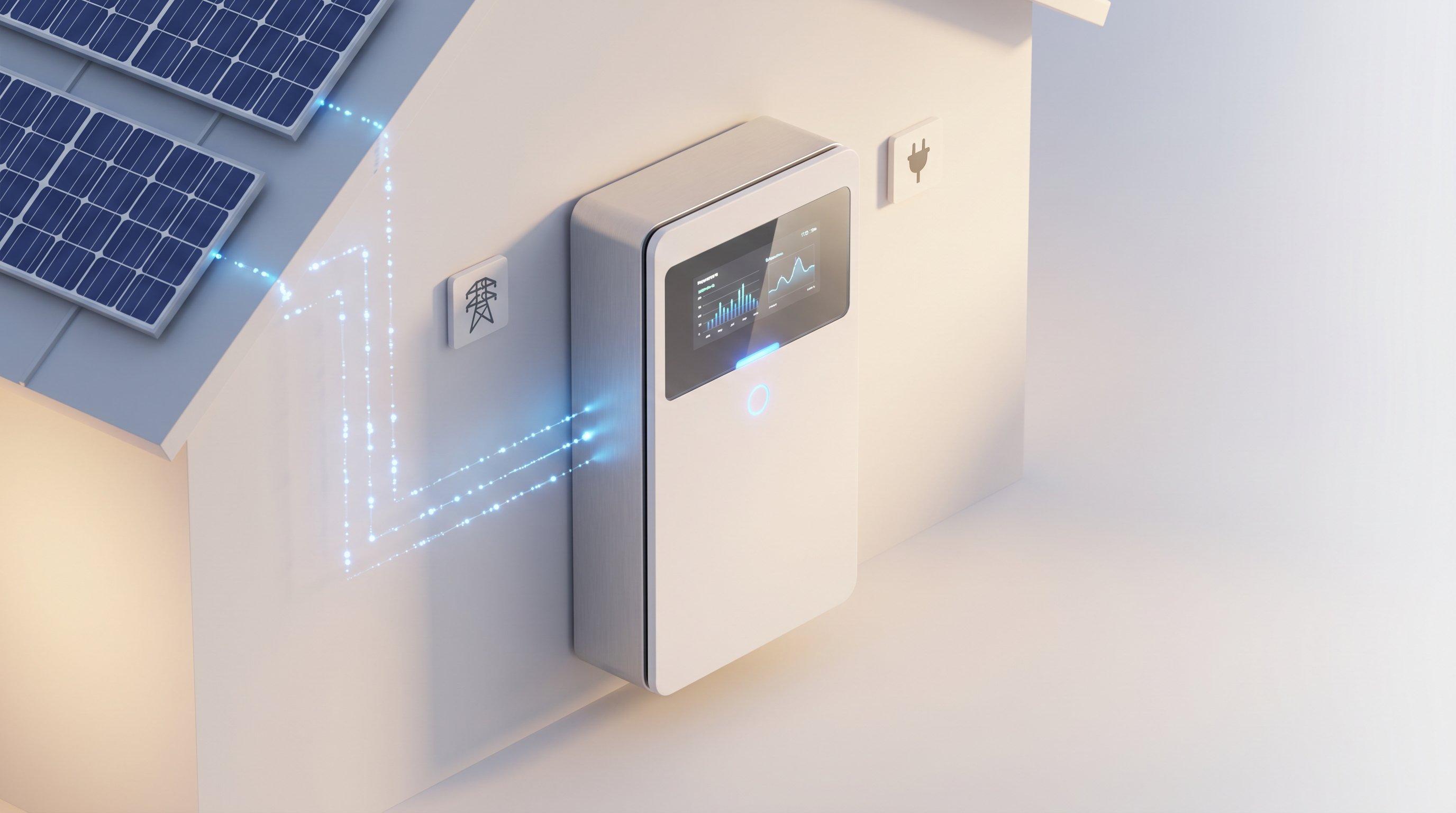
A home energy storage system (ESS) is essentially a large rechargeable battery, or bank of batteries, that stores electrical energy for use whenever you need it. Think of it as a reservoir: instead of water, you're capturing kilowatt-hours.
Most systems charge from solar panels during the day, banking that clean energy for evening use or emergencies. Others pull electricity from the grid during off-peak hours when rates are cheapest, then discharge it during expensive peak windows. Either way, the core idea is the same: store power when it's abundant or affordable, use it when it's scarce or costly.
Unlike traditional backup generators that burn fuel, emit fumes, and require regular maintenance, a home ESS operates silently and instantly. The moment grid power drops, your inverter kicks in, lights stay on, refrigerators keep humming, and Wi-Fi doesn't blink. For solar households, an ESS unlocks true self-sufficiency: for grid-tied homes, it's insurance and savings rolled into one sleek cabinet.
How Home Energy Storage Systems Work
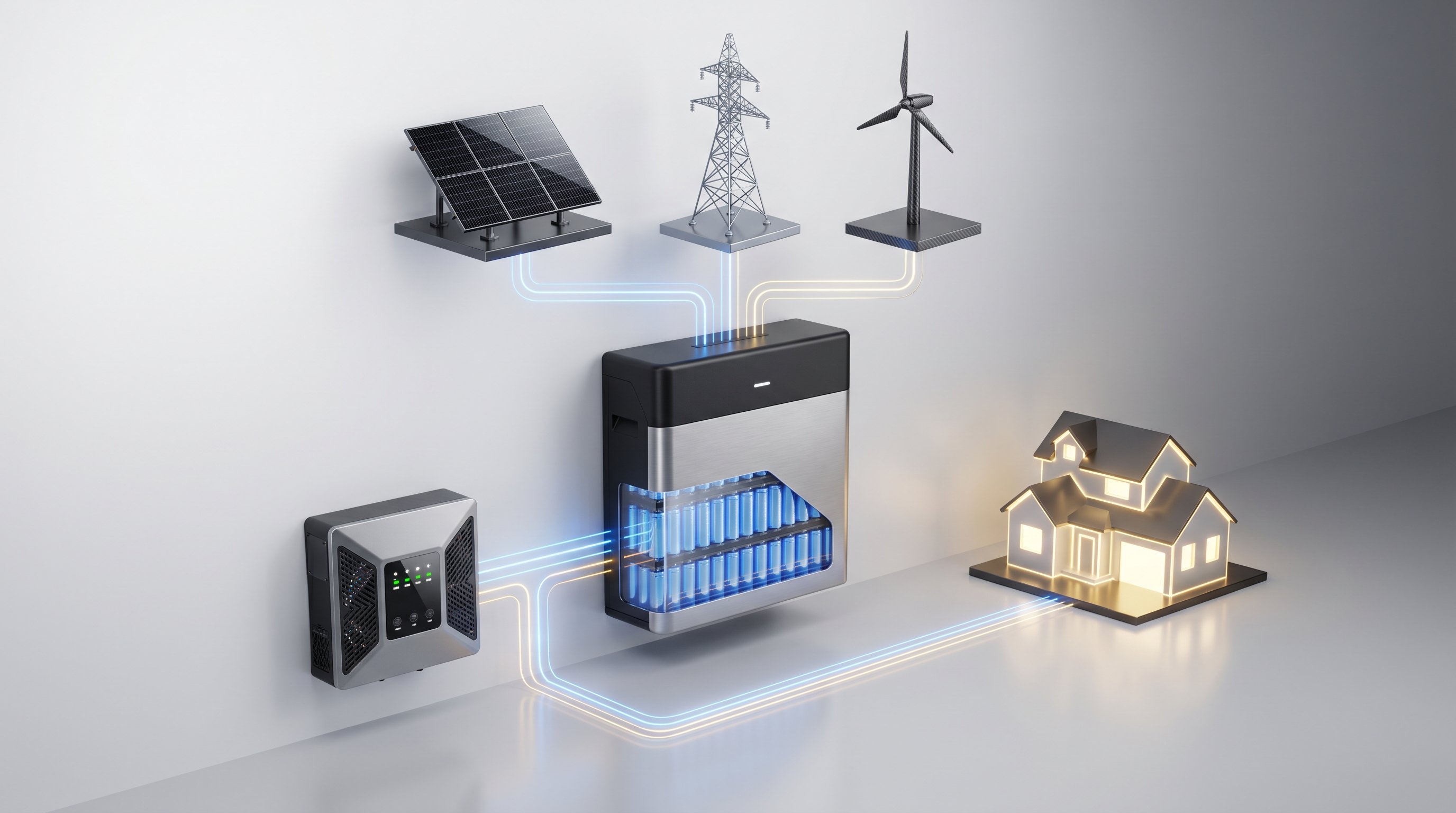
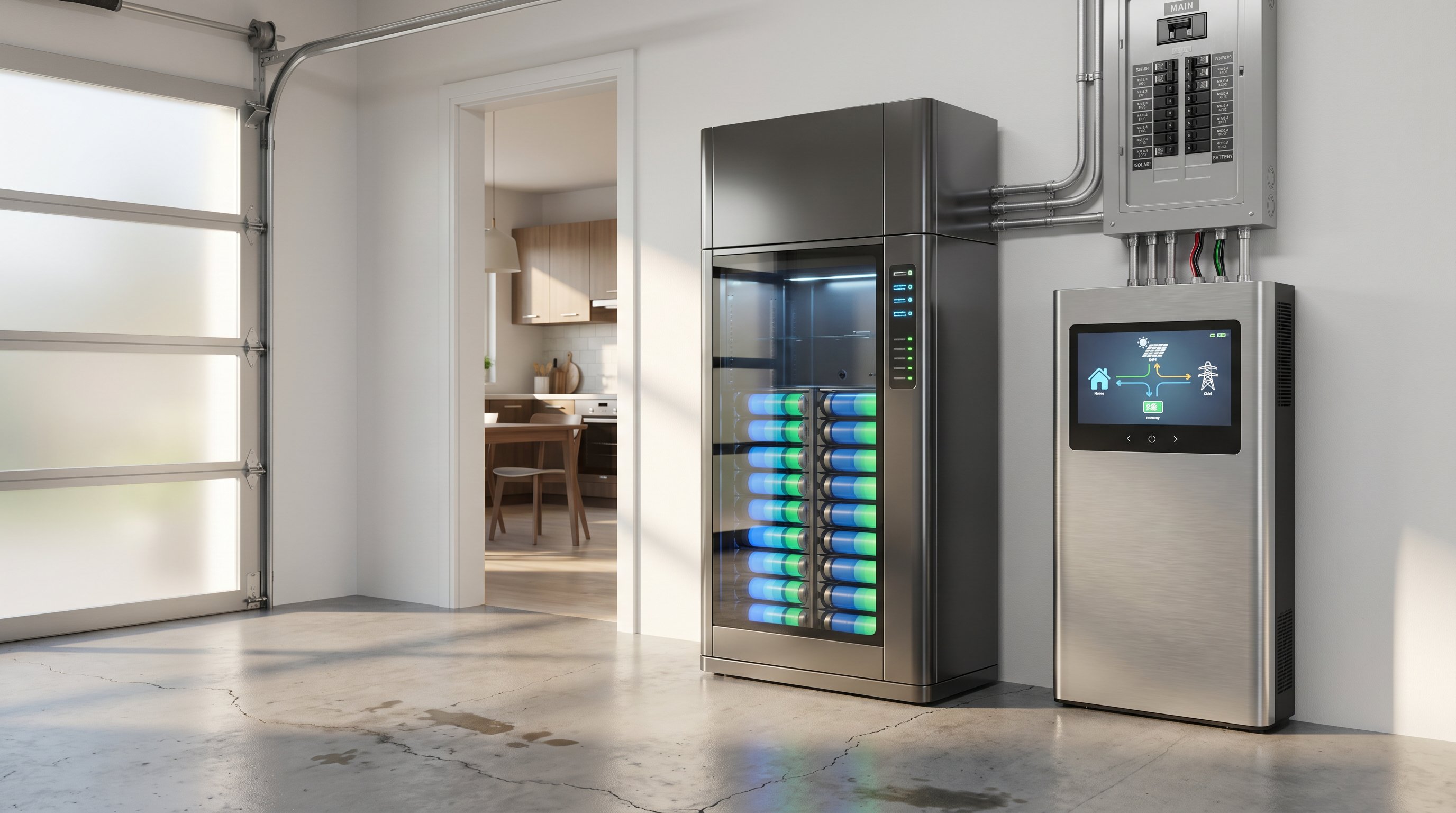
At its heart, every home energy storage system has three main components: an energy input, battery storage, and an inverter.
- Energy Input: Electricity flows in from solar panels, the utility grid, a wind turbine, or even a backup generator. When production exceeds consumption, say, your solar array is cranking at noon but you're at work, that surplus charges the battery.
- Battery Storage: The DC (direct current) energy is stored in battery cells. Capacity is measured in kilowatt-hours (kWh): a 10 kWh battery can theoretically deliver 1 kW for ten hours, or 10 kW for one hour.
- Inverter: Because your home runs on AC (alternating current), the inverter converts stored DC power back to AC whenever you draw from the battery. Many modern systems integrate the inverter into a single all-in-one unit, simplifying installation and wiring.
During normal operation, the system intelligently decides whether to store energy, send it to your appliances, or export it to the grid. When an outage hits, the inverter seamlessly switches to battery mode, often in milliseconds, so critical loads never lose power.
Integration with Solar, Grid, and Alternative Power Sources
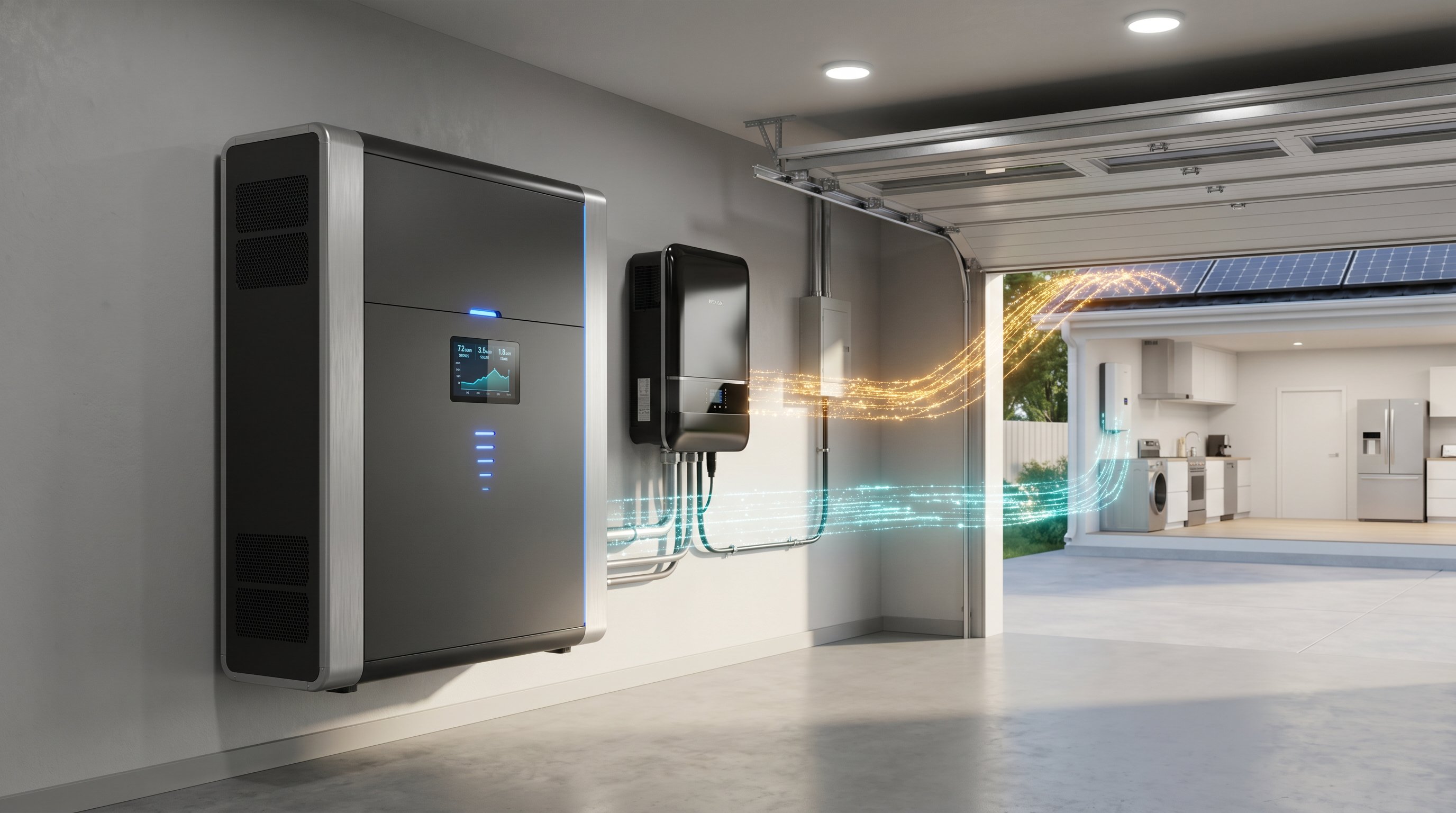
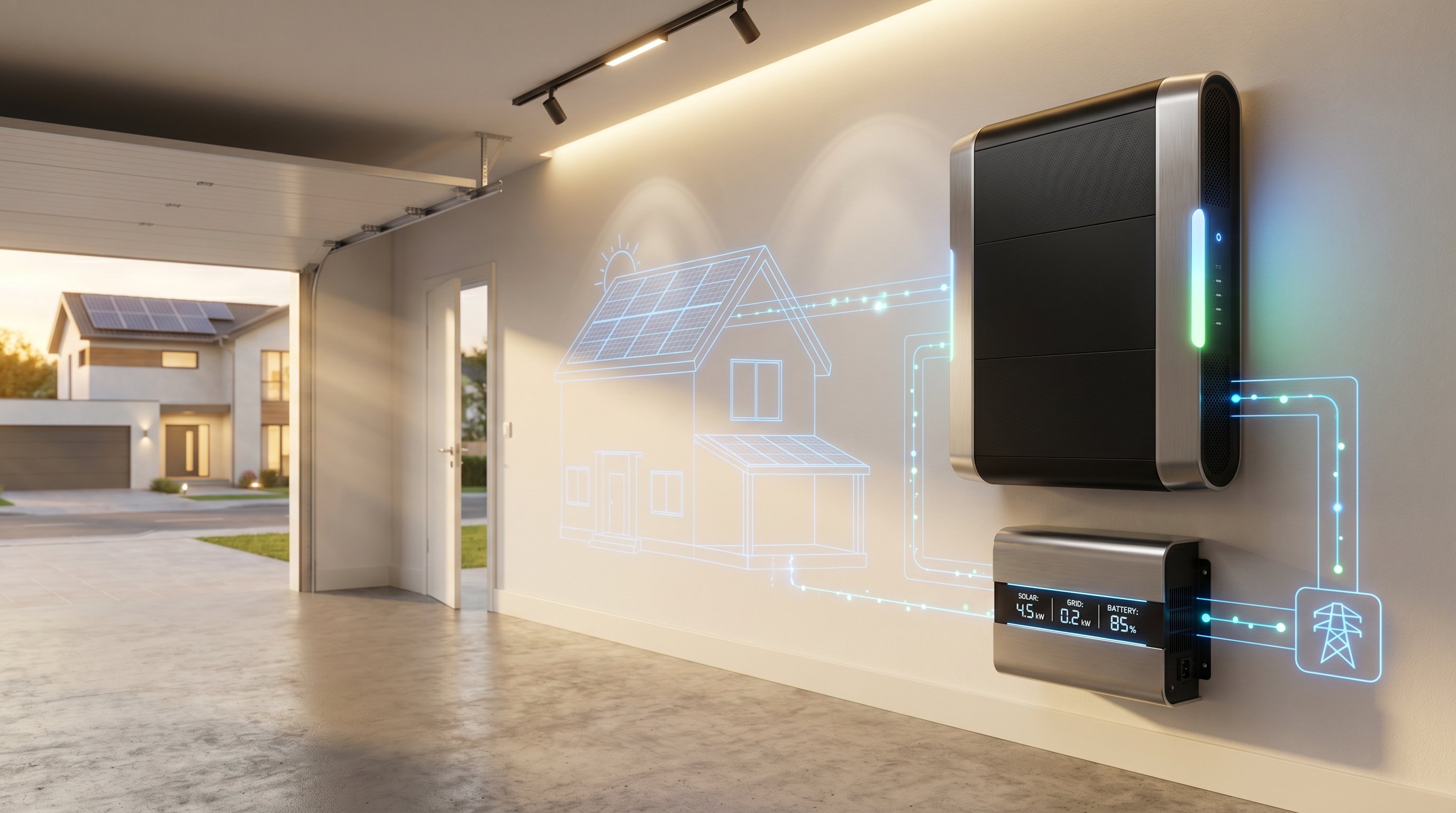
Home energy storage shines brightest when paired with solar panels. Excess daytime generation charges your batteries instead of disappearing into the grid for minimal compensation. Come evening, you're running on your own stored sunshine, no utility bill spike required.
Grid-tied setups let you charge from the utility during cheap off-peak hours and discharge during pricey peak times, a strategy called time-of-use arbitrage. If your utility offers dynamic pricing, the savings add up fast.
For off-grid properties or remote cabins, an ESS is non-negotiable. Solar and wind can be intermittent: batteries smooth out the gaps. Some homeowners also connect backup generators: the battery handles short outages silently, and the generator only fires up for extended events, saving fuel and wear.
Real-world examples? The LG Home 8 scales up to 57.6 kWh and supports both AC-coupled (grid-tied) and DC-coupled (direct solar) configurations. Tesla Powerwall bundles an integrated inverter for streamlined solar pairing. Generac systems let you layer in propane or natural-gas generators for multi-day resilience. And pioneers like Humless offer modular BESS that integrate effortlessly with solar, grid, wind, or generator inputs, giving you total flexibility.
Key Benefits of Installing a Home Energy Storage System
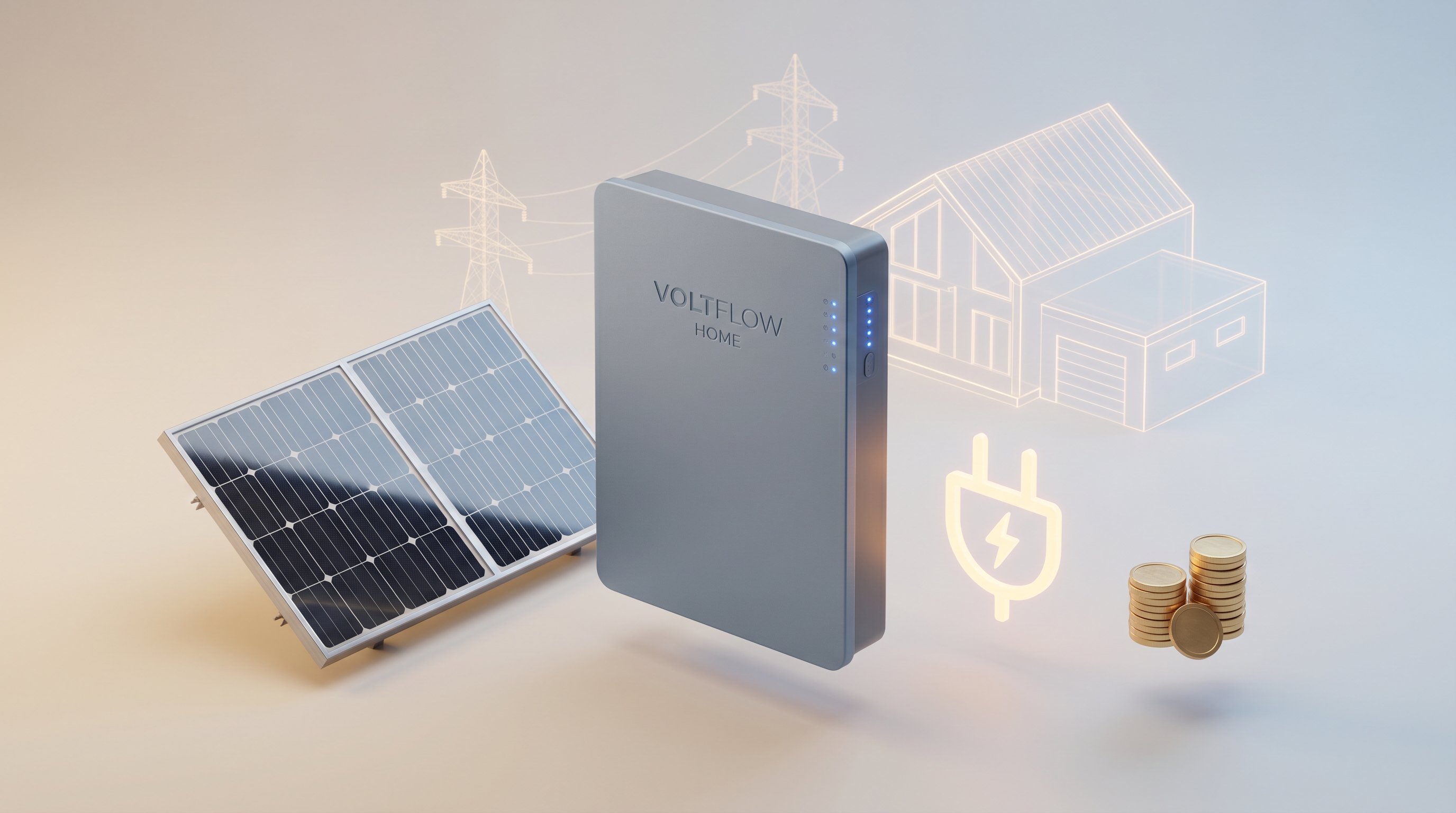
Why bother with batteries? Here's what you actually gain:
Instant, Silent Backup Power
No pull-cords, no exhaust fumes, no delayed startup. The second the grid fails, your inverter takes over. Refrigerators stay cold, medical devices keep running, and you're not fumbling for flashlights.
Reduced Grid Reliance and Lower Bills
By storing cheap or free energy (solar or off-peak grid power) and using it during expensive peak hours, you slash your utility costs. In states with time-of-use rates or demand charges, the payback period can be surprisingly short.
Maximized Solar Investment
Without storage, surplus solar often gets exported to the grid for a fraction of what you pay to import power at night. A battery lets you consume every watt you generate, dramatically boosting your return on investment.
Energy Independence and Resilience
Whether you're weathering wildfire-season power shutoffs, hurricane blackouts, or grid instability, a home ESS keeps your household humming. Off-grid owners enjoy true autonomy: grid-tied folks gain peace of mind.
Scalability for Whole-Home Coverage
Start with one battery module and expand as your needs grow. Many systems stack or link together, so you can power a few critical circuits today and your entire home tomorrow.
Bottom line: a home energy storage system isn't just a gadget, it's control, savings, and security wrapped into one investment.
Choosing the Right Battery Technology: Why LiFePO4 Leads the Market
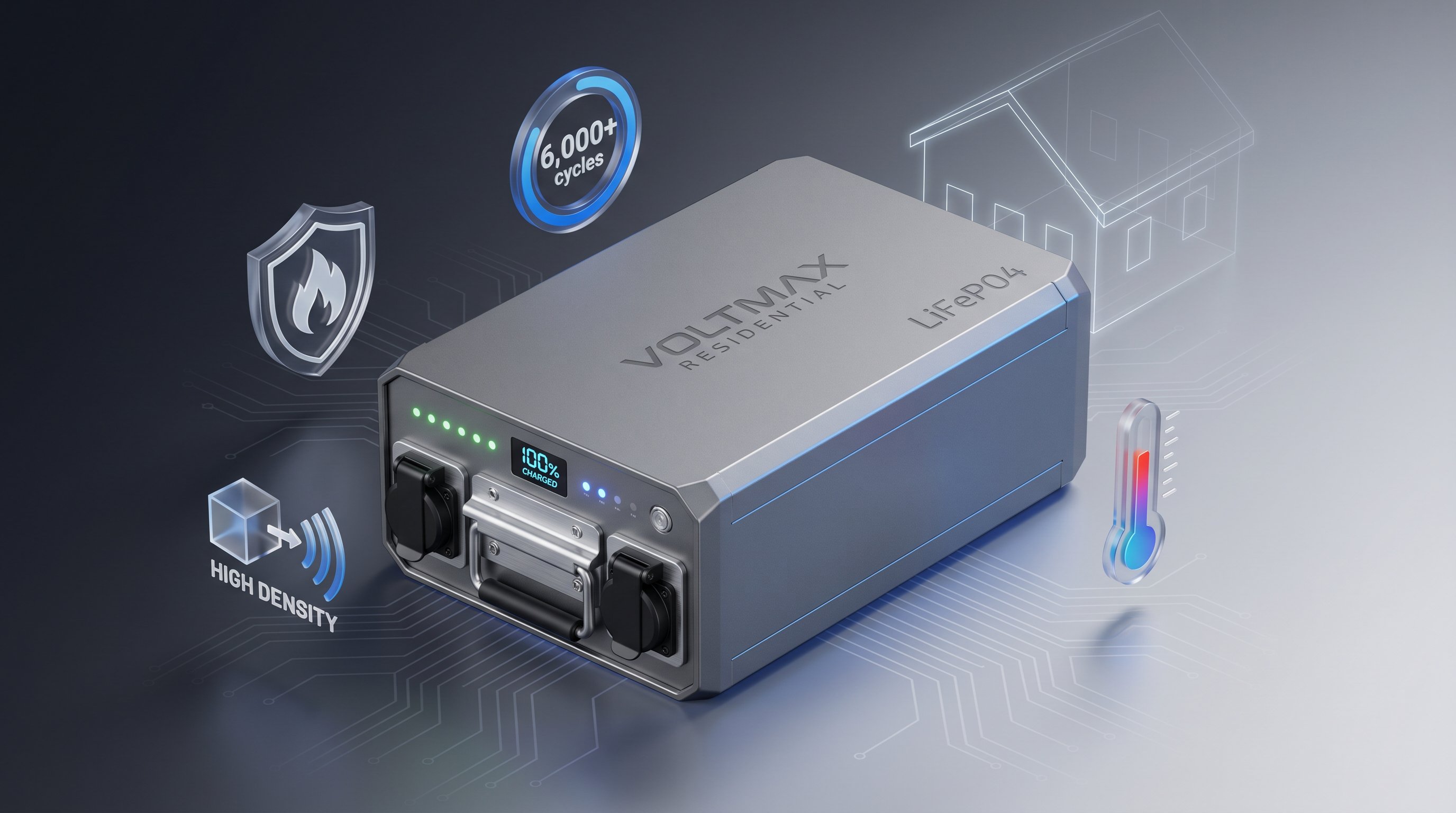
Not all lithium batteries are created equal. The chemistry inside your ESS determines safety, lifespan, and performance.
LiFePO4 (lithium iron phosphate) has emerged as the gold standard for residential and commercial energy storage. Here's why:
- Safety First: LiFePO4 cells are thermally stable and won't suffer thermal runaway, the catastrophic chain reaction that plagues some lithium-ion chemistries. No risk of fire or explosion under normal (or even abusive) conditions.
- Longevity: Expect 10-year warranties and 6,000+ charge cycles. That translates to a decade or more of daily use before capacity starts to fade.
- High Energy Density: Pack serious power into a compact footprint. A 16 kWh LiFePO4 battery can back up an average home for hours, or even days, without taking up your entire garage.
- Wide Temperature Range: LiFePO4 batteries tolerate cold better than many alternatives, crucial for northern climates or unheated outbuildings.
Real-world products bear this out. BigBattery's HUSKY and ETHOS lines use LiFePO4 exclusively. EG4's WallMount delivers 16 kWh in a sleek, IP65/IP67-rated enclosure. And Humless has pioneered LiFePO4-based BESS since 2010, proving the technology's reliability across thousands of installations.
If a vendor offers a different chemistry, NMC, NCA, or generic "lithium-ion", ask hard questions about cycle life, thermal management, and certifications. For home use, LiFePO4 is simply the safer, smarter bet.
Essential Features to Look for When Selecting Your System
Shopping for an ESS can feel overwhelming. Cut through the noise by prioritizing these must-haves:
Smart Battery Management System (BMS)
The BMS is the brain of your battery, balancing cell voltages, monitoring temperature, and protecting against overcharge or deep discharge. A quality BMS extends lifespan and prevents failures.
IP-Rated Enclosures
If your battery lives in a garage, shed, or outdoor enclosure, look for IP65 or IP67 ratings, dust-tight and protected against water jets or temporary immersion. This matters in humid, dusty, or freezing environments.
Remote Monitoring (Bluetooth/Wi-Fi)
Real-time dashboards let you track state of charge, energy flow, and system health from your phone. You'll spot issues early and optimize usage without guesswork.
All-in-One Design
Integrated inverter, charge controller, and battery in a single cabinet means fewer components, cleaner wiring, and often lower installation costs. Humless and Tesla Powerwall both lean heavily into this streamlined approach.
Modular and Expandable
Your energy needs will change. Pick a system that lets you add capacity, whether by stacking batteries, daisy-chaining units, or slotting in expansion modules.
Capacity, Certifications, and Scalability Considerations
Capacity: Start by calculating your daily energy use and desired backup duration. A typical U.S. home uses 25–30 kWh per day: if you want to cover essentials (fridge, lights, Wi-Fi, medical devices), 5–10 kWh may suffice. For whole-home backup, consider 14–16 kWh per unit. The LG Home 8 offers 14.4 kWh modules that stack to 57.6 kWh: EG4's WallMount clocks in at 16 kWh.
Certifications: UL 1973 (battery safety) and UL 9540 (ESS safety) are non-negotiable for grid-tied installations and many jurisdictions. These certifications prove the system has passed rigorous testing for fire, electrical, and environmental hazards. Don't skip this, insurance and local codes often require it.
Scalability: Life changes. Maybe you add an EV, install a pool pump, or expand your solar array. Choose a system designed for growth. Look for firmware that supports parallel operation, plug-and-play expansion kits, and clear documentation on max stack limits.
Cold-Weather Features: If you live in a freeze zone, verify the battery includes heating pads or operates safely below 32°F. LiFePO4 handles cold better than most, but active thermal management is still a plus.
Cost: Budget $5,000–$10,000 per installed battery, depending on capacity, brand, and labor. Federal tax credits (check the latest ITC rules) and state incentives can shave 30% or more off upfront costs, making 2026 an especially attractive window for investment.
Frequently Asked Questions About Home Energy Storage Systems
What is a home energy storage system and how does it work?
A home energy storage system (ESS) is a rechargeable battery that stores electrical energy from solar panels or the grid for later use. It has three main components: an energy input (solar/grid), battery storage measured in kilowatt-hours (kWh), and an inverter that converts DC power to AC for your home appliances. During outages, the inverter switches to battery mode instantly, often in milliseconds.
How much does a home energy storage system cost to install?
A typical home energy storage system costs $5,000–$10,000 per installed battery, depending on capacity, brand, and labor costs. Federal tax credits and state incentives can reduce upfront costs by 30% or more, making installation significantly more affordable in 2026.
Can I use a home energy storage system with solar panels?
Yes, home energy storage systems pair perfectly with solar panels. Excess daytime solar generation charges your battery instead of exporting it to the grid for minimal compensation. Come evening, you run on stored solar energy, eliminating nighttime utility bill spikes and maximizing your solar investment return.
Why is LiFePO4 the best battery technology for home energy storage?
LiFePO4 (lithium iron phosphate) is the industry standard for residential energy storage due to superior safety, no risk of thermal runaway, 10-year warranties, 6,000+ charge cycles, high energy density, and tolerance for cold temperatures. Products like EG4 WallMount (16 kWh) and BigBattery HUSKY use this proven chemistry.
What certifications should I look for when choosing an energy storage system?
Look for UL 1973 (battery safety) and UL 9540 (ESS safety) certifications. These prove your system has passed rigorous testing for fire, electrical, and environmental hazards. Most jurisdictions and insurance policies require these certifications for grid-tied installations.
How much battery capacity do I need for whole-home backup?
For essential appliances (fridge, lights, Wi-Fi, medical devices), 5–10 kWh typically suffices. For whole-home backup, aim for 14–16 kWh per unit. Since the average U.S. home uses 25–30 kWh daily, stackable systems like LG Home 8 (14.4 kWh modules) let you expand as needs grow.