Energy independence isn't some far-off dream anymore, it's happening right now in homes across America. Blackouts, skyrocketing utility rates, and the push toward renewable energy have made home battery storage one of the hottest investments for homeowners in 2026. These systems do more than just keep your lights on when the grid goes down: they put you in control of when, how, and how much energy you use.
Whether you're a solar enthusiast looking to maximize your panels' output, a business owner protecting critical operations, or someone living off-grid, battery storage is the backbone of true energy independence. Let's break down everything you need to know.
Key Takeaways
- Home battery storage systems allow homeowners to generate, store, and use their own electricity independently from the grid, providing backup power during outages and reducing reliance on utility rates.
- Lithium iron phosphate (LiFePO4) batteries dominate residential home battery storage due to their safety, durability, and ability to handle thousands of charge cycles without thermal issues.
- Pairing home battery storage with solar panels maximizes energy savings by capturing excess daytime power and using it during peak-rate evening hours, often paying for itself over time.
- DC-coupled systems boost efficiency by 5–10% when installing batteries and solar simultaneously, while AC-coupled systems offer flexibility for retrofitting batteries to existing solar arrays.
- Capacity and depth of discharge (DoD) are critical factors when choosing home battery storage; typical homes need 10–15 kWh with systems offering up to 100% DoD for maximum usable energy.
- Federal tax credits available in 2026 significantly reduce the effective cost of home battery storage installations when combined with solar panels.
What Is Home Battery Storage and How Does It Work?
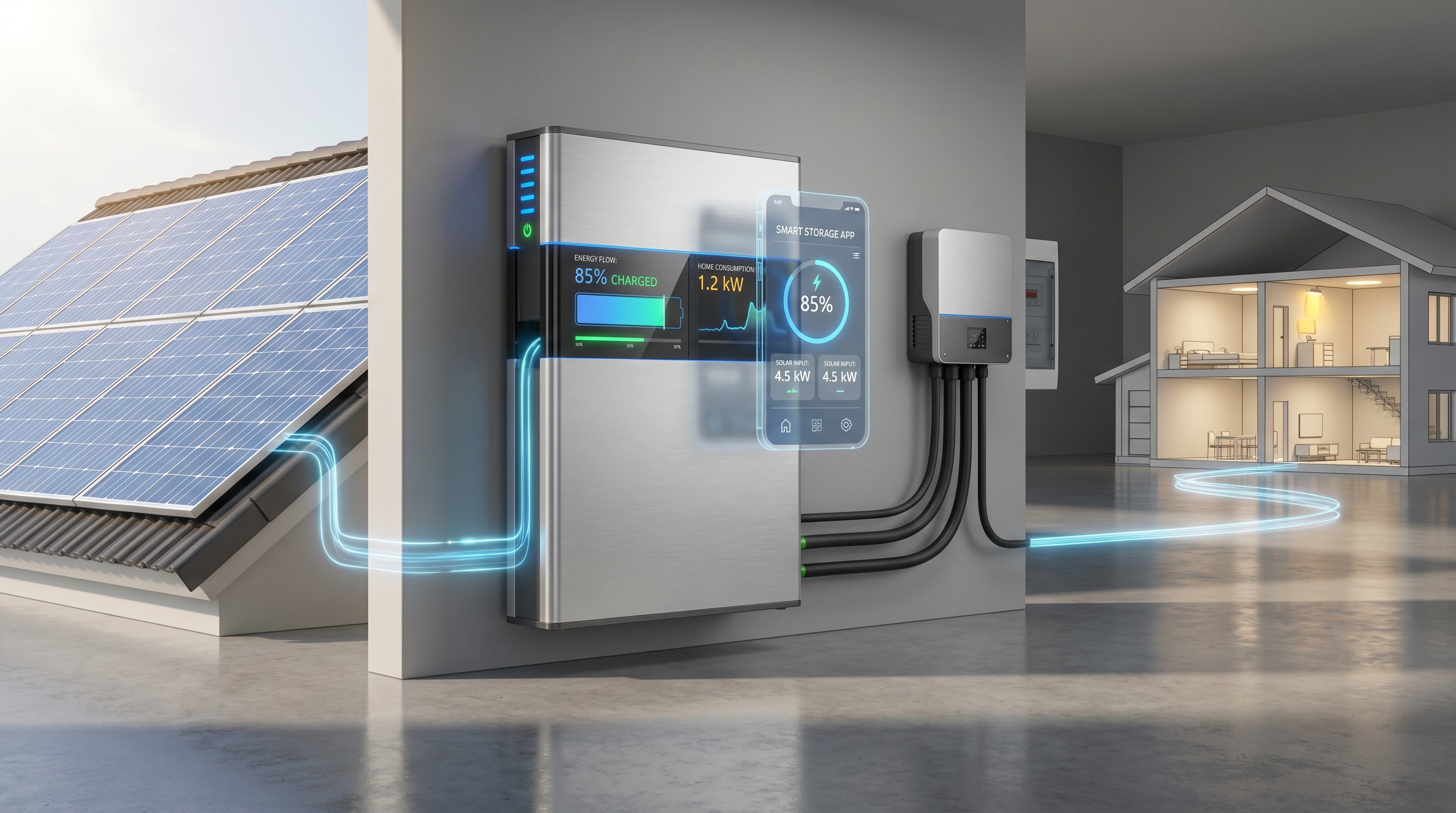
At its core, home battery storage is a stationary rechargeable system, usually lithium-ion, that captures and stores excess electricity generated by your solar panels or pulled from the grid. Instead of sending surplus energy back to the utility (often for pennies on the dollar), you bank it for later use: at night, during power outages, or when electricity rates spike.
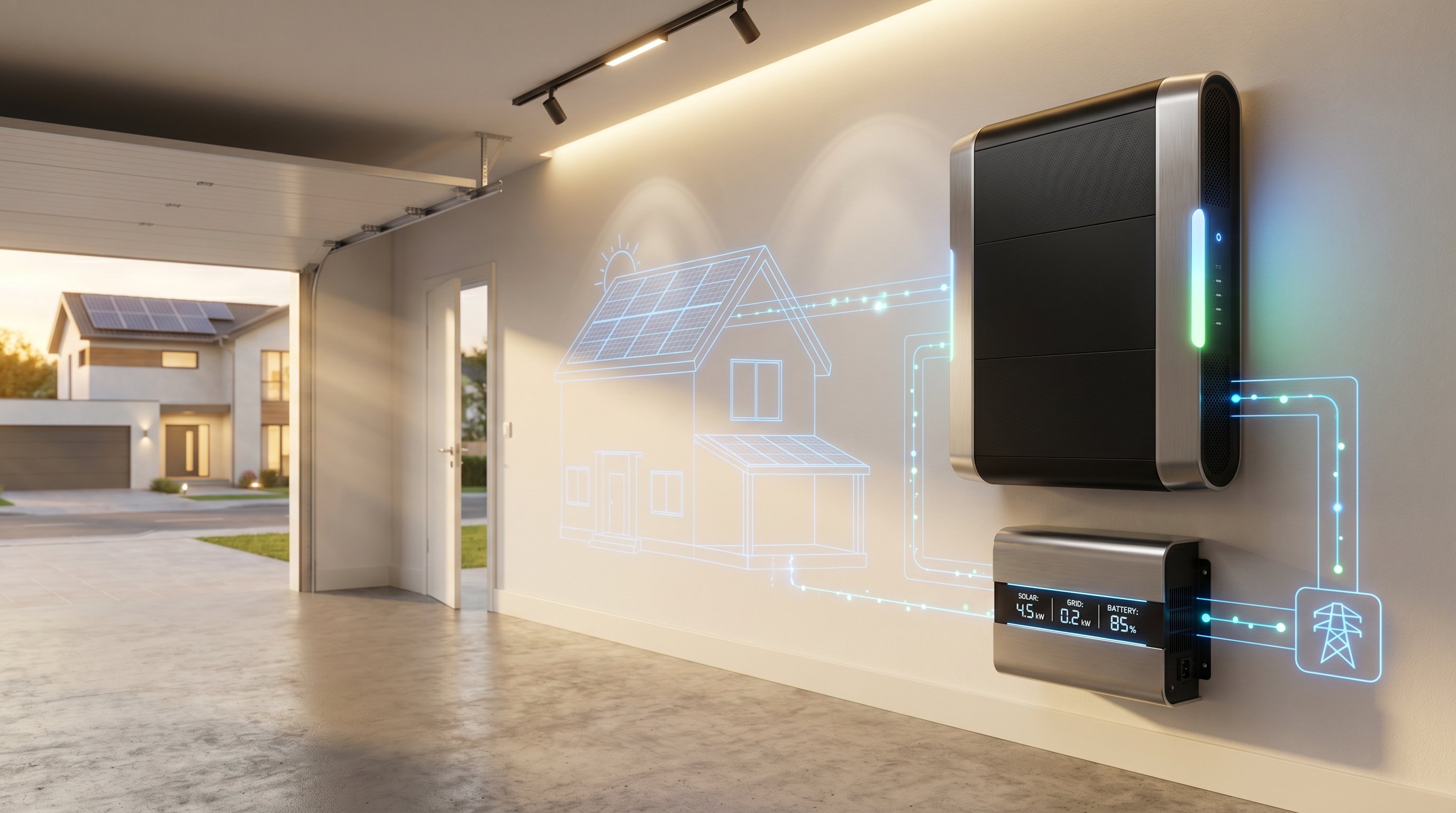
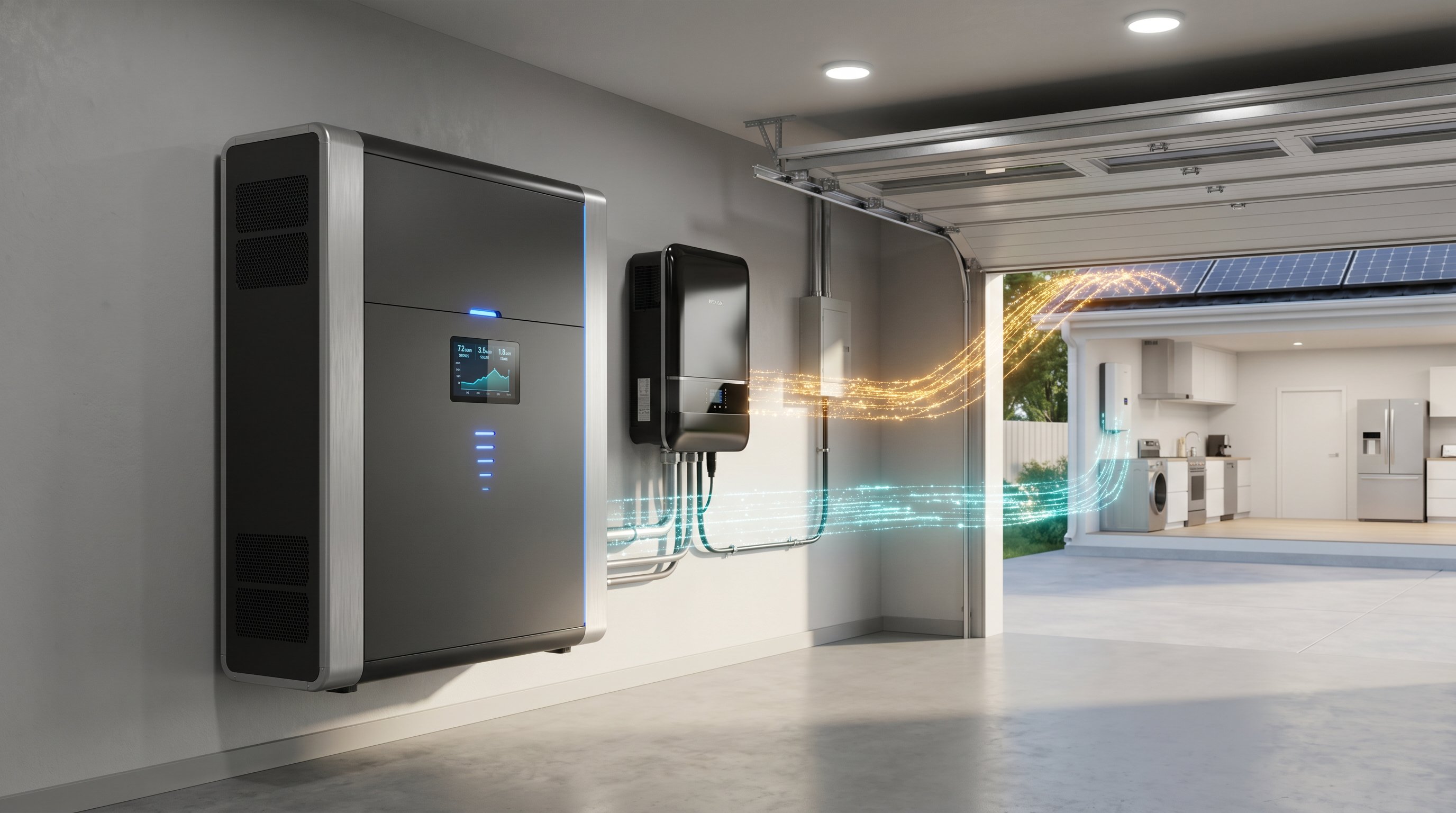
Here's the process in simple terms. Solar panels generate direct current (DC) electricity during daylight hours. If your home doesn't need all that power immediately, the excess flows into your battery system for storage. When you need electricity, say, after sunset or during a blackout, the battery discharges that stored DC power. An inverter then converts it to alternating current (AC), the type your appliances and outlets use.
Behind the scenes, a battery management system (BMS) orchestrates everything: monitoring charge levels, optimizing discharge cycles, and protecting against overcharging or overheating. Most modern systems come with smartphone apps that let you track energy flow in real time, schedule charging during off-peak hours, and even prioritize which loads get power first during an outage. It's like having a mini utility company in your garage or basement, and you're the CEO.
Key Benefits of Installing Home Battery Storage
Why are so many homeowners and businesses jumping on the battery bandwagon? The benefits go way beyond just having backup power, though that alone is a game-changer.
Energy Independence and Backup Power
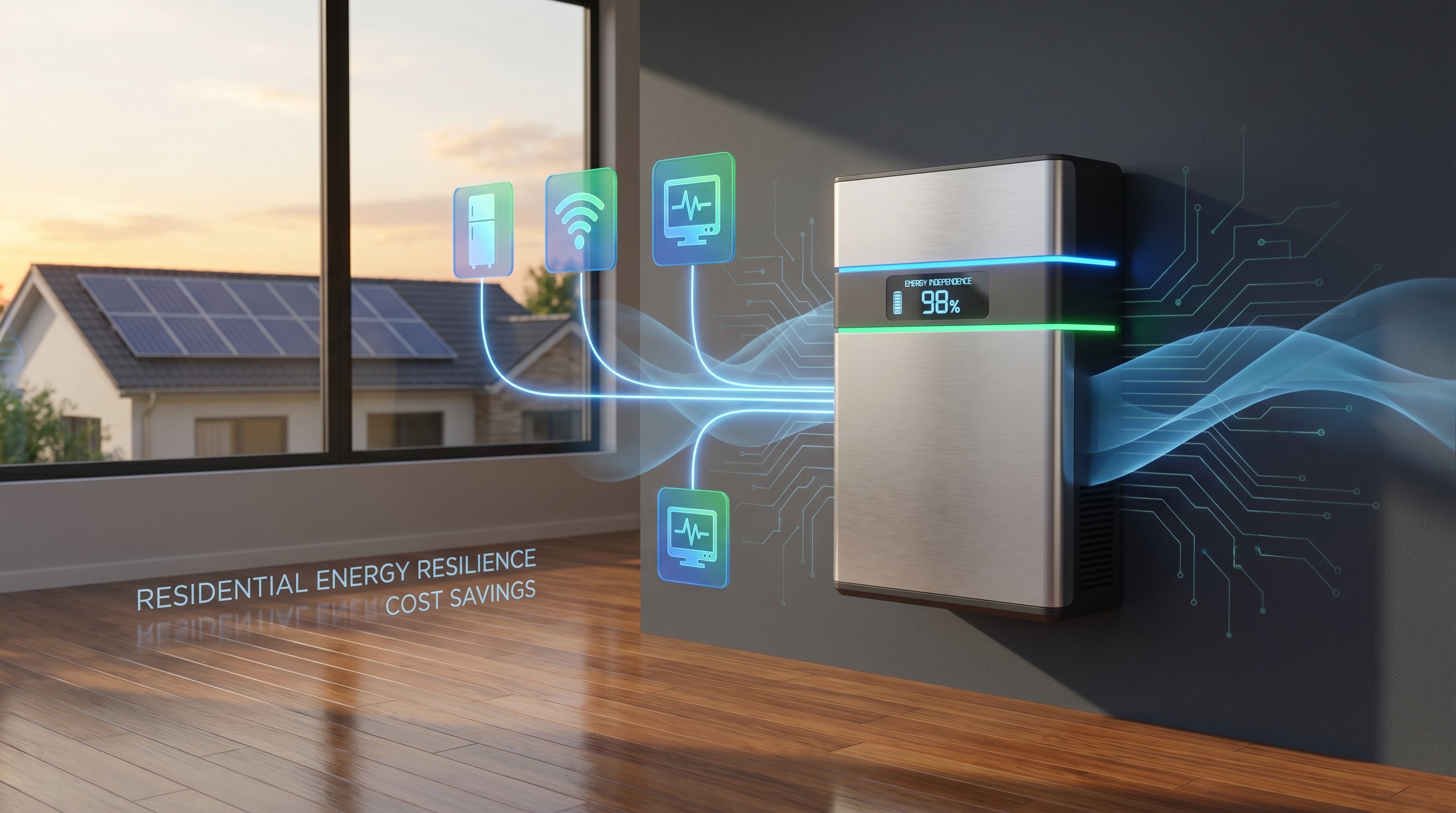
The biggest draw is autonomy. Pairing a battery with solar panels means you can generate, store, and use your own electricity without relying on the grid. During outages, whether from storms, wildfires, or grid failures, your home stays powered while your neighbors scramble for flashlights.
For off-grid property owners, battery storage isn't optional: it's essential. You can live comfortably in remote areas without noisy, fuel-guzzling generators. And for those who are grid-tied but want resilience, batteries isolate your home from external disruptions, keeping critical systems, refrigerators, medical devices, Wi-Fi, running smoothly.
Companies like Humless have spent 15+ years refining energy storage systems that seamlessly integrate solar, grid, wind, and even generator inputs, giving you true flexibility and control no matter your power source.
Cost Savings and Grid Resilience
Beyond backup, there's serious money to save. Battery storage maximizes self-consumption, meaning you use the solar power you generate instead of buying expensive electricity during peak hours. Many utilities charge time-of-use rates, where afternoon and evening power costs two or three times more than midday rates. Your battery soaks up cheap (or free) solar energy during the day and feeds it back to your home when rates spike.
Some regions even offer net metering or buyback programs, where you can sell excess stored energy back to the grid for credits or cash. And as the grid becomes more stressed by extreme weather and aging infrastructure, having your own reserve reduces dependence and shields you from rate hikes.
In short: batteries pay for themselves over time while insulating you from an increasingly unpredictable grid.
Types of Home Battery Storage Systems
Not all batteries are created equal. The right system depends on your setup, budget, and how you plan to use stored energy. Here's a rundown of the main types you'll encounter.
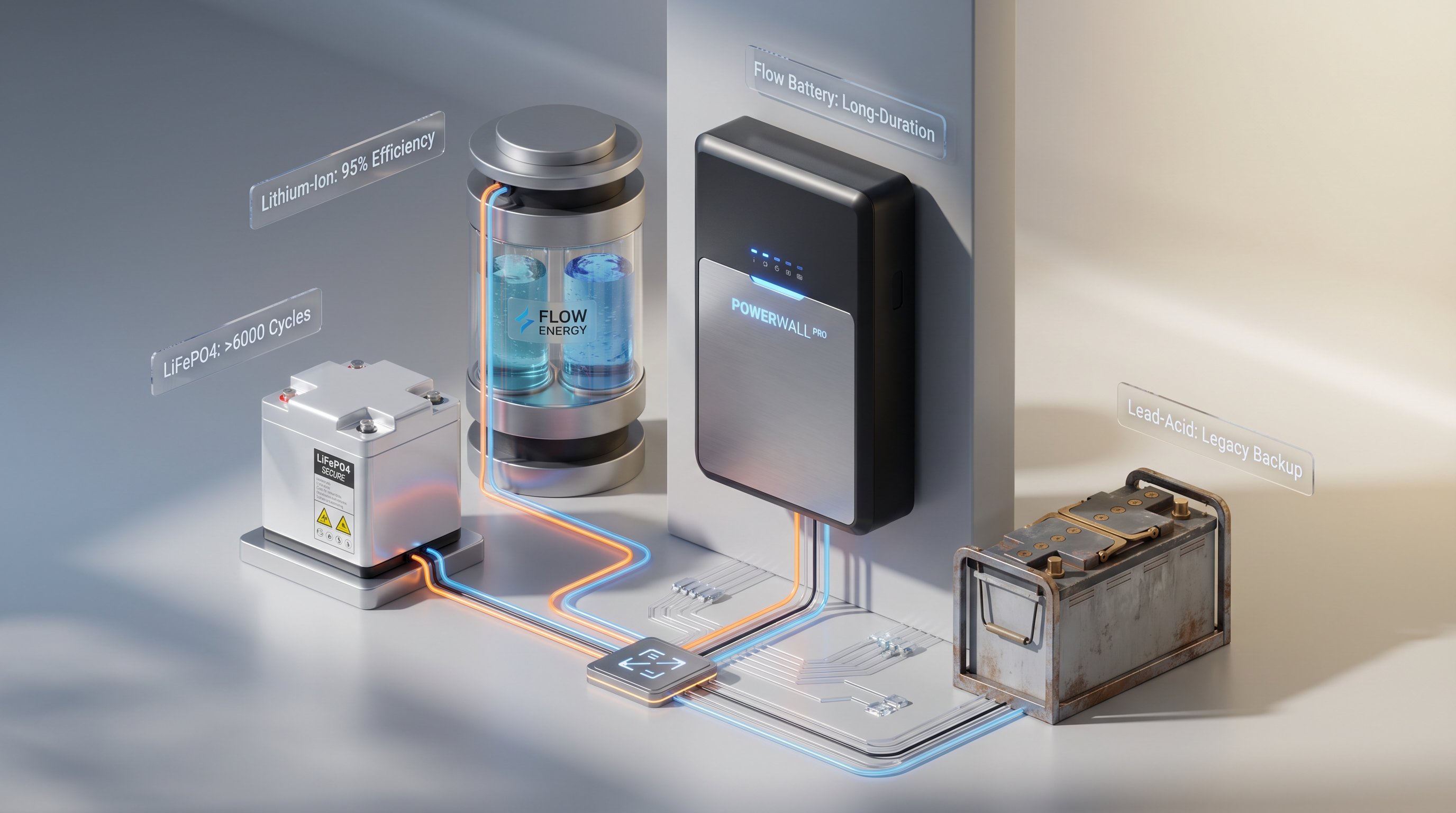
Lithium-ion batteries dominate the residential market, and for good reason. They're compact, efficient, and long-lasting. Within this category, lithium iron phosphate (LiFePO4) stands out as the safer, more durable variant. Unlike standard lithium-ion, LiFePO4 batteries resist thermal runaway (a fancy term for catching fire) and offer thousands more charge cycles, making them ideal for daily use in homes and businesses. Humless specializes in UL-certified LiFePO4 systems, delivering proven reliability since 2010.
Beyond chemistry, coupling matters. DC-coupled systems connect solar panels directly to the battery in DC form, skipping an extra conversion step. This boosts efficiency, often by 5–10%, and works beautifully if you're installing solar and storage at the same time. AC-coupled systems, on the other hand, tie into your home's existing AC wiring. They're perfect for retrofitting batteries to an already-installed solar array, offering flexibility without rewiring your entire setup.
You'll also hear about flow batteries, an emerging technology that uses liquid electrolytes for potentially unlimited cycle life, though they're still pricey and bulky for residential use. Lead-acid batteries are the old guard, cheap upfront but heavy, short-lived, and less efficient. Most homeowners skip them in favor of modern lithium solutions.
Choose based on whether you're building from scratch or upgrading, and whether efficiency or retrofit ease matters more to you.
Choosing the Right Home Battery Storage System for Your Needs
Picking the right battery isn't about grabbing the biggest brand name, it's about matching capacity, features, and expandability to your actual lifestyle and energy profile.
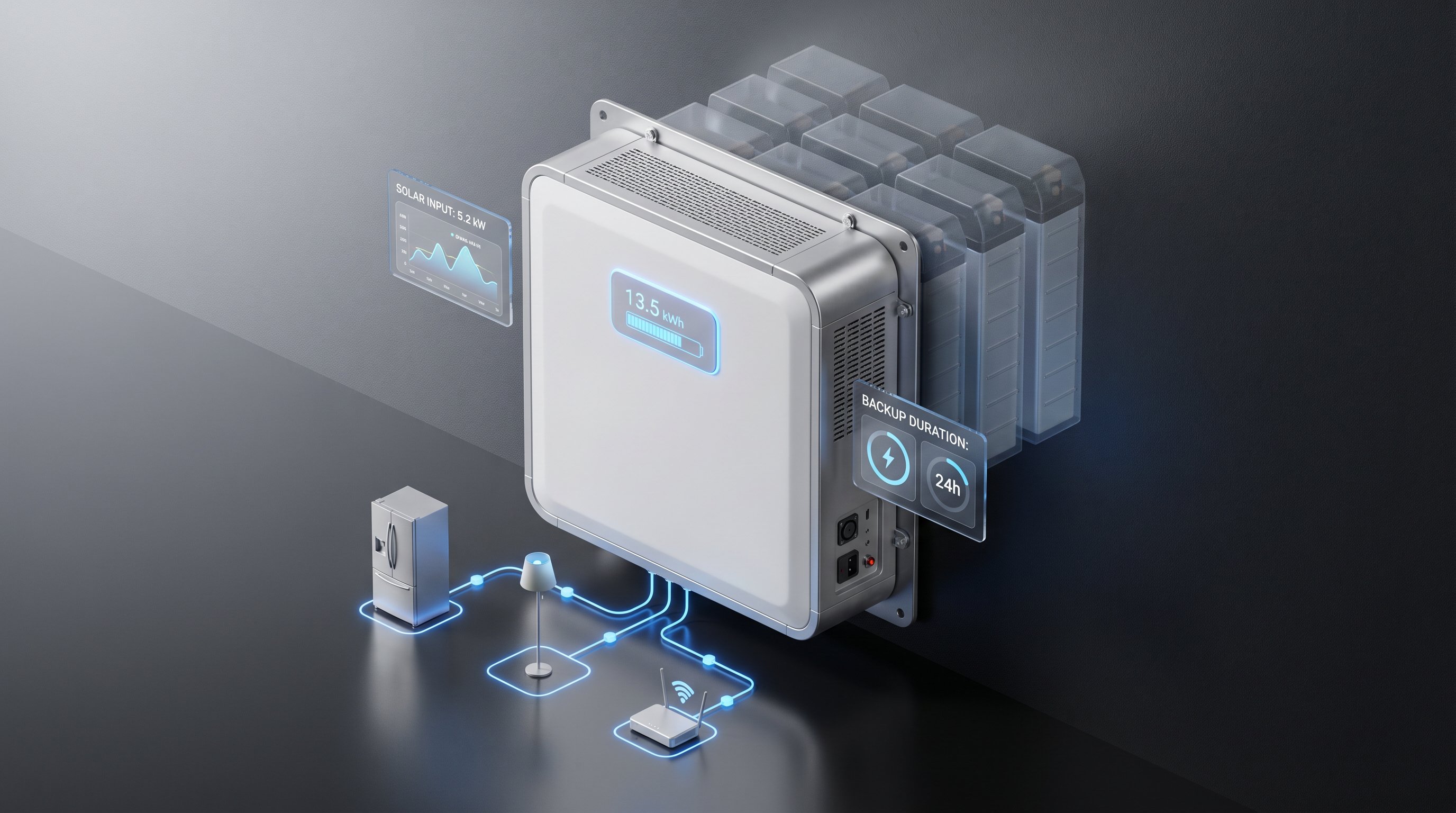
Start with capacity and depth of discharge (DoD). Capacity, measured in kilowatt-hours (kWh), tells you how much energy the battery holds. A typical home might need 10–15 kWh to cover essential loads overnight or during a day-long outage. But capacity alone doesn't tell the full story. Depth of discharge indicates how much of that stored energy you can safely use. Some older systems max out at 80% DoD: newer models, like certain Humless units and brands such as SimpliPHI, offer up to 100%, meaning you get every watt you paid for.
Next, consider solar integration. If you already have panels, check compatibility. AC-coupled batteries work with virtually any existing system, while DC-coupled options require a hybrid inverter. If you're starting fresh, DC-coupled is often the smarter long-term play.
Backup needs matter too. Will you power your whole home or just critical circuits? Whole-home backup demands larger capacity and potentially multiple batteries in parallel. If you only need the fridge, lights, and modem running, a single mid-sized unit might suffice.
Finally, think about expandability. Energy needs grow, maybe you buy an EV, add a home office, or install a heat pump. Modular systems let you add more batteries as your consumption scales, without starting from scratch. Look for brands with proven track records and robust support: 24/7 customer service (like Humless offers) can be a lifesaver when integrating complex systems.
Installation and Integration Considerations
Getting a home battery up and running involves more than bolting a box to the wall. Proper installation and integration are critical for safety, performance, and maximizing your investment.
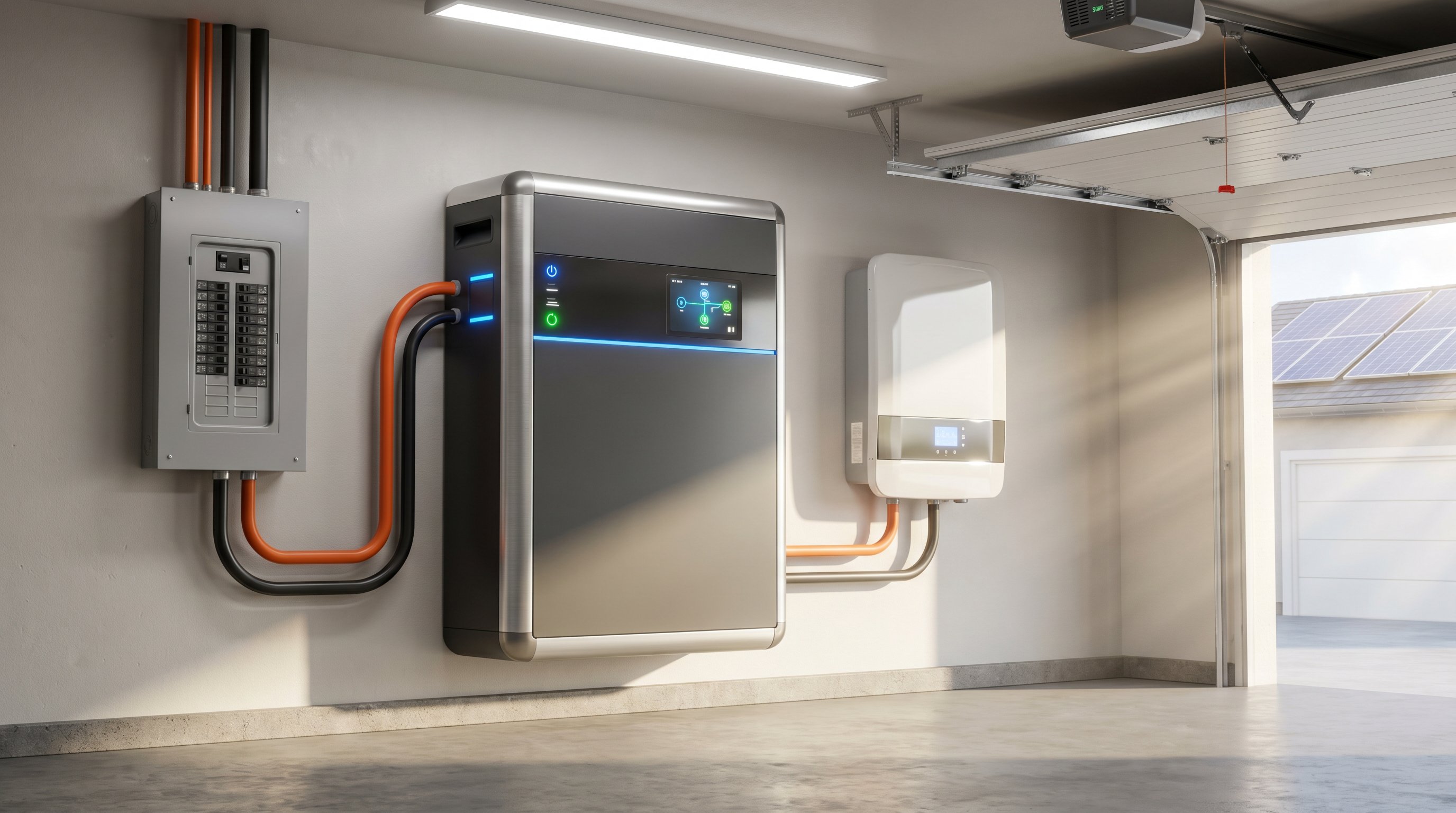
First, you'll need a compatible inverter. Hybrid inverters handle both solar input and battery charging/discharging in one unit, streamlining DC-coupled setups. If you're retrofitting an AC-coupled system, your existing solar inverter stays in place, and the battery connects through its own inverter tied to your home's AC panel.
Mounting and location come next. Most batteries install on a garage or utility room wall, though some larger units sit on the floor. They need ventilation, protection from extreme temperatures, and compliance with local fire codes. LiFePO4 batteries are safer and more tolerant of temperature swings than standard lithium-ion, but you still want a climate-controlled space if possible.
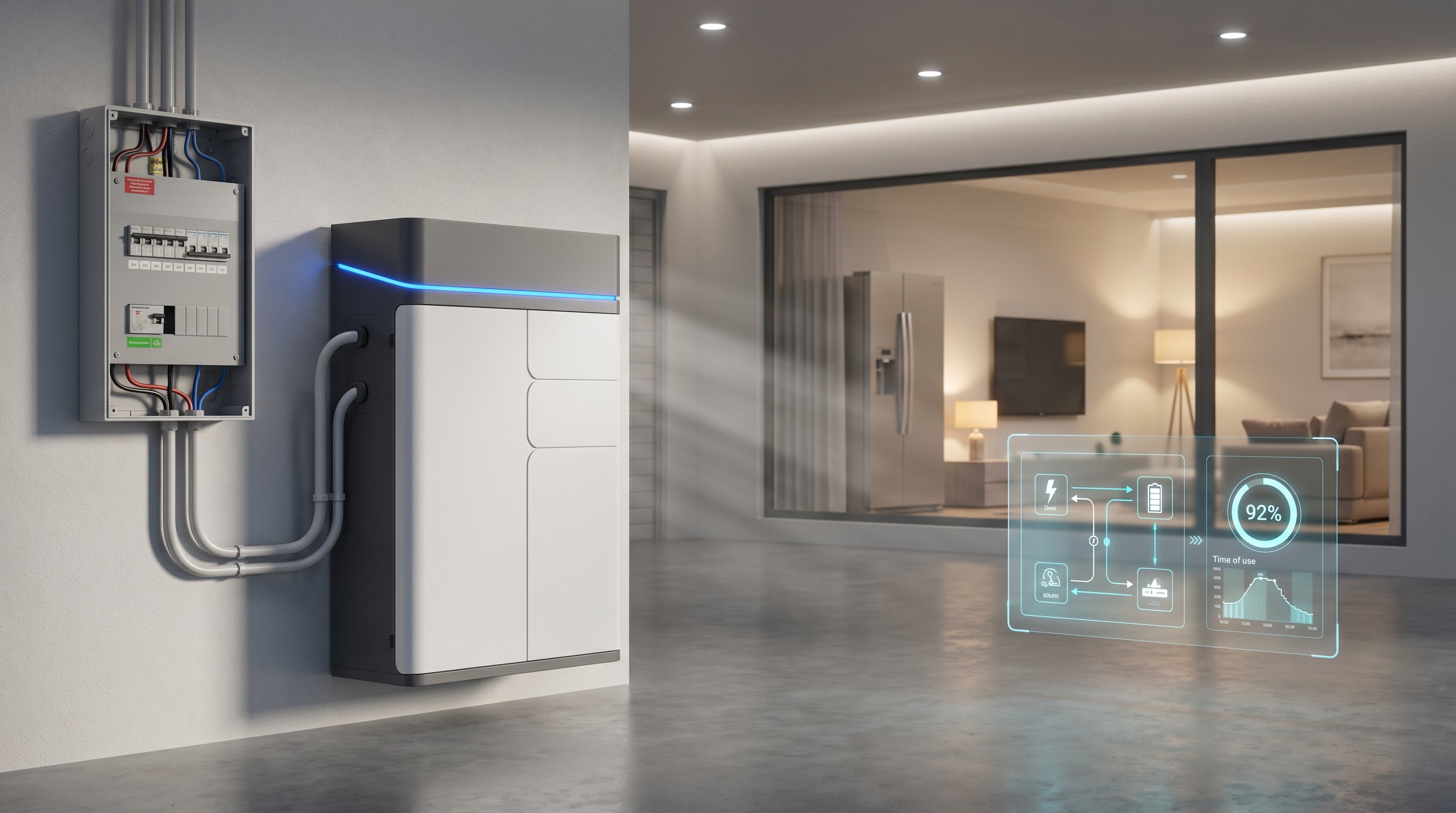
Wiring and testing follow. A licensed electrician will connect the battery to your electrical panel, integrate any monitoring systems, and run diagnostics. If you're adding backup isolation gear, like a transfer switch or critical loads panel, that requires additional work to ensure your home can "island" from the grid during outages without backfeeding power onto utility lines.
One often-overlooked factor: permit and utility approval. Many jurisdictions require inspections and interconnection agreements before you flip the switch. Your installer should handle this, but budget extra time.
Costs vary widely. A basic grid-tied battery without full backup capability runs cheaper: whole-home backup with islanding and transfer switches adds thousands. But the peace of mind, and long-term savings, usually justify the upfront investment. And with federal tax credits still available in 2026 for solar-plus-storage, the effective cost drops significantly.
Bottom line: work with experienced installers, choose UL-certified equipment, and plan for future expansion. Done right, home battery storage isn't just an upgrade, it's a transformation in how you power your life.
Frequently Asked Questions About Home Battery Storage
What is home battery storage and how does it work?
Home battery storage is a stationary rechargeable system, typically lithium-ion, that captures excess electricity from solar panels or the grid. Solar panels generate DC power during the day; excess energy charges the battery. When needed, an inverter converts stored DC power to AC electricity for your home. A battery management system monitors levels, optimizes cycles, and prevents overcharging. Most systems include smartphone apps for real-time monitoring and scheduling.
How much does home battery storage cost and what are the savings?
Costs vary widely depending on capacity and backup features. Basic grid-tied batteries cost less, while whole-home backup with isolation equipment adds thousands. However, federal tax credits available in 2026 reduce effective costs. Savings come from maximizing solar self-consumption, avoiding peak-rate electricity (2–3× higher than midday rates), and potential grid buyback programs. Batteries typically pay for themselves over time while protecting you from utility rate hikes.
What's the difference between DC-coupled and AC-coupled battery systems?
DC-coupled systems connect solar panels directly to batteries without conversion, offering 5–10% higher efficiency. They're ideal for new solar-plus-storage installations with hybrid inverters. AC-coupled systems tie into existing home AC wiring and work with already-installed solar arrays, making them perfect for retrofitting batteries without rewiring. Choose based on whether you're building from scratch or upgrading an existing system.
Can home battery storage power my whole house during an outage?
Yes, home battery storage can provide whole-home backup, but it requires sufficient capacity (typically 10–15 kWh for overnight or day-long outages) and proper installation with isolation gear like transfer switches. Alternatively, you can prioritize critical circuits—refrigerator, lights, Wi-Fi, medical devices—with smaller capacity. Modular systems let you add batteries as energy needs grow, supporting future expansion without starting over.
Why is lithium iron phosphate (LiFePO4) battery technology preferred over standard lithium-ion?
LiFePO4 batteries are safer, more durable, and longer-lasting than standard lithium-ion. They resist thermal runaway (the risk of catching fire), offer thousands more charge cycles for daily use, and tolerate temperature swings better. While more expensive upfront, UL-certified LiFePO4 systems like those from proven manufacturers deliver superior reliability and longevity, making them the smart choice for residential and business applications.
What permits and approvals do I need before installing home battery storage?
Most jurisdictions require permits, inspections, and utility interconnection agreements before installation. Your installer should handle these requirements, but budget extra time. A licensed electrician will ensure your system meets fire codes, local regulations, and utility standards. Proper permitting protects your safety, maintains warranty coverage, and ensures your battery system works seamlessly with your home's electrical setup and the grid.