
If you're weighing the jump to solar battery storage, the first question on your mind is probably: What's this actually going to cost me? And it's a smart question. Battery storage isn't cheap, most homeowners spend somewhere in the low-to-mid five figures, but it's also the key to unlocking true energy independence, reliable backup power during outages, and real savings on time-of-use electricity rates. With prices dropping 8–12% from 2025 and new incentive structures reshaping the economics in 2026, understanding the cost landscape has never been more important. This guide breaks down what you'll actually pay, what drives those numbers, and how to trim your investment without sacrificing quality.
Key Takeaways
- Solar battery storage cost typically ranges from $12,000 to $22,000 fully installed in 2026, with prices dropping 8–12% compared to the previous year due to increased manufacturing and competition.
- Battery capacity and chemistry significantly influence pricing: residential systems average 13.5 kWh at roughly $700–$1,400 per kWh installed, with lithium iron phosphate (LiFePO4) offering the best balance of safety and long-term value.
- Hidden installation costs including electrical panel upgrades ($1,500–$4,000+), permitting, and structural work can add thousands to your final bill, so always request an itemized breakdown from installers.
- State incentives like California's SGIP program (up to $1,000/kWh), virtual power plant programs ($200–$1,000 annually), and flexible financing options can significantly reduce your out-of-pocket investment.
- Understanding your solar battery storage cost structure and payback period is essential for determining whether battery backup truly pays off for your energy independence goals and local electricity rates.
What Is Solar Battery Storage and Why the Cost Matters
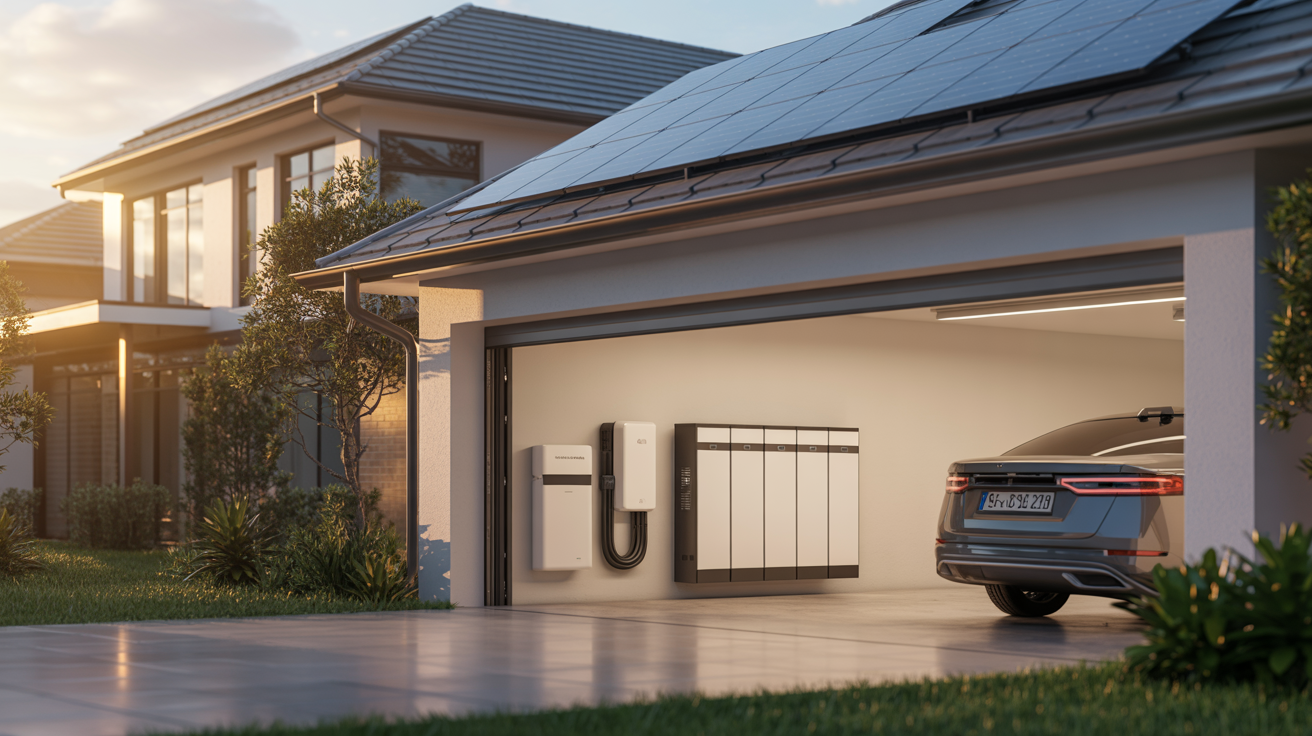
Solar battery storage is a system that captures surplus electricity generated by your solar panels and stores it in a battery bank for later use, at night, during grid outages, or when utility rates spike during peak hours. Instead of sending excess power back to the grid (often for minimal credit), you keep it on-site, boosting your self-consumption and reducing reliance on grid electricity.
The system works by converting DC power from your solar array into stored energy (either DC or AC, depending on your battery configuration) that can be dispatched whenever you need it. This means uninterrupted power during blackouts, lower bills if you're on a time-of-use rate plan, and the ability to ride out storms or grid instability without a generator.
But here's why cost matters so much: the upfront investment typically ranges from around $9,000 to $22,000 depending on capacity, brand, and installation complexity. That price tag directly influences your payback period, how long it takes for monthly savings and avoided outage costs to recoup the initial spend. For homeowners in areas with frequent blackouts, high electricity rates, or strong state incentives, the economics can pencil out beautifully. For others, it's a longer-term play. Understanding the cost structure helps you evaluate whether battery storage is worth it for your situation, rather than relying on generic online calculators.
Average Cost of Solar Battery Storage in 2026
In 2026, a typical residential solar battery installation runs about $12,000 to $22,000, fully installed. Many industry sources still cite a narrower range, roughly $9,000 to $18,000 for a single-battery system before incentives, but final costs vary widely depending on battery size, brand, and local labor rates.
For context, the average home battery system is around 13.5 kWh in capacity, which tends to cost around $15,000 before any tax credits or rebates. Prices have softened 8–12% compared to 2025, driven by increased manufacturing capacity, more competition among installers, and improved battery chemistries that deliver more energy per dollar.
If you're shopping, expect quotes to cluster in that $12,000–$20,000 range for a standard whole-home backup solution. Smaller systems (10 kWh) might dip closer to $10,000, while larger setups (20+ kWh) or premium brands can push past $25,000.
Price Ranges by Battery Capacity and Type
Battery cost breaks down into two main dimensions: capacity (how much energy it stores, measured in kilowatt-hours) and power (how much it can deliver at once, measured in kilowatts). Most residential batteries fall between 10 and 20 kWh, suitable for backing up essential circuits or an entire home for several hours.
On a per-kilowatt-hour basis, expect to pay roughly $700 to $1,400/kWh installed, depending on the brand and installer. For example, a Tesla Powerwall (13.5 kWh) typically costs around $1,018/kWh, translating to about $13,743 before incentives. Other popular models, like the Humless BESS units, LG Chem RESU, or Enphase IQ Battery, land in similar ranges but vary in chemistry (LiFePO4 vs. NMC), warranty length, and cycle life.
Small commercial installations (around 50 kWh) can run $50,000 to $70,000, though economies of scale kick in at higher capacities. For residential buyers, sticking to proven lithium iron phosphate (LiFePO4) chemistries often delivers the best balance of safety, cycle life, and cost per kWh.
Key Factors That Affect Solar Battery Storage Costs
Not all battery systems are priced alike. Several variables can swing your final invoice by thousands of dollars:
Capacity and power rating: A 10 kWh battery costs less than a 20 kWh unit, but you'll also get fewer hours of backup. Similarly, a battery rated for 5 kW continuous power can't run as many heavy appliances simultaneously as a 10 kW model. Balancing capacity and power to match your actual usage is key.
Battery chemistry and brand: Lithium iron phosphate (LiFePO4) batteries, like those offered by Humless, tend to offer longer cycle life (often 6,000+ cycles) and superior thermal stability compared to NMC (nickel-manganese-cobalt) alternatives. Premium brands with robust warranties and proven track records command higher upfront prices but often deliver better long-term value.
New install versus retrofit: Adding a battery to an existing solar array usually costs more than installing both together. Retrofits may require additional inverters (AC-coupled systems), wiring upgrades, or structural changes to accommodate the new hardware.
Local labor, permitting, and electrical work: Installation rates vary widely by region. Urban markets with high labor costs and strict permitting can add $2,000–$5,000 to the base battery price. If your home's electrical panel is outdated or undersized, you may need a service upgrade, another $1,500–$3,000.
Market competition and installer margins: Saturated markets with multiple certified installers tend to offer more competitive pricing. In contrast, rural or underserved areas may see higher quotes simply due to limited installer availability and travel costs.
Installation Costs and Hidden Expenses to Budget For
The sticker price on a battery system rarely tells the whole story. Installation costs and ancillary expenses can add several thousand dollars to your final bill, and they're easy to overlook if you're comparing quotes on battery hardware alone.
Electrical panel upgrades: If your main service panel is near capacity or outdated, you may need a sub-panel, load center replacement, or even a full service upgrade. Expect $1,500 to $4,000+ for major panel work.
Structural and mounting work: Wall-mounted batteries need reinforced backing or floor stands. If your installer has to pour a concrete pad, run conduit through crawl spaces, or trench lines to a detached garage, that's additional labor and materials.
Permitting and inspections: Most jurisdictions require permits for battery installations, with fees ranging from $100 to $500. Inspection scheduling can also delay your project, indirectly adding cost if your installer charges for return trips.
Monitoring hardware and software: Many systems include Wi-Fi-connected monitoring gateways, but some charge extra for advanced analytics, mobile apps, or integration with smart home platforms.
Disposal and recycling fees: Although rare, some installers tack on end-of-life disposal fees upfront, especially for lithium-ion chemistries with strict recycling requirements.
When comparing quotes, ask for an itemized breakdown. A lower battery price might come with higher installation fees, while a pricier package could include permitting, monitoring, and warranty coverage bundled in.
Incentives, Tax Credits, and Ways to Reduce Your Investment
The good news: there are still meaningful ways to cut your out-of-pocket cost in 2026, even though the landscape has shifted.
Federal tax credit (30%): The Residential Clean Energy Credit, which offered a 30% federal tax credit for homeowners who purchased solar and storage systems outright, expired at the end of 2025 for direct residential ownership. But, the 30% credit still applies to commercial and third-party-owned (TPO) systems. That means if you opt for a solar-plus-storage lease or power purchase agreement (PPA), the developer can claim the credit and pass some of the savings on to you through lower monthly payments. It's not a direct check in your pocket, but it can make battery storage affordable without a big upfront cash outlay.
State and utility rebates: Several states offer generous battery incentives that remain in effect:
- California SGIP (Self-Generation Incentive Program): Provides up to $1,000 per kWh for qualifying residential batteries, with higher rebates for low-income households and those in high-fire-risk areas.
- New York, Hawaii, Massachusetts, South Carolina, and others: Maintain state tax credits, rebates, or performance incentives ranging from a few hundred to several thousand dollars per installation.
Check your local utility's website or the Database of State Incentives for Renewables & Efficiency (DSIRE) for up-to-date program details.
Virtual power plant (VPP) programs: Some utilities and grid operators will pay you an annual fee, often $200 to $1,000, to allow occasional dispatch of your battery during grid emergencies. Programs like Tesla's Virtual Power Plant in California or Humless's partnership opportunities let you monetize your system while still retaining backup capability most of the time.
Financing and leasing options: If the upfront cost is daunting, many installers offer zero-down financing with manageable monthly payments. Because the monthly savings on your utility bill can offset the loan payment, you might achieve positive cash flow from day one, especially if you're in a high-rate market or benefit from state incentives.
Conclusion
In 2026, a typical home solar battery installation will set you back roughly $12,000 to $22,000 installed, with wide variation depending on capacity, brand, and local factors. The key to making a smart investment is evaluating cost per kilowatt-hour, lifetime cycle count, and available incentives, especially state rebates and third-party ownership structures that still leverage the 30% federal credit. With prices trending downward and financing options more flexible than ever, solar battery storage is becoming a realistic path to energy independence for more homeowners. Crunch the numbers for your situation, and you might find the payback is closer, and sweeter, than you think.
Frequently Asked Questions About Solar Battery Storage Cost
How much does solar battery storage cost in 2026?
A typical residential solar battery storage system costs between $12,000 and $22,000 fully installed in 2026. Most homeowners pay around $15,000 for a standard 13.5 kWh system before incentives. Prices have dropped 8–12% compared to 2025, driven by increased manufacturing capacity and competition among installers.
What factors affect solar battery storage cost?
Solar battery storage cost is influenced by capacity (kWh), power rating (kW), battery chemistry (LiFePO4 vs. NMC), brand reputation, whether it's a new install or retrofit, local labor rates, permitting fees, and electrical upgrades. Panel upgrades, wiring work, and regional installer availability can add $2,000–$5,000 to your total investment.
What is the cost per kilowatt-hour for residential solar batteries?
Residential solar batteries typically cost between $700 and $1,400 per kWh installed, depending on brand and installer. For example, a Tesla Powerwall costs approximately $1,018/kWh, which translates to roughly $13,743 before incentives for a 13.5 kWh system.
Can I get tax credits or rebates for solar battery storage?
The federal 30% Residential Clean Energy Credit expired for direct residential purchases at the end of 2025, but it still applies to commercial systems and third-party ownership. Homeowners can benefit through solar leases or PPAs. State and utility rebates remain available—California SGIP offers up to $1,000/kWh, and programs in New York, Hawaii, Massachusetts, and South Carolina provide additional incentives.
What hidden costs should I budget for when installing solar battery storage?
Beyond the battery price, budget for electrical panel upgrades ($1,500–$4,000+), permitting and inspection fees ($100–$500), structural mounting work, wiring upgrades, and monitoring hardware. Ask installers for itemized quotes to identify all costs, as lower battery prices sometimes come with higher installation fees.
Is solar battery storage worth the cost?
Solar battery storage is worth the investment if you have frequent power outages, high time-of-use electricity rates, strong state incentives, or live in a high-fire-risk area. The payback period depends on your local rates, available incentives, and backup power needs. Financing options and virtual power plant programs can improve economics by reducing upfront costs or adding annual income from grid support services.