Energy independence isn't just a buzzword anymore, it's a necessity. From rolling blackouts to skyrocketing utility rates, homeowners and businesses are demanding power solutions they can actually depend on. Enter ion storage systems: advanced battery technologies that store electricity from solar panels, the grid, or generators, giving you control over when and how you use power. Unlike the old lead-acid batteries gathering dust in garages, today's ion-based batteries, especially lithium-ion and emerging solid-state designs, offer longer lifespans, faster charging, and serious safety upgrades. Whether you're looking to go off-grid, slash your energy bills, or keep the lights on during outages, understanding ion storage systems is your first step toward true energy independence.
Key Takeaways
- Ion storage systems—advanced rechargeable batteries that move ions between electrodes—enable homeowners and businesses to store electricity from solar panels, the grid, or generators for on-demand use and true energy independence.
- Lithium-ion and LiFePO4 chemistries dominate modern ion storage, with LiFePO4 offering superior thermal stability and safety through its resistance to thermal runaway, making it the preferred choice for residential and commercial installations.
- Ion storage systems paired with solar integration provide maximum energy self-consumption, allowing you to store excess daytime solar energy for evening use and significantly reduce peak-hour electricity rates and utility bills.
- Next-generation solid-state ion storage with ceramic-based electrolytes eliminates flammable liquid materials entirely, promising inherently safer systems with faster charging and higher energy density without requiring compression or active cooling.
- When selecting an ion storage system, prioritize capacity matching your daily consumption, UL certifications (particularly UL 9540 and UL 1973), LiFePO4 chemistry for safety, and a provider with proven long-term support and reliability.
What Are Ion Storage Systems?
At their core, ion storage systems are rechargeable batteries that store electrical energy by moving ions, charged particles, between electrodes during charge and discharge cycles. The term "ion storage" is broad: it encompasses traditional lithium-ion batteries (the workhorses powering everything from smartphones to electric vehicles) and next-gen solid-state batteries that replace flammable liquid electrolytes with safer, ceramic-based materials.
Most residential and commercial battery energy storage systems (BESS) today rely on lithium-ion chemistry because of its high energy density, efficiency, and relatively affordable cost per kilowatt-hour. These systems capture electricity when it's cheap or abundant, say, during sunny midday hours from your solar array or off-peak grid periods, and release it on demand when you need it most.
But innovation doesn't stop there. Companies like ION Storage Systems are pushing the envelope with anodeless solid-state batteries featuring patented 3D ceramic architectures. These eliminate the flammable liquid electrolytes that have caused fires in phones, hoverboards, and EVs, introducing a new level of intrinsic safety without the need for compression or active cooling. While still emerging, this technology signals where the industry is headed: safer, denser, faster-charging ion storage that fits seamlessly into homes, businesses, and critical infrastructure.
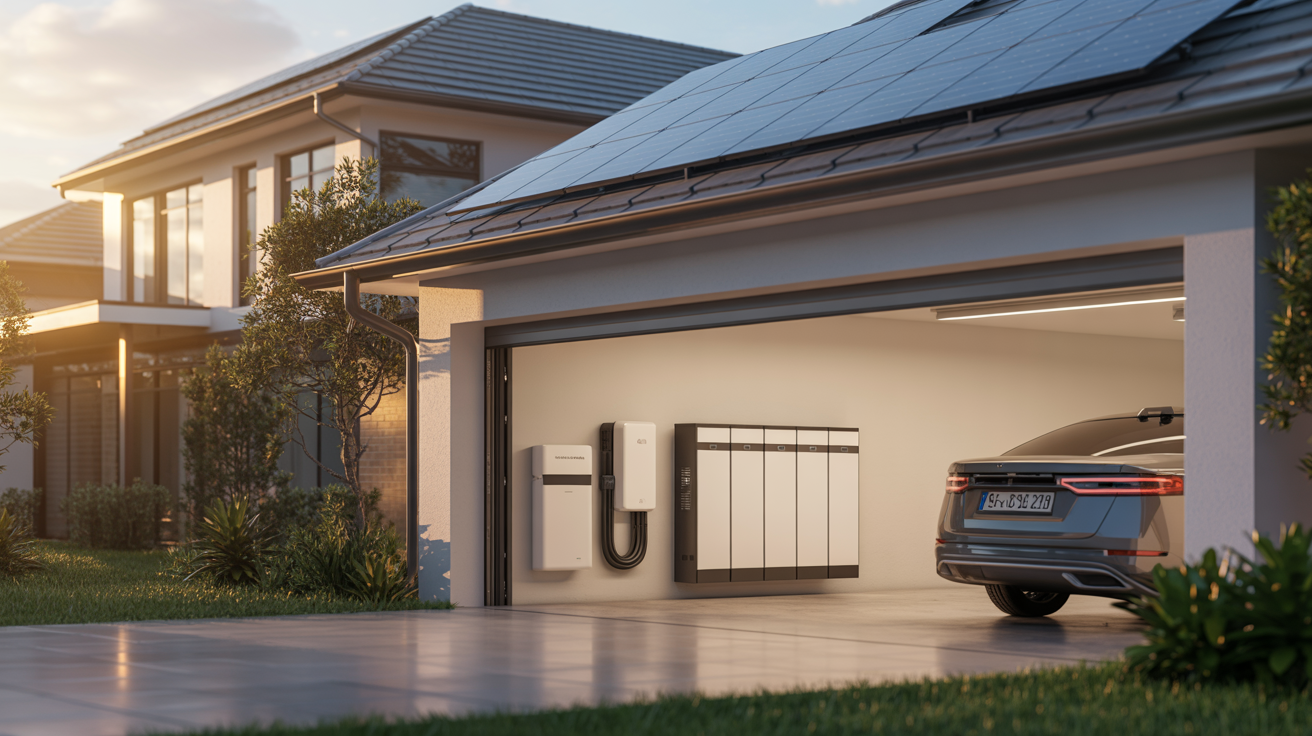
For homeowners and installers, "ion storage" typically means lithium-ion BESS units that integrate with solar inverters, grid connections, and backup circuits, turning your property into a mini power plant with storage capacity measured in kilowatt-hours (kWh).
How Lithium-Ion Technology Powers Modern Energy Storage
Lithium-ion batteries dominate the energy storage landscape because they pack a lot of power into a relatively small, lightweight package. Inside each cell, lithium ions shuttle between a positive cathode and a negative anode through a liquid electrolyte. During charging, ions move to the anode: during discharge, they flow back to the cathode, generating the electricity that runs your home or business.
This chemistry offers several advantages: high round-trip efficiency (often 90% or better), thousands of charge cycles, and modular scalability. You can stack multiple battery modules together to meet your exact energy needs, whether that's a compact 10 kWh system for essential loads or a robust 40+ kWh setup for whole-home backup and solar self-consumption.
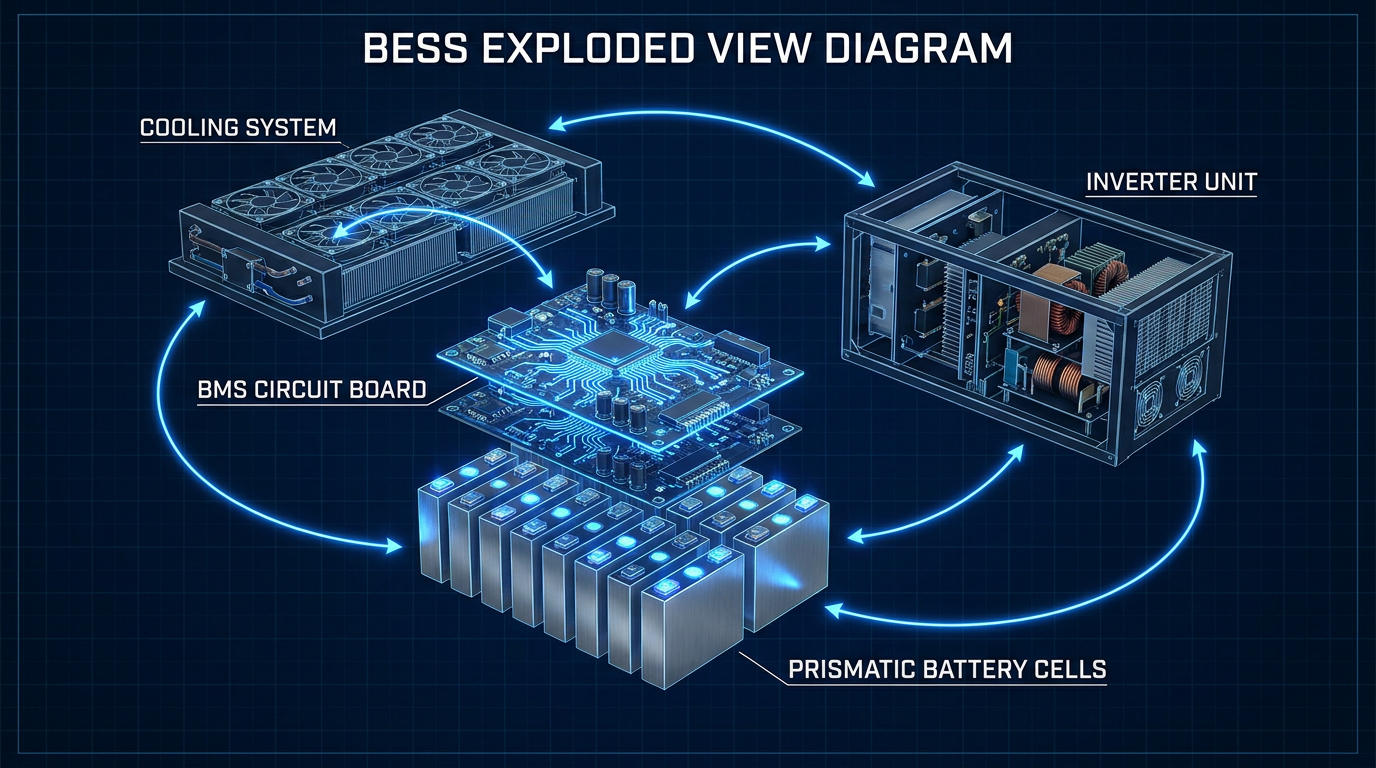
But, traditional lithium-ion isn't without trade-offs. The liquid electrolytes are flammable, which is why you've heard horror stories about phone batteries catching fire or EVs going up in flames after accidents. To manage these risks, quality BESS manufacturers build in multiple safety layers: battery management systems (BMS) that monitor voltage and temperature, thermal management hardware, and protective enclosures. Companies with proven track records, like Humless, a pioneer in energy storage since 2010, design systems with UL certifications and robust thermal controls to keep those ions moving safely.
Still, the industry is evolving. Advances in solid-state lithium-ion technology replace the flammable liquid with nonflammable ceramic electrolytes, sidestepping thermal runaway risks entirely while enabling faster charging and higher energy densities. ION Storage Systems' ceramic-based cells, for instance, eliminate fire hazards and the need for heavy cooling equipment, pointing toward a future where ion storage is both powerful and inherently safe.
LiFePO4 Chemistry: The Safest Ion Storage Solution
When safety is your top priority, and it should be, lithium iron phosphate (LiFePO4 or LFP) chemistry stands out. Unlike other lithium-ion cathodes (such as nickel-manganese-cobalt), LiFePO4 is thermally stable and far less prone to thermal runaway. It won't ignite as easily under abuse conditions, making it the go-to choice for residential and commercial installations where fire risk is unacceptable.
LiFePO4 batteries also boast impressive cycle life, often exceeding 6,000 charge-discharge cycles with minimal capacity fade. That translates to decades of reliable service if you're cycling daily for solar storage. They're more tolerant of deep discharges and high temperatures, and they don't contain cobalt, a material with ethical and supply-chain concerns.
The trade-off? LiFePO4 cells have slightly lower energy density than high-nickel chemistries, so you might need a bit more physical space or weight for the same kWh capacity. But for stationary energy storage, where space isn't as tight as in an EV, that's a minor concession for major safety gains.
Leading BESS providers like Humless leverage LiFePO4 chemistry in their battery modules, pairing it with intelligent BMS and UL-certified enclosures to deliver systems you can install with confidence. And looking ahead, emerging solid-state designs with nonflammable ceramic electrolytes promise to leapfrog even LiFePO4 on the safety front, eliminating liquid entirely and preventing thermal runaway by design.
Key Benefits of Ion Storage Systems for Homeowners and Businesses
Why invest in ion storage? The benefits stretch far beyond just having backup power during outages, though that alone can be a game-changer.
Energy Independence and Bill Savings: Store excess solar energy during the day and use it at night, slashing your reliance on the grid and avoiding expensive peak-hour electricity rates. In time-of-use markets, this arbitrage can pay for your system faster than you'd think.
Reliable Backup Power: When the grid goes down, a properly configured BESS seamlessly takes over, keeping critical loads, refrigerators, medical devices, internet, HVAC, running without missing a beat. No loud generators, no fuel runs, no carbon monoxide worries.
Environmental Impact: Pairing ion storage with solar panels means you're storing clean, renewable energy instead of burning fossil fuels. Over time, you shrink your carbon footprint while boosting your home's or facility's resilience.
Long Lifespan and Low Maintenance: Quality lithium-ion systems, especially LiFePO4-based units, can last 10–20 years with minimal upkeep. No watering cells like lead-acid, no regular servicing, just set it and (mostly) forget it.
Scalability and Flexibility: Start with a smaller capacity and expand as your energy needs grow. Modular designs let you add batteries over time without replacing the entire system.
Advanced Monitoring and Control: Modern BESS platforms offer smartphone apps and web dashboards, giving you real-time visibility into energy production, consumption, and battery state-of-charge. Optimize your usage on the fly or let smart algorithms do it for you.
For businesses, ion storage also unlocks demand-charge reduction, power-quality improvements, and participation in grid services or virtual power plant programs, revenue streams that can offset installation costs. And with companies like Humless offering 24/7 support and proven reliability since 2010, you're not just buying batteries: you're investing in peace of mind.
Integrating Ion Storage with Solar, Grid, and Backup Power Sources
Ion storage systems shine brightest when they're part of a holistic energy ecosystem. Here's how they play well with other power sources:
Solar Integration: This is the sweet spot. Solar panels generate DC power: a hybrid inverter converts it to AC for your home and also charges the battery. Excess solar that would otherwise be exported to the grid (often at low rates) gets stored for evening and nighttime use. The result? Maximum self-consumption, lower bills, and energy security after sunset.
Grid Connection (Grid-Tied + Storage): Even if you're connected to the utility, a BESS lets you leverage time-of-use rates, charge when power is cheap (or free from solar), discharge when it's expensive. Many systems can also provide uninterruptible power (UPS-like functionality), switching to battery instantly if the grid drops, then recharging once power returns.
Backup and Off-Grid Operation: For rural properties, remote sites, or anyone tired of grid dependence, ion storage combined with solar (and optionally a generator) enables true off-grid living. The battery buffers intermittent solar generation, and a generator can top up the battery during prolonged cloudy spells. Advanced systems manage all these sources automatically, prioritizing solar, then battery, then generator as needed.
Wind and Hydro: Got a wind turbine or micro-hydro setup? Ion storage smooths out the variable output, storing energy when the wind blows or water flows and delivering steady power around the clock.
Humless BESS solutions are designed for exactly this kind of flexibility. They integrate seamlessly with solar inverters (both AC-coupled and DC-coupled configurations), grid connections, wind, and generators, giving you complete energy independence and control. With 15+ years of field-proven reliability and robust system design, Humless makes it easy to orchestrate multiple power sources under one intelligent platform.
Choosing the Right Ion Storage System for Your Needs
Not all ion storage systems are created equal. Here's what to evaluate as you shop:
Capacity (kWh): Match the battery size to your daily energy consumption and backup priorities. A 10 kWh system might cover essentials: 20–30 kWh can run a whole home for a day or more. Review your utility bills and calculate average daily usage, then size accordingly.
Power Rating (kW): This is how much electricity the battery can deliver at once. A 5 kW continuous rating can handle typical household loads: larger homes or businesses may need 10 kW or more to start air conditioners, well pumps, or heavy equipment.
Chemistry and Safety: Prioritize LiFePO4 for residential/commercial installs due to superior thermal stability. Check for UL certifications (UL 1973, UL 9540, UL 9540A) and ask about built-in fire suppression or thermal management.
Warranty and Cycle Life: Look for at least a 10-year warranty and a guaranteed cycle count (e.g., 6,000+ cycles). This reflects the manufacturer's confidence in long-term performance.
Compatibility and Expandability: Ensure the system works with your existing or planned solar inverter, and confirm you can add capacity later without a total overhaul.
Support and Service: A battery is a long-term investment. Choose a provider with responsive customer support, comprehensive documentation, and a proven track record. Humless, for example, offers 24/7 support and has been pioneering reliable energy storage since 2010, critical when you need help troubleshooting or expanding your system.
Capacity, Certification, and Safety Standards
Dig deeper into the specs: total usable capacity (some systems reserve a buffer), depth of discharge (DoD), and round-trip efficiency. Certifications matter, UL 9540 covers the entire energy storage system, while UL 1973 focuses on battery safety. UL 9540A fire-safety testing provides data on thermal runaway propagation, giving installers and authorities confidence in residential deployments.
Emerging solid-state ion storage, like ION Storage Systems' Cornerstone cells with nonflammable ceramic electrolytes, sets a new safety bar by eliminating fire risk entirely, no compression or cooling required. While these are still ramping to mass production, keeping an eye on such innovations ensures you're future-proofing your energy strategy.
Eventually, the "right" system balances capacity, safety, cost, and compatibility with your energy goals, whether that's grid independence, backup resilience, or maximizing solar ROI.
Frequently Asked Questions About Ion Storage Systems
What is an ion storage system and how does it work?
An ion storage system is a rechargeable battery that stores electrical energy by moving ions between electrodes during charge and discharge cycles. Ion storage systems include traditional lithium-ion batteries and emerging solid-state designs with ceramic electrolytes. They capture electricity from solar panels, the grid, or generators and release it on demand for home or business power.
Why is LiFePO4 chemistry considered safer for residential ion storage?
Lithium iron phosphate (LiFePO4) chemistry is thermally stable and resistant to thermal runaway, making it far less likely to ignite under abuse conditions. It boasts 6,000+ charge cycles with minimal fade, tolerates deep discharges, and contains no cobalt, offering decades of reliable service with significantly lower fire risk than other lithium-ion chemistries.
How do solid-state ion storage batteries differ from traditional lithium-ion?
Solid-state batteries replace flammable liquid electrolytes with nonflammable ceramic materials, eliminating fire hazards and thermal runaway risks entirely. ION Storage Systems' ceramic-based design requires no compression or active cooling, enabling faster charging and higher energy density while providing intrinsic safety that traditional lithium-ion cannot match.
Can ion storage systems be integrated with solar panels and the grid?
Yes. Ion storage systems work seamlessly with solar, grid connections, generators, wind, and hydro sources. Solar panels charge the battery during peak sunlight; excess energy is stored instead of exported to the grid. Grid-tied systems also leverage time-of-use rates by charging when electricity is cheap and discharging during expensive peak hours.
What capacity and power rating should I choose for my ion storage system?
Match capacity (kWh) to your daily energy consumption: 10 kWh covers essentials, while 20–30 kWh runs whole-home backup. Power rating (kW) should handle simultaneous loads; 5 kW suits typical homes, though larger properties or businesses may need 10 kW+ for air conditioners and heavy equipment. Review utility bills to size accurately.
What certifications and safety standards should ion storage systems meet?
Look for UL 1973 (battery safety), UL 9540 (entire energy storage system), and UL 9540A (fire-safety thermal runaway testing). Solid-state ion storage with ceramic electrolytes, like ION Storage Systems' designs, exceeds these standards by eliminating fire risk entirely through nonflammable materials, requiring no compression or cooling.