Energy independence isn't just a buzzword anymore, it's a practical goal for homeowners and businesses tired of rising utility bills and unpredictable outages. Enter hybrid inverters, the Swiss Army knife of modern solar systems. Unlike traditional inverters that simply convert solar energy for immediate use, hybrid inverters do double duty: they manage your solar panels and battery storage in one sleek unit, giving you control over when and how you use every watt. Whether you're aiming to slash your energy costs, ride out blackouts, or cut ties with the grid entirely, understanding how hybrid inverters work is your first step toward true energy control.
Key Takeaways
- Hybrid inverters combine solar conversion and battery management in one unit, enabling you to store excess energy and achieve energy independence while cutting utility costs by up to 70%.
- Unlike traditional inverters that shut down during outages, hybrid inverters provide seamless backup power with UPS functionality, keeping critical loads running without noise or fuel costs.
- Hybrid inverters operate in multiple modes—grid-tied, off-grid, or hybrid—automatically managing power sources and battery levels in real time based on your energy usage patterns.
- Look for hybrid inverters with multiple MPPT trackers, 48V battery compatibility, UPS functionality, and parallel stacking capability to ensure efficiency and future scalability.
- Battery-agnostic hybrid inverters from brands like Sol-Ark and EG4 let you choose LiFePO4 batteries based on budget and warranty rather than being locked into a single manufacturer.
- Hybrid inverters deliver faster ROI than traditional solar systems through bill arbitrage and outage protection, making them essential for properties seeking true energy resilience and control.
What Is a Hybrid Inverter and How Does It Work?
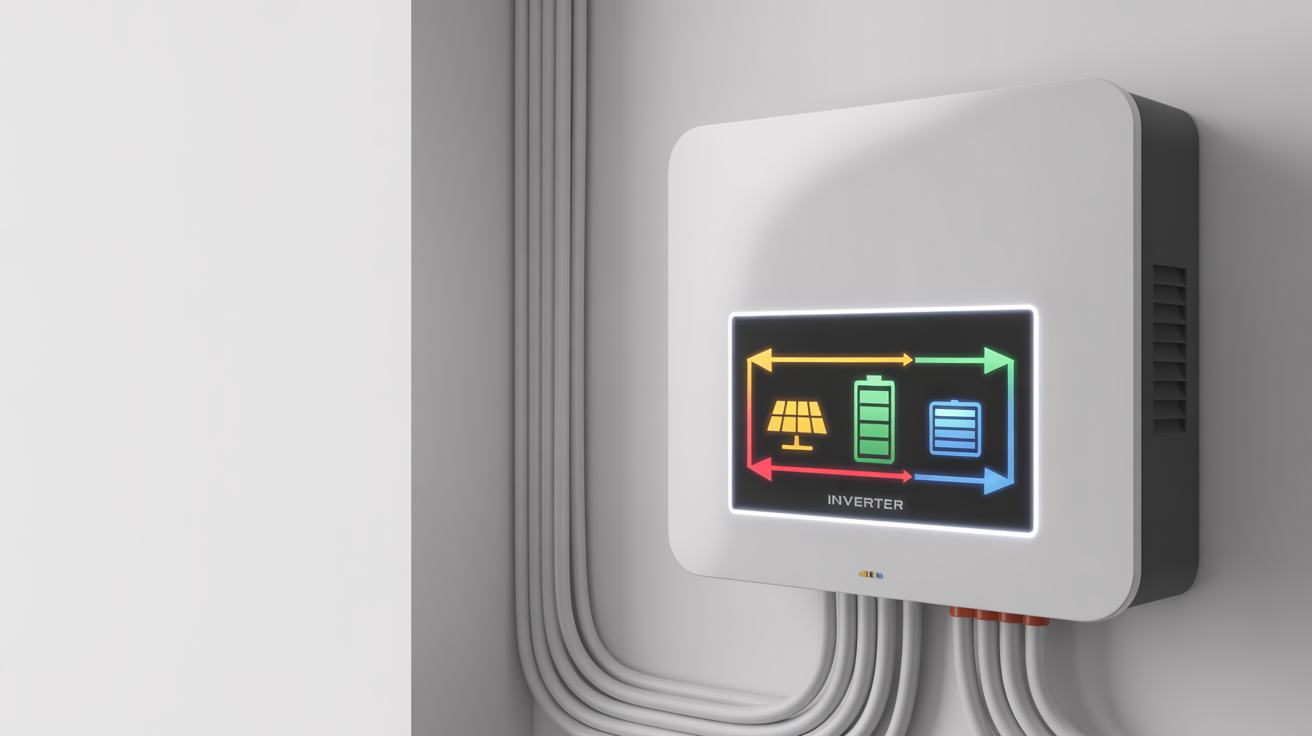
A hybrid inverter is essentially two devices rolled into one: a solar inverter that converts DC electricity from your panels into usable AC power, and a battery inverter that manages energy storage and discharge. Think of it as the brain of your energy system, juggling multiple power sources, solar panels, batteries, and the utility grid, simultaneously.
Here's how it works in practice. When sunlight hits your solar panels, they generate DC electricity. The hybrid inverter's Maximum Power Point Tracking (MPPT) controllers optimize this output, squeezing every available watt from your array. The inverter then converts that DC power to AC for your home's appliances. But here's where it gets interesting: any excess energy doesn't just flow back to the grid (though it can). Instead, the hybrid inverter intelligently routes surplus power to charge your battery bank for later use.
During an outage or at night, the system reverses course. The inverter draws stored DC energy from your batteries, converts it to AC, and keeps your lights on, all without missing a beat. Many hybrid inverters also include Uninterruptible Power Supply (UPS) functionality, switching to battery backup in milliseconds to protect sensitive electronics.
The real magic lies in the inverter's ability to operate in multiple modes: grid-tied (selling excess to the utility), off-grid (complete independence), or hybrid mode (balancing self-consumption with grid support). It monitors your energy usage patterns, battery charge levels, and grid availability in real time, automatically deciding whether to use solar, tap the batteries, or pull from the grid. For homeowners, this means seamless power management without lifting a finger, and for off-grid properties, it's the gateway to reliable 24/7 electricity from renewable sources.
Key Benefits of Hybrid Inverter Systems
The appeal of hybrid inverters goes well beyond technical specs, these systems deliver tangible benefits that hit your wallet and your peace of mind.
Massive Savings on Energy Bills
By maximizing self-consumption of your solar energy, hybrid inverters can cut utility costs by up to 70%. Instead of sending cheap solar power to the grid during the day and buying expensive electricity at night, you store that energy and use it when rates peak. In regions with time-of-use pricing or unfavorable net metering policies (like California's NEM 3.0), this arbitrage becomes even more valuable.
Reliable Backup Power
Power outages are increasingly common, whether from aging infrastructure, extreme weather, or grid overload. A hybrid inverter paired with battery storage keeps critical loads running, refrigerators, medical equipment, internet routers, without the noise, fuel costs, or maintenance headaches of a generator. For businesses, that means avoiding costly downtime: for homeowners, it's priceless peace of mind.
Simpler Installation, Lower Costs
Traditional solar-plus-storage setups require separate inverters for panels and batteries, multiplying equipment costs, installation labor, and potential failure points. Hybrid inverters consolidate everything into one unit, saving space on your wall and hours on the job site. Fewer components also mean fewer warranties to track and less troubleshooting down the road.
True Energy Independence
For off-grid property owners or anyone pursuing sustainability goals, hybrid inverters make renewable energy practical. They seamlessly integrate solar, batteries, and even backup generators, managing the handoffs so you're never left in the dark. Companies like Humless have spent over 15 years perfecting battery energy storage systems (BESS) that pair perfectly with hybrid inverters, delivering UL-certified reliability whether you're on-grid, off-grid, or somewhere in between.
Hybrid Inverter vs. Traditional Inverters: What's the Difference?
If you're weighing your inverter options, understanding the gap between hybrid and traditional models is crucial, because they're built for fundamentally different goals.
Traditional (String) Inverters
These workhorses have one job: convert DC from your solar panels into AC electricity for immediate household use or grid export. They're simple, cost-effective, and perfectly adequate if you don't care about storage or backup power. But the moment the grid goes down, your solar system shuts off too (a safety requirement to protect utility workers). You can't store excess energy, so any surplus just flows to the utility, often at rates far lower than what you pay to buy power back.
Hybrid Inverters
Hybrid inverters add bi-directional battery management to the mix. They charge batteries from solar or grid power, discharge stored energy on demand, and maintain power during outages. This flexibility unlocks grid-tie, off-grid, and hybrid operating modes, making them ideal for anyone prioritizing resilience or energy independence. Yes, they cost more upfront, but the ROI from bill savings and backup capability often makes up the difference within a few years.
Here's a quick side-by-side:
| Feature | Hybrid Inverter | Traditional Inverter |
|---|---|---|
| Battery Integration | Built-in | Requires separate battery inverter |
| Grid/Off-Grid Flexibility | Yes | Grid-tie only |
| Energy Storage | Yes | No |
| Backup Power | Yes | No (shuts off during outages) |
| Cost | Higher initial investment | Lower upfront cost |
Bottom line? If you're installing solar purely to offset daytime usage and don't care about outages, a traditional inverter might suffice. But for anyone seeking backup resilience, bill arbitrage, or off-grid capability, a hybrid inverter isn't just nice to have, it's essential.
Essential Features to Look for in a Hybrid Inverter
Not all hybrid inverters are created equal. Here are the features that separate the best from the rest:
Multiple MPPT Trackers
Maximum Power Point Tracking controllers optimize solar output even when panels face different directions or experience partial shading. Look for inverters with at least two independent MPPT inputs for maximum flexibility and efficiency.
48V Battery Compatibility
Most modern residential hybrid inverters work with 48-volt battery systems, which offer a sweet spot of safety, efficiency, and scalability. Brand-agnostic models (like those from Sol-Ark or EG4) let you choose the best battery for your budget without vendor lock-in. Companies like Humless specialize in LiFePO4 battery energy storage systems designed to integrate seamlessly with leading hybrid inverters.
UPS (Uninterruptible Power Supply) Functionality
This feature provides near-instantaneous switchover to battery backup during an outage, critical for protecting computers, medical devices, and other sensitive electronics from damaging power interruptions.
Parallel Operation and Scalability
Need more power? The best hybrid inverters support parallel stacking, allowing you to combine multiple units to scale capacity as your energy needs grow. This is especially valuable for businesses or homeowners planning future expansions.
Generator Integration
For off-grid systems or extended outage scenarios, built-in generator controls let your hybrid inverter automatically start a backup generator when batteries run low, then seamlessly switch back to solar when conditions improve.
NEM 3.0 and Grid Export Controls
If you're in California or other regions with unfavorable net metering, look for inverters with programmable grid export limits and smart load management to maximize self-consumption instead of exporting power at minimal credit.
Battery Compatibility and Integration
Battery compatibility is make-or-break for any hybrid inverter system. Most residential units are designed around 48V lithium battery banks, which deliver the best balance of performance, longevity, and cost.
The best part? Many modern hybrid inverters are battery-agnostic, meaning you're not locked into a single manufacturer's ecosystem. Brands like Sol-Ark, EG4, and Victron work with a wide range of LiFePO4 batteries, giving you freedom to choose based on capacity, warranty, and budget. Systems from Humless, pioneers in battery energy storage since 2010, offer UL-certified LiFePO4 options that integrate with top hybrid inverters for residential, commercial, and off-grid applications.
The inverter handles charging from both solar and grid sources, intelligently balancing inputs to extend battery life and optimize efficiency. During discharge, it seamlessly converts stored DC power to AC for your home, with zero interruption. For backup scenarios, this bi-directional flow is what keeps your lights on when the grid fails.
Choosing the Right Hybrid Inverter for Your Energy Needs
With dozens of models on the market, choosing the right hybrid inverter comes down to matching specs to your real-world situation.
Assess Your Load Requirements
Start by calculating your peak and average power consumption. A typical home might need 5–10 kW of continuous power, with surge capacity for well pumps or air conditioners. Oversizing slightly gives you headroom for future loads, but going too big wastes money on unused capacity.
Match Your Solar Array
Your inverter's DC input capacity should align with your solar panel array. If you're installing 12 kW of panels, you'll need an inverter (or stacked inverters) rated to handle that input without clipping. Pay attention to MPPT input ranges and string configuration to maximize efficiency.
Evaluate Grid Reliability
If you live in an area with frequent outages or unreliable power, prioritize models with robust UPS functionality, large battery integration, and generator controls. For grid-stable regions, a simpler grid-tie hybrid might suffice.
Plan for Future Expansion
Energy needs tend to grow, new EVs, hot tubs, home additions. Choose inverters that support parallel stacking or modular battery expansion so you can scale without starting from scratch.
Consider Off-Grid vs. Grid-Tied
Remote properties need inverters with proven off-grid chops and reliable generator integration. Popular residential models like Sol-Ark 12K and EG4 18kPV excel in both scenarios. For urban or suburban installs, ensure your inverter meets local utility interconnection requirements and supports smart grid features.
Don't Overlook Support and Warranty
A hybrid inverter is a 10+ year investment. Look for manufacturers offering solid warranties (5–10 years minimum) and responsive technical support. Integrating with proven battery systems, like those from Humless, backed by 24/7 support and 15+ years of field-proven reliability, can make the difference between smooth sailing and endless troubleshooting.
Conclusion
Hybrid inverters represent the cutting edge of residential and commercial energy management, combining solar conversion, battery storage, and grid interaction in one intelligent package. Whether you're chasing energy independence, protecting against outages, or simply slashing utility bills, the right hybrid inverter transforms your solar system from a passive roof ornament into an active, responsive power hub. Take the time to match features to your needs, and you'll reap decades of reliable, cost-effective energy control.
Frequently Asked Questions About Hybrid Inverters
What is a hybrid inverter and how does it differ from a traditional inverter?
A hybrid inverter combines solar DC-to-AC conversion with battery management in one unit, enabling grid-tie, off-grid, and backup modes. Traditional inverters only convert solar power for immediate use and shut down during outages. Hybrid inverters intelligently route excess energy to batteries for later use, delivering up to 70% bill savings through self-consumption.
How much can a hybrid inverter reduce my energy bills?
Hybrid inverters can cut utility costs by up to 70% by maximizing self-consumption of solar energy. Instead of exporting cheap daytime solar power to the grid and buying expensive peak-hour electricity, you store excess energy in batteries and use it when rates are highest, especially valuable under NEM 3.0 policies.
What are the key features to look for in a hybrid inverter?
Prioritize multiple MPPT trackers for optimized solar output, 48V battery compatibility, UPS functionality for instantaneous backup switchover, parallel operation for scalability, generator integration, and NEM 3.0 grid export controls. These features ensure efficiency, resilience, and flexibility for growing energy needs.
Can a hybrid inverter provide backup power during a grid outage?
Yes. Unlike traditional inverters that shut down during outages, hybrid inverters paired with battery storage provide seamless backup power with UPS functionality, switching to batteries in milliseconds. This keeps critical loads like refrigerators, medical equipment, and internet routers running without noise or fuel costs.
What battery voltage do most residential hybrid inverters use?
Most modern residential hybrid inverters are designed around 48-volt battery systems, which offer the best balance of safety, efficiency, and scalability. Many brands like Sol-Ark and EG4 are battery-agnostic, allowing you to choose LiFePO4 batteries from different manufacturers based on capacity, warranty, and budget.
Is a hybrid inverter suitable for off-grid properties?
Absolutely. Hybrid inverters excel in off-grid applications by seamlessly integrating solar, battery storage, and backup generators. They automatically manage power sources and generator switchover, making them ideal for remote properties pursuing complete energy independence without grid connectivity.