When you add battery storage to solar, the panel choice becomes more important than many people realize. Both monocrystalline and polycrystalline solar panels can charge batteries effectively, but they do it with different efficiencies, footprints, and cost profiles. If your goal is to keep essential loads running during outages, maximize self-consumption, or build a resilient off-grid or hybrid system, the panel type you choose affects how quickly your batteries fill, how much roof space you need, and how much value you get over the life of the system.
For homeowners and businesses comparing solar-plus-storage options, the right answer is rarely “one panel type is always best.” Instead, the best choice depends on available space, climate, budget, desired backup runtime, and the storage platform itself. At Humless, a Battery Energy Storage company serving customers since 2010, we’ve seen how the right solar array can make the difference between a battery that merely provides backup and a battery system that delivers true energy independence. That’s especially relevant when pairing solar with solutions like the Humless Universal 6kW BESS and the 5kWh LiFePO4 Battery, where strong daily charging performance matters just as much as reliable discharge.
Key Takeaways
- Monocrystalline panels are usually the better choice for battery storage because they deliver more power per square foot and perform well in space-constrained installations.
- Polycrystalline panels can still make sense when budget is the top priority and roof or ground space is plentiful.
- For solar-plus-storage, the most important metric is not just panel efficiency but how reliably the array can recharge the battery every day.
- Typical monocrystalline modules operate around 19% to 23% efficiency, while polycrystalline modules are often around 15% to 18%.
- Battery systems such as the Humless Universal 6kW BESS and 5kWh LiFePO4 Battery benefit from higher-output solar arrays, especially in winter or during partial shading conditions.
- Look for UL certification, a 10-year warranty, and federal incentives such as the 30% ITC to improve system safety, bankability, and return on investment.
Monocrystalline vs. Polycrystalline: The Core Differences
Solar panels convert sunlight into electricity using silicon cells, but the way those cells are manufactured changes their performance. Monocrystalline panels are made from a single, continuous silicon crystal. This structure allows electrons to move more efficiently, which generally means higher efficiency, better power density, and a more uniform black appearance. Polycrystalline panels are made by melting multiple silicon fragments together. The manufacturing process is simpler and historically lower cost, but the resulting crystal boundaries reduce efficiency slightly and often give the panels a bluish, speckled look.
In practical terms, a good monocrystalline panel today commonly falls in the 19% to 23% efficiency range, with premium models sometimes exceeding that. Polycrystalline panels are more often found in the 15% to 18% range. That may sound like a small difference, but it matters a lot when you are trying to charge a battery consistently. For example, if two systems need to produce the same 6 kilowatts of solar output, the monocrystalline array will usually require less roof area. In a tight urban installation, that can determine whether you can install enough panels to support a battery-backed home at all.
Efficiency also affects balance-of-system design. Fewer panels may mean fewer racking components, fewer wire runs, and less labor. With battery storage, those advantages can translate into faster charging during short winter days or cloudy weather. Polycrystalline panels can still produce excellent energy over time, but when space is constrained, the “more watts per square foot” advantage of monocrystalline is hard to ignore.
There are also performance differences in heat and low-light conditions. Monocrystalline modules typically have slightly better temperature coefficients, often around -0.3% to -0.4% per degree Celsius, compared with polycrystalline modules that are commonly around -0.4% to -0.5% per degree Celsius. That means when panel temperatures rise on hot summer roofs, monocrystalline panels usually lose a bit less output. In real life, the difference may only be a few percent on a scorching day, but over years of operation it adds up.
That’s why the question is not just “Which panel is cheaper?” but “Which panel will feed my battery system more effectively over time?”
Why Battery Storage Changes the Equation
If you were choosing panels for a grid-tied system with no storage, the answer might focus mainly on upfront cost and roof fit. Once you add batteries, the priorities change. Battery systems need dependable daily energy input, not just occasional peak performance. A battery that is undercharged because the array is too small, poorly oriented, or too low in efficiency will leave you relying on the grid or generator more often than planned.
Battery storage is about energy timing. Solar panels produce during the day, while batteries often supply power at night or during outages. That means your panels need to generate enough surplus energy to cover daytime loads and still recharge the battery. With a lithium iron phosphate battery, such as the 5kWh LiFePO4 Battery offered by Humless, charging efficiency is high and cycle life is excellent, but the battery can only store what the solar array provides. In a real-world system, a 5kWh battery may need roughly 4.3 to 4.8 kWh of solar input to move from a partially discharged state back to full, once charging losses are included.
That is where panel type matters. If your solar array is limited by roof space, monocrystalline panels can help you harvest more kilowatt-hours per day. This becomes especially important when you are trying to recharge batteries in fewer sun hours, such as during winter, on stormy days, or in northern climates. A more efficient panel can be the difference between a battery arriving at 100% by late afternoon or running short before evening peaks begin.
Battery storage also rewards consistent production. If a system is designed to recharge a battery every day, even modest differences in annual yield matter. Suppose a monocrystalline array produces just 5% more annual energy than a polycrystalline array of the same nominal wattage because of better efficiency and lower temperature losses. Over a 10-year period, that difference can be substantial, particularly in systems where backup reliability is the whole point.
This is why experienced designers look beyond the label wattage and examine the full charging profile. How many peak sun hours does the site receive? What are the winter conditions? Is the battery being charged from solar only, or solar plus grid? Is the customer optimizing for resilience, bill savings, or off-grid autonomy? The best panel is the one that supports the battery’s role in the system, not just the one with the lowest upfront price.
Glenn Jakins, Founder and CTO of Humless, has spent more than 15 years in the field and has overseen more than 15,000 deployments. That experience reinforces a simple truth: battery storage works best when the solar array is designed to deliver predictable, sufficient charging every day, not just occasional good performance.
When Monocrystalline Is the Better Choice
For most battery storage applications, monocrystalline panels are the strongest overall choice. Their higher efficiency means you need less area to produce the same amount of energy, which is especially important for residential rooftops, carports, or compact commercial sites. If you are trying to power critical loads and keep a battery charged for evening use or outage protection, extra energy density is a meaningful advantage.
Imagine a home with 10 kWh to 15 kWh of daily electrical demand and a battery that covers overnight use. If the roof can only support a modest array, every watt matters. A monocrystalline module can pack more generation into the same footprint, making it easier to reach the minimum array size needed to replenish the battery after a full discharge. That can improve system resilience during winter storms or extended cloudy periods.
Monocrystalline panels also tend to have a cleaner appearance, which can matter on visible rooftops. In many modern installations, the aesthetic difference is secondary to performance, but homeowners often appreciate the uniform look. More importantly, many monocrystalline products are available in advanced cell formats such as half-cut cells or TOPCon designs, which can improve shade tolerance and reduce resistive losses. Those features are valuable in storage systems, because anything that helps harvest more energy during imperfect conditions helps the battery maintain charge.
There is another practical advantage: monocrystalline panels often deliver better long-term value when paired with storage. Battery systems are usually expected to last many years, and a 10-year warranty on the storage side aligns well with the long service life of high-quality monocrystalline modules. Over that period, higher annual production can offset a higher initial panel cost. When utility rates rise, the economic case strengthens further because more daytime solar can be stored and used later instead of purchased from the grid.
Monocrystalline is also the preferred choice for many premium backup systems. If the goal is to support a UL-certified battery platform, maximize return under the 30% federal ITC tax credit, and reduce dependency on generator runtime, starting with the most efficient practical panel is often the smartest strategy. That is one reason many Humless customers who choose the Humless Universal 6kW BESS also prefer monocrystalline modules: the array can more reliably deliver enough energy to charge the system and carry it through the evening peak.
In short, monocrystalline tends to be best when one or more of the following are true: roof space is limited, outage resilience is a priority, winter performance matters, or the system must charge a battery quickly and consistently.
When Polycrystalline Can Still Make Sense
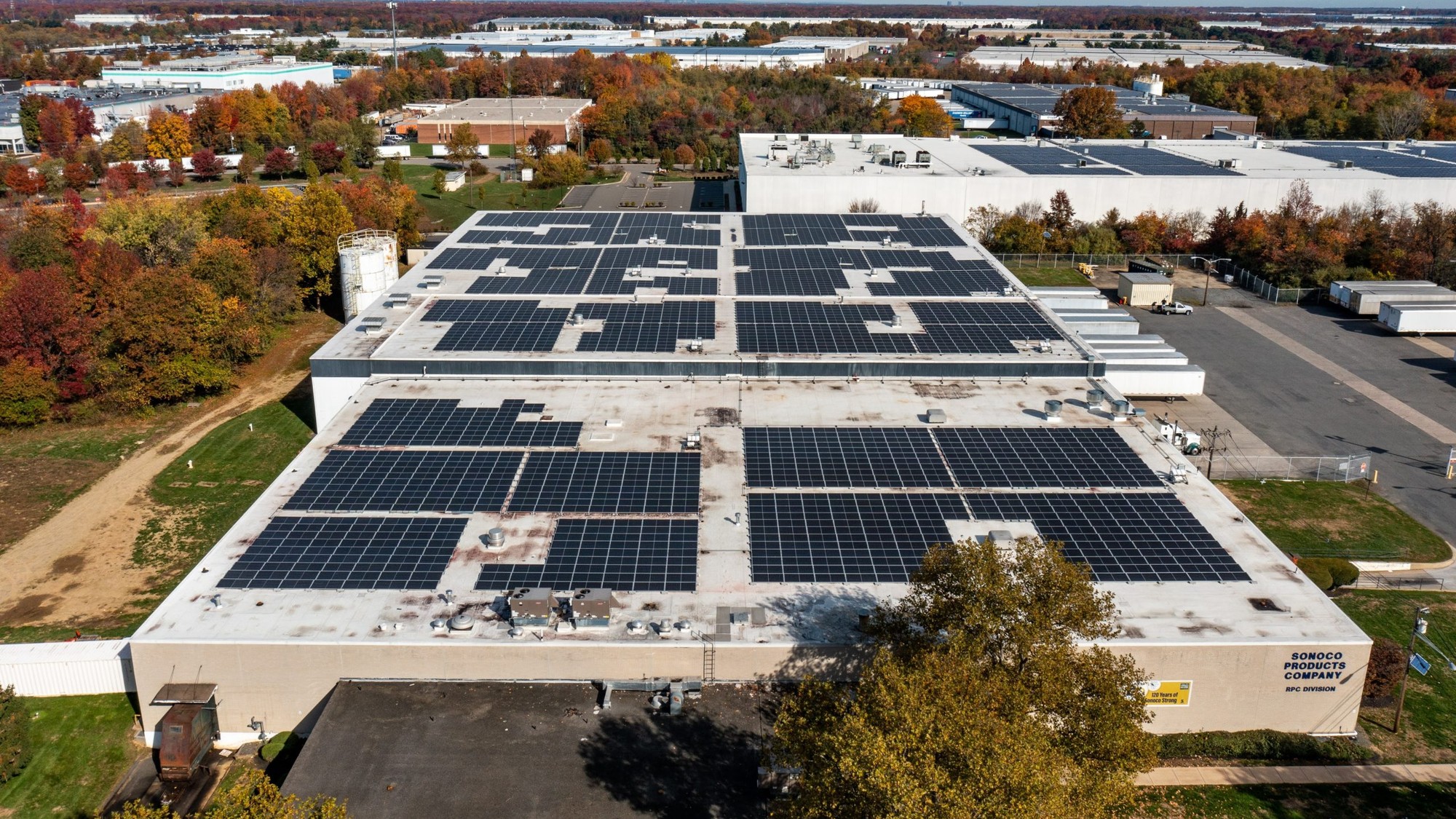
Polycrystalline panels are not obsolete. In the right application, they can still be a practical and cost-effective option. Their main advantage is typically lower upfront cost per panel, and for some projects that matters more than squeezing every last watt from a small roof. If you have a large ground-mount site, a spacious commercial property, or an off-grid location with plenty of installation area, polycrystalline can still provide a workable energy source for batteries.
In a budget-driven project, polycrystalline panels may let you allocate more of the total budget to storage capacity, power electronics, mounting, or site work. That can be a reasonable tradeoff if you have enough space to install extra panels. For example, a system with abundant land may simply use a few more modules to make up for the lower efficiency. If those extra panels are inexpensive enough, the total installed cost can remain attractive.
However, the “cheap panel” argument has limits. Battery systems need enough daily solar harvest to stay charged, and if a lower-efficiency array requires significantly more space, more racking, or more labor, the savings can shrink quickly. On a roof, the extra area needed for polycrystalline modules can create design compromises that affect aesthetics, structural loading, or expansion capacity. So while polycrystalline may be suitable for some utility-scale or space-rich projects, it is less often the best answer for battery-backed homes.
Polycrystalline panels also deserve a closer look in markets where price volatility or supply constraints make them particularly attractive. In certain projects, a lower-cost module can be an acceptable way to enter the solar-plus-storage market now, with the expectation of future upgrades. But if the customer’s primary objective is resilience and reliable charging, it is important to evaluate the full-life economics instead of just the sticker price.
A good rule of thumb is this: choose polycrystalline only when the installation has generous space and the budget is tight enough that panel cost dominates the decision. If you need compact, high-output, year-round charging for a battery, monocrystalline usually wins.
How to Size Solar for a Humless Battery System
Panel type is only one part of the equation. To get the best results from battery storage, the solar array must be sized to the battery, the load profile, and the site’s sun availability. This is where system design matters more than brand labels. A properly sized array can turn a battery from a short-term backup device into a true energy management asset.
Consider a simple example. If a home uses 20 kWh per day and wants enough solar to run the home and recharge a battery, a 6 kW solar array in a location with 5 peak sun hours could theoretically generate about 30 kWh per day before losses. After accounting for inverter efficiency, temperature, wiring, and other system losses, the usable energy might be closer to 23 to 26 kWh on a good day. That is enough to support household demand and still refill storage, but only if the system is designed carefully.
Now compare panel types. A monocrystalline array of the same size will usually fit into less space, which is useful if your roof can only support a certain number of modules. That makes it easier to hit the desired array size without crowding the roof or reducing spacing for maintenance and airflow. With storage, that space efficiency can matter as much as the raw wattage.
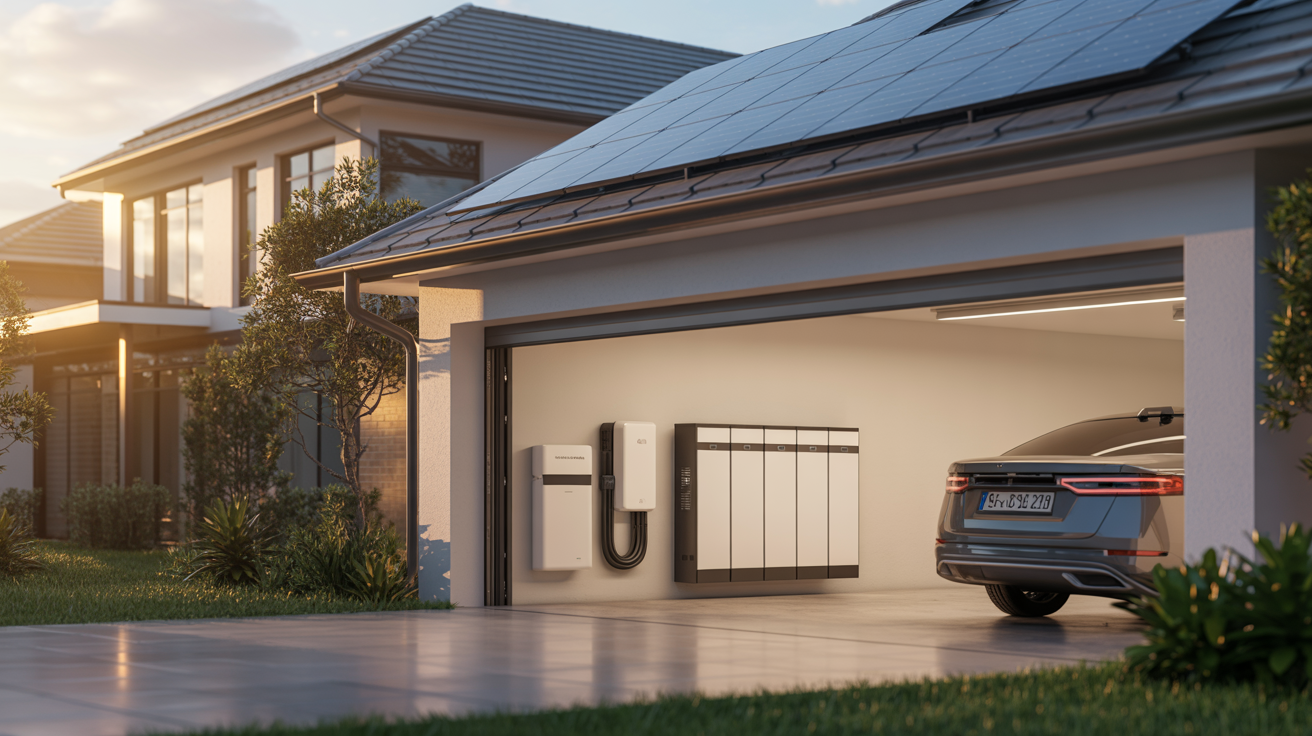
For a compact battery platform like the Humless Universal 6kW BESS, the solar array should be matched to the battery’s daily cycling goals. If the paired storage is a 5kWh LiFePO4 Battery, you want enough solar energy to bring that battery from a low state of charge back to full even when loads continue during the day. In many real-world setups, that means building in a margin so the array can cover both immediate use and charging losses. A design that looks adequate on paper can underperform if it is built too close to the edge.
Site-specific factors also matter. Shading from trees, chimneys, or nearby buildings can reduce output. So can panel orientation and tilt. Monocrystalline panels with better low-light performance and higher efficiency can help recover some of that lost energy, but thoughtful layout is still essential. If a battery system is intended to ride through outages or support critical loads, conservative sizing is usually the safer path.
One of the biggest mistakes people make is choosing batteries first and panels second. In reality, the two should be designed together. That is part of the reason Humless approaches solar-plus-storage as an integrated system. The right battery can only deliver its full value if the solar array is capable of maintaining it through real-world conditions, not just ideal lab conditions.
Cost, Incentives, Warranty, and Long-Term Reliability
Upfront pricing often drives the monocrystalline versus polycrystalline decision, but long-term economics tell the fuller story. Monocrystalline modules usually cost more per panel, yet they often deliver lower cost per watt installed in space-limited settings because fewer modules are required. Polycrystalline panels may be cheaper to buy, but if they force a larger array footprint or fail to produce enough charging energy for the battery, the total system value can drop.
In many cases, the 30% federal ITC tax credit changes the math in favor of a higher-quality system. When solar and eligible battery storage are installed together, the tax credit can substantially reduce net cost. That makes it easier to justify monocrystalline panels if they improve performance and help the storage system deliver more usable energy. Incentives do not remove the need for good design, but they make performance-focused choices more accessible.
Warranty and certification matter just as much as efficiency. A 10-year warranty provides confidence that the storage portion of the system is backed for the long haul, especially when paired with panels expected to operate for decades. UL certification is equally important because it supports safety, permitting, and insurance acceptance. In practical terms, UL-certified components help customers and installers move through the approval process with greater confidence, and they reduce risk in systems that will be cycling daily.
Humless products are designed with those expectations in mind. For homeowners and businesses evaluating solar-plus-storage, a UL-certified, warrantied system can be a decisive advantage. The goal is not just to buy energy hardware, but to invest in a resilient power platform that performs safely for years. When customers choose solutions like the Humless Universal 6kW BESS, they are often looking for exactly that combination of reliability, simplicity, and long-term value.
Glenn Jakins’ leadership at Humless reflects a deployment-driven mindset. With more than 15 years in the industry and over 15,000 deployments, the lesson is clear: the cheapest system is rarely the best system if it leaves the battery undercharged, the roof underutilized, or the owner exposed to avoidable maintenance and replacement costs. The best value comes from a system that consistently meets the load, protects the battery, and stands up to real-world conditions.
For many buyers, the bottom line is simple. If budget is tight and space is abundant, polycrystalline can work. If space is limited, resilience is a priority, and long-term return matters, monocrystalline usually provides the better investment.
Choosing the Best Panel Type for Your Backup Goals
The best solar panel for battery storage depends on the job you need the system to do. If your goal is to keep a few lights, a refrigerator, and essential electronics running during outages, you may only need a modest array and a compact battery. But if you want to power more of the home, extend backup runtime, or reduce grid dependence, the panel decision becomes more consequential.
Here is the simplest framework. Choose monocrystalline when you want maximum output from limited space, better performance in lower-light conditions, and a more future-proof design for battery charging. Choose polycrystalline when installation area is plentiful and the immediate goal is to reduce upfront panel costs without demanding the highest efficiency. In both cases, the battery should be sized and configured to handle the expected loads, cycles, and outage scenarios.
For many Humless customers, the answer ends up being monocrystalline because storage is meant to provide peace of mind. Battery systems are not just about daily bill savings; they are about knowing that your power reserve will be ready when needed. A high-efficiency solar array increases the odds that the battery is full when the sun goes down or when the grid goes out.
If you are planning around the Humless Universal 6kW BESS and the 5kWh LiFePO4 Battery, think of the panels as the fuel source that keeps the system ready. The battery stores the value; the panels create it. A compact, efficient monocrystalline array often makes the most sense because it helps ensure the storage system can recharge reliably day after day. In that context, the panel choice is not just about solar. It is about the performance of the entire resilience stack.
Ultimately, the best installation is one that matches the customer’s energy habits, roof space, climate, and budget. With the right design, either panel type can support battery storage. But if the question is which one is usually best for battery storage, monocrystalline is the stronger default in most residential and small commercial systems.
FAQ
Do monocrystalline panels charge batteries faster than polycrystalline panels?
In most cases, yes. Monocrystalline panels usually have higher efficiency, so they produce more power per square foot and can deliver more daily energy in the same space. That does not mean they always charge a battery faster in every scenario, but when roof area is limited, they usually help the battery recharge more reliably and earlier in the day.
Are polycrystalline panels still worth buying for storage systems?
They can be, especially when the installation has plenty of room and the budget is a major concern. Polycrystalline panels may make sense for ground mounts or large open sites where adding extra modules is easy. For tight rooftops and critical backup applications, though, monocrystalline is generally the better fit.
What size solar array do I need for a battery like the Humless 5kWh LiFePO4 Battery?
The right size depends on your loads, sun hours, and whether the battery is being charged from solar only or from solar plus grid. As a general rule, you want enough array capacity to supply daytime demand and still refill the battery with margin for losses. Many systems benefit from designing the solar array larger than the battery’s nominal capacity would suggest, especially if backup reliability is the priority.
How do UL certification, warranties, and tax credits affect the decision?
UL certification helps support safety, permitting, and insurance acceptance. A 10-year warranty provides long-term confidence in the storage system. The 30% federal ITC tax credit can lower the effective cost of eligible solar-plus-storage installations, making it easier to invest in higher-performing monocrystalline panels and a more robust battery system.
If you are planning a solar-plus-storage project and want help choosing the right panel type, battery size, and system layout, contact Humless for a consultation. Since 2010, Humless has helped customers build reliable energy storage systems designed for real-world performance, and our team can help you determine whether monocrystalline or polycrystalline solar panels are the best fit for your goals, your space, and your budget.