Energy independence isn't just a buzzword anymore, it's a tangible goal for thousands of homeowners and businesses tired of unpredictable utility bills and power outages. If you've already invested in solar panels or you're considering making the leap, there's one critical piece of the puzzle that determines whether you're truly energy-independent or simply grid-tied with green credentials: a battery bank.
A solar panel battery bank transforms your solar setup from a daytime-only energy source into a 24/7 powerhouse. Instead of watching excess electricity flow back to the grid (often for minimal credit), you're storing that energy for evenings, emergencies, or those cloudy stretches when your panels aren't producing at full capacity. Whether you're planning to go completely off-grid, secure backup power for critical loads, or maximize every kilowatt-hour your panels generate, understanding how battery banks work with solar systems is essential.
In this guide, we'll walk through everything from the basics of what a solar battery bank actually does, to sizing calculations, component selection, and safety considerations. By the end, you'll know exactly how to choose and configure a battery bank that fits your energy goals and budget.
Key Takeaways
- A battery bank with solar panel transforms your system from daytime-only generation into 24/7 energy independence by storing excess electricity for nights and emergencies.
- Lithium Iron Phosphate (LiFePO4) batteries offer 3,000 to 5,000+ cycles, 95% efficiency, and superior safety compared to traditional lead-acid options.
- Properly sizing your solar panel battery bank requires calculating daily energy consumption and matching storage capacity to your solar array's output.
- Essential system components include MPPT charge controllers, pure sine wave inverters, and Battery Management Systems (BMS) for safe operation.
- Professional installation and code compliance are critical for battery bank safety, preventing hazards like electrical fires and ensuring optimal performance.
- Battery banks reduce reliance on expensive grid power during peak-rate hours while providing reliable backup during utility outages.
What Is a Solar Panel Battery Bank?
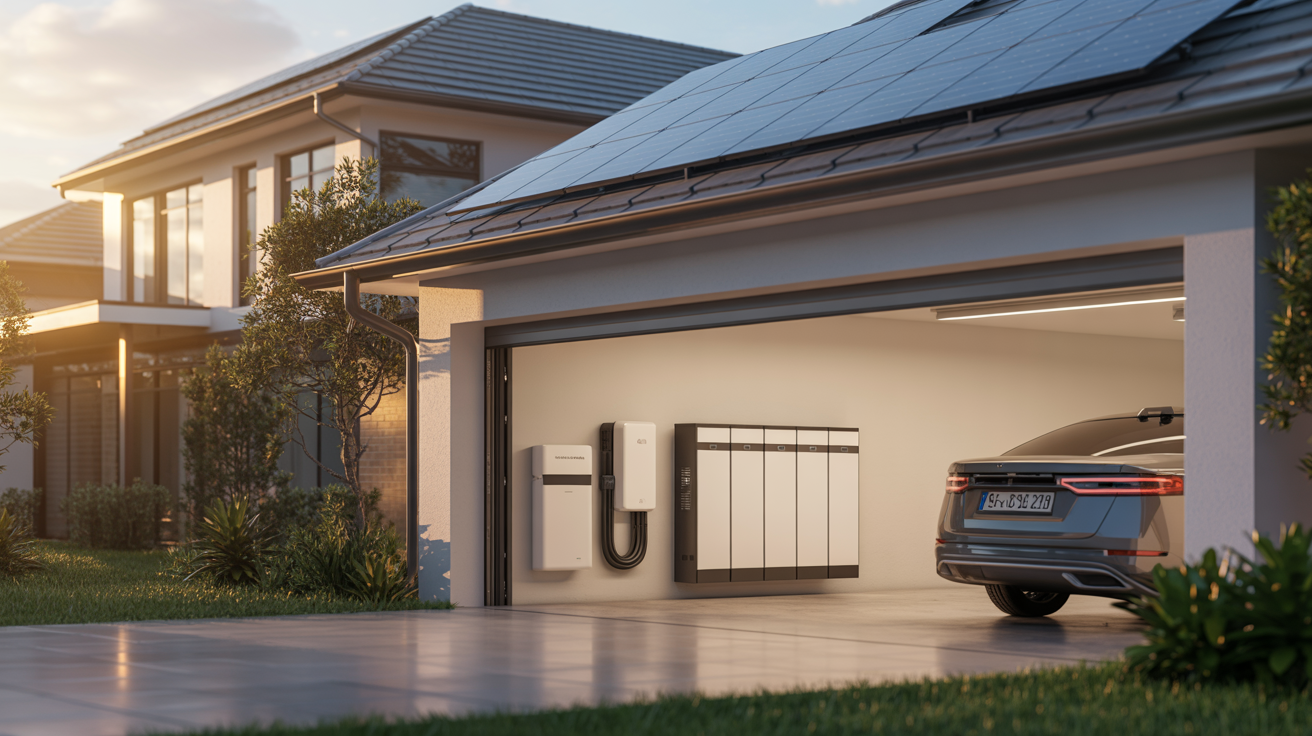
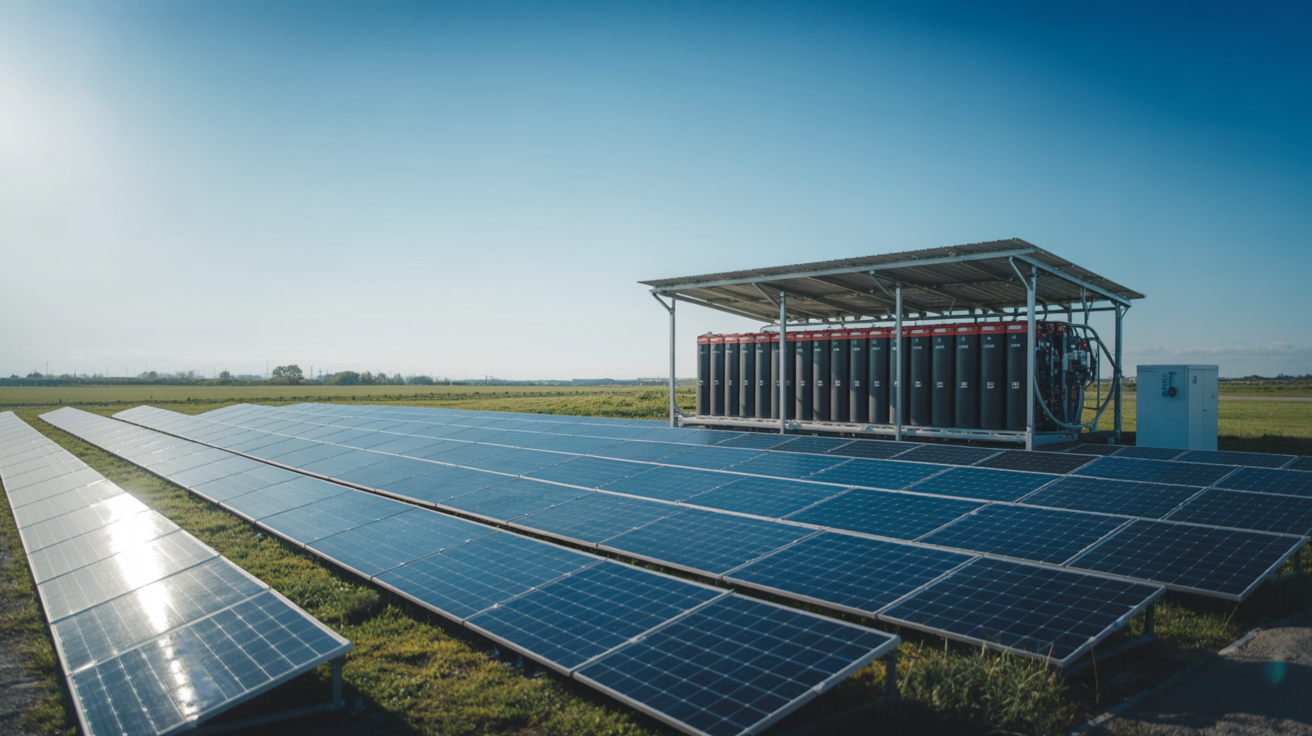
At its core, a solar panel battery bank is a collection of batteries working together to store excess electricity generated by your solar panels. Think of it as an energy reservoir, during peak sunlight hours when your panels are cranking out more power than you're using, that surplus doesn't go to waste. Instead, it's captured and held in reserve for when the sun goes down, clouds roll in, or the grid fails.
Unlike a single battery, a battery bank combines multiple units (either wired in series, parallel, or both) to achieve the voltage and capacity your system demands. This stored energy is in the form of direct current (DC) electricity, the same type your solar panels produce. When you need to power your home, that DC electricity gets converted to alternating current (AC) by an inverter, the kind of electricity your appliances and devices expect.
The beauty of a battery bank lies in its flexibility. For off-grid properties, it's the backbone of self-sufficiency, ensuring lights stay on after sunset. For grid-tied homes, it provides backup during outages and reduces reliance on utility power during peak-rate hours. In both cases, you're leveraging the solar energy you've already paid to generate, rather than letting it slip away.
Modern battery banks come in various chemistries and configurations, but they all share the same fundamental role: bridging the gap between when solar energy is produced and when it's actually needed. That's what makes them indispensable for anyone serious about energy independence.
How Battery Banks Work with Solar Panels
Understanding the interplay between solar panels and battery banks demystifies the entire system and helps you make smarter decisions about components and configuration. Let's break down the process step-by-step.
Energy Collection and Storage Process
When sunlight hits your solar panels, photovoltaic cells convert that light into DC electricity. This raw power flows from the panels toward your battery bank, but it doesn't go directly, there's a critical gatekeeper called a charge controller standing between them.
The charge controller regulates the voltage and current coming from the panels to match what the batteries can safely accept. Without it, you'd risk overcharging the battery bank, which can lead to reduced lifespan, damage, or even safety hazards. Maximum Power Point Tracking (MPPT) controllers are the gold standard here, optimizing energy harvest even when conditions aren't perfect.
There are two main system architectures: DC-coupled and AC-coupled. In a DC-coupled setup, solar electricity flows directly to the batteries as DC, which is efficient and straightforward. In an AC-coupled system, solar power is first converted to AC by a grid-tied inverter, then back to DC for battery storage, a bit less efficient but useful for retrofitting existing grid-tied systems with battery backup.
Once the charge controller gives the green light, excess energy fills the battery bank. If your panels produce more power than the batteries can absorb and your loads consume, the surplus either exports to the grid (in grid-tied setups) or gets curtailed (in off-grid systems). The goal is to size your battery bank and solar array so you're capturing and using as much of that energy as possible.
Discharge and Usage Cycles
When the sun sets or your energy demand exceeds what the panels are producing in real-time, the battery bank steps in. Inside lithium-based batteries like LiFePO4, lithium ions migrate from the anode to the cathode, releasing electrons that flow through your system to power your home. This process is managed by a Battery Management System (BMS), which monitors cell voltage, temperature, and current to prevent over-discharge and maintain balance across cells.
The stored DC electricity exits the battery bank and heads to an inverter, which converts it to the AC power your refrigerator, HVAC, lights, and electronics need. In systems with backup power capability, the inverter can prioritize critical loads, essentials like medical equipment, refrigeration, and communication devices, ensuring they stay online even if battery capacity is limited.
Each full charge and discharge is called a cycle. High-quality lithium batteries can handle thousands of cycles before capacity degrades noticeably, while older lead-acid types may only last a few hundred. The depth of discharge (DoD) also matters: draining a battery to 20% capacity versus 80% affects longevity. Modern systems with BMS protections handle this automatically, preventing you from accidentally shortening your battery bank's lifespan.
As the solar panels resume production the next morning, the cycle repeats, charging the battery bank, powering loads, storing excess. It's this continuous loop that turns a static solar installation into a dynamic, resilient energy system.
Key Benefits of Adding a Battery Bank to Your Solar System
Adding a battery bank to your solar panels isn't just a nice-to-have upgrade, it fundamentally changes how you generate, store, and consume energy. Here's why it matters.
Energy Independence and Backup Power
The most compelling reason to invest in a solar panel battery bank is independence. When the grid goes down, whether from storms, wildfires, equipment failures, or planned outages, a battery-backed solar system keeps the lights on. You're not scrambling for a generator or rationing flashlight batteries: critical appliances and systems continue running seamlessly.
For off-grid homeowners and remote properties, a battery bank isn't optional, it's the only way to bridge nighttime and low-sun periods. But even for grid-tied homes, backup power offers peace of mind. Medical equipment, home offices, security systems, and food storage all depend on reliable electricity. A properly sized battery bank ensures you're never at the mercy of utility company timelines during restoration efforts.
Beyond emergencies, battery storage lets you reduce or eliminate grid reliance during peak-rate hours. Many utilities charge significantly more for electricity in the evening when demand spikes. With a battery bank, you're drawing from your own stored solar energy instead of paying premium rates. Over time, those savings add up, improving your return on investment.
Maximum Solar Energy Utilization
Without a battery bank, any solar energy you don't use instantly either goes back to the grid (often for a fraction of what you'd pay to buy it back) or gets wasted. That's a missed opportunity, especially if your panels are producing heavily during midday when you're at work or away.
A battery bank captures that surplus, storing it for later when your panels aren't producing but your energy needs remain. Instead of exporting cheap midday solar to the utility and importing expensive evening grid power, you're self-consuming your own clean energy. This is particularly valuable in areas with unfavorable net metering policies or time-of-use rates.
You're also maximizing the value of every panel and every sunny day. If your goal is sustainability, there's something deeply satisfying about knowing you're actually using the renewable energy you generate rather than giving it away. For businesses, this can mean lower operating costs and a smaller carbon footprint, win-win.
Companies like Humless have been pioneering battery energy storage systems since 2010, offering UL-certified LiFePO4 solutions that integrate seamlessly with solar, grid, wind, and generator sources. Their systems are designed for both residential and commercial applications, delivering reliable energy independence backed by 24/7 support.
Types of Battery Banks for Solar Panel Systems
Choosing the right battery chemistry is one of the most important decisions you'll make, affecting cost, lifespan, maintenance, and performance. Let's compare the leading options.
Lithium Iron Phosphate (LiFePO4) Batteries
LiFePO4 batteries have rapidly become the go-to choice for modern solar battery banks, and for good reason. They offer exceptional cycle life, often 3,000 to 5,000+ cycles depending on depth of discharge, meaning they can last a decade or more in typical residential use. Their energy density is high, so you get more usable capacity in a smaller, lighter package compared to lead-acid.
Safety is another standout feature. LiFePO4 chemistry is inherently stable, with lower risk of thermal runaway or fire compared to other lithium formulations. Built-in Battery Management Systems (BMS) monitor each cell, balancing charge and preventing over-voltage, under-voltage, or overheating. This makes them well-suited for indoor installations and applications where safety is non-negotiable.
Efficiency is also top-notch. LiFePO4 batteries typically boast round-trip efficiency around 95%, meaning you get back nearly all the energy you put in. They also handle partial state-of-charge well, so you don't have to worry about daily deep cycling shortening their lifespan. Yes, the upfront cost is higher than lead-acid, but the total cost of ownership, factoring in longevity, maintenance, and performance, usually favors lithium.
For those seeking reliable, long-term energy storage, Humless offers a range of LiFePO4-based battery energy storage systems designed for seamless solar integration, off-grid living, and backup power. Their UL-certified products are built for durability and backed by over 15 years of expertise in the field.
Lead-Acid and AGM Batteries
Lead-acid batteries, including flooded (wet cell) and sealed Absorbent Glass Mat (AGM) variants, are the traditional workhorses of solar battery banks. They're cheaper upfront, widely available, and familiar to installers. For budget-conscious projects or smaller systems, they can still make sense.
But, they come with trade-offs. Cycle life is significantly shorter, typically 500 to 1,000 cycles depending on depth of discharge, and they don't like being regularly drained below 50% capacity. That means you'll need roughly double the rated capacity to get the same usable energy as a lithium bank. Efficiency is lower too, around 80-85%, so more energy is lost to heat during charge and discharge.
Flooded lead-acid batteries require regular maintenance: checking electrolyte levels, topping off with distilled water, and ensuring proper ventilation to vent hydrogen gas. AGM batteries are sealed and maintenance-free, but they're still heavier, bulkier, and shorter-lived than LiFePO4.
If initial cost is your primary constraint and you're comfortable with more frequent replacements and hands-on upkeep, lead-acid can work. But for most modern solar installations, especially those aiming for long-term energy independence, lithium iron phosphate is the smarter investment.
Sizing Your Solar Panel Battery Bank
Getting the size right is critical. Too small, and you'll run out of power when you need it most: too large, and you're wasting money on capacity you'll never use. Here's how to dial it in.
Calculating Your Energy Needs
Start by figuring out your daily energy consumption in kilowatt-hours (kWh). Pull up a few recent utility bills and divide your monthly usage by 30, or use a home energy monitor for real-time data. Be honest about what you actually use, not what you think you use.
If you're planning for backup power only, identify your critical loads, refrigerator, freezer, lights, internet, medical devices, and calculate their combined daily draw. For example, a fridge might use 1.5 kWh/day, lights another 0.5 kWh, and electronics 1 kWh, totaling 3 kWh/day. Multiply by the number of days you want backup (e.g., 2-3 days) to get your target capacity.
For off-grid or full energy independence, you'll need to cover 100% of your daily usage. Let's say your household uses 30 kWh/day. Factor in some headroom for cloudy stretches or seasonal variation, many off-gridders aim for 1.5x to 2x their average daily use to handle worst-case scenarios.
Don't forget inefficiencies. Inverters and charge controllers aren't perfect: account for about 10-15% loss in the system. So if you need 30 kWh of usable energy, plan for around 33-35 kWh of battery capacity.
Matching Battery Capacity to Solar Array Output
Your battery bank and solar array need to work in harmony. A massive battery bank paired with undersized panels won't recharge fully, while oversized panels with a tiny bank waste potential.
Look at your solar array's daily production. If you have a 5 kW array in a location with 5 peak sun hours/day, that's roughly 25 kWh/day generated. After powering your daytime loads, the remainder charges the battery. If you use 10 kWh during the day, you have 15 kWh left to store.
Battery capacity is often listed in amp-hours (Ah) at a specific voltage. To convert to kWh:
kWh = (Ah × Voltage) / 1000
For example, a 200 Ah battery at 48V provides:
(200 × 48) / 1000 = 9.6 kWh
If you need 30 kWh of storage, you'd wire multiple batteries in series (to increase voltage) or parallel (to increase amp-hours), or both. A common 48V system might use four 200 Ah batteries in parallel for 800 Ah total, or about 38 kWh.
Always match your battery bank voltage to your inverter and charge controller specs. Most residential systems run 12V, 24V, or 48V, with 48V becoming standard for larger installations due to higher efficiency and lower current (thinner wiring, less loss).
When in doubt, consult with a professional installer or reach out to manufacturers like Humless, whose team can help you size a battery energy storage system tailored to your solar array and energy needs.
Essential Components for a Complete Solar Battery System
A solar panel battery bank doesn't operate in isolation, it's part of an integrated system where each component plays a vital role. Here's what you need to make it all work.
Solar Panels: Obviously, these are your energy source. Monocrystalline panels are the most efficient and space-effective, though polycrystalline can be a budget alternative. Your array size determines how much energy you can generate and, so, how quickly you can recharge your battery bank.
Charge Controller: This is the brain managing energy flow from panels to batteries. MPPT (Maximum Power Point Tracking) controllers are preferred for larger systems because they optimize power harvest, especially in variable conditions. PWM (Pulse Width Modulation) controllers are cheaper but less efficient. The controller must be rated for your array's voltage and current.
Battery Bank: We've covered chemistries and sizing, but don't overlook the importance of quality. UL-certified batteries from reputable manufacturers ensure safety and performance. Look for built-in BMS in lithium systems to protect against over-charge, over-discharge, and thermal issues.
Inverter: This converts stored DC electricity to AC for your home. Pure sine wave inverters are essential for sensitive electronics. For grid-tied systems with battery backup, a hybrid or battery-based inverter manages both solar production and battery charge/discharge, often with smart features like load prioritization and grid export control.
Wiring and Protection: Properly sized cables, fuses, and breakers prevent overheating and electrical hazards. Don't skimp here, undersized wiring leads to voltage drop, inefficiency, and fire risk. Use appropriate gauge wire for your system's current, and install disconnects for safe maintenance.
Monitoring System: Many modern setups include app-based monitoring so you can track solar production, battery state-of-charge, and energy consumption in real-time. This visibility helps you optimize usage and catch issues early.
Humless battery energy storage systems integrate many of these components into cohesive, pre-engineered solutions, reducing complexity and installation time. Their systems are designed to work with solar, grid, wind, and generator inputs, offering flexibility for diverse applications.
Installation and Safety Considerations
Installing a solar panel battery bank isn't a casual DIY project, it involves high-voltage DC electricity, heavy components, and potential hazards if done incorrectly. Safety and code compliance should be top priorities.
Professional Installation: Unless you're a licensed electrician with solar experience, hire a qualified installer. They'll ensure proper wiring, grounding, and compliance with National Electrical Code (NEC) and local building codes. Mistakes can lead to fires, electric shock, or voided warranties.
Battery Management System (BMS): Modern lithium batteries come with integrated BMS that monitors voltage, temperature, and current for each cell. This prevents overcharging, deep discharge, and thermal runaway. Never bypass or disable BMS protections, they're there for a reason.
Ventilation and Enclosures: Lead-acid batteries emit hydrogen gas during charging, so they must be installed in well-ventilated areas away from ignition sources. Lithium batteries don't off-gas under normal conditions, but they should still be housed in flame-retardant enclosures and kept within manufacturer-specified temperature ranges (usually 32-104°F).
Electrical Protection: Properly rated fuses or circuit breakers between panels, charge controller, battery bank, and inverter protect against short circuits and overcurrent. Use DC-rated disconnects so you can safely isolate components during maintenance.
Grounding: All metal enclosures, racks, and system components must be properly grounded to prevent shock hazards and lightning damage. Follow NEC Article 690 for solar-specific grounding requirements.
Physical Security: Battery banks are heavy and contain stored energy. Secure them on stable surfaces or racks to prevent tipping. Keep them away from children, pets, and flammable materials.
Fire Safety: Even safe chemistries like LiFePO4 can pose risks if damaged or improperly installed. Install smoke detectors and fire extinguishers (Class C or ABC rated) near battery locations. Some jurisdictions require additional fire suppression for large battery banks.
Reputable manufacturers like Humless provide detailed installation guides and offer 24/7 support to installers and end-users. Their UL-certified systems meet rigorous safety standards, giving you confidence that your energy storage is both effective and safe.
Choosing the Right Battery Bank for Your Application
With so many options on the market, how do you pick the battery bank that's actually right for your situation? It comes down to matching technology and capacity to your specific use case and budget.
For Off-Grid Homes: You need maximum reliability and longevity. LiFePO4 is the clear winner here, its long cycle life, deep discharge tolerance, and low maintenance make it ideal when grid power isn't a fallback. Size generously to handle multi-day cloudy periods, and consider a hybrid system that can integrate a backup generator for extended low-sun stretches.
For Grid-Tied Backup Power: If you're mainly looking for outage protection, you can size more conservatively, enough to run critical loads for 1-3 days. A hybrid inverter that seamlessly switches between grid, solar, and battery keeps essentials online without interruption. Lithium batteries shine here too, thanks to fast charging and high efficiency.
For Time-of-Use Optimization: If your utility has time-of-use rates, a battery bank lets you store cheap midday solar and use it during expensive evening peaks. Calculate your evening usage and match battery capacity accordingly. The savings can significantly shorten your payback period.
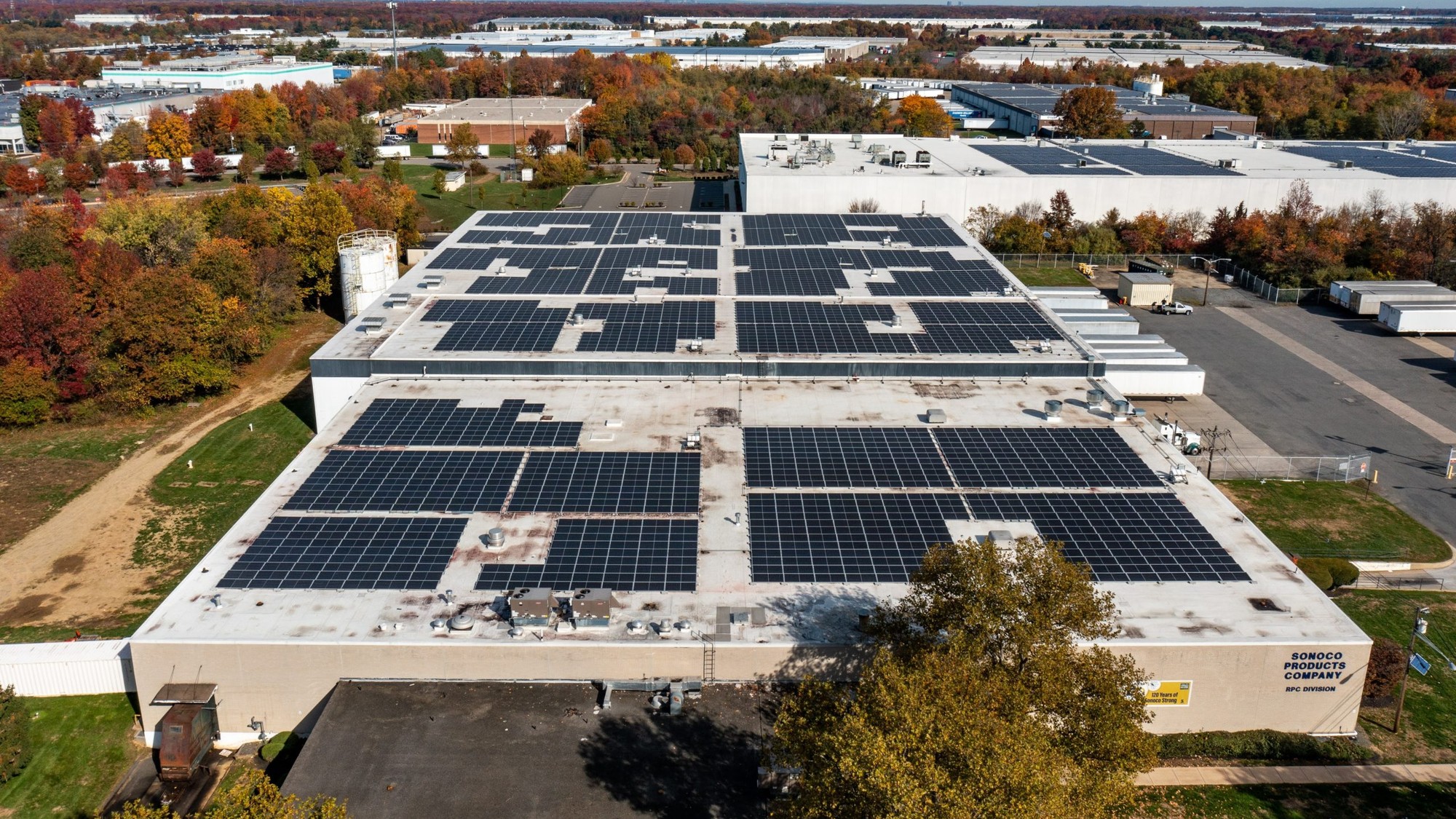
For Commercial and Business Applications: Larger energy demands require scalable, modular battery systems. Look for commercial-grade solutions with robust warranties, monitoring, and support. Humless offers commercial battery energy storage systems designed for reliability and performance, with options that integrate with existing infrastructure.
Budget Constraints: If upfront cost is a major barrier and your energy needs are modest, lead-acid AGM batteries can work for basic backup, though you'll replace them sooner. Just be realistic about their limitations. For most, saving a bit longer to invest in lithium pays off over the system's lifetime.
Climate and Environment: Extreme temperatures affect battery performance. LiFePO4 handles a wider range than lead-acid, but if you're in a very cold climate, consider insulated or heated enclosures. Conversely, hot environments benefit from active cooling or shaded installations.
Eventually, the "right" battery bank balances performance, cost, and lifespan for your unique energy goals. Don't hesitate to consult with experienced providers, companies like Humless have been in the energy storage business for over 15 years and can help tailor a solution that fits your application, whether residential, commercial, or off-grid.
Conclusion
A battery bank with solar panels isn't just an add-on, it's the key to unlocking true energy independence. Whether you're aiming to go fully off-grid, protect your home from utility outages, or simply maximize the value of every kilowatt-hour your panels produce, a properly sized and configured battery bank makes it all possible.
We've covered the fundamentals, what a solar panel battery bank is, how it works with your panels, the benefits it delivers, and the critical decisions around battery type and sizing. You've seen why LiFePO4 batteries have become the industry standard for reliability and longevity, and how essential components like charge controllers and inverters tie the system together.
Safety and proper installation can't be overlooked. This is sophisticated electrical equipment storing significant energy: professional installation and adherence to codes protect both your investment and your family.
As you move forward, remember that energy independence is a journey, not a one-size-fits-all product. Your specific needs, daily usage, backup requirements, climate, budget, all shape the ideal solution. Companies like Humless, with over 15 years pioneering battery energy storage systems, offer UL-certified LiFePO4 solutions designed for seamless solar integration, off-grid resilience, and 24/7 support.
The grid will keep having outages. Utility rates will keep climbing. But with a solar panel battery bank, you're no longer at the mercy of either. You're in control, powered by the sun, ready for whatever comes next.
Frequently Asked Questions
What is a battery bank with solar panel and how does it work?
A solar panel battery bank is a collection of batteries that stores excess DC electricity generated by solar panels during peak sunlight hours. When your panels produce more power than you're using, a charge controller safely directs that surplus into the battery bank for use at night, during outages, or on cloudy days when panels aren't producing.
How long does a solar battery bank last?
LiFePO4 (lithium iron phosphate) battery banks typically last 10-15 years with 3,000 to 5,000+ charge cycles, depending on depth of discharge and usage patterns. Lead-acid batteries have shorter lifespans of 3-5 years with 500-1,000 cycles, requiring more frequent replacement despite lower upfront costs.
What size battery bank do I need for solar panels?
Calculate your daily energy consumption in kilowatt-hours (kWh) from utility bills or energy monitors. For backup power, identify critical loads and multiply by desired backup days. For off-grid systems, plan for 1.5-2x your average daily use to handle cloudy periods, accounting for 10-15% system inefficiency.
Can you run a house on solar panels with battery bank?
Yes, a properly sized battery bank with solar panels can power your entire home. Off-grid homes rely completely on solar-battery systems, while grid-tied homes use battery banks for backup during outages or to reduce utility costs by storing cheap midday solar for expensive evening peak-rate hours.
What is the difference between DC-coupled and AC-coupled solar battery systems?
DC-coupled systems send solar electricity directly to batteries as DC power, offering higher efficiency and simpler design. AC-coupled systems convert solar power to AC first, then back to DC for battery storage—slightly less efficient but ideal for retrofitting existing grid-tied solar installations with battery backup capability.
Are LiFePO4 batteries worth it for solar battery banks?
LiFePO4 batteries offer superior value despite higher upfront costs. They deliver 3-5x longer lifespan than lead-acid, 95% round-trip efficiency, deeper safe discharge, and built-in Battery Management Systems for safety. Over 10-15 years, total cost of ownership typically favors lithium due to longevity and minimal maintenance requirements.