When the grid goes dark, most solar panels shut down automatically, a safety feature that leaves homeowners in the dark even though their rooftop investment. That's where battery backup solar power systems change the game. By pairing solar panels with energy storage, these systems capture the sun's power during the day and keep it ready for whenever you need it, whether that's midnight movie marathons, afternoon brownouts, or full-blown storm outages.
For homeowners tired of watching utility bills climb, businesses seeking uninterrupted operations, or off-grid property owners craving true energy independence, battery backup systems offer a compelling solution. They're not just a safety net: they're a strategic tool for reducing energy costs, maximizing solar investments, and taking control of your power supply. Let's dig into how these systems work, what they deliver, and how to choose one that fits your needs.
Key Takeaways
- Battery backup solar power systems store surplus solar energy for use during outages, nights, or cloudy days, transforming solar panels into a 24/7 power source.
- These systems reduce electricity costs by up to 30% in time-of-use pricing areas by storing daytime solar energy and using it during expensive peak hours.
- Lithium iron phosphate (LiFePO4) batteries offer superior safety, thermal stability, and longer cycle life compared to other chemistries, making them ideal for residential installations.
- Proper sizing requires calculating daily energy consumption and backup priorities—a typical critical loads setup needs 5–10 kWh of battery capacity per day.
- Battery backup solar power systems provide energy independence and resilience, automatically switching to stored power during grid failures in milliseconds.
- Professional installation ensures code compliance, safety, and eligibility for the federal Investment Tax Credit covering 30% of system costs through 2032.
What Are Battery Backup Solar Power Systems?
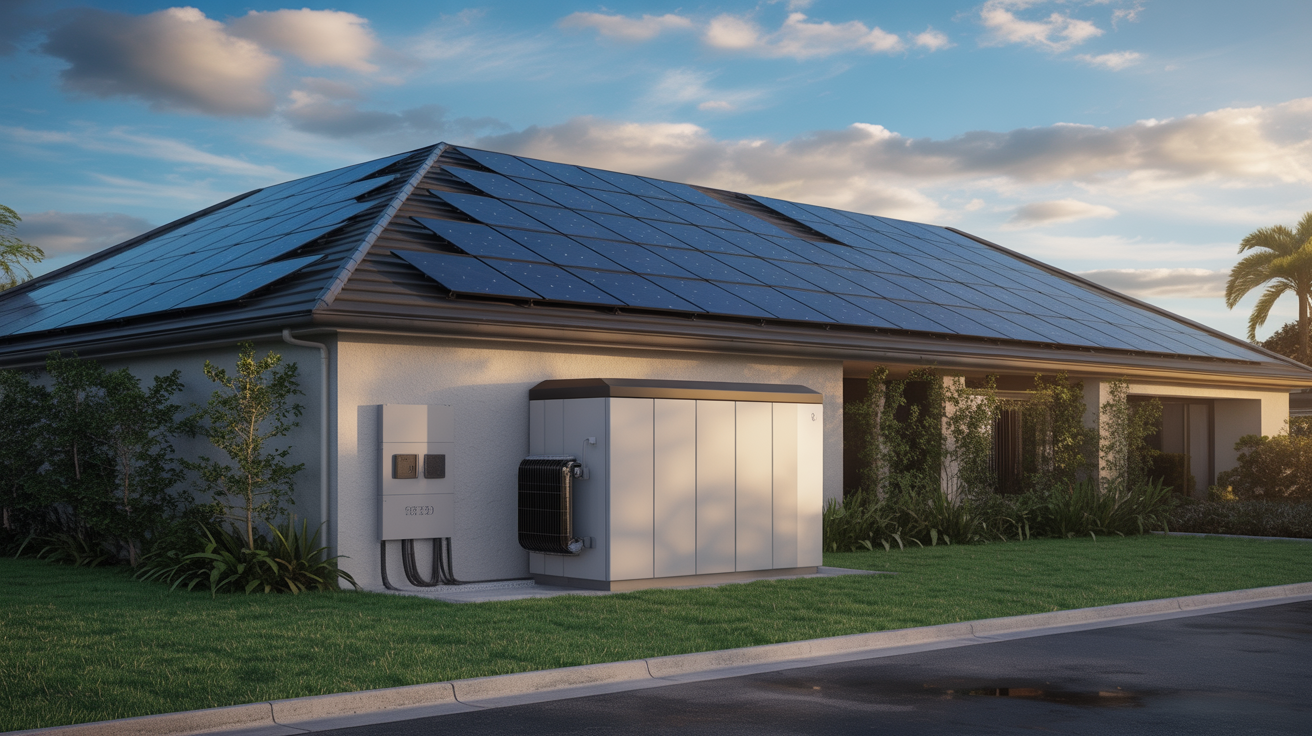
Battery backup solar power systems combine photovoltaic (PV) panels with rechargeable batteries, storing surplus solar energy generated during daylight hours for use when the sun isn't shining. Unlike standard solar installations that feed excess power back to the grid or simply waste it, these systems bank that energy locally, ready to power your home at night, during cloudy spells, or when utility service fails.
Think of them as a savings account for electricity. Your solar panels deposit energy during sunny periods, and you withdraw it on demand. This setup shifts your relationship with the grid from total dependence to selective use, letting you tap stored power instead of pulling from utility lines during expensive peak hours or emergencies.
The core appeal? Resilience and control. A battery backup transforms a solar array from a daytime generator into a 24/7 energy source, keeping critical circuits alive even when neighbors lose power. For off-grid properties, these systems can eliminate grid reliance entirely. For grid-tied homes, they act as insurance, maintaining comfort, safety, and productivity through outages while still offering the economic benefits of net metering when conditions allow.
How Solar Powered Battery Backup Systems Work
The operation of solar powered battery backup systems follows a logical flow: generate, store, and dispatch. During daylight, your solar panels produce direct current (DC) electricity. An inverter converts that DC power into alternating current (AC) for immediate household use. Any surplus beyond your real-time consumption flows into the battery bank for storage instead of being sent back to the grid.
When solar production drops, whether at dusk, during storms, or on overcast days, the system automatically taps the stored battery power to meet your electrical demand. This seamless handoff means your lights stay on, your refrigerator keeps humming, and your devices keep charging without interruption. If the batteries run low and you're grid-tied, the system can draw from utility power as a fallback: if you're off-grid, sizing and weather-watching become essential.
Many modern systems include smart energy management software that monitors real-time production, consumption, and grid conditions. These apps let you set priorities, for example, reserving battery power for outages while using grid electricity during off-peak times, or maximizing self-consumption to avoid exporting power at low net-metering rates. The result is an adaptive energy ecosystem that optimizes both savings and security.
Key Components of a Solar Battery Backup System
Each solar battery backup system relies on a handful of essential parts working in concert:
- Solar panels: The power generators. Quality panels from manufacturers like Canadian Solar or REC capture photons and convert them into DC electricity. Panel efficiency, wattage, and array size determine how much energy you can produce daily.
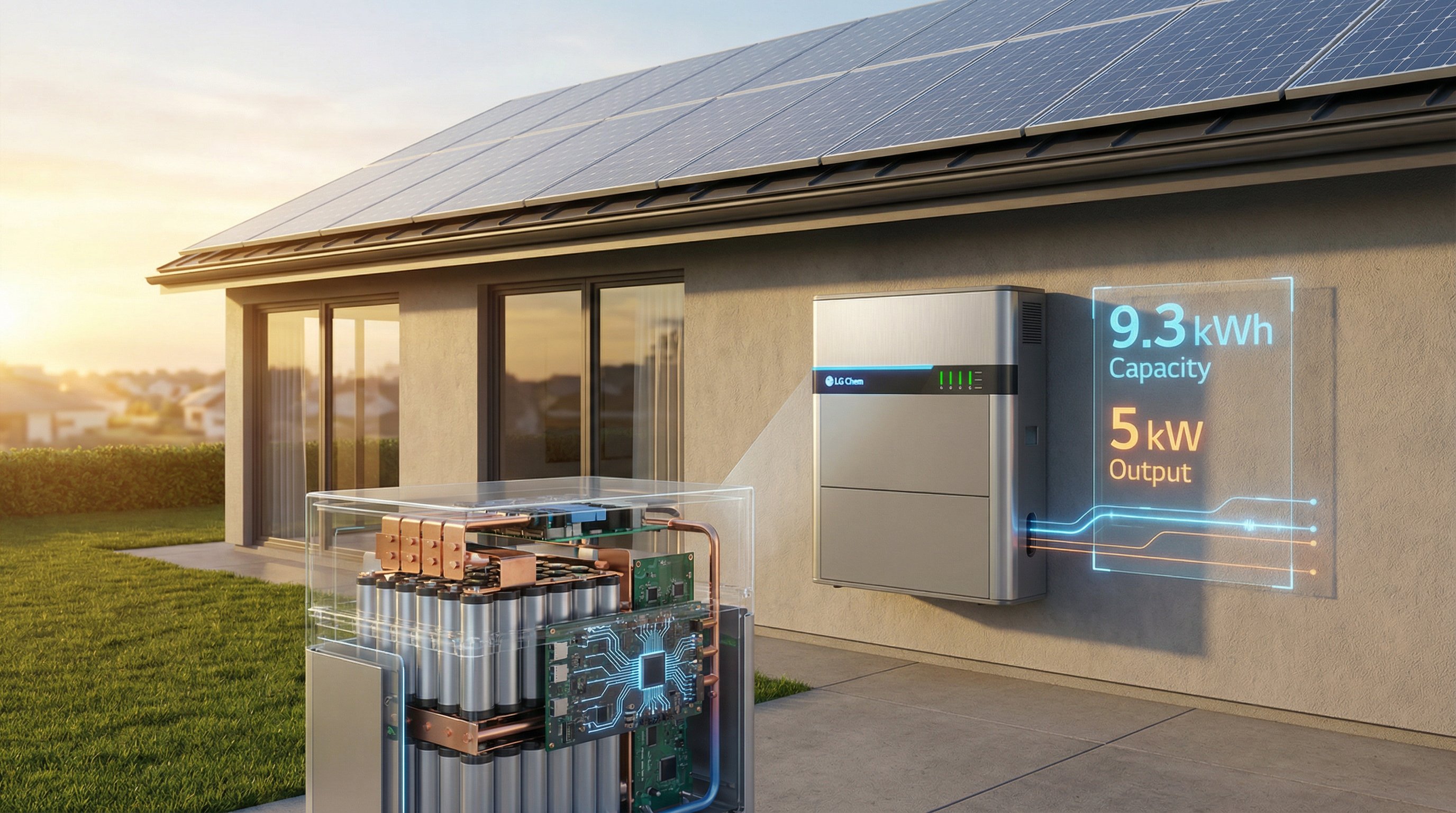
- Battery storage: The heart of the backup capability. Lithium-ion batteries, like the Tesla Powerwall (13.5 kWh) or Humless BESS units, dominate the residential market thanks to their energy density, cycle life, and efficiency. Battery capacity (measured in kilowatt-hours) dictates how long you can run loads without solar input.
- Inverter/charger: The traffic cop. Hybrid inverters (SolarEdge, Generac, Franklin WH) handle DC-to-AC conversion, manage charge/discharge cycles, and route power between panels, batteries, loads, and the grid. Some systems use separate charge controllers and inverters: integrated units simplify installation.
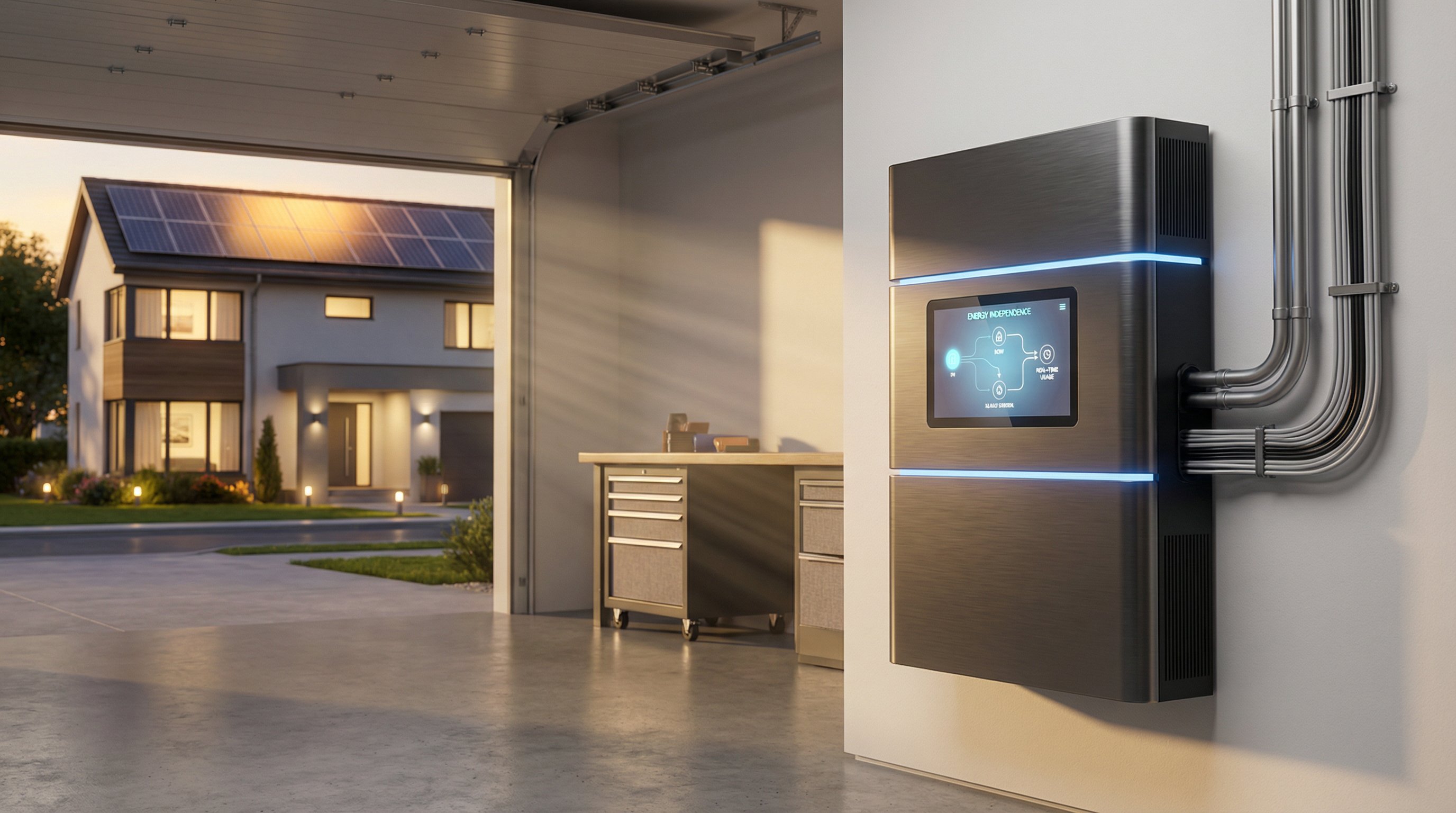
- Monitoring and control systems: Apps like mySolarEdge or FranklinWH provide real-time visibility into energy flows, battery state-of-charge, and system health. They also enable automation, triggering backup modes during outages or scheduling battery use to dodge time-of-use pricing peaks.
- Balance-of-system hardware: Wiring, breakers, disconnect switches, and mounting equipment tie it all together safely and to code. UL-certified components (a hallmark of brands like Humless) ensure reliability and compliance.
Benefits of Installing a Solar Battery Backup System
The advantages of solar battery backup systems stretch beyond simple blackout protection, they reshape how you consume, save, and think about energy.
Energy Independence and Security
Battery backup cuts the cord (at least partially) between your home and the utility grid. When storms knock out power lines or grid operators impose rolling blackouts, your system automatically switches to battery mode, keeping essential circuits, lights, refrigeration, medical devices, internet routers, running without a hiccup. That auto-switching happens in milliseconds, so you won't even notice the transition.
For off-grid property owners, energy independence isn't optional, it's the only option. A properly sized solar battery system can eliminate utility bills entirely, delivering full autonomy in remote or rural locations. Even for grid-tied users, the psychological and practical peace of mind is substantial. You're no longer at the mercy of aging infrastructure, wildfire shutoffs, or rate hikes. You control when and how you use stored power, making your home a self-sufficient energy island when needed.
Cost Savings and Grid Reliability
Maximizing self-consumption of solar energy directly translates to lower utility bills. Instead of exporting daytime surplus at modest net-metering credits and buying evening power at full retail rates, you store that surplus and use it during high-cost periods. In states with time-of-use (TOU) pricing, where evening kilowatt-hours cost two or three times more than midday rates, battery storage can slash monthly bills by 30% or more.
Beyond immediate savings, batteries hedge against future rate increases. Utility costs have climbed steadily nationwide, and pairing solar with storage locks in a portion of your energy supply at a fixed cost, the upfront investment in panels and batteries. Over a 10- to 15-year payback period, that insulation from rate volatility adds up.
Grid reliability also improves from the utility's perspective when distributed battery systems reduce peak demand. Some regions offer demand-response programs or virtual power plant incentives, paying homeowners to share stored power during grid stress. It's a win-win: you earn credits, and the grid stays stable.
Types of Battery Backup Solar Power Systems
Not all solar battery systems are created equal. Your choice depends on whether you want to stay connected to the grid, how much independence you need, and what budget and goals you're working with.
Grid-Tied Systems with Battery Backup
Grid-tied systems with battery backup are the most common residential setup. You remain connected to utility power, exporting excess solar energy when your batteries are full and importing grid electricity when solar and battery supplies run short. The battery acts as a buffer and backup, not a replacement for the grid.
Products like the Generac PWRcell or Humless BESS units exemplify this category. During normal operation, the system prioritizes self-consumption, using solar first, then batteries, and finally grid power. When an outage occurs, an automatic transfer switch isolates your home from the grid and powers designated backup circuits from the battery. Once utility service returns, the system reconnects seamlessly.
This approach offers flexibility: you get outage protection without sacrificing the economic benefits of net metering or the convenience of unlimited grid power during extended cloudy periods. Installation is straightforward since electricians can integrate batteries into existing solar arrays with minimal disruption.
Off-Grid Solar Battery Systems
Off-grid systems sever the utility connection entirely, making your solar panels and batteries the sole power sources. These setups are essential for remote cabins, farms, or properties where grid extension costs are prohibitive, but they demand careful planning.
Battery capacity must cover nighttime and low-production days, often requiring arrays two to three times larger than grid-tied equivalents. Backup generators (propane, diesel, or gasoline) typically supplement the system during prolonged bad weather, charging batteries when solar can't keep up. Off-grid living requires energy discipline: you monitor consumption closely, run heavy loads during sunny hours, and size your system with generous margins.
The payoff is total independence and zero utility bills, forever. Brands specializing in off-grid solutions, including Humless, design scalable, modular battery banks that grow with your needs and withstand harsh environmental conditions.
Hybrid Solar Battery Solutions
Hybrid systems blend the best of grid-tied and off-grid worlds, offering maximum flexibility. They can operate in multiple modes: grid-tied for daily savings, battery backup during outages, and even off-grid mode if you choose to disconnect temporarily or permanently.
Hybrid inverters (from manufacturers like SolarEdge, Schneider Electric, or Sol-Ark) manage these transitions automatically, prioritizing solar self-consumption, battery reserves, and grid import/export based on your settings. Some hybrid systems support generator inputs too, making them ideal for properties that experience frequent outages or want the option to go off-grid later without replacing equipment.
This versatility comes at a modest cost premium, but for homeowners or businesses seeking future-proof resilience, hybrids deliver unmatched adaptability. You're not locked into one operating mode, your system evolves as your needs and the grid landscape change.
Choosing the Right Battery Technology
Battery chemistry matters, a lot. The type of battery you choose affects performance, lifespan, safety, and cost, so it's worth understanding the options.
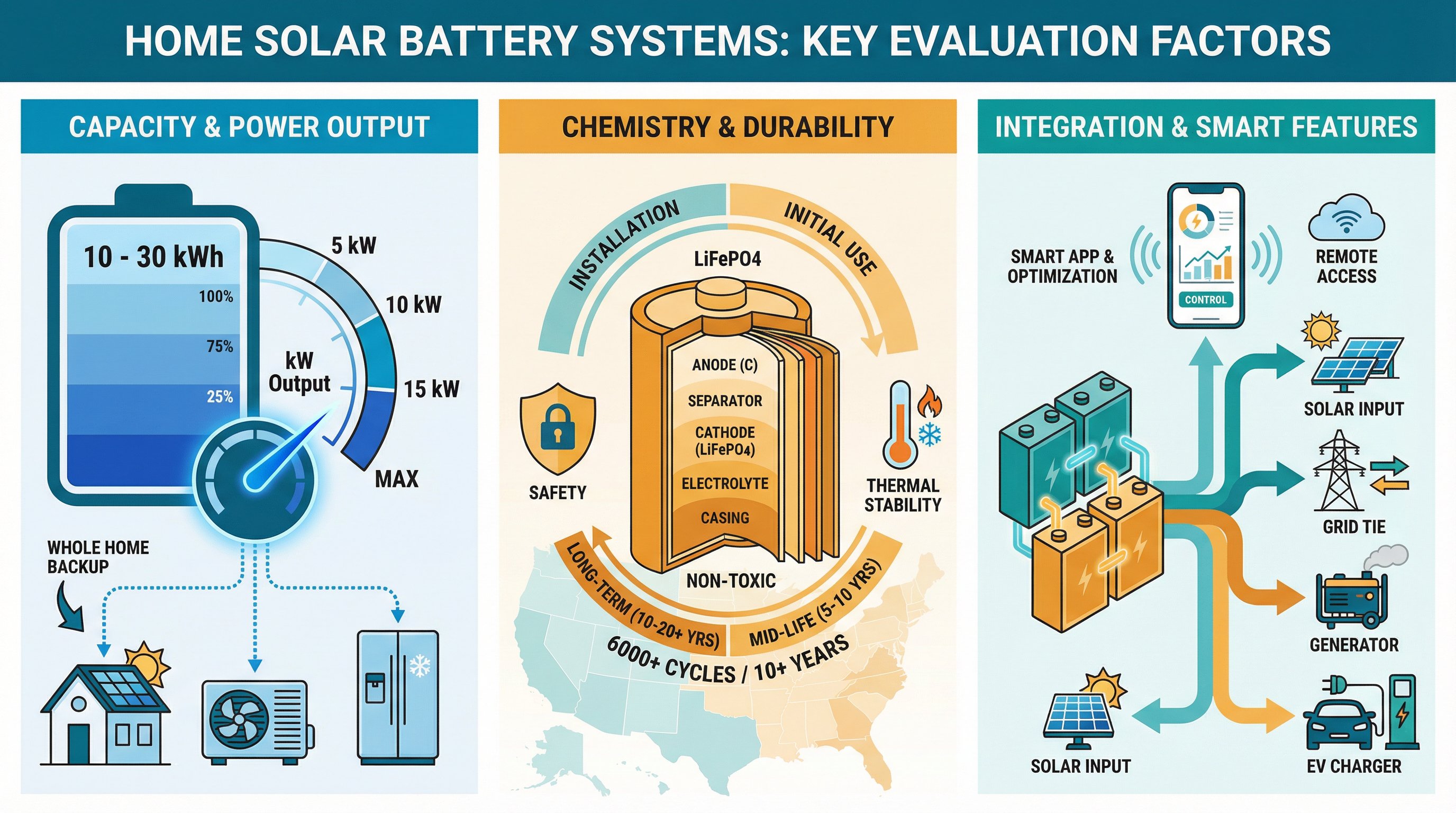
Lithium-ion batteries dominate the residential solar storage market because they pack high energy density, excellent round-trip efficiency (90–95%), and long cycle lives (often 5,000–10,000 cycles). Within the lithium family, lithium nickel manganese cobalt (NMC) and lithium iron phosphate (LiFePO4) are the two heavyweights.
LiFePO4 vs. Other Battery Chemistries
LiFePO4 (lithium iron phosphate) batteries stand out for safety, thermal stability, and longevity. They're less prone to thermal runaway, the overheating cascade that can cause fires, making them a top choice for residential installations where safety is paramount. LiFePO4 cells also tolerate deeper discharges and more charge cycles than NMC counterparts, often exceeding 6,000 cycles at 80% depth of discharge. Humless BESS systems leverage LiFePO4 chemistry for exactly these reasons: robust performance, UL certification, and peace of mind.
NMC batteries (used in products like the Tesla Powerwall) offer slightly higher energy density, squeezing more capacity into a smaller footprint. They're popular in space-constrained installations but require more sophisticated thermal management. Both lithium chemistries vastly outperform older technologies like lead-acid, which suffer from shorter lifespans (500–1,000 cycles), lower efficiency (70–80%), and maintenance headaches, and nickel-cadmium, which is expensive and carries environmental concerns.
For most residential and commercial users, LiFePO4 strikes the best balance of safety, performance, and cost over the system's 10- to 15-year life. If you're choosing a battery, prioritize brands with UL or equivalent certifications, transparent warranty terms (typically 10 years or a specified throughput), and proven track records in real-world deployments.
Sizing Your Solar Powered Battery Backup System
Undersized systems leave you in the dark: oversized ones waste money. Proper sizing balances daily energy needs, backup priorities, and budget.
Start by calculating your average daily electricity consumption in kilowatt-hours (kWh). Check recent utility bills or use a monitoring device to track real usage. For a typical U.S. home, that's around 30 kWh per day, though it varies widely by climate, appliances, and habits.
Next, identify your backup priorities. Do you need to power the whole house during outages, or just critical loads, refrigerator, a few lights, internet, and maybe a window AC unit? Critical loads might total 5–10 kWh per day, while whole-home backup could match or exceed your full consumption.
Battery capacity should cover at least one full evening and night of your backup load. For example, if your critical loads use 8 kWh overnight, a single 13.5 kWh battery (like a Powerwall or comparable Humless unit) provides a comfortable margin. If you want multi-day autonomy, common for off-grid setups or areas with frequent extended outages, multiply that by the number of days you want to ride out without solar recharge. A three-day reserve for 8 kWh daily usage means 24 kWh of battery capacity, often requiring two or more units.
Solar array size must generate enough energy to meet daily loads and recharge the batteries. A rough rule of thumb: if you use 30 kWh per day and your location gets 4–5 peak sun hours, you need at least a 6–7 kW solar array (accounting for system losses). Off-grid or autonomy-focused systems often double that to handle seasonal variation and cloudy stretches.
Don't forget scalability. Many modern systems, including Humless BESS, are modular, you can start with one battery and add more as needs or budgets grow. Consulting with a professional installer or using online calculators (many manufacturers provide them) ensures you don't over- or under-build.
Installation and Integration Considerations
Even the best battery backup system won't deliver if installation is bungled. Integration with existing solar, electrical panels, and grid connections requires expertise, permitting, and attention to detail.
First, assess compatibility. If you already have solar panels, confirm your inverter supports battery integration or plan to upgrade to a hybrid model. Some older inverters aren't battery-ready, requiring a parallel installation of a battery inverter or a full system retrofit. Newer installs benefit from integrated solutions where the inverter, battery, and monitoring come as a cohesive package.
Electrical panel upgrades are common. Backup circuits need to be isolated on a critical loads sub-panel, which an electrician will wire separately from non-essential loads. This sub-panel connects to the battery and automatic transfer switch, ensuring seamless failover during outages. Plan for this added cost and complexity upfront.
Physical installation matters too. Batteries should be mounted in climate-controlled spaces, garages, basements, or utility rooms, away from extreme heat or freezing temperatures. LiFePO4 units tolerate wider temperature ranges than NMC, but all batteries perform best between 50–80°F. Some systems, like Humless BESS, offer weather-resistant enclosures suitable for outdoor installation in covered areas, expanding placement options.
Permits and inspections are non-negotiable. Local building codes, utility interconnection agreements, and fire safety regulations govern battery installations. A licensed installer handles this bureaucracy, ensuring your system is code-compliant and eligible for incentives like the federal Investment Tax Credit (ITC), which covers 30% of system costs through 2032.
Finally, plan for monitoring and maintenance. Most systems connect via Wi-Fi or cellular to cloud-based apps, giving you real-time visibility and remote troubleshooting. Schedule annual inspections to check connections, firmware updates, and battery health. Reputable manufacturers and installers offer ongoing support, Humless, for instance, provides 24/7 technical assistance to keep your system running smoothly.
A professional installation isn't just a good idea, it's essential for safety, performance, and warranty validity. DIY installs can void warranties and create hazards, so budget for expert labor and enjoy the peace of mind that comes with a turnkey, certified system.
Conclusion
Battery backup solar power systems represent more than a technological upgrade, they're a strategic shift toward energy autonomy, resilience, and long-term savings. Whether you're a homeowner looking to weather the next storm without losing power, an off-grid property owner seeking total independence, or a business protecting critical operations, these systems deliver tangible value that compounds over time.
The landscape has matured dramatically. Costs have dropped, efficiency has climbed, and integrated solutions from proven brands like Humless BESS make deployment straightforward and reliable. LiFePO4 chemistry, modular scalability, and smart monitoring have turned what was once a niche luxury into a practical investment for millions of properties.
As utility rates rise, climate-driven outages increase, and renewable energy incentives remain strong, the case for solar battery backup only strengthens. The question isn't whether battery storage makes sense, it's how soon you can get it installed. Start by auditing your energy needs, consulting with reputable installers, and exploring the systems that align with your goals. Your future self, powering through the next blackout with the lights on and the coffee brewing, will thank you.
Frequently Asked Questions
What is a battery backup solar power system?
A battery backup solar power system pairs solar panels with rechargeable batteries to store excess solar energy generated during the day. This stored energy powers your home at night, during outages, or when the grid fails, transforming your solar array into a 24/7 energy source.
How do battery backup solar power systems work during a power outage?
During an outage, an automatic transfer switch isolates your home from the grid and seamlessly switches to battery power in milliseconds. The system powers designated backup circuits, keeping essential loads like lights, refrigerators, and medical devices running without interruption until grid service returns.
What are the cost savings benefits of installing a solar battery backup system?
Battery systems maximize self-consumption of solar energy, letting you store daytime surplus and use it during expensive peak hours instead of buying from the grid. In areas with time-of-use pricing, this can reduce monthly electricity bills by 30% or more while hedging against future rate increases.
How long do lithium-ion solar batteries last?
Lithium-ion batteries typically last 10 to 15 years or 5,000 to 10,000 charge cycles, depending on chemistry. LiFePO4 (lithium iron phosphate) batteries often exceed 6,000 cycles at 80% depth of discharge, offering superior longevity, safety, and thermal stability compared to other chemistries.
Can I add battery backup to my existing solar panel system?
Yes, if your inverter supports battery integration or you upgrade to a hybrid inverter model. Many modern systems offer modular, scalable battery units that integrate with existing solar arrays, though you may need electrical panel upgrades and professional installation to ensure compatibility and code compliance.
What size battery backup system do I need for my home?
Battery size depends on your daily energy consumption and backup priorities. For critical loads averaging 8 kWh overnight, a 13.5 kWh battery provides adequate coverage. For whole-home backup or multi-day autonomy, calculate your daily usage and multiply by desired days of reserve, often requiring multiple battery units.