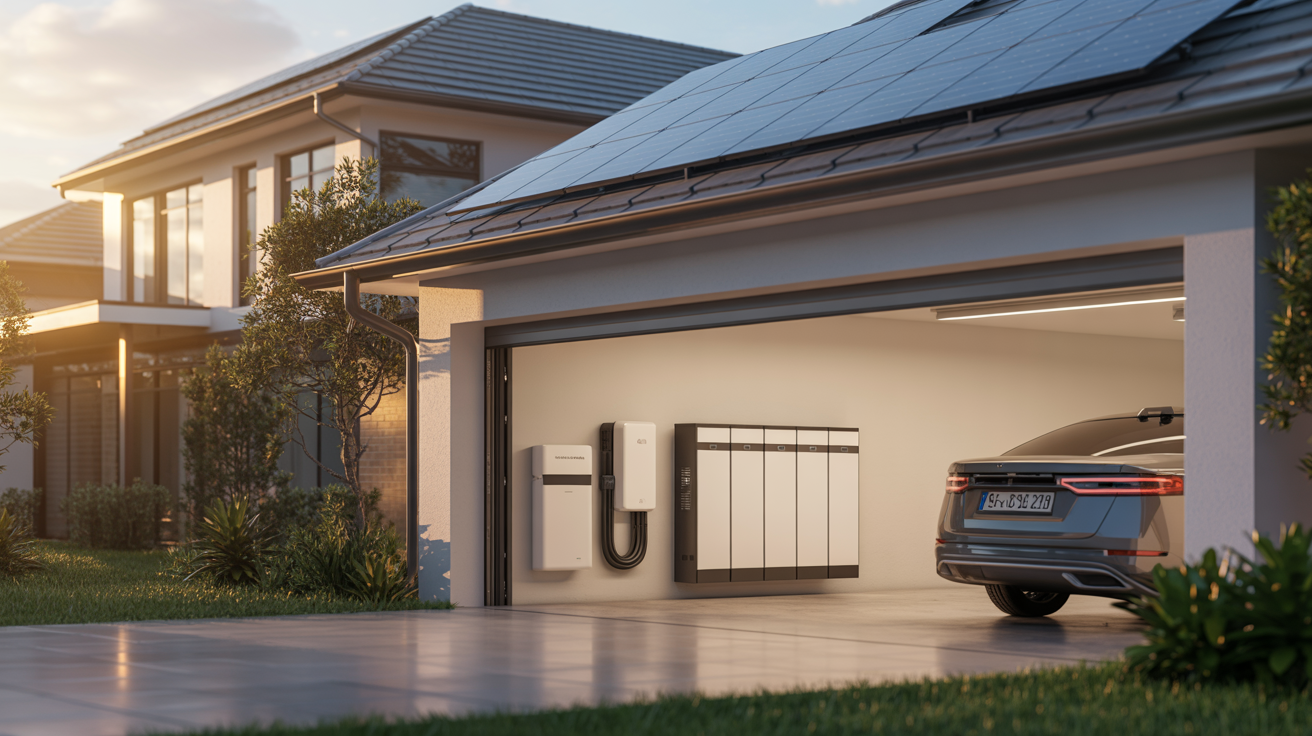
Power outages don't announce themselves. One minute you're working from home, the next you're scrambling for candles and worrying about spoiled groceries. For homeowners exploring solar energy, battery storage has shifted from luxury to necessity, especially as extreme weather events become more frequent and utility rates climb higher during peak hours.
BrightBox is Sunrun's answer to this challenge: a branded solar battery storage system built around LG Chem technology that promises backup power without the hefty upfront cost. Offered as a $0-down service bundled with new solar installations, it's designed to keep essential circuits running during grid failures while helping you dodge time-of-use rate spikes. But how does it stack up against standalone battery systems like Tesla Powerwall, and is the lease model actually the right move for your home? This guide breaks down everything you need to know about BrightBox's capabilities, limitations, and how it compares to alternatives in the residential energy storage market.
Key Takeaways
- BrightBox solar battery storage offers $0-down, 20-year service agreements bundled with Sunrun solar installations, eliminating large upfront hardware costs while providing professional monitoring and maintenance.
- BrightBox delivers 9.3 kWh of capacity and 5 kW of continuous power to run essential loads (refrigerator, lights, WiFi, devices) for 8-12 hours during grid outages, making it suitable for modest backup rather than whole-home protection.
- Unlike ownership-based systems like Tesla Powerwall, BrightBox is solar-only and cannot charge from the grid, limiting effectiveness during prolonged cloudy periods unless paired with backup generators.
- BrightBox requires pairing with a new Sunrun solar installation and is not available as a standalone retrofit, reducing flexibility compared to competitors that integrate with existing systems.
- The service model means you don't own the hardware, and transferring the contract to a home buyer or buying out early can be costly, whereas systems like Powerwall add long-term home resale value.
- BrightBox is ideal for budget-conscious homeowners seeking backup power without ownership responsibilities, but falls short for those needing whole-home protection, off-grid capability, or long-term energy independence.
What Is BrightBox and How Does It Compare to Other Solar Battery Systems?
BrightBox is Sunrun's proprietary solar battery storage solution, leveraging LG Chem RESU10H lithium-ion batteries to deliver 9.3 kWh of usable capacity. Unlike traditional battery purchases where you own the hardware outright, BrightBox operates as a service agreement, Sunrun handles the design, installation, monitoring, maintenance, and warranty coverage under a 20-year service plan, available in over 20 U.S. states including California, Arizona, New York, Massachusetts, and Vermont.
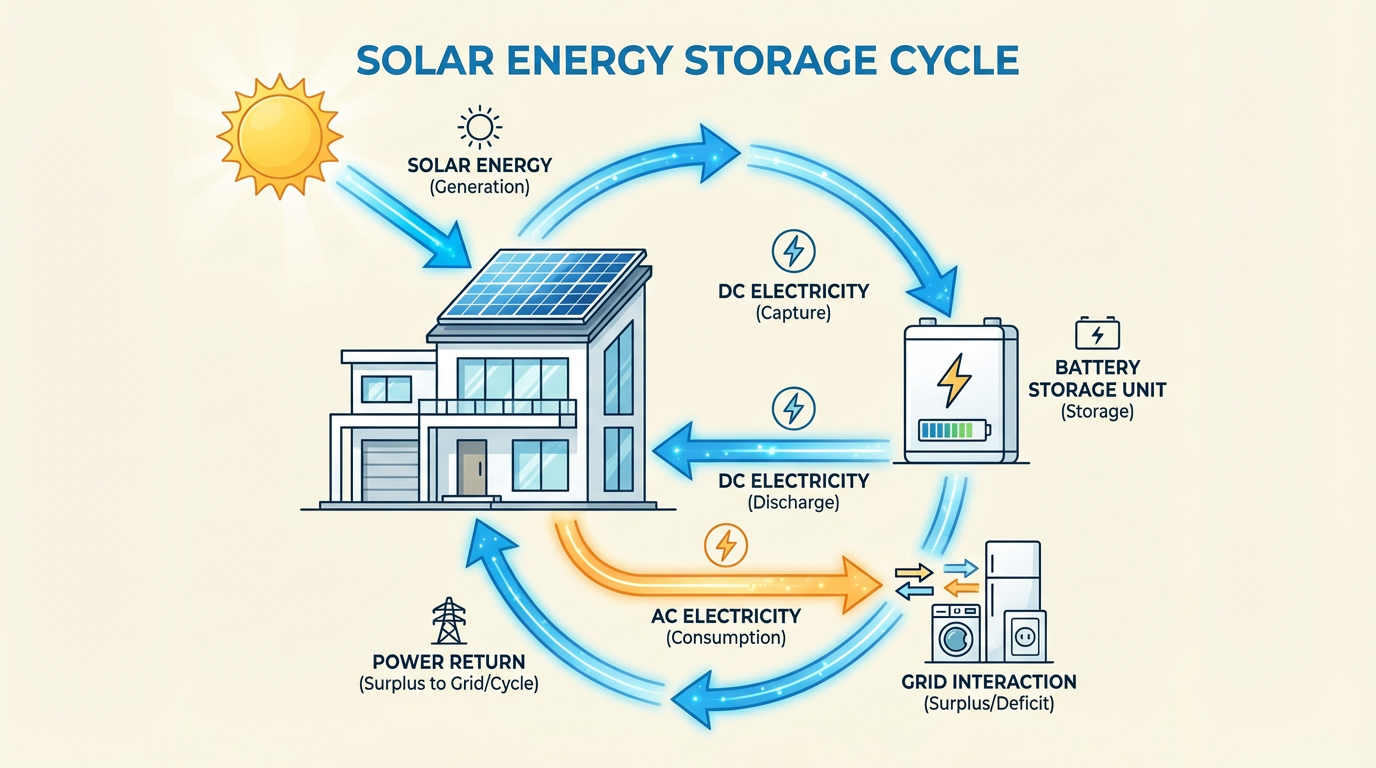
The core value proposition centers on three use cases: grid outage backup, time-of-use rate optimization, and participation in virtual power plant (VPP) programs. When the grid goes down, BrightBox automatically switches to battery power, keeping essential circuits operational for 8-12 hours depending on your load. During normal operation, it can store excess solar energy produced during midday and discharge it during evening peak-rate windows, reducing your reliance on expensive grid power. In VPP-enabled regions, Sunrun may remotely dispatch your stored energy back to the grid during high-demand events, earning you credits while supporting grid stability.
One critical design choice distinguishes BrightBox from whole-home battery systems: it's engineered to power essential loads only, typically four circuits covering items like your refrigerator, a few lights, WiFi router, and maybe a laptop charger. This isn't the system for running central air conditioning, electric dryers, or multiple large appliances simultaneously during an outage. That focus keeps costs down and backup duration practical, but it does mean you'll need to prioritize which circuits matter most when Sunrun's team designs your installation.
How BrightBox Stacks Up Against Competitors
The residential battery storage market has matured rapidly, and BrightBox faces stiff competition, especially from Tesla's Powerwall 3, the current benchmark for whole-home backup. Here's a side-by-side breakdown:
| Feature | BrightBox | Tesla Powerwall 3 |
|---|---|---|
| Usable Capacity | 9.3 kWh | 13.5 kWh (45% more) |
| Backup Duration | 8-12 hours (essentials) | 24+ hours (whole home) |
| Continuous Power | 5 kW | 11.5 kW |
| Ownership Model | Lease/service ($0 down) | Ownership ($15,000+) |
| Circuit Coverage | 4 essential circuits | Whole-home capable |
| Warranty | 20-year service agreement | 10-year limited warranty |
BrightBox's 9.3 kWh capacity and 5 kW continuous output make it suitable for modest backup needs, think keeping the essentials humming rather than maintaining your full lifestyle. Powerwall 3's 13.5 kWh and 11.5 kW output can shoulder significantly heavier loads, including well pumps, electric vehicle charging, and HVAC systems during prolonged outages.
The financing model is where things get interesting. BrightBox's $0-down service structure eliminates the barrier of a $10,000–$15,000 upfront battery purchase, rolling costs into your monthly Sunrun solar subscription. You don't own the hardware, but you also don't handle maintenance, monitoring, or replacement concerns, Sunrun does. For homeowners who prefer predictable monthly payments and hands-off management, that's appealing. Powerwall buyers, by contrast, own their system outright after installation, which may qualify for federal tax credits and adds resale value to the home, but comes with higher initial investment and self-managed upkeep.
Another consideration: BrightBox requires pairing with a new Sunrun solar installation, it's not available as a standalone retrofit for existing solar arrays or grid-only applications. Systems like Powerwall, Enphase IQ Battery, or offerings from Humless, a pioneer in battery energy storage since 2010, offer more flexible integration paths, working with solar, grid, wind, or generator sources in both grid-tied and off-grid configurations. For property owners seeking true energy independence beyond what a leased, solar-only system provides, exploring ownership-based LiFePO4 battery solutions with UL certification and modular scalability may deliver better long-term control and performance.
Bottom line: BrightBox suits budget-conscious homeowners who want backup power without big upfront costs and don't mind limited circuit coverage. Powerwall and independent BESS platforms shine when you need greater capacity, whole-home protection, or off-grid capabilities.
Key Features and Performance Specifications of BrightBox Technology
Understanding BrightBox's technical specs helps clarify whether it'll meet your household's energy profile and backup expectations. Here's what the hardware and service package actually deliver.
Capacity and Backup Duration
At 9.3 kWh usable capacity, BrightBox stores enough energy to run a typical mix of essential loads, refrigerator (150W), LED lighting (60W), WiFi router (10W), phone/laptop charging (50W), and a TV (100W), for roughly 8-12 hours. If your solar panels continue producing during daylight outages, that window extends considerably, especially in sunny climates. But, if you're powering a sump pump (800W), garage door opener, or medical equipment, that runtime shrinks quickly. Sunrun's design team will calculate your specific backup duration during the site assessment based on your selected circuits and average consumption.
Power Output and Inverter Performance
BrightBox delivers 5 kW of continuous power output, meaning it can supply up to 5,000 watts simultaneously to your backed-up circuits. That's generally sufficient for essentials, but won't cover high-draw appliances like electric water heaters, clothes dryers, or window AC units. Peak surge capacity handles brief inrush currents (like when a fridge compressor kicks on), but sustained heavy loads will trip the system's protection or drain the battery in under an hour.
Operating Temperature Range and Installation Flexibility
The LG Chem RESU10H at the heart of BrightBox operates within -10°C to 45°C (14°F to 113°F). That's reasonably robust for most U.S. climates, though extreme cold or desert heat at the margins may impact charging efficiency and cycle life. Indoor garage installations are ideal: outdoor enclosures are possible in moderate climates but may require additional thermal management in harsh environments.
Solar Integration and Virtual Power Plant (VPP) Enrollment
BrightBox is solar-only, it doesn't charge from the grid in most configurations, which limits its utility during prolonged cloudy stretches unless you have generator backup. This design prioritizes renewable energy self-consumption but can leave you vulnerable during multi-day storms or winter months with short daylight hours.
Sunrun's VPP program is a unique feature: during high-demand grid events, Sunrun may remotely discharge your BrightBox to supply energy back to the utility, earning you bill credits. While this supports grid resilience and can offset costs, it does mean Sunrun has partial control over your stored energy. For homeowners prioritizing complete energy independence, the ability to manage and control your power 24/7 without third-party dispatch, this may feel restrictive. Systems like those from Humless, designed for true autonomy with seamless integration across solar, grid, wind, and generator inputs, offer more granular user control and aren't subject to utility or service provider directives.
Financing, Warranty, and Service Model
The $0-down, 20-year service agreement bundles installation, monitoring, maintenance, and performance guarantees into your monthly payment. Sunrun replaces failed components at no additional cost, and system monitoring alerts the company to issues before you notice them. There's no separate inverter warranty to track or technician to hire, it's all included.
But, you don't own the battery. If you sell your home, the new owner must assume the service agreement or you'll need to buy out the contract (potentially at significant cost). And after 20 years, the battery's capacity will have degraded, lithium-ion cells typically retain 70-80% of original capacity after two decades of cycling, so the system's usefulness in year 18-20 may be noticeably diminished.
Availability and Scalability
BrightBox is available in California, Arizona, New York, Massachusetts, Vermont, Hawaii, Nevada, and a growing list of other states where Sunrun operates. Scalability is limited: while you can technically add a second BrightBox for additional capacity, the service model and cost structure make this less common than with modular, owner-purchased systems that let you expand incrementally as needs grow.
For businesses, off-grid properties, or homeowners who want to start small and scale to 20+ kWh over time, exploring battery energy storage systems (BESS) with modular LiFePO4 architecture and UL certification provides more flexibility and long-term value.
Conclusion
BrightBox delivers accessible, low-barrier solar battery storage for homeowners who value simplicity and can't front five figures for hardware. Its essential-load focus and service model make backup power approachable, but the trade-offs, limited capacity, solar-only charging, and lack of ownership, matter more as your energy goals shift toward independence and control. If you're planning new solar with Sunrun and need modest outage protection, BrightBox fits the bill. But for whole-home resilience, off-grid capability, or true energy autonomy, exploring ownership-based BESS platforms with proven reliability and 24/7 support opens up possibilities BrightBox simply can't match.
Frequently Asked Questions About BrightBox Solar Battery Storage
What is BrightBox and how does it work with solar panels?
BrightBox is Sunrun's solar battery storage system using LG Chem RESU10H technology with 9.3 kWh usable capacity. It stores excess solar energy during the day and releases it during peak hours or power outages, offering 8-12 hours of backup for essential circuits like refrigerators, lights, and WiFi without upfront costs through a $0-down service agreement.
How does BrightBox compare to Tesla Powerwall 3?
BrightBox offers 9.3 kWh capacity and 5 kW power output with a $0-down lease model, while Tesla Powerwall 3 delivers 13.5 kWh and 11.5 kW with full home backup for $15,000+. BrightBox suits budget-conscious homeowners wanting essential-load backup; Powerwall is better for whole-home protection and ownership benefits like tax credits.
Can BrightBox power my entire home during a power outage?
No. BrightBox is designed for essential circuits only—typically four circuits covering refrigerators, lights, WiFi, and device charging. It won't power central AC, electric dryers, or multiple large appliances simultaneously. This focused design keeps costs low and backup duration practical for critical needs.
What is included in BrightBox's service agreement and warranty?
BrightBox's 20-year service agreement includes installation, monitoring, maintenance, and full warranty coverage. Sunrun handles all repairs and component replacements at no extra cost, eliminating the need to hire technicians or manage upkeep—you simply pay a monthly subscription bundled with your solar service.
Does BrightBox charge from the grid or only from solar panels?
BrightBox is solar-only in most configurations and doesn't charge directly from the grid. This prioritizes renewable energy self-consumption but can limit backup during extended cloudy periods or winter months with short daylight hours unless you have generator backup paired with the system.
In which states is BrightBox solar battery storage available?
BrightBox is available in 20+ U.S. states where Sunrun operates, including California, Arizona, New York, Massachusetts, Vermont, Hawaii, and Nevada, with continued expansion. Availability depends on your location and Sunrun's service area, so check with Sunrun directly to confirm eligibility for your home.