The grid isn't what it used to be. Between increasingly frequent blackouts, skyrocketing energy costs during peak hours, and the growing adoption of solar and wind, homeowners and businesses alike are searching for ways to take control of their power. That's where grid power storage comes in, a technology that's transforming how we capture, store, and use electricity. Whether you're looking to slash utility bills through time-of-use optimization, ensure your home stays powered during outages, or fully embrace off-grid living, understanding grid power storage is your first step toward true energy independence in 2026.
Key Takeaways
- Grid power storage systems capture excess electricity during high production periods and release it during peak demand or outages, balancing renewable energy intermittency and reducing reliance on expensive peaker plants.
- Battery-based grid power storage provides silent, automatic backup power during blackouts without fuel or maintenance requirements, offering seamless protection that traditional generators cannot match.
- Time-of-use optimization and peak shaving strategies can reduce electricity bills by hundreds of dollars annually by storing cheap off-peak energy and discharging during expensive peak rate periods.
- Lithium iron phosphate (LiFePO4) batteries have become the gold standard for residential and commercial grid power storage due to their superior thermal stability, 5,000+ cycle life, and enhanced safety.
- Proper system sizing requires assessing your backup power needs, integration with existing solar or grid sources, available space, and local utility policies to maximize energy independence and cost savings.
- Battery storage systems respond in milliseconds to charge and discharge commands, making them ideal for both residential backup power and grid services like frequency regulation and demand response.
What Is Grid Power Storage and How Does It Work?
Grid power storage is a system that captures excess electricity when production is high or demand is low, then releases it back to the grid (or your home) when it's needed most. Think of it as a giant energy buffer that keeps the lights on when solar panels go dark at night or when your neighborhood faces a summer brownout.
At its core, grid power storage balances supply and demand on the electric grid. Renewable sources like solar and wind are fantastic, but they're also intermittent, the sun doesn't always shine, and the wind doesn't always blow. Storage systems solve this problem by holding onto energy generated during optimal conditions and dispatching it during shortages or peak demand periods.
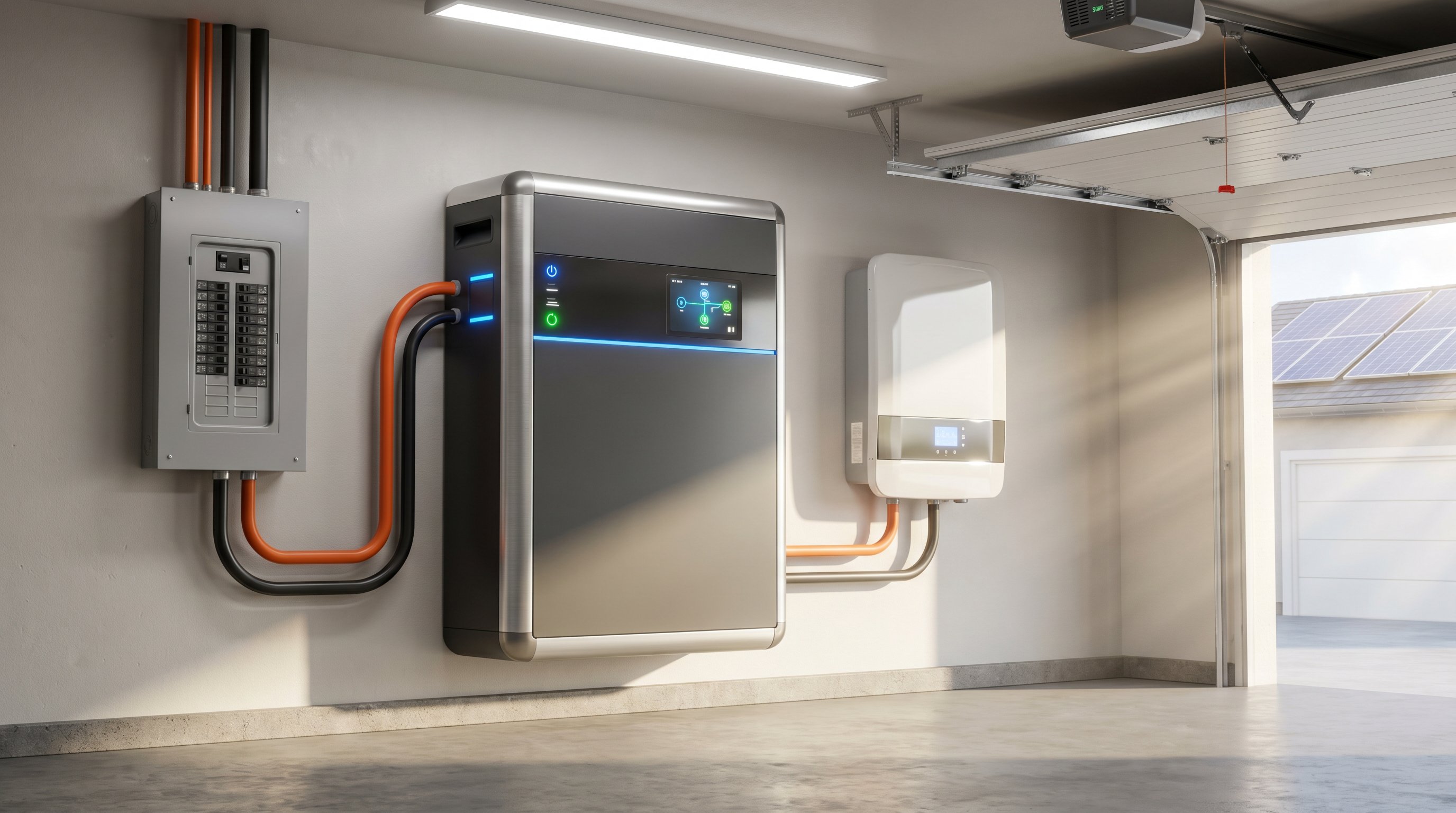
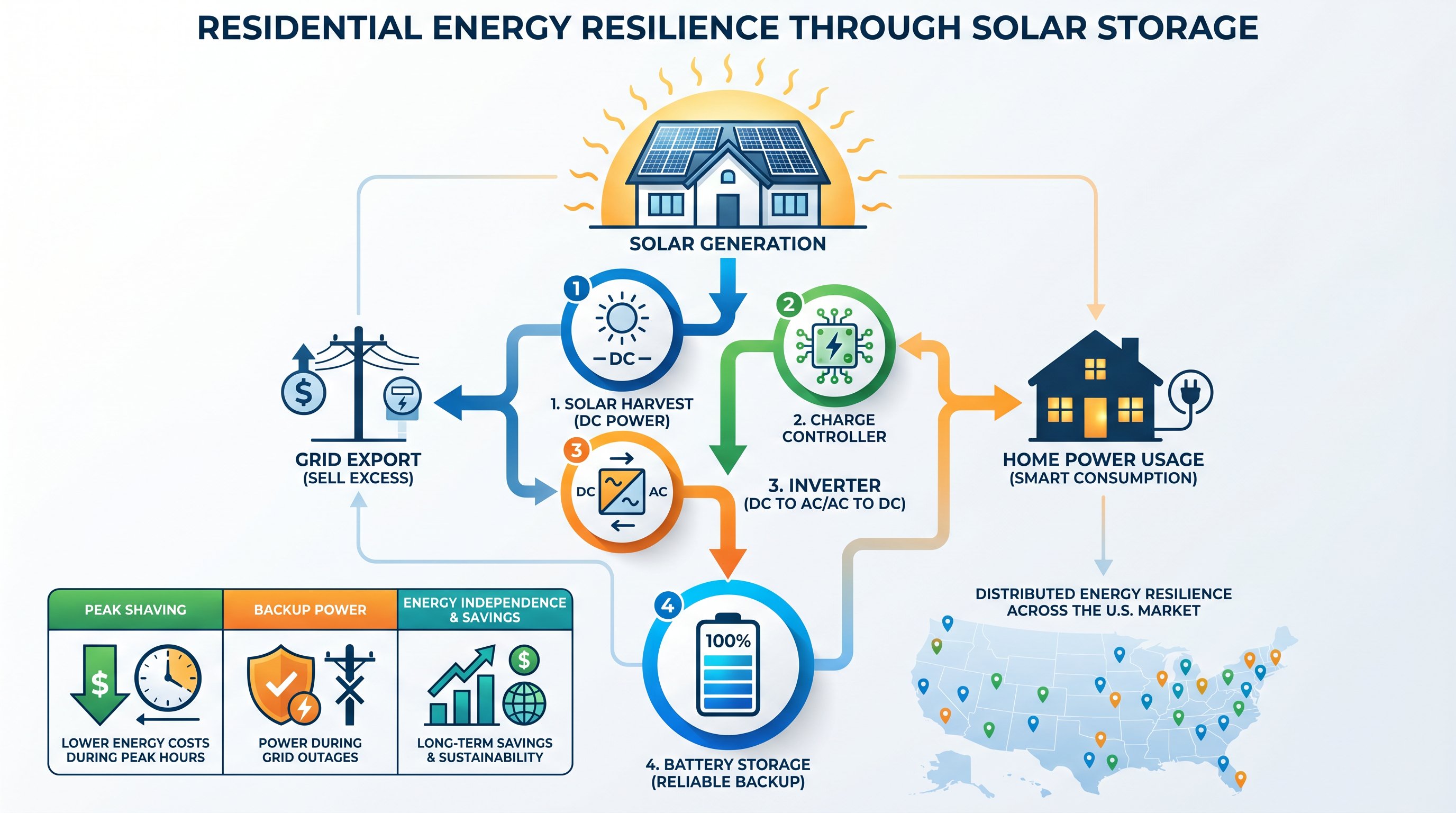
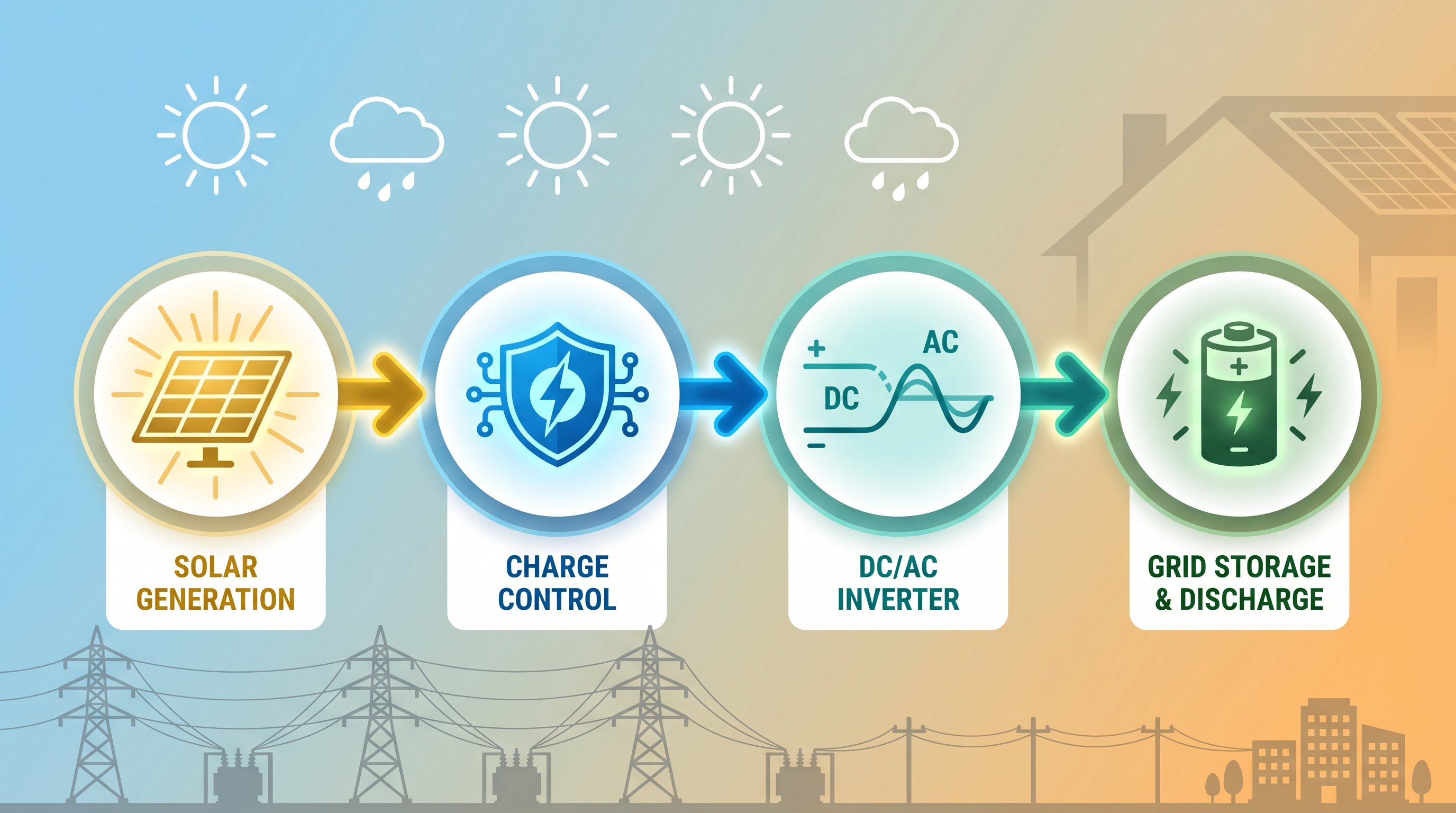
For homeowners with solar installations, the process typically involves four key components:
- Solar panels generate direct current (DC) electricity from sunlight
- Charge controllers manage the flow of power to prevent overcharging or excessive discharge, protecting your battery investment
- Inverters convert DC power into alternating current (AC) that your appliances and the grid can use
- Batteries store the energy for later use
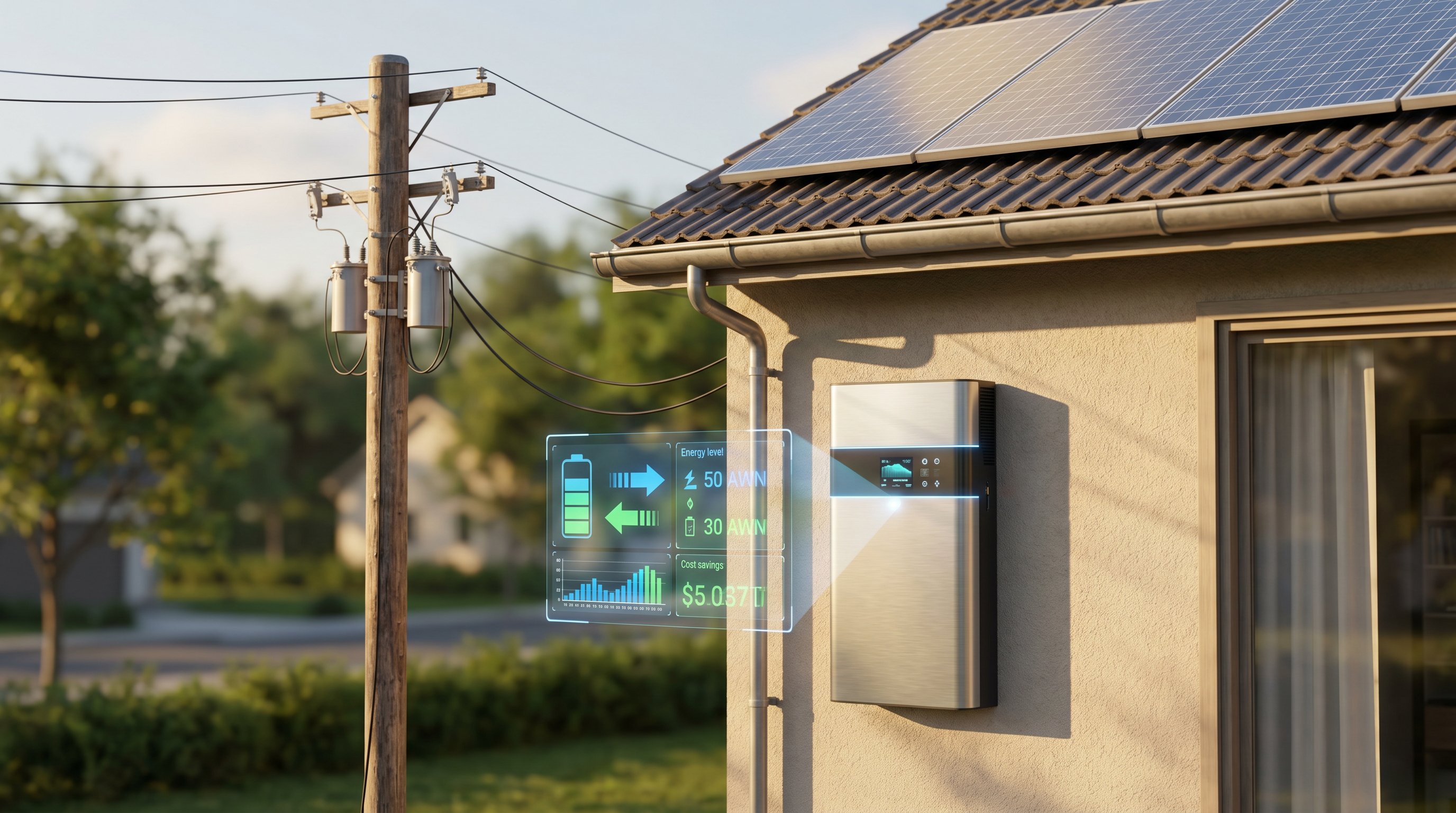
During periods of excess generation, say, a sunny afternoon when your panels are cranking out more power than you're using, energy flows into storage or exports to the grid (if you're grid-tied). When production drops or an outage hits, the system discharges stored power, isolating from the grid for safety while keeping your critical loads running. Modern systems can switch between modes in milliseconds, providing seamless backup that you won't even notice until your neighbors' lights go out and yours stay on.
Key Benefits of Grid Power Storage Systems
Grid power storage isn't just a nice-to-have anymore, it's becoming essential infrastructure for anyone serious about energy resilience and cost savings. The benefits extend far beyond simply having backup power during storms.
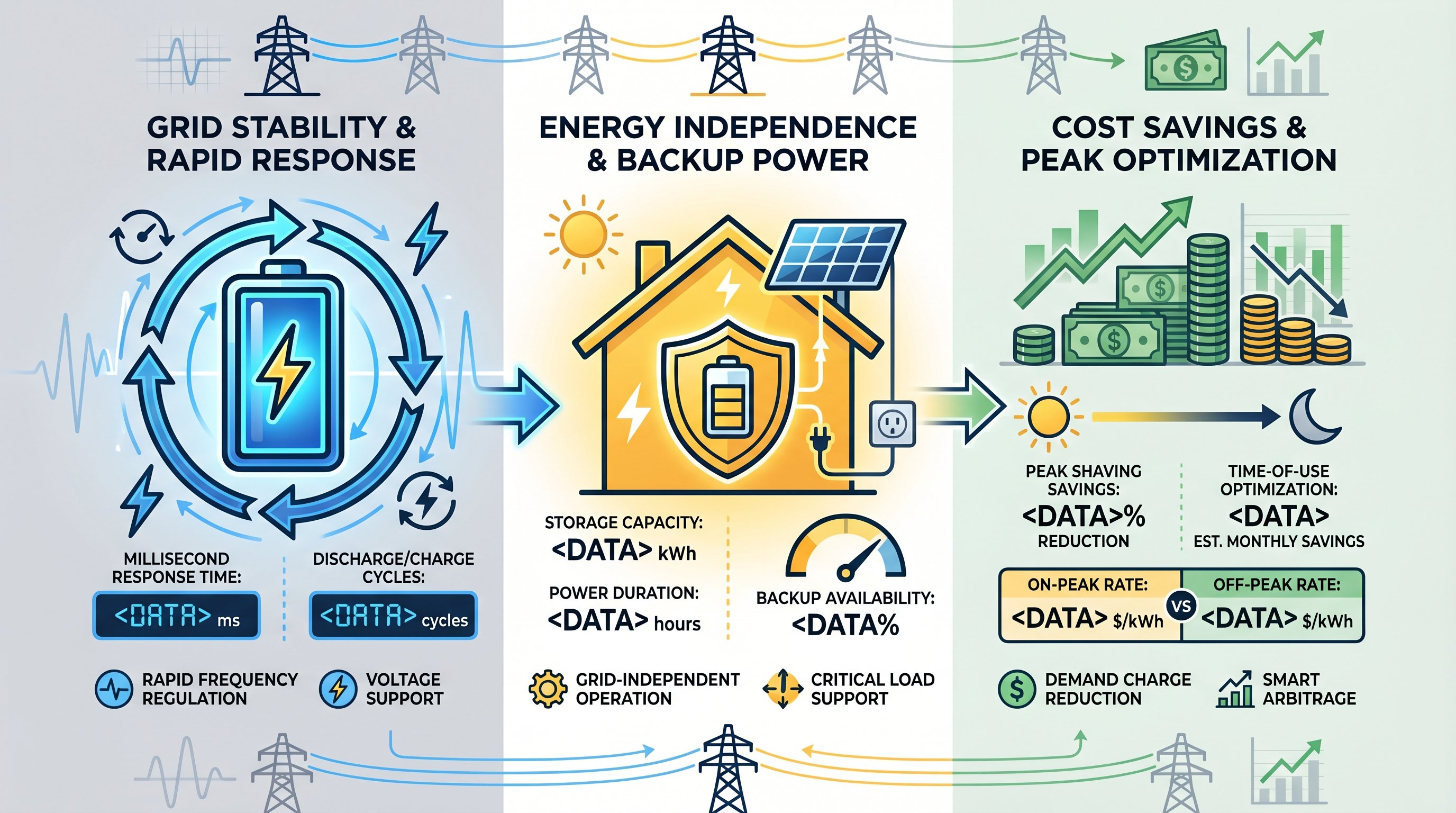
First, these systems prevent blackouts and help integrate renewable energy into the grid more effectively. When everyone's solar panels are producing at noon but demand peaks at 6 PM, storage bridges that gap. On a macro level, storage maintains grid stability: on a personal level, it means you're not at the mercy of an aging electrical infrastructure.
The flexibility of modern storage systems is remarkable. Unlike traditional power plants that take hours to ramp up, battery storage can charge and discharge in milliseconds, far faster than natural gas or nuclear facilities. This rapid response capability makes storage ideal for frequency regulation and voltage support, keeping the grid stable even as variable renewables become a larger share of the energy mix.
Economically, grid storage makes tremendous sense. By deploying cheap solar power first and storing it for later, you avoid firing up expensive fossil fuel "peaker" plants during high-demand periods. The efficiency gains alone can be substantial, reducing waste and cutting costs across the board.
Energy Independence and Backup Power
One of the most compelling reasons homeowners invest in grid power storage is the peace of mind that comes with true backup capability. When severe weather knocks out power lines or grid failures leave neighborhoods dark, a properly configured storage system isolates your home from the grid and powers your essential loads using stored energy.
Unlike a traditional generator that requires fuel, maintenance, and produces noise and emissions, battery-based backup is silent, automatic, and can run as long as your storage capacity allows. Systems integrated with solar can even recharge during the day while keeping your home powered, providing extended backup that gas generators simply can't match.
Modern battery energy storage systems (BESS) like those from Humless offer rated discharge capacities that can power everything from critical circuits to whole-home loads, depending on your system size. Smart battery management systems cut off discharge at safe levels, typically around 3.0V per cell, to prevent damage and extend battery lifespan, ensuring your backup power is there when you need it most.
Cost Savings Through Peak Shaving and Time-of-Use Optimization
If backup power is the insurance policy, cost savings are the dividend. Grid power storage systems excel at reducing your electricity bills through two key strategies: peak shaving and time-of-use (TOU) optimization.
Peak shaving works by storing energy when it's cheap and plentiful, typically during the day when solar production is high, then discharging it during expensive peak periods in the evening. This avoids drawing power from the grid when rates are at their highest, which can be 3-5 times more expensive than off-peak rates depending on your utility.
Time-of-use arbitrage takes this a step further. If you're on a TOU rate plan, your storage system can intelligently charge from the grid during super off-peak hours (often late at night when rates bottom out), then discharge during mid-peak and on-peak periods. Even without solar, this strategy can slash your bills by hundreds of dollars annually.
For solar owners, the math gets even better. Instead of sending excess solar power to the grid for minimal credit (or none at all in areas where net metering is being phased out), you store it and use it yourself when electricity is most valuable. That's energy independence paying real dividends every single month.
Types of Grid Power Storage Technologies
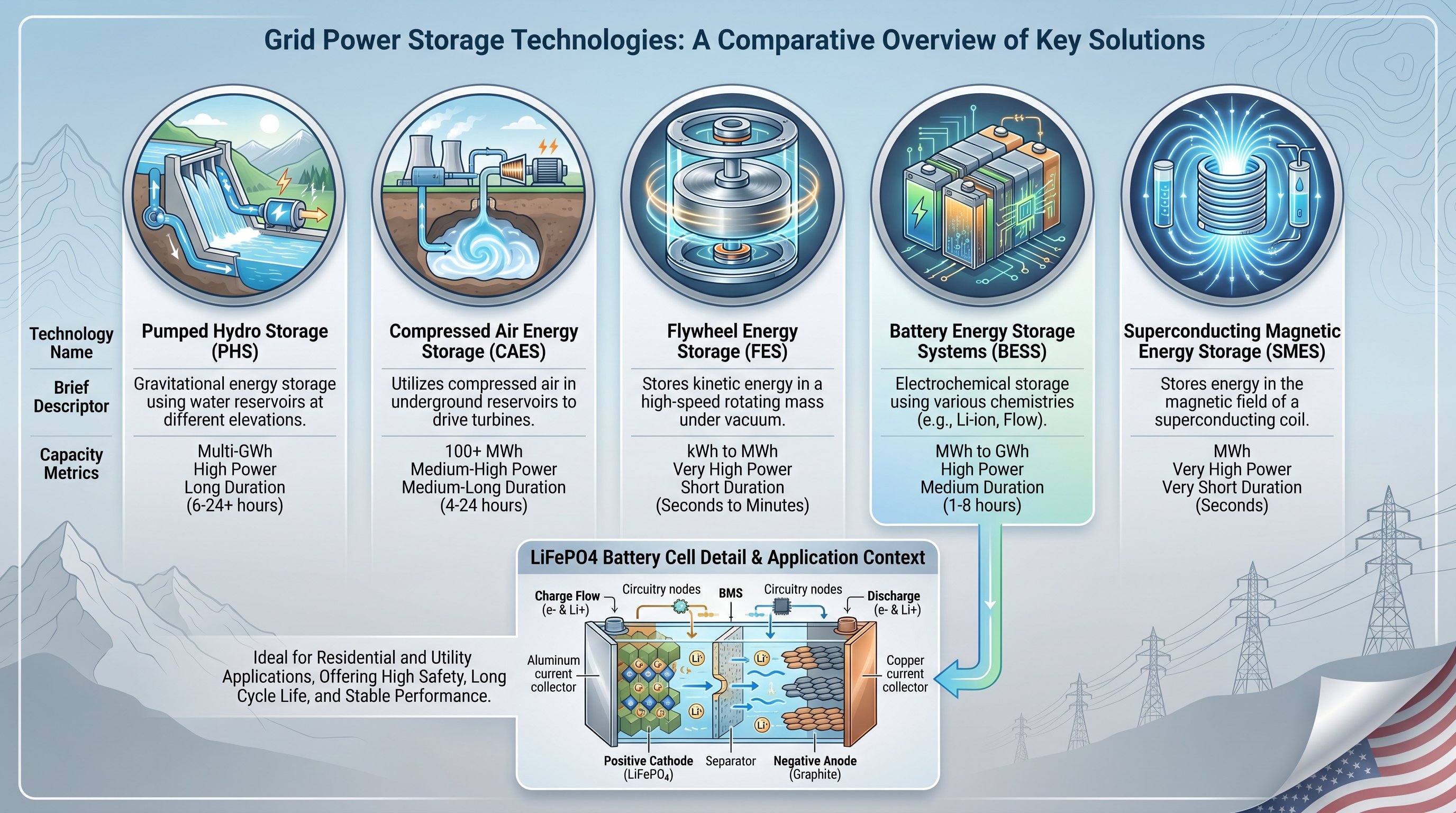
Grid power storage isn't one-size-fits-all. Different technologies excel in different applications, from utility-scale grid stabilization to residential backup power. Understanding the landscape helps you appreciate why certain solutions work better for specific needs.
| Type | Description | Duration/Capacity |
|---|---|---|
| Pumped Hydro | Pumps water uphill using excess power, releases through turbines when needed | Long-term, very high capacity |
| Compressed Air (CAES) | Compresses air into underground caverns, releases to boost gas turbines (25-2700 MW) | Hours-long discharge, utility-scale |
| Flywheels | Spins a motor/magnet in a vacuum: provides quick frequency stabilization | Minutes to hours, burst power |
| Batteries | Chemical storage in various chemistries: rapid response for renewables integration | Flexible duration, rapid response |
| SMES | Superconducting magnetic loops store/return current with minimal loss | Voltage stability, short bursts |
Pumped hydro storage is the granddaddy of grid storage, accounting for the vast majority of utility-scale storage worldwide. It's incredibly efficient for bulk, long-duration storage but requires specific geography, mountains and water.
Compressed air energy storage (CAES) and flywheels fill niche roles in grid stabilization, while superconducting magnetic energy storage (SMES) provides ultra-fast response for voltage regulation. But for homeowners, businesses, and increasingly for utilities, batteries have become the go-to solution.
Lithium-Ion and LiFePO4 Battery Systems
Battery technology has advanced dramatically over the past decade, making residential and commercial energy storage practical and affordable. Lithium-ion batteries, in particular, have revolutionized the industry thanks to their high energy density, efficiency, and declining costs.
Within the lithium-ion family, lithium iron phosphate (LiFePO4) batteries have emerged as the gold standard for grid power storage applications. Unlike older lithium chemistries, LiFePO4 offers superior thermal stability, longer cycle life (often 5,000+ cycles), and enhanced safety, critical factors when you're storing kilowatt-hours of energy in or near your home.
These batteries store DC power from solar panels or the grid, then discharge efficiently when called upon. Modern battery management systems (BMS) monitor each cell, ensuring balanced charging and preventing over-discharge by cutting off at maximum depth-of-discharge thresholds. This intelligent management maximizes both performance and lifespan.
For residential applications, companies like Humless have pioneered UL-certified LiFePO4 battery energy storage systems that integrate seamlessly with solar, grid, wind, and generator sources. These modular systems scale from small backup solutions to whole-home energy independence platforms, backed by proven reliability and 24/7 support.
The rapid response time of battery systems, charging or discharging in milliseconds, makes them ideal not just for backup power but for grid services like frequency regulation and demand response. As battery costs continue to fall, they're becoming the economic choice for everything from residential backup to utility-scale renewable integration.
Choosing the Right Grid Power Storage System for Your Needs
With so many options available, selecting the right grid power storage system comes down to understanding your specific needs and constraints. There's no universal "best" system, only the best system for you.
Start by assessing your capacity requirements. How much backup power do you need during an outage? Are you looking to cover just critical circuits (refrigerator, internet, a few lights) or power your entire home? Calculate your daily energy consumption and decide how many days of autonomy you want. A small home might get by with 10-15 kWh of storage, while larger homes or those wanting extended backup might need 30-40 kWh or more.
Next, consider your integration needs. Are you pairing storage with existing solar panels, planning a new solar installation, or simply adding battery backup to a grid-tied home? Systems like those from Humless offer flexibility to integrate with multiple power sources, solar, grid, wind, and generators, giving you maximum versatility as your needs evolve.
Response speed matters too. For residential backup and peak shaving, battery systems offer unbeatable rapid response and seamless switching. If you're a utility or large commercial operation evaluating bulk, long-duration storage, pumped hydro or CAES might enter the conversation, but for most homeowners and businesses, batteries are the clear winner.
Don't overlook cost considerations. Battery prices have dropped roughly 90% over the past decade, making them increasingly accessible. But, upfront costs still vary widely based on capacity, chemistry, and features. Look for UL-certified systems with proven track records and solid warranties. Cheaper systems may save money initially but can cost more in the long run through shorter lifespans or poor performance.
Finally, think about your site and installation constraints. Do you have adequate space for battery cabinets? Is your electrical panel ready for integration, or will it need upgrades? What are your local utility's policies on energy storage and net metering?
The good news? Reputable storage providers and solar integrators can walk you through these decisions, often providing load analysis and system design services. With the right grid power storage system sized and configured for your needs, you'll enjoy energy independence, lower bills, and the peace of mind that comes with true backup power, no matter what the grid throws at you.
Frequently Asked Questions
What is grid power storage and how does it work?
Grid power storage captures excess electricity during high production or low demand periods and releases it when needed most. It balances supply and demand by storing energy from renewables like solar and wind, then dispatching it during peak hours or outages. The system uses solar panels, charge controllers, inverters, and batteries to manage power flow seamlessly.
How much money can grid power storage save on electricity bills?
Grid power storage reduces bills through peak shaving and time-of-use optimization. By storing cheap daytime solar power and discharging during expensive peak periods (3-5x costlier), you can save hundreds annually. Without solar, TOU arbitrage during off-peak hours also delivers significant savings on compatible rate plans.
Can grid power storage keep my home powered during a blackout?
Yes. Grid power storage systems automatically isolate from the grid during outages and discharge stored energy to power essential loads or your entire home. Battery-based backup is silent, automatic, and can run as long as your storage capacity allows. Unlike generators, solar-integrated systems can recharge during the day for extended backup.
What types of battery technology are best for residential grid power storage?
Lithium-ion batteries, particularly lithium iron phosphate (LiFePO4), are the gold standard for residential grid power storage. They offer superior thermal stability, long cycle life (5,000+ cycles), rapid response, and enhanced safety. Modern battery management systems monitor each cell to prevent over-discharge and maximize lifespan.
Why is grid power storage important for renewable energy integration?
Renewable sources like solar and wind are intermittent—the sun doesn't always shine, and wind doesn't always blow. Grid power storage bridges the gap by capturing energy during optimal generation periods and releasing it during shortages. This solves the mismatch between renewable production and peak demand, stabilizing the grid effectively.
What size grid power storage system do I need for my home?
System size depends on your needs. Calculate your daily energy consumption and desired backup days. Small homes covering critical circuits might need 10-15 kWh, while larger homes wanting extended autonomy may require 30-40 kWh or more. Consult with solar integrators for professional load analysis and system design recommendations.