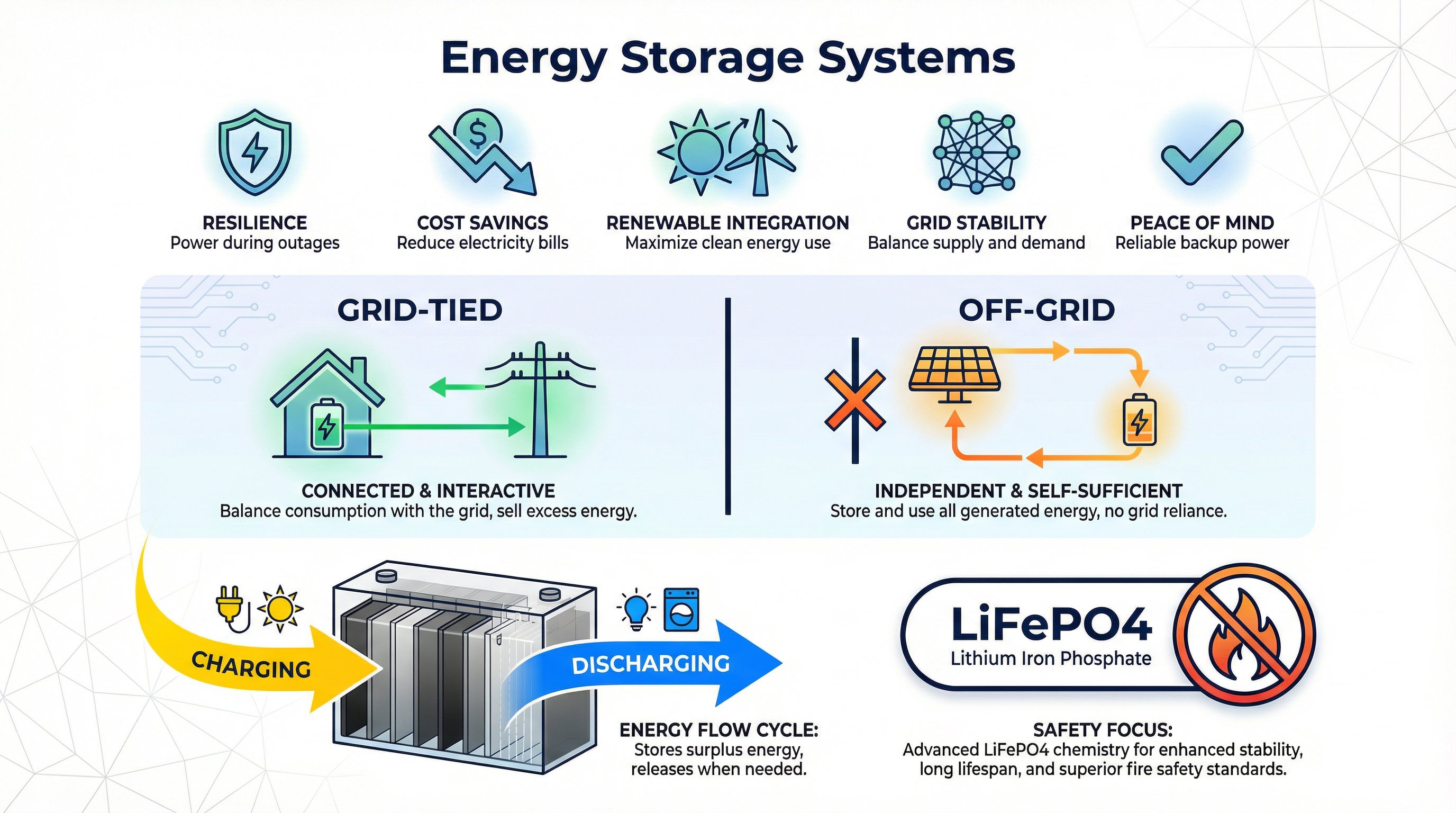
Power outages, rising energy costs, and the push for renewable energy have made one thing clear: reliable backup power isn't a luxury anymore, it's essential. Whether you're a homeowner chasing energy independence, a solar installer guiding clients, or a business owner protecting operations, energy storage systems have evolved from niche tech to mainstream solutions. Since 2010, the landscape has shifted dramatically, with battery energy storage systems (BESS) becoming more affordable, efficient, and accessible than ever. But what exactly are these systems, and how do you choose the right one? Let's cut through the hype and break down everything you need to know about energy storage in 2026.
Key Takeaways
- Energy storage systems capture excess renewable energy and release it on demand, solving the intermittency problem of solar and wind power while providing backup during outages.
- Lithium-ion battery energy storage systems (BESS), particularly LiFePO4 chemistry, have become the most practical and affordable option for homes and businesses due to their safety, efficiency, and 15+ year lifespan.
- Grid-tied systems allow you to optimize energy costs and earn net metering credits, while off-grid BESS systems provide complete energy independence for remote properties.
- Energy storage delivers measurable benefits including resilience during power outages, substantial cost savings through peak rate avoidance, and increased renewable energy integration.
- Selecting the right energy storage solution requires matching system capacity (power in kW and energy in kWh) to your actual needs, considering your energy sources, location, and choosing UL-certified systems from trusted manufacturers.
What Are Energy Storage Systems?
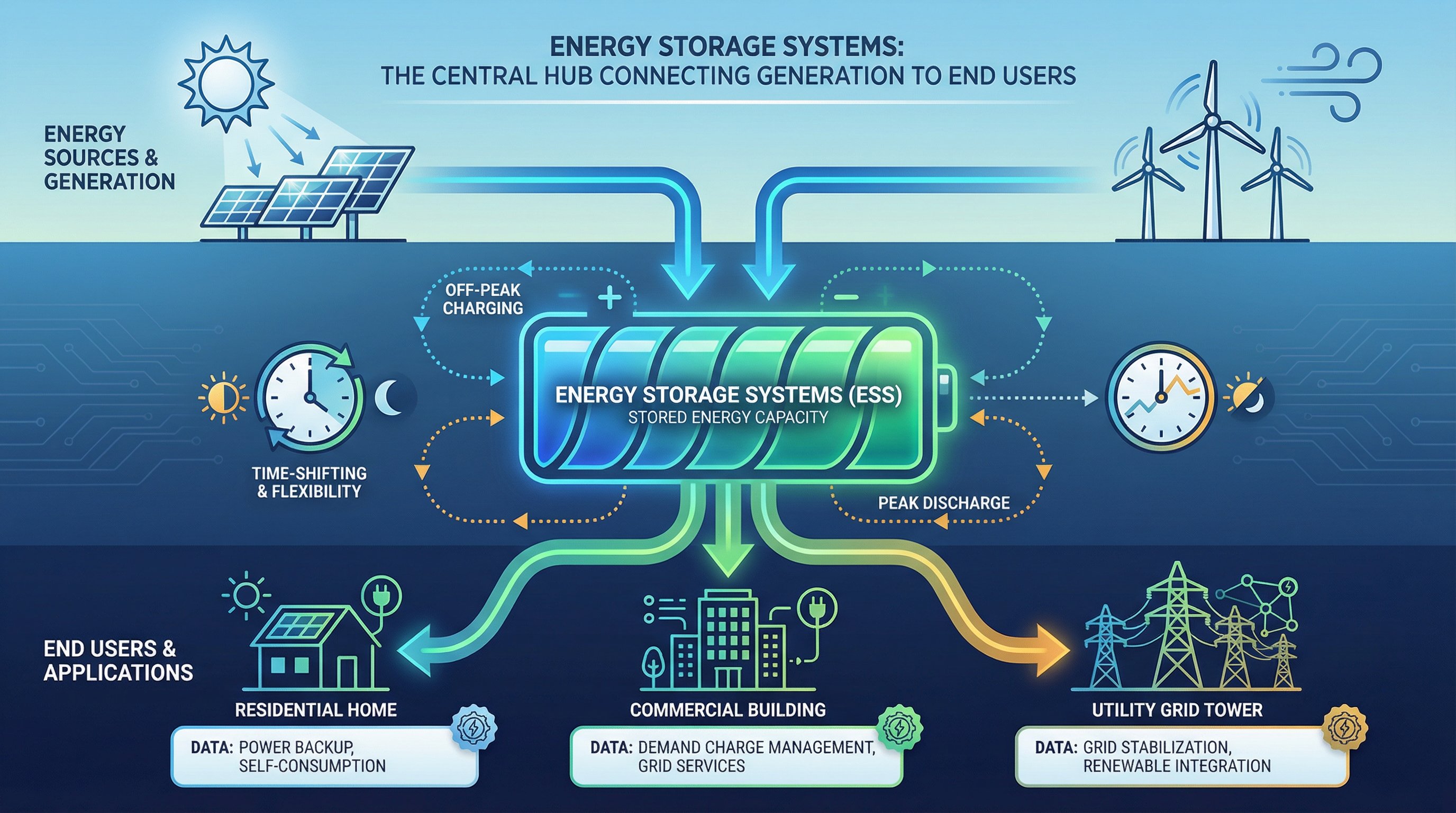
At their core, energy storage systems (ESS) are devices that capture energy when it's plentiful and release it when you need it most. Think of them as batteries for your home, business, or even the electric grid, except they're working at a scale that can power entire buildings or stabilize utility networks.
These systems store excess energy generated from sources like solar panels, wind turbines, or even the grid itself during off-peak hours. When demand spikes or your renewable sources aren't producing, say, at night when your solar panels are idle, the stored energy kicks in to bridge the gap. It's a balancing act that keeps your lights on and your systems running smoothly.
The beauty of ESS lies in their flexibility. They enable renewable energy integration by solving the intermittency problem: the sun doesn't always shine, and the wind doesn't always blow. By capturing that energy when it's available, storage systems let you tap into clean power around the clock. For homeowners, this means backup during outages and lower utility bills. For businesses, it's about resilience, cost savings, and hitting sustainability goals. And for the grid? It's about stability and handling peak loads without firing up expensive, polluting power plants.
How Battery Energy Storage Systems (BESS) Work
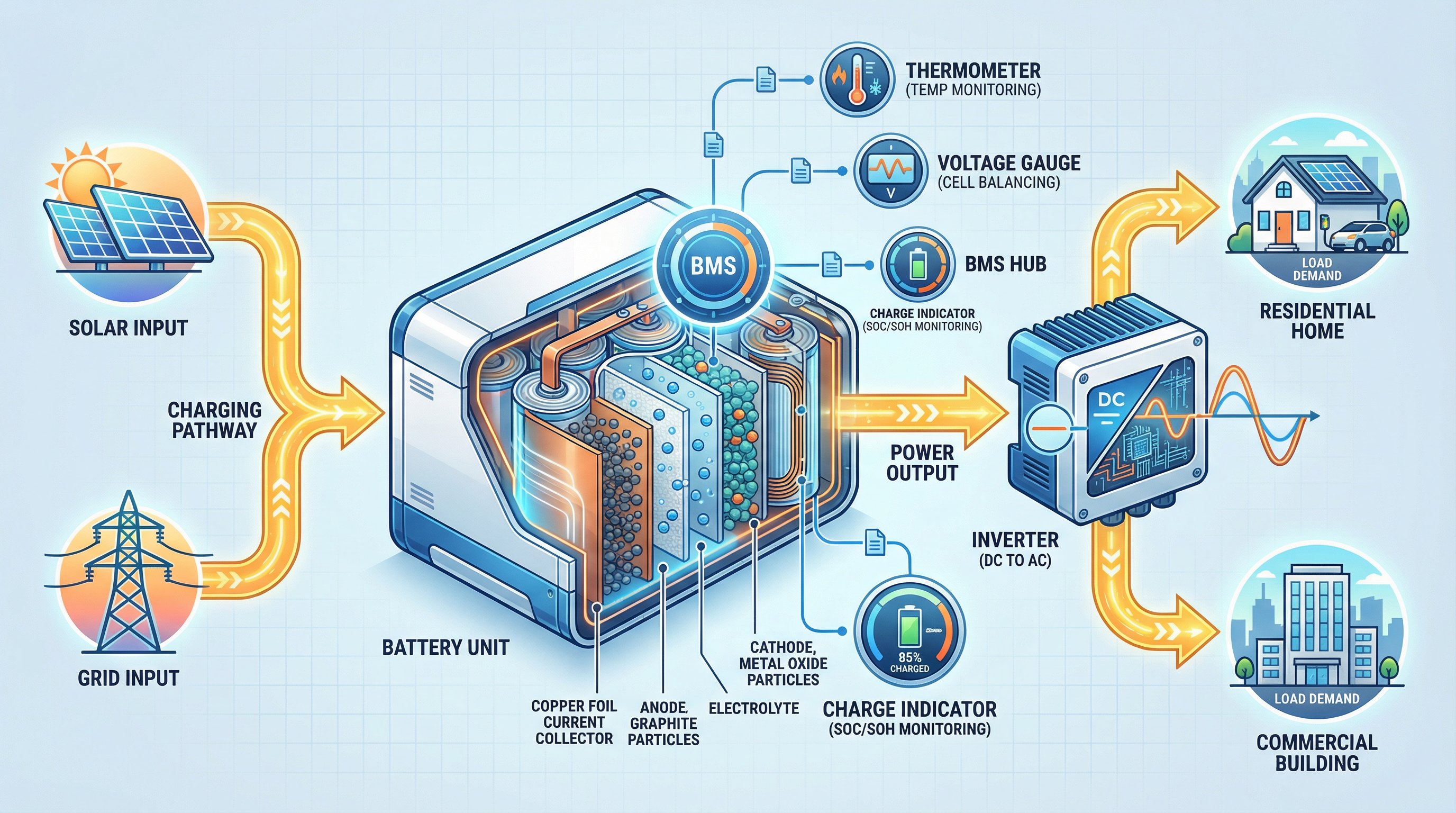
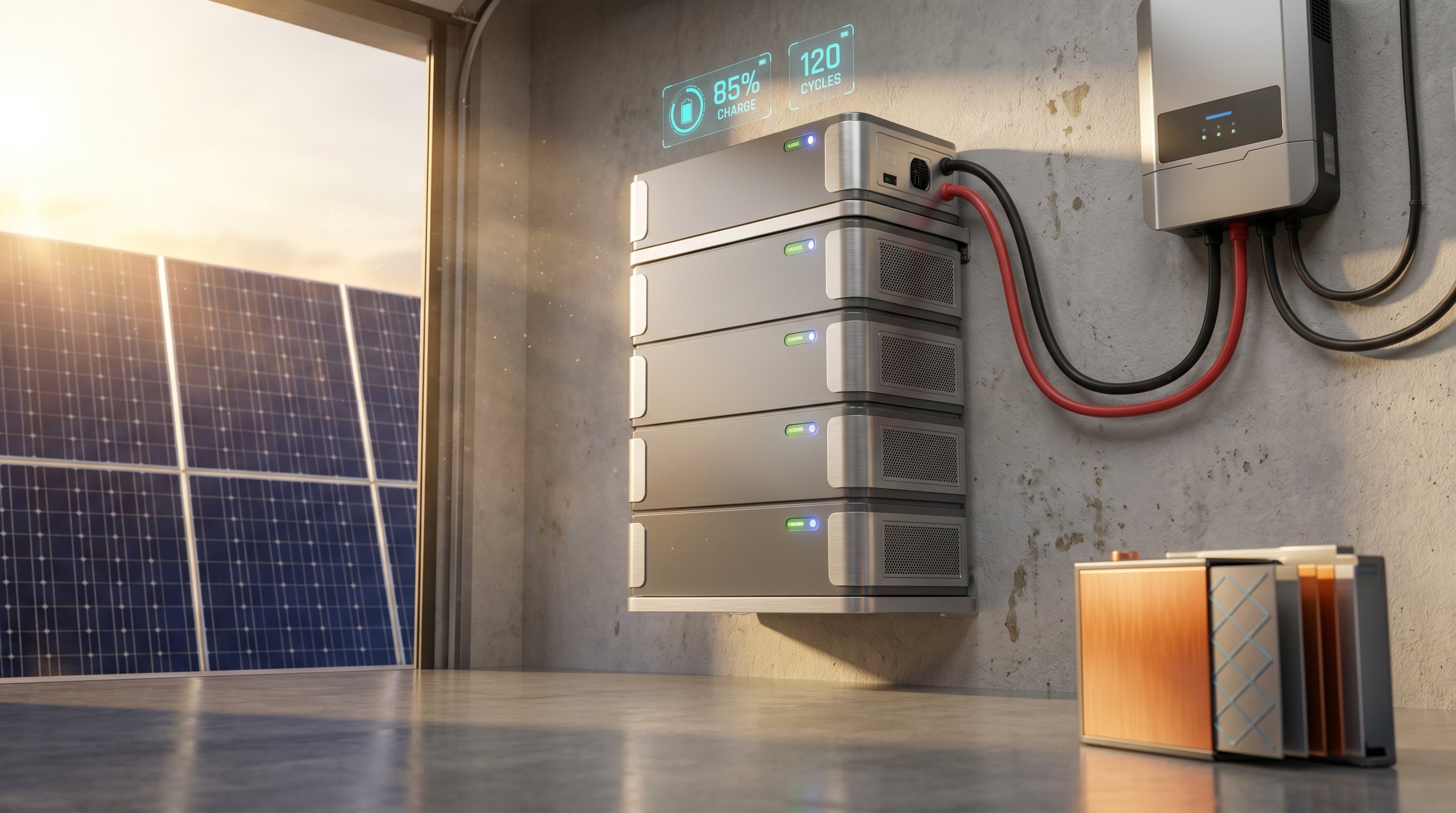
Battery energy storage systems, often just called BESS, are the workhorses of modern energy storage, and they're surprisingly elegant in how they operate. Here's the process: electricity flows into the system and gets converted into chemical energy through electrochemical reactions inside the batteries. When you need power, that chemical energy converts back into electricity, which an inverter then conditions for use in your home, business, or the grid.
Most BESS today rely on lithium-ion technology (the same chemistry powering your smartphone, but scaled way up). These batteries pack a lot of energy into a relatively small footprint, making them ideal for residential and commercial applications. The system charges during periods of excess generation, like midday when your solar array is cranking, or during off-peak grid hours when electricity is cheaper.
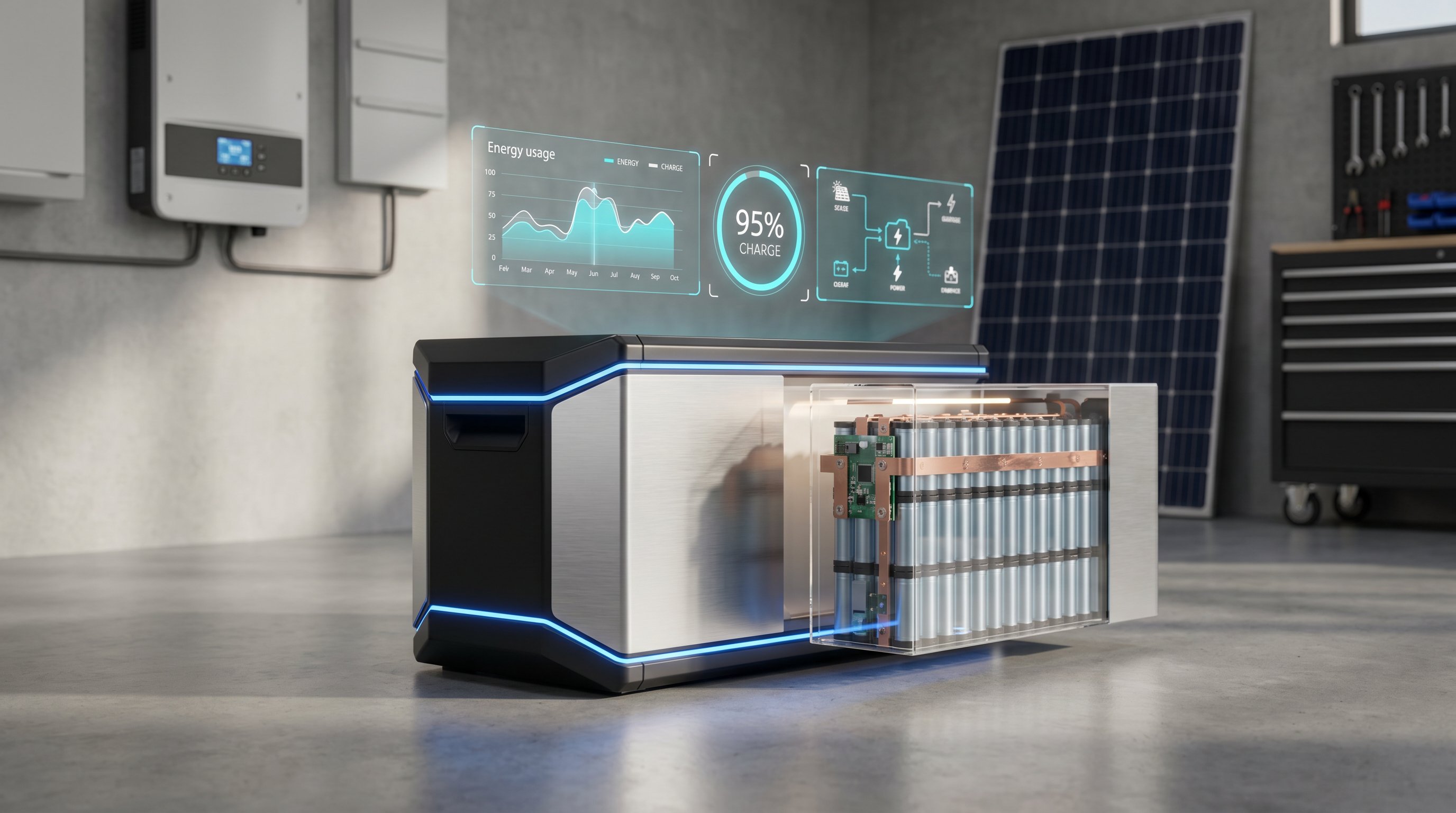
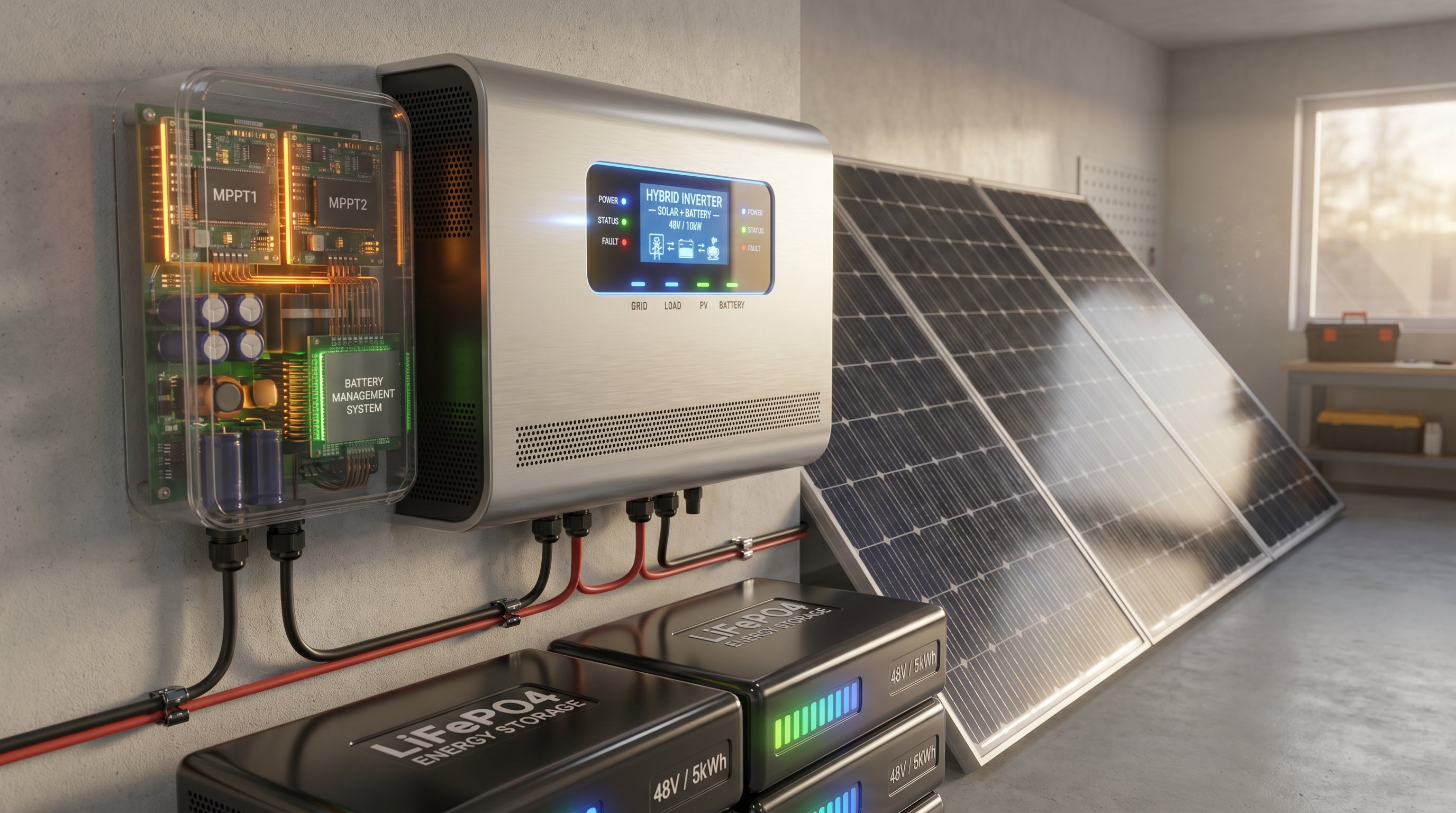
But there's more going on under the hood. A battery management system (BMS) acts as the brain, constantly monitoring charge levels, temperature, voltage, and overall health. It prevents overcharging, manages discharge rates, and ensures safety by shutting things down if temperatures spike or cells malfunction. This layer of intelligence is what makes modern BESS reliable and safe for everyday use.
The discharge side is equally important. When your home or business draws power, the inverter converts the stored DC electricity into AC power that your appliances and equipment can use. Response times are impressively fast, many systems can switch from grid power to battery backup in milliseconds, so you won't even notice when the lights stay on during an outage.
Types of Energy Storage Systems for Homes and Businesses
Energy storage isn't one-size-fits-all, and the technology you choose depends on your scale, goals, and setup. While large utilities might lean on pumped hydro (using reservoirs to store energy) or compressed air systems (storing air in underground caverns), those aren't practical for most residential or commercial users. Flywheels offer rapid-response power for short bursts, and thermal storage systems can hold heat in materials like molten salt, but again, these are niche applications.
For homes and businesses, battery ESS dominate the landscape, and for good reason. They're modular, scalable, and pair beautifully with solar installations. Lithium-ion batteries lead the pack, offering high energy density, decent lifespans, and improving affordability. Flow batteries are emerging for larger commercial applications where longer discharge times matter, but they're still less common.
What really sets battery systems apart is versatility. You can start small, say, a single unit for essential loads, and expand as your needs grow. They fit in garages, utility rooms, or outdoor enclosures, and they integrate with existing electrical systems without major overhauls. Whether you're powering a suburban home or a rural business, batteries give you the flexibility to design a system that actually fits your life.
Lithium Iron Phosphate (LiFePO4) Systems
Not all lithium-ion batteries are created equal, and LiFePO4 (lithium iron phosphate) chemistry has carved out a reputation as the gold standard for safety and longevity in energy storage. While traditional lithium-ion batteries can be prone to thermal runaway, basically, overheating that leads to fires, LiFePO4 systems are far more stable. They handle high temperatures better, they don't degrade as quickly, and they typically last thousands of charge cycles longer than other chemistries.
For homeowners and businesses prioritizing reliability and long-term value, LiFePO4 is a smart bet. Companies like Humless have built their BESS around this chemistry precisely because it delivers consistent performance over 15+ years. Yes, LiFePO4 systems might have slightly lower energy density than some alternatives, but the trade-off in safety, lifespan, and peace of mind is well worth it. When you're storing kilowatt-hours of energy in your home, you want a system you can trust.
Grid-Tied vs. Off-Grid Energy Storage
Here's where your setup splits into two distinct paths: grid-tied or off-grid. Understanding the difference is crucial because it shapes your entire system design.
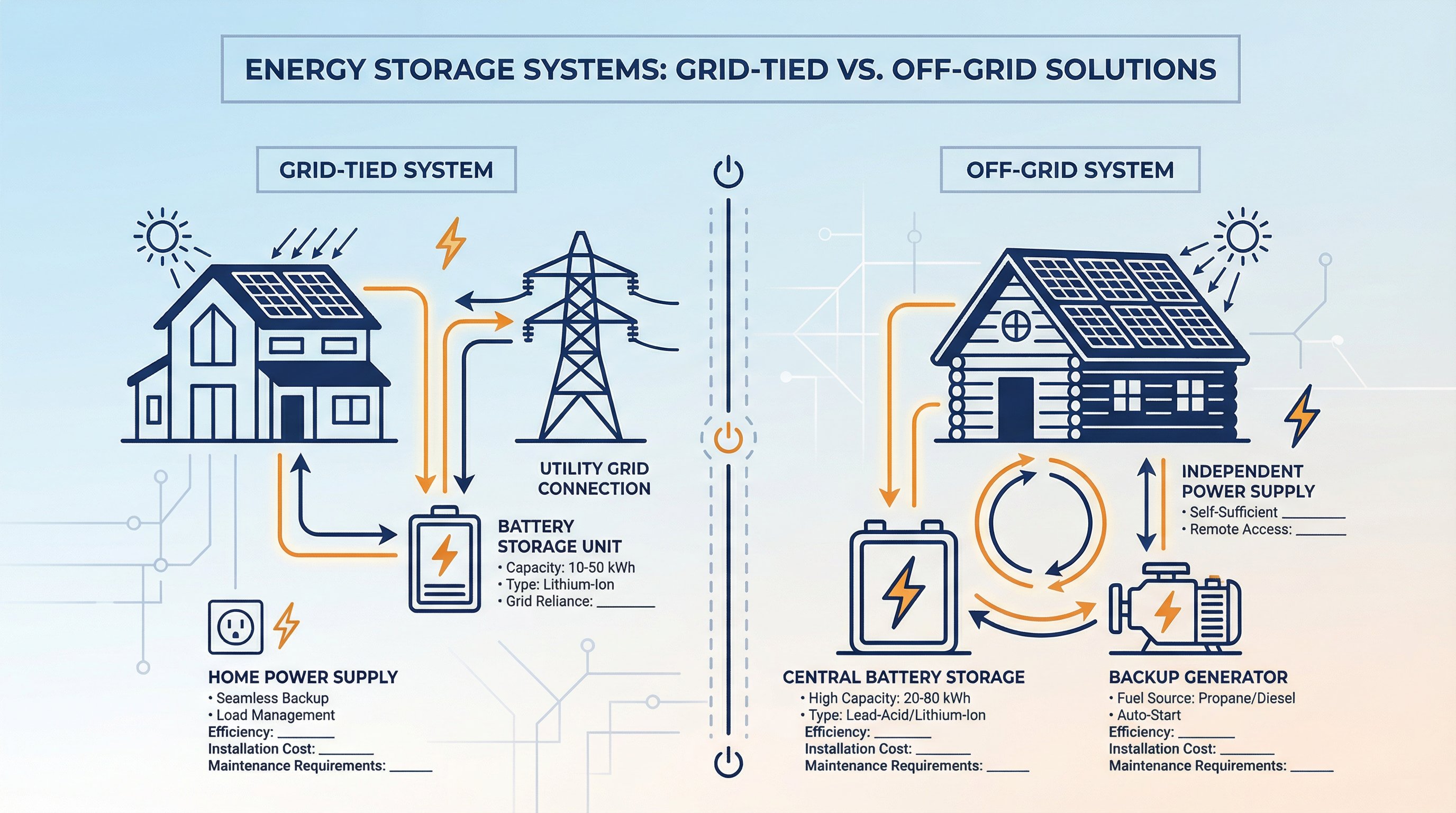
Grid-tied systems stay connected to the utility grid. They let you store excess solar energy during the day and use it at night, while also giving you the option to export power back to the grid (hello, net metering credits). During an outage, a properly configured grid-tied BESS with backup functionality can keep critical loads running while the grid is down. These systems are ideal if you have reliable grid access and want to optimize your energy costs, shave peak demand charges, or hedge against time-of-use rates.
Off-grid systems, on the other hand, operate independently. There's no utility connection, your energy storage, solar panels, and possibly a backup generator are your only sources of power. Off-grid setups are essential for remote properties, cabins, or anyone who wants complete energy independence. They require more careful sizing because there's no grid safety net if you run out of stored power. But for those seeking true autonomy or living where grid access isn't an option, off-grid BESS paired with renewables is the only way forward.
Key Benefits of Installing an Energy Storage System
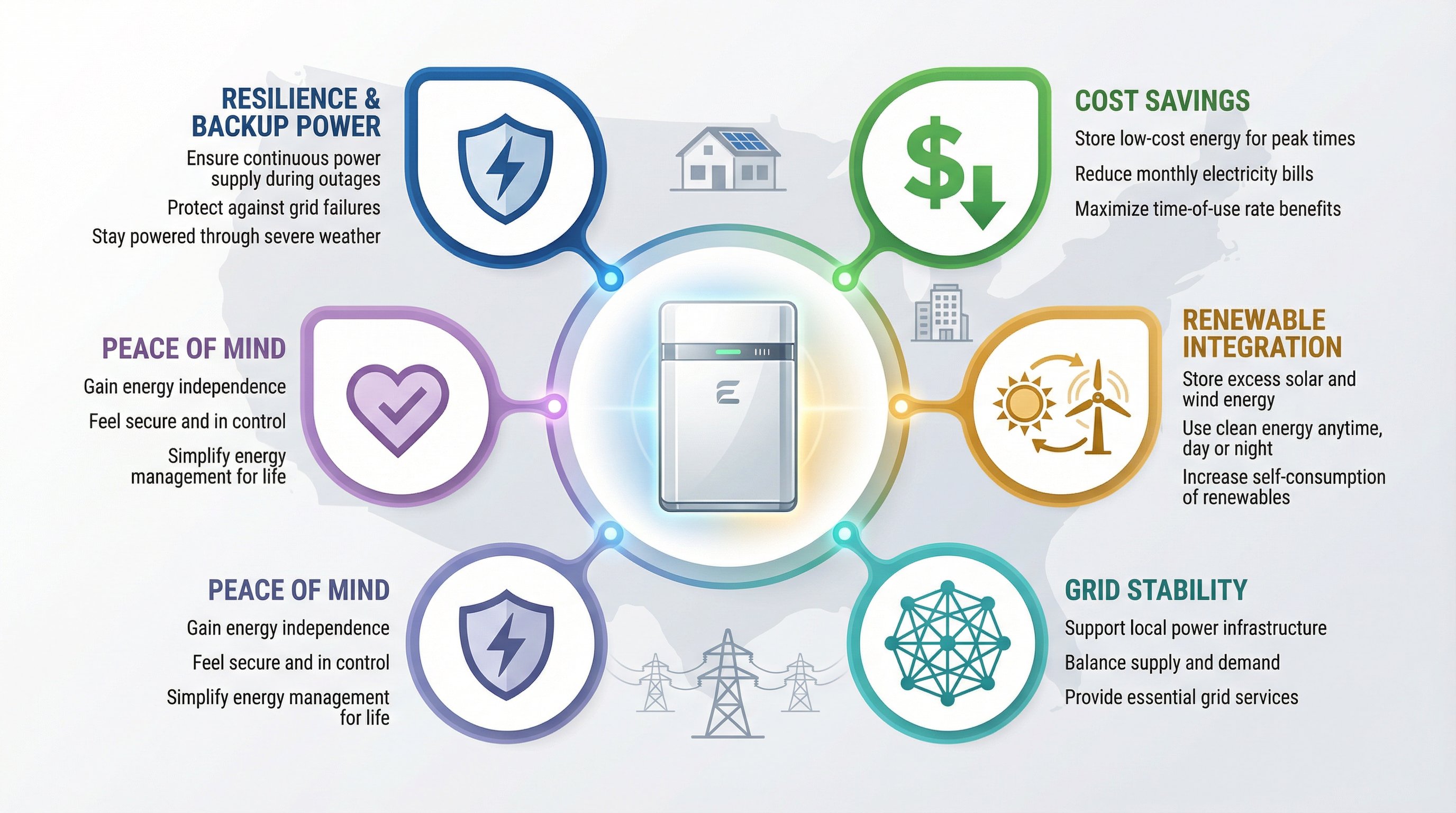
So why go through the effort and expense of adding energy storage? The benefits stack up quickly, especially in 2026's energy landscape.
Resilience and backup power top the list. When the grid goes down, whether from storms, wildfires, or aging infrastructure, your BESS keeps the essentials running. No more spoiled food, no more dead phones, and no more scrambling for a generator that won't start.
Cost savings are real, too. Energy storage lets you avoid peak electricity rates by charging during cheap off-peak hours and discharging when rates spike. For businesses, this translates into serious demand charge reductions. Pair your BESS with solar, and you're generating and storing your own power, slashing monthly utility bills.
Renewable integration is another huge win. Solar and wind are fantastic, but they're intermittent. Storage bridges those gaps, letting you use clean energy even when the sun sets or the wind dies down. You're maximizing your investment in renewables and reducing reliance on fossil fuels.
There's also grid stability. While this matters more at the utility scale, residential and commercial BESS contribute by reducing strain during peak demand. Some utilities even offer incentives for systems that can discharge back to the grid when needed.
Finally, there's the peace of mind. Knowing you've got backup power, energy independence, and control over your costs? That's worth something you can't easily quantify.
Choosing the Right Energy Storage Solution for Your Needs
Picking the right BESS isn't about grabbing the biggest battery on the market, it's about matching the system to your actual needs. Start by assessing your power and energy requirements. Power (measured in kilowatts, or kW) is how much electricity you need at any given moment. Energy (measured in kilowatt-hours, or kWh) is how long you need that power to last. A home might need 5 kW to run essentials and 20 kWh to last through a typical outage. A business? That could be 50 kW and 200 kWh or more.
Next, consider your energy sources. Are you pairing storage with solar? Wind? Or are you purely looking at grid arbitrage (buying low, using high)? If you're going solar, size your battery to store excess daytime generation. If you're off-grid, oversize your storage and generation to cover cloudy stretches.
Location and site constraints matter, too. Do you have grid access, or are you remote? How much space do you have for equipment? Outdoor-rated systems can handle weather exposure, but indoor units might need climate control.
Don't overlook certifications and support. Look for UL-certified systems that meet safety standards, and prioritize manufacturers with proven track records. Humless, for instance, has been pioneering energy storage since 2010, offering UL-certified LiFePO4 BESS with 24/7 support, exactly the kind of reliability you want when you're depending on backup power.
Finally, think long-term. Battery warranties, cycle life, and expandability all factor into total cost of ownership. A cheaper system that dies in five years isn't a bargain. Invest in quality, and your energy storage will pay dividends for well over a decade.
Frequently Asked Questions About Energy Storage Systems
What are energy storage systems and how do they work?
Energy storage systems capture excess energy from sources like solar panels or the grid and store it for later use. Battery energy storage systems (BESS) convert electricity into chemical energy through electrochemical reactions, then convert it back to usable AC power via an inverter when needed. A battery management system monitors charge levels, temperature, and safety to ensure reliable operation.
How can energy storage systems help reduce my electricity costs?
Energy storage lets you charge during off-peak hours when electricity rates are cheaper, then discharge during peak rate periods to avoid expensive charges. When paired with solar panels, storage systems capture excess daytime generation for nighttime use, significantly reducing reliance on grid power and lowering monthly utility bills.
What's the difference between grid-tied and off-grid energy storage?
Grid-tied systems remain connected to the utility grid, allowing you to export excess power and earn credits through net metering while maintaining grid backup. Off-grid systems operate independently without utility connection, relying entirely on stored energy and renewables—ideal for remote locations or those seeking complete energy independence.
Why is LiFePO4 chemistry preferred for residential energy storage?
Lithium iron phosphate (LiFePO4) batteries are the safest lithium-ion option, offering superior thermal stability, exceptional longevity (15+ years), and thousands more charge cycles than other chemistries. They're less prone to overheating or degradation, making them ideal for homeowners prioritizing reliability and long-term value in their energy storage investment.
How much power and storage capacity do I need for my home?
Assess your power needs (measured in kW for simultaneous load) and energy needs (measured in kWh for duration). A typical home might need 5 kW and 20 kWh for essential loads during outages. Consider your energy sources, whether you're pairing with solar, and your site constraints like available space and grid access when sizing your system.
Can energy storage systems provide backup power during outages?
Yes, properly configured battery energy storage systems can keep critical loads running during grid outages, with many systems switching from grid to battery backup in milliseconds. This ensures essential appliances, lighting, and devices continue operating without interruption, providing peace of mind and protection against power loss.