If you've invested in a 12V LiFePO4 battery for your home backup power or solar energy storage system, you already know these batteries are built to last. But here's the thing, improper storage voltage can quietly steal years from your battery's lifespan, even when it's just sitting idle. Whether you're storing batteries for the off-season, keeping backups for emergencies, or managing seasonal properties, understanding the right storage voltage isn't optional, it's essential.
Unlike traditional lead-acid batteries, LiFePO4 chemistry requires a specific "sweet spot" voltage during storage to prevent degradation and maintain peak performance. Store it too high, and you'll stress the cells. Too low, and you risk permanent damage. In this guide, you'll learn exactly what voltage to target, how to prepare your battery for storage, and the maintenance schedules that'll keep your energy storage investment performing for thousands of cycles. Let's jump into the science and practical steps that'll protect your power when you need it most.
Key Takeaways
- The optimal 12V LiFePO4 storage voltage is 13.15-13.2V, corresponding to approximately 50% state of charge, which minimizes chemical stress and maximizes battery lifespan.
- Storing at extreme voltages—above 13.6V or below 12.5V—accelerates degradation and can cause permanent capacity loss or damage to your LiFePO4 battery.
- Before storing, disconnect all loads, chargers, and accessories to prevent parasitic drains that can deplete your battery over time.
- Check stored batteries monthly for short-term storage (1-3 months) or quarterly for long-term storage (3-12 months) to maintain optimal voltage levels.
- Ideal storage temperature for 12V LiFePO4 batteries is 15-25°C (59-77°F) in a low-humidity, well-ventilated environment.
- Proper 12V LiFePO4 storage voltage management can extend battery life to 3,000-5,000+ cycles, while improper storage can reduce lifespan by 20-40%.
What Is 12V LiFePO4 Storage Voltage and Why It Matters
Storage voltage is the specific voltage level at which you maintain your LiFePO4 battery during periods of inactivity. It's not just a technicality, it directly impacts how many cycles your battery will deliver over its lifetime and whether it'll be ready when you actually need it.
For 12V LiFePO4 batteries, the optimal storage voltage sits around 13.15-13.2V, corresponding to approximately 50% state of charge (SOC). This isn't arbitrary. At this voltage, the battery experiences minimal chemical stress, reducing the degradation that occurs even when the battery isn't being used.
Think of it like storing a coiled spring. Keep it fully compressed (100% charge) or completely relaxed (0% charge) for months, and the material starts to deform. Store it at a neutral position, and it maintains its integrity. Same principle applies to your battery chemistry.
Understanding LiFePO4 Chemistry and Voltage Characteristics
LiFePO4 (lithium iron phosphate) batteries have unique voltage behavior that sets them apart from traditional battery chemistries. A typical 12V LiFePO4 battery actually consists of four cells in series, each with a nominal voltage of 3.2V, giving you a combined 12.8V nominal voltage.
The operational voltage range spans from about 10V (0% SOC, absolute minimum) to 14.6V (100% fully charged). But here's what makes LiFePO4 special: the voltage stays remarkably flat throughout most of the discharge cycle, typically hovering around 13.2-13.6V during normal use. This flat discharge curve means you get consistent power output, unlike lead-acid batteries that gradually sag as they discharge.
This chemistry also offers exceptional cycle life, typically 3,000-5,000+ cycles when properly managed, and superior thermal stability compared to other lithium chemistries. The iron phosphate cathode is inherently more stable, which translates to safer operation and longer calendar life.
Why Storage Voltage Differs from Operating Voltage
During operation, your battery regularly moves through its full voltage range, from 14.6V when fully charged down to wherever your BMS cuts off (usually around 10-11V to prevent damage). That's normal and expected during use.
Storage is different. When a battery sits idle at extreme voltages, specific degradation mechanisms kick in. At high voltages (near 14.6V), you create stress on the positive electrode, potentially causing cell swelling and accelerated capacity fade. The lithium ions become overly concentrated on one side of the cell, and maintaining this imbalance over time wears down the electrode structure.
At very low voltages (below 12.5V), you risk copper dissolution from the current collectors, which can lead to internal short circuits and permanent capacity loss. The battery's internal chemistry essentially "forgets" some of its capacity when left depleted.
The 50-60% SOC range (13.15-13.2V) represents a neutral equilibrium where lithium ions are reasonably distributed and chemical stress is minimized. It's the Goldilocks zone, not too charged, not too depleted, just right for long-term health.
Optimal Storage Voltage Range for 12V LiFePO4 Batteries
Let's get specific about the numbers. For maximum longevity, you'll want to target a resting voltage between 13.15-13.2V for your 12V LiFePO4 battery. This corresponds to approximately 50% state of charge and translates to about 3.2-3.3V per individual cell.
The acceptable range extends from about 13.0V (around 25% SOC) to 13.33V (roughly 75% SOC). Staying within this broader window is fine, but closer to that 13.15-13.2V target is better for long-term storage.
What you want to avoid:
- Above 13.6V: You're getting into high-charge territory that accelerates aging
- Below 12.5V: You're approaching the danger zone where permanent damage becomes a risk
One important note: these are rested voltage readings. After charging or discharging, give your battery at least 30 minutes to an hour to settle before taking a storage voltage measurement. The voltage immediately after use doesn't reflect the true state of charge.
The Ideal 50-60% State of Charge Sweet Spot
Why does 50% SOC work so well for storage? It comes down to balancing multiple factors.
At 50% charge, the battery retains enough energy to handle the slow self-discharge that occurs over time (typically 1-3% per month for LiFePO4), while avoiding the stress of high-voltage storage. You've got a buffer in both directions, the battery won't drop dangerously low even after several months, and you're not pushing the upper voltage limits.
Many battery manufacturers actually recommend 40-50% SOC as a rule of thumb for extended storage. Some conservative approaches suggest erring slightly lower in the range (closer to 40%) for storage periods exceeding six months, though 50% remains the most commonly cited target.
This sweet spot also means less work when you bring the battery back into service. You're starting from a middle ground, so the battery doesn't need a full charge cycle before use, and the BMS has an easier time balancing cells from this neutral position.
Voltage Reading Guidelines: What the Numbers Mean
Learning to interpret your battery's voltage readings helps you make better storage decisions. Here's your reference guide for rested voltages on a 12V LiFePO4 battery:
- 13.6V: 100% charged (rested after full charge)
- 13.4V: Approximately 80-90% SOC
- 13.2V: Roughly 50-70% SOC (target zone)
- 13.0V: Around 50% SOC (lower end of ideal range)
- 12.8V: Approximately 30-40% SOC
- 12.5V: Around 20% SOC (approaching minimum safe storage)
- 12.0V: Below 10% SOC (too low for storage)
- 10V: 0% SOC, absolute minimum (damage risk is high)
Keep in mind that LiFePO4's flat discharge curve means voltage doesn't change dramatically through the middle SOC ranges. A voltmeter alone gives you a general idea, but many quality battery management systems provide more accurate SOC readings by tracking amp-hours in and out over time.
For storage purposes, if your rested voltage reads anywhere from 13.0-13.3V, you're in good shape. If it's outside that range, it's time to adjust before putting the battery away.
How to Prepare Your 12V LiFePO4 Battery for Storage
Proper preparation takes just a few minutes but can add years to your battery's service life. Here's the step-by-step process to get your LiFePO4 battery storage-ready.
Step 1: Check Current State of Charge
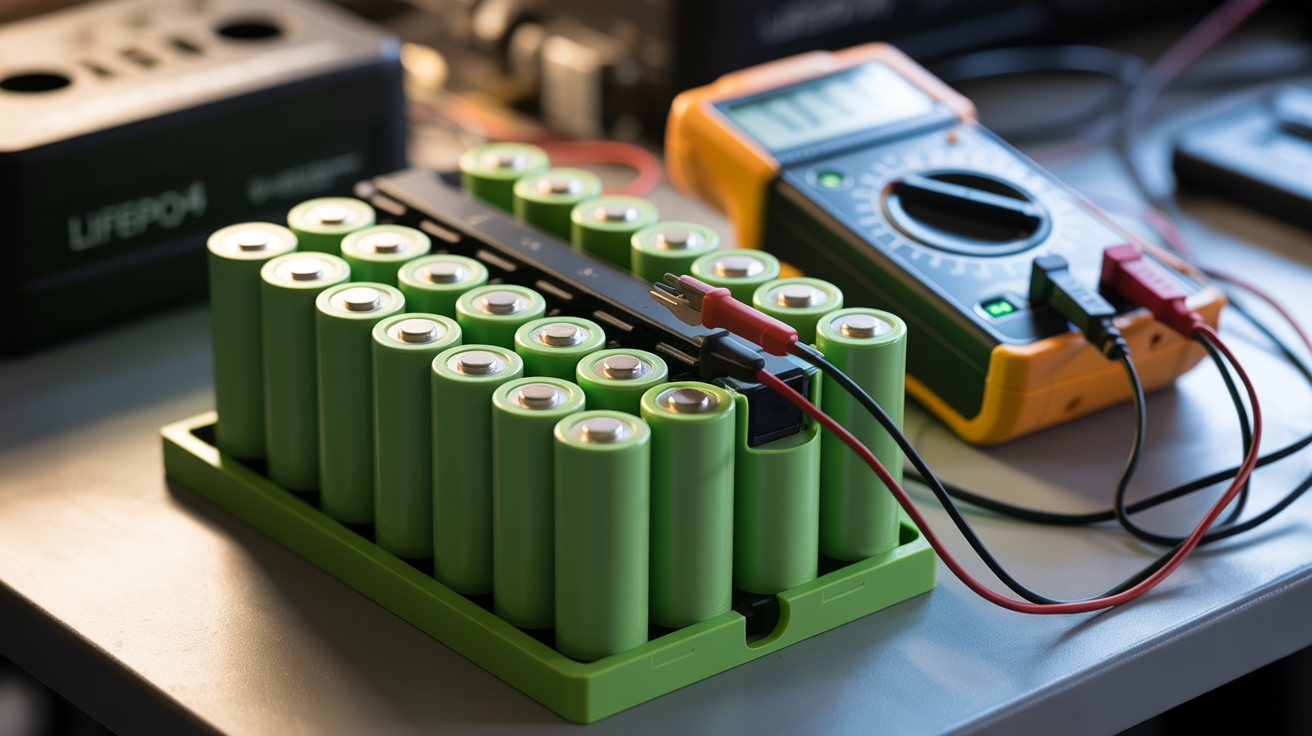
Before you can hit the target storage voltage, you need to know where you're starting from. Use a quality digital voltmeter to measure the battery terminals after it's been at rest for at least 30 minutes (no charging or discharging).
If your battery has a built-in BMS display or you're using a battery monitor, check the SOC reading there as well. Modern systems from manufacturers like Humless often include digital displays or smartphone connectivity that show precise state of charge alongside voltage.
Record both the voltage and SOC if available. This gives you a baseline and helps you decide whether you need to charge up or discharge down to reach the target zone.
If the battery reads:
- Above 13.3V: You'll need to discharge slightly
- Below 13.0V: You'll need to charge
- Between 13.0-13.3V: You're already in the ideal range
Step 2: Adjust to Target Storage Voltage
Once you know your starting point, make the necessary adjustments.
If you need to charge: Connect your LiFePO4-compatible charger and bring the battery up to the 13.15-13.2V target. Many smart chargers allow you to set a target voltage. If yours doesn't, you can charge to full (14.6V) and then use the battery briefly to drop it down to storage voltage, just monitor with your voltmeter.
If you need to discharge: The simplest method is to connect a moderate load (like a power inverter running lights or a small appliance) and monitor the voltage as it drops. Disconnect the load once you reach your target voltage. Don't over-discharge: keep a close eye on those numbers.
Some advanced systems let you program a discharge to a specific SOC, which makes this process even easier. For home battery energy storage systems, you might be able to set your system to a specific SOC through the controller interface.
Let the battery rest for another 30-60 minutes after adjustment and re-check the voltage to confirm you've hit your target.
Step 3: Disconnect All Loads and Chargers
This final step is critical and often overlooked. Once your battery is at the correct storage voltage, physically disconnect:
- All charging sources (solar controllers, AC chargers, etc.)
- All loads (inverters, devices, accessories)
- Parasitic drains (some BMS units, Bluetooth modules, or monitoring devices draw small amounts of power continuously)
If your BMS or monitoring system has a significant parasitic drain, consider disconnecting it if possible, or factor this into your maintenance schedule. Some systems draw 10-50mA continuously, which can slowly deplete your battery over months.
For systems integrated into your home's backup power or solar installation, this might mean throwing a disconnect switch or removing the battery from the system entirely if it's going into true long-term storage.
Store the battery in a clean, dry location away from metal objects that could accidentally short the terminals. A final tip: take a photo of your voltage reading and the date, it's a helpful reference for when you check on it later.
Storage Duration Guidelines and Maintenance Schedule
Storage isn't a "set it and forget it" situation. LiFePO4 batteries need periodic attention based on how long they'll be sitting idle. Here's how to structure your maintenance schedule.
Short-Term Storage (1-3 Months)
For storage periods up to three months, say, you're storing a battery for seasonal use or keeping a backup system on standby, your maintenance needs are minimal but still important.
Recommended schedule: Check the battery voltage monthly.
When you check, look for:
- Voltage readings that have dropped below 13.0V
- Any physical changes (swelling, leaks, terminal corrosion)
- Environmental conditions (temperature, moisture)
If the voltage has dropped below 13.0V, top it back up to the 13.15-13.2V storage target. LiFePO4 batteries have low self-discharge rates (typically 1-3% per month), so you shouldn't see dramatic drops, but parasitic drains or temperature extremes can accelerate discharge.
For short-term storage, many users find they don't need to recharge at all if the battery was properly prepared and all loads were disconnected.
Long-Term Storage (3-12 Months)
Longer storage periods require a bit more attention to prevent capacity fade and ensure the battery's ready when you need it.
Recommended schedule: Check the battery every three months (quarterly).
During each quarterly check:
- Measure the rested voltage
- If voltage has dropped below 13.0V, recharge to 50% SOC (13.15-13.2V)
- Inspect terminals and casing for any signs of degradation
- Verify storage conditions remain optimal (temperature, humidity)
- Document the date, voltage, and any observations in a log
Even with LiFePO4's excellent shelf life, batteries stored for 6-12 months will benefit from an occasional "exercise", a gentle discharge and recharge cycle can help keep the cells balanced and the BMS calibrated, though this isn't strictly necessary if you're maintaining proper storage voltage.
When to Check and Recharge Your Stored Battery
Beyond the scheduled intervals, certain situations warrant an immediate check:
- Temperature extremes: If your storage location experiences a heat wave or cold snap, verify the battery voltage afterward
- Before planned use: Always check voltage a day or two before you intend to put the battery back in service
- After any access: If you've moved the battery or accessed the storage area, take a quick measurement
- Voltage alarms: If your BMS has low-voltage alerts and one triggers, respond immediately
Set reminders on your phone or calendar for your maintenance checks. For commercial or business applications, integrate these checks into your facility's regular maintenance schedule.
A properly maintained 12V LiFePO4 battery can sit in storage for a year or more and come back to full functionality. Neglect those periodic checks, though, and you might find a deeply discharged battery that's lost significant capacity, or worse, one that won't accept a charge at all.
Environmental Considerations for LiFePO4 Battery Storage
Where and how you store your battery matters almost as much as the voltage you store it at. Environmental conditions directly affect self-discharge rates, chemical stability, and long-term performance.
Ideal Temperature Range and Climate Control
Temperature is the single most important environmental factor for battery storage. The ideal storage temperature for 12V LiFePO4 batteries is 15-25°C (59-77°F), basically comfortable room temperature.
Within this range, the battery's chemistry remains stable, self-discharge stays minimal, and capacity degradation essentially pauses. Think of it as hibernation mode for your battery.
What happens outside this range?
High temperatures (above 30°C/86°F):
- Accelerate self-discharge rates (possibly 5-8% per month instead of 1-3%)
- Speed up chemical degradation even in storage
- Can trigger BMS thermal protections
- Reduce overall calendar life
Low temperatures (below 0°C/32°F):
- Slow down chemical reactions (which sounds good but isn't)
- Can cause voltage depression that's mistaken for discharge
- Risk of reduced capacity upon reactivation
- Potential BMS malfunctions in extreme cold
If you don't have climate-controlled storage, aim for the most temperature-stable location available. Basements often work well, they stay cooler in summer and don't freeze in winter. Avoid attics (temperature swings), uninsulated garages (freezing risk), or outdoor sheds (both extremes).
For off-grid or seasonal properties, consider insulated battery enclosures if you can't bring batteries to a climate-controlled location.
Humidity, Ventilation, and Physical Protection
Beyond temperature, several other environmental factors deserve attention.
Humidity: Keep your battery in a low-humidity environment. While the LiFePO4 cells themselves are sealed, terminals and connections can corrode in damp conditions. Aim for relative humidity below 60%. In humid climates, consider using desiccant packs in the storage area or a dehumidifier in the storage room.
Ventilation: Store batteries in a well-ventilated area, even though LiFePO4 doesn't off-gas under normal conditions like lead-acid does. Ventilation helps regulate temperature and prevents moisture buildup. Don't seal batteries in airtight containers unless specifically designed for battery storage.
Physical protection: Store batteries on non-conductive surfaces (wood shelves, plastic pallets) away from metal objects. Keep them upright in their normal orientation. Protect from potential impacts, a dropped or struck battery can suffer internal damage even if the case looks fine.
Cleanliness: Store in a clean environment free from dust, chemicals, and flammable materials. Wipe down terminals before storage to remove any corrosion or residue.
For home battery energy storage systems from manufacturers like Humless, many units come in protective enclosures designed for various environments. If your system is staying in place (just not being used), ensure the installation location meets these environmental criteria year-round.
One often-overlooked tip: elevate batteries slightly off concrete floors if storing in basements or garages. While modern batteries aren't as sensitive to this as old lead-acid batteries were, keeping them off cold concrete helps maintain more stable temperatures.
Common Storage Voltage Mistakes to Avoid
Even experienced users sometimes fall into these storage traps. Here are the most common mistakes and how they damage your battery investment.
Storing at Full Charge or Complete Depletion
This is the number one storage mistake, and it's surprisingly common. Many people assume a fully charged battery (14.6V) is the best way to store it, after all, it's "ready to go," right?
Wrong. Storing at 100% charge keeps maximum voltage stress on the cells continuously. Over weeks and months, this accelerates capacity fade and can cause cell imbalance. You might lose 10-20% of your battery's total lifespan just from storing it fully charged for a year.
The opposite extreme, storing a depleted battery, is even worse. If a LiFePO4 battery sits below 20% SOC (under 12.5V) for extended periods, copper dissolution from the current collectors can occur, potentially causing dendrite formation and internal shorts. A battery stored deeply discharged might never recover its full capacity, or worse, might not accept a charge at all.
There's also the risk of over-discharge. If a battery at 20% SOC sits for months with even a small parasitic drain, it can drop below the critical 10V threshold where permanent damage occurs. The BMS might lock out charging entirely as a safety measure.
The fix: Always target that 50% SOC (13.15-13.2V) sweet spot. It takes just a few extra minutes but preserves years of battery life.
Leaving BMS or Accessories Connected
Many users don't realize their battery management system, Bluetooth modules, or monitoring devices consume power even when the battery isn't "in use." These parasitic drains can range from a few milliamps to 50mA or more.
That might not sound like much, but over months, it adds up. A 20mA parasitic drain on a 100Ah battery will discharge about 14.4Ah per month, roughly 15% of capacity. A battery stored at perfect 50% SOC can drop to dangerously low levels in just a few months if these drains aren't eliminated.
Some BMS units can be powered down or disconnected. Others are integrated and can't be removed. If you can't eliminate the drain, you'll need more frequent maintenance checks and top-ups.
Accessories like voltmeters, displays, Bluetooth adapters, or heating pads also draw power. Disconnect everything that isn't essential to the battery's basic protection.
The fix: Before storage, physically disconnect the BMS if possible, or at minimum disconnect all external accessories. If your BMS can't be disconnected, factor its parasitic drain into your maintenance schedule and check voltage more frequently.
Ignoring Periodic Maintenance Checks
Perhaps the most dangerous mistake is the "set and forget" approach. You prepare the battery perfectly, store it at ideal voltage and temperature, then ignore it for a year.
Even under perfect conditions, batteries self-discharge. Environmental conditions change. Parasitic drains you didn't know about slowly deplete the battery. Without periodic checks, you won't know there's a problem until you try to use the battery and find it dead, or permanently damaged.
I've seen batteries that were stored "properly" but not checked for 18 months. They'd dropped to 9V, well below the BMS cutoff. Some recovered with careful reconditioning: others lost 30-40% of their capacity permanently.
The fix: Set non-negotiable calendar reminders for maintenance checks. Monthly for short-term storage, quarterly for long-term. Treat it like any other important maintenance task for your home or business energy systems. For commercial applications, build battery storage checks into your facility management protocols.
Storing batteries isn't complicated, but it does require consistency. These three mistakes, wrong voltage, parasitic drains, and neglect, account for the vast majority of premature battery failures during storage. Avoid them, and your LiFePO4 batteries will be ready to deliver when you need them most.
Reactivating Your 12V LiFePO4 Battery After Storage
Bringing a battery back into service after storage requires a careful, methodical approach. Rush this process, and you risk damaging a battery that's been perfectly preserved.
Inspection and Voltage Testing Before Use
Before you reconnect anything, perform a thorough inspection of the battery and its components.
Visual inspection:
- Check the battery case for any cracks, bulges, or signs of swelling
- Examine terminals for corrosion, discoloration, or looseness
- Look for any signs of leakage (though rare with LiFePO4)
- Verify all labels and warnings are intact and readable
- Inspect cables and connectors for wear or damage
Voltage testing:
Using a digital voltmeter, measure the rested voltage at the battery terminals. What you find tells you what happens next:
- 13.0-13.3V: Perfect. The battery maintained its storage voltage well.
- 12.5-13.0V: Acceptable. It's discharged slightly below target but is still in good condition.
- 12.0-12.5V: Low but recoverable. Proceed with caution and slow charging.
- Below 12.0V: Concerning. The battery may have been over-discharged. Attempt recovery with a low-current charge, but monitor closely.
- Below 10V: Critical. The BMS may have shut down. May require special recovery procedures or professional assistance.
If the voltage is significantly lower than expected (more than 1V below where you stored it), investigate why. Was there a parasitic drain you missed? Temperature extremes? This information helps you prevent the same issue next time.
Check the BMS status indicators if your battery has them. Many systems will show fault codes or protection modes that were triggered during storage.
Proper Reconnection and Initial Charging Protocol
Once inspection and voltage testing are complete, follow this reactivation sequence:
Step 1: Initial charging (if needed)
If your battery is below 80% SOC (roughly 13.4V), you'll want to charge it before putting it back into full service.
- Use a LiFePO4-compatible charger set to the correct voltage (14.2-14.6V)
- Start with a lower charge current if the battery was stored for more than 6 months (0.1-0.2C rate)
- Monitor the battery temperature during the first 30 minutes of charging
- Watch for any unusual behavior (excessive heat, swelling, odd sounds)
For batteries that were stored at proper voltage (13.0-13.3V), a slow top-off charge is gentler than immediately loading the battery at partial charge.
Step 2: Balance charging
After extended storage, your cells may have drifted slightly out of balance. Perform a full balance charge:
- Charge to 14.6V and hold (most LiFePO4 chargers do this automatically)
- Allow the BMS to balance cells (this can take 2-6 hours)
- The charger should taper down to a very low current (< 0.5A) when balancing is complete
Many quality battery energy storage systems from manufacturers like Humless include automatic cell balancing during charging, so this may happen without any special action on your part.
Step 3: Reconnection
Once the battery is charged and balanced:
- Clean all terminals and connections with a wire brush or contact cleaner
- Reconnect cables in the proper sequence (positive first for most systems, follow manufacturer guidance)
- Tighten all connections to specification (usually snug but not over-torqued)
- Reconnect the BMS and any monitoring systems
- Power on the system and verify BMS readings are normal
Step 4: Light load testing
Before putting the battery back into full service, run a light load test:
- Connect a small to moderate load (10-20% of battery capacity)
- Run for 30-60 minutes
- Monitor voltage, temperature, and BMS status
- Verify the battery performs as expected
This gentle test ensures everything is working correctly before you rely on the battery for critical backup power or off-grid energy storage.
For home battery backup systems or solar storage, consider scheduling reactivation during a time when you have grid power available as backup, just in case any issues arise.
Once the battery passes these checks, it's ready to return to full service in your energy independence system. The time you invested in proper storage and careful reactivation pays dividends in reliable, long-lasting performance.
Storage Voltage Best Practices for Different Applications
Different energy storage applications have unique storage needs and challenges. Here's how to optimize your approach based on how you're using your 12V LiFePO4 batteries.
Home Backup Power and Solar Energy Storage Systems
For residential backup power and solar battery storage, you're typically dealing with semi-regular cycling with occasional extended idle periods.
Best practices:
- If your system is truly offline for extended periods (more than a month), follow the full storage protocol: discharge to 13.15-13.2V and disconnect.
- For systems on standby (ready for power outages), many homeowners keep batteries at 60-80% SOC for faster response. This is acceptable for standby periods under 2-3 weeks, but for longer standby periods, reduce to 50% SOC.
- Solar systems with daily cycling don't require storage-voltage management during normal use, but if you're suspending solar operation seasonally (rare but possible), prepare batteries for storage.
- Modern home battery systems often include "storage mode" settings, verify yours is configured correctly for the idle duration you expect.
For complete battery energy storage systems like those from Humless, the integrated BMS and control systems can often be programmed to maintain optimal storage conditions automatically. Check your system settings or consult your manual for available storage modes.
Many homeowners with solar energy storage find that quarterly battery maintenance checks integrate well with seasonal system reviews, inspect panels, check connections, verify batteries.
Off-Grid Systems and Seasonal Properties
Off-grid cabins, RVs, boats, and seasonal properties present unique storage challenges since the entire system may sit unused for months.
Best practices:
- Before closing up for the season, run through the full storage preparation checklist: check SOC, adjust to 13.15-13.2V, disconnect all loads and solar inputs.
- For RVs and boats, disconnect batteries entirely from the vehicle's electrical system. Many vehicles have phantom loads that will drain batteries over months.
- If you can't return for periodic checks, consider slightly conservative storage voltage (40-45% SOC, around 13.0V) to give more buffer against self-discharge.
- For properties with minimal security or climate control, bring batteries home if possible. Storing them in a climate-controlled garage beats an unheated cabin every time.
- Document battery voltage and date at closing and again at reopening, this helps you track degradation patterns year over year.
Off-grid property owners often coordinate battery storage with other winterization tasks (draining pipes, shutting off propane, etc.). Add battery preparation to that checklist and it becomes routine.
One clever approach some seasonal users take: install a small solar panel (5-10W) with a charge controller set to maintain exactly 50% SOC. This provides continuous trickle maintenance without the need for periodic visits. Just ensure the controller can target a specific voltage (13.2V) rather than cycling to full charge.
Commercial and Business Energy Storage
Businesses using battery energy storage for demand management, backup power, or renewable integration have both higher stakes and more resources for proper maintenance.
Best practices:
- Integrate battery storage maintenance into facility management software or preventive maintenance schedules.
- For backup batteries on standby, quarterly inspection and voltage verification should be standard protocol.
- Document all maintenance in a battery log (physical or digital): date, voltage, SOC, any actions taken, technician name.
- If rotating battery banks (some in use, some in storage), maintain a clear status board showing which banks are at storage voltage and when they were last checked.
- For mission-critical applications, consider redundant monitoring, BMS data plus independent voltage monitoring, to catch any degradation early.
- Train multiple staff members on storage protocols so maintenance doesn't depend on a single person.
Commercial installations often use larger battery banks (multiple 12V batteries in series/parallel). Storage voltage management applies to each individual battery, so systems with 10+ batteries require systematic checking. Creating a simple inspection sheet with a row for each battery helps ensure nothing is missed.
Businesses investing in UL-certified energy storage systems from established manufacturers like Humless often benefit from extended warranty coverage and 24/7 support, use these resources when questions about storage protocols arise.
For all applications, the fundamental principles remain the same: store at 50% SOC (13.15-13.2V), maintain proper environmental conditions, and check periodically. The specific implementation just adapts to your use case, access frequency, and level of system integration.
Maximizing Battery Lifespan Through Proper Storage Practices
Everything we've covered in this guide comes down to one goal: getting the maximum lifespan from your LiFePO4 battery investment. Let's bring it all together.
Properly managed 12V LiFePO4 batteries deliver 3,000-5,000+ cycles, and with quality systems featuring advanced BMS technology, some manufacturers are seeing 7,000+ cycles in real-world applications. That translates to 10-15 years of reliable service in typical home energy storage scenarios, and potentially longer in applications with less intensive cycling.
But here's the reality: improper storage can steal 20-40% of that lifespan without you even realizing it. A battery stored at full charge for two years might reach only 2,000 cycles instead of 4,000. One stored below 20% SOC might suffer permanent capacity loss that reduces usable energy by 30%.
The good news? Avoiding these losses costs almost nothing. The storage protocol outlined in this guide requires minimal time and zero specialized equipment beyond a basic voltmeter. For the investment you've made in battery energy storage, whether for energy independence, backup power, or off-grid living, the return on this small maintenance effort is massive.
Your storage success checklist:
✓ Store at 13.15-13.2V (50% SOC)
✓ Keep temperature between 15-25°C (59-77°F)
✓ Disconnect all loads, chargers, and accessories
✓ Check voltage monthly (short-term) or quarterly (long-term)
✓ Recharge when voltage drops below 13.0V
✓ Inspect before reactivation
✓ Perform balance charge after extended storage
Integrate these practices into your routine, and your batteries will reward you with decades of dependable performance. Whether you're storing a single 12V battery or managing a complete home battery energy storage system, the principles scale perfectly.
For homeowners pursuing energy independence through solar storage, businesses building resilient backup power systems, or off-grid property owners who depend on reliable energy, your battery is the heart of your system. Treat it right during storage, and it'll be there when you need it most, cycle after cycle, year after year.
Manufacturers like Humless back their battery energy storage systems with industry-leading warranties and proven reliability precisely because proper voltage management, quality BMS technology, and user education combine to deliver exceptional longevity. When you understand and carry out proper storage practices, you're not just protecting a battery, you're securing your energy independence for the long haul.
Frequently Asked Questions
What is the optimal storage voltage for a 12V LiFePO4 battery?
The optimal storage voltage for a 12V LiFePO4 battery is 13.15-13.2V, which corresponds to approximately 50% state of charge. This voltage minimizes chemical stress and degradation during periods of inactivity, maximizing battery lifespan.
How often should I check my 12V LiFePO4 battery during storage?
For short-term storage (1-3 months), check voltage monthly. For long-term storage (3-12 months), check every three months. Recharge to 50% SOC (13.15-13.2V) if voltage drops below 13.0V to prevent permanent damage.
Can I store my LiFePO4 battery fully charged?
No, storing a LiFePO4 battery fully charged (14.6V) accelerates capacity fade and stresses the cells. Always store at 50% SOC (13.15-13.2V) instead. Full-charge storage can reduce overall battery lifespan by 20-40% over time.
What temperature is best for storing 12V LiFePO4 batteries?
The ideal storage temperature is 15-25°C (59-77°F). Temperatures above 30°C accelerate self-discharge and degradation, while temperatures below freezing can cause voltage depression and reduced capacity. Climate-controlled environments preserve battery health best.
Why is 50% state of charge recommended for LiFePO4 storage?
At 50% SOC, the battery maintains a neutral chemical equilibrium with lithium ions reasonably distributed, minimizing stress on electrodes. This prevents high-voltage cell swelling and low-voltage copper dissolution, while providing buffer against self-discharge over time.
How do I know if my LiFePO4 battery voltage is too low for storage?
If rested voltage reads below 13.0V (approximately 50% SOC), recharge to the storage target of 13.15-13.2V. Voltages below 12.5V approach dangerous territory where permanent capacity loss can occur from copper dissolution in the battery's internal structure.