Solar panels on your roof are great, until the sun sets or the grid goes down. That's where solar power energy storage comes in. Instead of watching your excess solar electricity vanish into the grid (often for pennies), a battery system captures and holds it so you can power your home at night, during outages, or whenever energy prices spike. In 2026, storage isn't just a nice-to-have: it's the key to real energy independence, lower bills, and a resilient home. Whether you're off-grid in the mountains or grid-tied in the suburbs, understanding how to store the sun's energy can transform your solar investment from a daytime generator into a 24/7 power plant.
Key Takeaways
- Solar power energy storage captures excess electricity generated by your panels and holds it for use at night, during outages, or when utility rates spike, transforming intermittent solar into reliable 24/7 power.
- Lithium iron phosphate (LiFePO4) batteries are the residential standard, offering 90–95% round-trip efficiency, 3,000–6,000+ cycles, and superior safety compared to older lithium chemistries.
- Storage systems maximize self-consumption by allowing you to use your own solar energy during peak-rate hours instead of buying expensive grid power, resulting in payback periods of 7–12 years.
- A solar plus storage system provides grid-independent backup power during blackouts, keeping critical loads running for hours or days—essential protection for families and businesses.
- Modern battery systems integrate smart controls that optimize charging and discharging based on time-of-use rates and weather forecasts, ensuring you capture full value from every kilowatt-hour your panels produce.
- Choosing the right solar storage solution requires evaluating capacity needs, efficiency ratings, cycle life warranties (10+ years or 4,000+ cycles), upfront costs, and manufacturer support for long-term reliability.
What Is Solar Power Energy Storage and Why Does It Matter?
Solar power energy storage refers to technologies that capture electricity generated by your solar panels and hold it for later use, so you're not dependent on sunshine in real-time or the utility grid.
At its core, energy storage works by converting electrical energy into another form (usually chemical energy inside a battery), then releasing it back as electricity when you need it. For solar, that means excess kilowatt-hours from a sunny afternoon charge your battery instead of flowing back to the grid. Later, after dark, during a storm, or when your utility's rates peak, the system discharges that stored power to run your lights, fridge, and everything else.
Why does this matter? Three big reasons:
- Reliability and resilience. Blackouts don't care whether your panels are cranking out power at noon: if the grid's down, you're down, unless you have storage. A battery keeps the lights on and critical loads running.
- Energy independence. You consume more of what you generate, cutting reliance on the utility and dodging time-of-use rate hikes.
- Grid benefits. Storage helps balance supply and demand, reduce curtailment (waste) of solar generation, and stabilize the broader electric system, especially as renewables grow.
In short, storage turns intermittent solar into dispatchable, on-demand clean power.
How Solar Energy Storage Systems Work
Understanding the flow is simpler than you might think. Here's the step-by-step:
- Solar panels generate DC electricity from sunlight.
- An inverter converts that DC into AC power for your home's circuits (and the grid, if you're connected).
- When your panels produce more than you're using, the excess energy charges a battery (or other storage device) instead of immediately exporting to the utility.
- The battery holds that energy as chemical potential, typically inside lithium-ion cells.
- Later, at night, during cloudy weather, or in an outage, the system discharges stored electricity back through the inverter to power your home.
- If the battery runs low and generation is insufficient, a grid-tied system can pull from the utility: off-grid setups may rely on a backup generator or simply ration stored energy.
Modern systems often include smart controls that optimize when to charge, discharge, or export based on time-of-use rates, weather forecasts, and your usage patterns. The result? You use clean, self-generated power whenever it makes the most sense, financially and operationally.
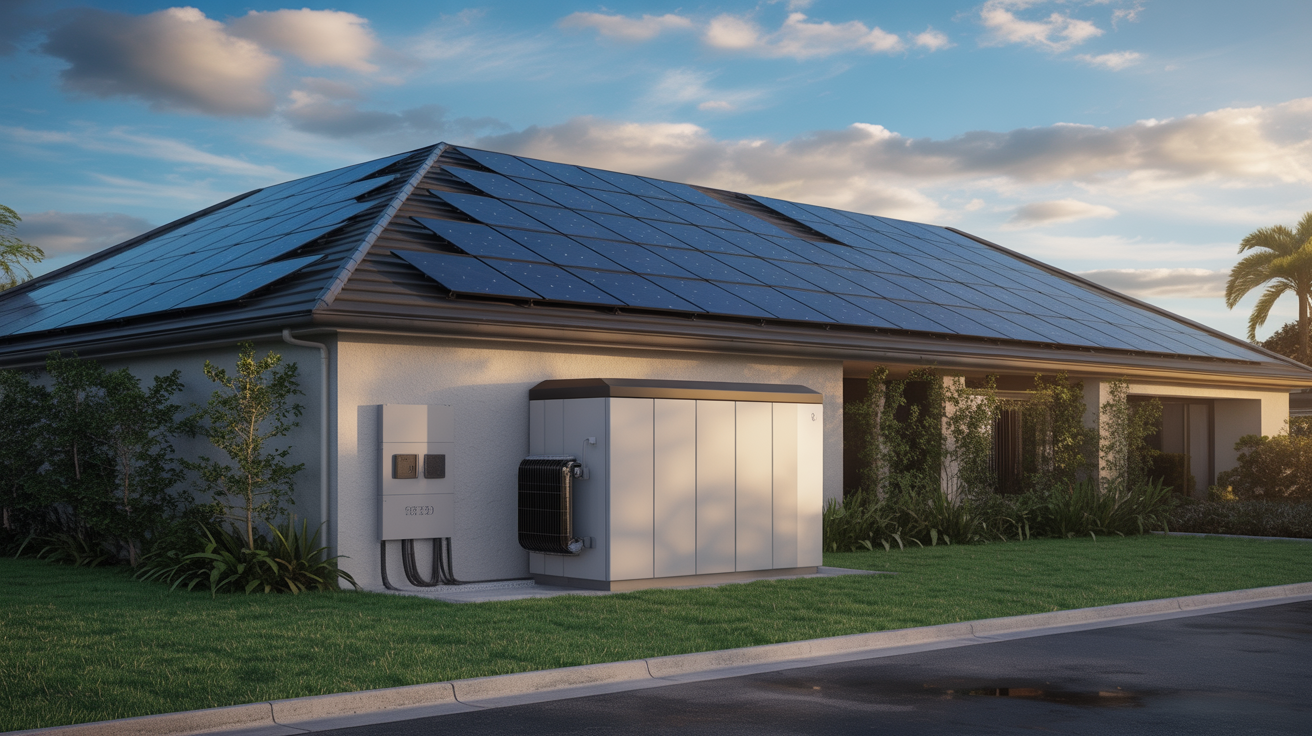
For homeowners, this usually means a wall-mounted or floor-standing battery cabinet connected to your existing (or new) solar array and inverter. Humless BESS offers integrated solutions that seamlessly tie together solar, grid, and even generator inputs with 24/7 monitoring and support.
Types of Solar Energy Storage Technologies
Not all storage is created equal. The technology you choose depends on your capacity needs, budget, cycle life, and application. Here are the main contenders in 2026:
- Lithium-ion batteries (including lithium iron phosphate, or LiFePO4): By far the most popular for residential and commercial solar. High energy density, excellent round-trip efficiency (often 90–95%), and long cycle life. They're compact, scalable, and proven.
- Flow batteries: Use liquid electrolytes stored in external tanks. Great for long-duration storage (4+ hours) and very high cycle counts, but bulkier and currently pricier per kWh. Best suited for larger commercial or utility projects.
- Mechanical storage (flywheels, compressed air): Niche solutions for specific grid or industrial applications. Rarely used in home solar setups.
For most homeowners and small businesses, lithium-ion, and especially LiFePO4, is the go-to thanks to its balance of performance, safety, and cost.
Lithium Iron Phosphate (LiFePO4) Batteries
LiFePO4 is a subtype of lithium-ion chemistry that's gained a stellar reputation for safety and longevity. Unlike older lithium cobalt oxide cells, LiFePO4 has a much lower risk of thermal runaway (overheating and fire), making it one of the safest battery chemistries available.
Key advantages include:
- Long cycle life: Often 3,000–6,000+ cycles at 80% depth of discharge, translating to a decade or more of daily use.
- High efficiency: Round-trip efficiency typically above 90%.
- Stable performance across a wide temperature range.
- Environmental and recyclability benefits compared to some other lithium chemistries.
Many leading residential storage systems, including those from Humless, leverage LiFePO4 for its combination of durability, safety certifications (UL, IEC), and proven track record in both stationary and mobile applications.
Key Benefits of Adding Storage to Your Solar System
Why bolt a battery onto your solar array? The payoff goes well beyond just having lights during a blackout.
1. Maximize self-consumption and energy independence
Without storage, excess daytime solar often gets exported to the grid at wholesale rates, pennies per kWh. A battery lets you bank that energy and use it in the evening when you'd otherwise buy expensive grid power. You keep more value on-site and reduce dependence on the utility.
2. Backup power and resilience
Grid outages, from storms, wildfires, or equipment failures, are unpredictable. A solar-plus-storage system can island your home, keeping critical circuits running for hours or days. That's peace of mind you can't put a price on, especially for families with medical needs or businesses that can't afford downtime.
3. Bill savings through time-of-use and demand charge optimization
Many utilities now charge higher rates during peak evening hours. Storage lets you shift your solar generation to cover those expensive windows, slashing your bill. Commercial customers can also shave costly demand charges by discharging the battery during high-load events.
4. Support a cleaner, more reliable grid
Aggregated home batteries can act as virtual power plants, feeding power back during peak demand or absorbing surplus renewables. This reduces the need for fossil peaker plants and curtailment (wasted solar), accelerating the transition to a cleaner grid.
5. Future-proof your investment
As utilities phase out generous net metering and adopt more complex rate structures, storage ensures you capture full value from every kilowatt-hour your panels produce.
Choosing the Right Solar Storage Solution for Your Needs
Picking the perfect battery isn't one-size-fits-all. Here's what to weigh:
Capacity and scalability
How many kilowatt-hours do you need? Start by analyzing your evening and overnight consumption (or critical-load requirements during an outage). If you might add an electric vehicle, heat pump, or second home later, choose a modular system that can grow.
Technology type
For most homeowners, lithium-ion (especially LiFePO4) hits the sweet spot of cost, safety, and performance. If you're planning multi-day off-grid autonomy or have a large commercial facility, explore flow batteries or hybrid solutions. Humless offers UL-certified LiFePO4 systems designed to integrate seamlessly with solar, grid, wind, and generator sources.
Efficiency and lifecycle
Higher round-trip efficiency means less energy lost in the charge/discharge cycle, more savings over time. Longer cycle life (measured in full charge/discharge cycles) means fewer replacements and lower lifetime cost. Look for warranties of 10+ years or 4,000+ cycles.
Cost and return on investment
Upfront price matters, but so do operating savings, available incentives (federal tax credits, state rebates, utility programs), and the avoided cost of grid power. Run the numbers: payback periods of 7–12 years are common, and financing or leasing can smooth cash flow.
Safety and environmental impact
Prioritize systems with strong safety certifications (UL 9540, UL 1973, IEC standards) and a proven track record. LiFePO4 excels here. Also consider end-of-life recyclability and the manufacturer's take-back programs.
Support and warranty
A battery is a long-term partner. Choose a manufacturer with robust customer service, local support, and transparent warranty terms. Humless backs its systems with 24/7 support and over 15 years of energy-storage expertise.
Conclusion
Solar power energy storage, especially modern lithium-ion and LiFePO4 batteries, transforms solar from a daytime-only resource into a dispatchable, reliable, and cost-effective power source you control around the clock. Whether you're chasing energy independence, protecting against outages, or simply squeezing every dollar from your panels, storage is the missing piece that makes solar truly shine. As grids evolve and clean energy scales, the ability to store the sun's energy when it's abundant and use it when it's needed most isn't just smart, it's essential.
Frequently Asked Questions About Solar Power Energy Storage
What is solar power energy storage and why do I need it?
Solar power energy storage captures electricity from your solar panels and stores it for later use, enabling you to power your home at night, during outages, or when grid rates peak. It transforms intermittent solar into reliable, on-demand clean energy while increasing energy independence and resilience.
How does a solar energy storage system work?
Solar panels generate DC electricity, which an inverter converts to AC power for your home. Excess generation charges a battery instead of exporting to the grid. Later, during night or cloudy weather, the system discharges stored energy back through the inverter to power your home.
What type of solar battery is best for residential use?
Lithium-ion batteries, especially lithium iron phosphate (LiFePO4), are ideal for residential solar storage. They offer high efficiency (90–95%), long cycle life (3,000–6,000+ cycles), excellent safety, and compact design, making them the most popular choice for homeowners.
How much money can I save with solar energy storage?
Savings depend on your utility rates and usage patterns. Storage lets you avoid peak-rate charges and maximize self-consumption of solar energy instead of selling it at wholesale prices. Typical payback periods range from 7–12 years, especially with federal tax credits and state rebates.
Can solar batteries work during a power outage?
Yes, a solar-plus-storage system can island your home during grid outages, keeping critical circuits running for hours or days. This backup power is especially valuable for families with medical equipment or businesses that cannot afford downtime.
What should I look for when choosing a solar storage solution?
Consider capacity (kWh needed), technology type (lithium-ion for most homes), efficiency and cycle life, upfront cost versus ROI, safety certifications (UL 9540, IEC), scalability for future growth, and manufacturer support and warranty terms.