We've reached a turning point in how we think about energy. The grid isn't just something we draw from anymore, it's becoming a two-way street, where homes and businesses can store, manage, and even sell power back. This shift is driven by batteries and energy storage systems that have evolved from clunky, expensive backups into sleek, scalable solutions capable of powering everything from a single home during an outage to entire industrial facilities during peak demand.
Whether you're a homeowner tired of blackouts, a solar installer looking to maximize renewable energy value, or a business seeking to cut electricity costs and boost resilience, understanding modern battery energy storage is essential. These systems don't just sit idle waiting for the lights to go out, they actively optimize energy use, integrate seamlessly with solar and wind, and provide independence from an aging grid.
In this guide, we'll break down how these technologies work, explore the leading battery chemistries, examine real-world applications, and help you navigate the choices that'll shape your energy future. Let's immerse.
Key Takeaways
- Battery energy storage systems transform excess solar or wind power into usable energy during outages or peak demand periods, delivering both resilience and cost savings.
- LiFePO4 batteries dominate modern energy storage due to their superior safety, 6,000+ cycle lifespan, and cobalt-free chemistry compared to traditional lithium-ion alternatives.
- Residential and commercial applications of batteries and energy storage range from backup power and peak shaving to off-grid independence and demand charge reduction.
- Integrating battery storage with renewable energy sources like solar maximizes self-consumption and reduces reliance on expensive grid power, especially as net metering policies decline.
- Key factors when choosing an energy storage system include capacity (kWh), power rating (kW), scalability for future expansion, and safety certifications like UL 9540.
- Future trends point to falling costs, second-life EV batteries, and emerging sodium-ion technology making batteries and energy storage more accessible and sustainable by 2030.
Understanding Battery and Energy Storage Technology
At their core, battery energy storage systems (BESS) do something deceptively simple: they capture electrical energy when it's abundant or cheap and release it when you need it most. But the elegance lies in the execution, how they stabilize grids, integrate renewables, and respond in fractions of a second to keep power flowing smoothly.
How Energy Storage Systems Work
Think of a BESS as a smart buffer between your energy source and your consumption. When solar panels produce more electricity than your home uses on a sunny afternoon, that excess doesn't have to vanish into the grid for pennies. Instead, the BESS captures it, storing the energy in rechargeable batteries through a well-orchestrated chemical dance.
Inside each battery cell, three key players make this happen: the anode (negative electrode), cathode (positive electrode), and electrolyte. During charging, ions shuttle from the cathode to the anode through the electrolyte, storing energy. When you need power, the process reverses, ions flow back, releasing electrons that create the current powering your lights, fridge, or EV charger.
What makes modern BESS exceptional is their response time. They can dispatch stored energy in under a second, which is critical for grid stability. If a cloud passes over a solar farm and generation drops, a BESS can instantly inject power to smooth out the dip. For homeowners, this means seamless transitions during outages, your lights don't even flicker.
Key Components of a Battery Energy Storage System
A complete BESS is more than just batteries stacked in a box. It's an integrated system with several essential components working in concert:
Battery modules are the heart, housing the individual cells that store energy. These modules are engineered for specific voltages and capacities, often scalable so you can start small and expand as needs grow.
Power conversion systems (PCS) act as translators. They convert the direct current (DC) stored in batteries into alternating current (AC) that your home or business uses, and vice versa during charging. High-quality inverters ensure minimal energy loss and clean power output.
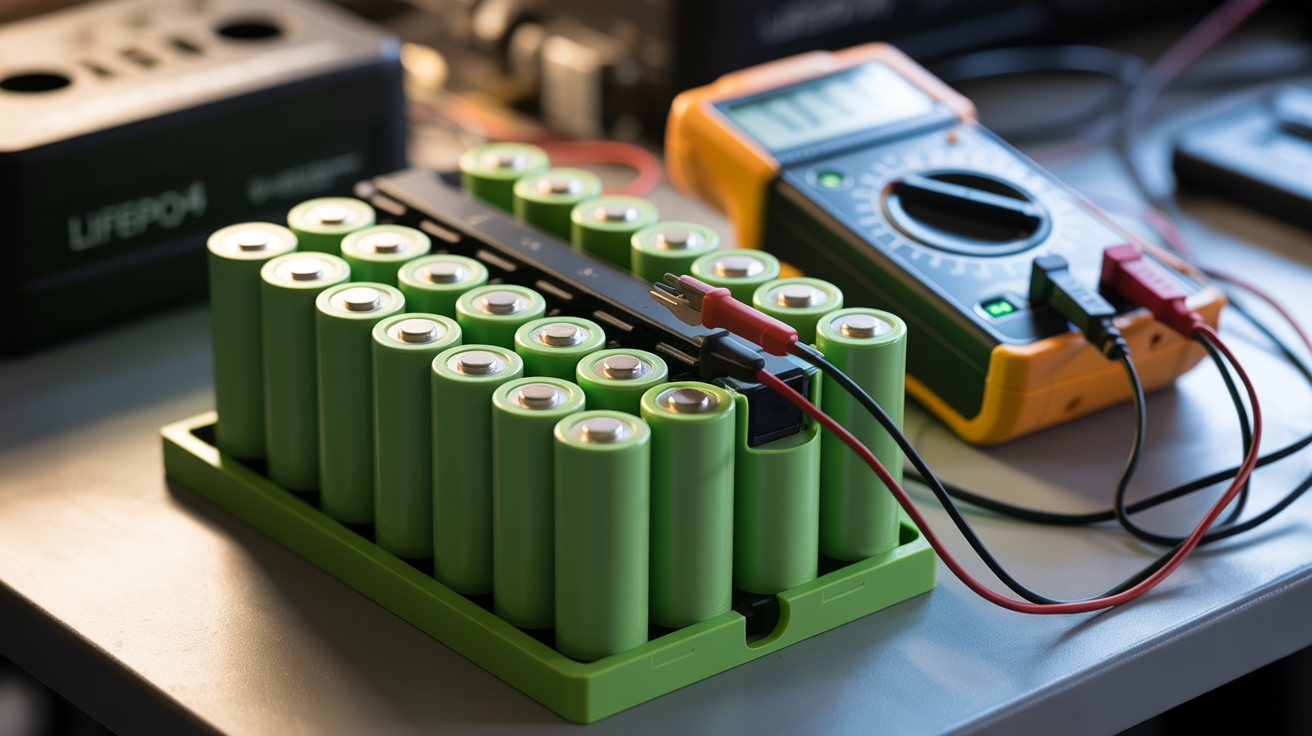
Battery management systems (BMS) are the brains. They monitor cell voltages, temperatures, and state of charge, ensuring balanced operation and preventing issues like overcharging or thermal runaway. A robust BMS extends battery lifespan and enhances safety.
Control systems orchestrate when to charge and discharge based on energy prices, consumption patterns, solar production, or grid signals. Advanced controllers enable features like peak shaving (drawing from the battery during expensive peak hours) and backup mode (instant switchover during outages).
Together, these components create a responsive, intelligent energy storage solution that adapts to your unique power landscape.
Types of Battery Energy Storage Technologies
Not all batteries are created equal. The chemistry inside determines everything from how long they last to how safe they are and what applications they're suited for. Let's break down the key players.
Lithium-Ion and LiFePO4 Battery Systems
Lithium-ion (Li-ion) batteries dominate the energy storage landscape, and for good reason. They pack high energy density into relatively compact packages, respond quickly, and have benefited from massive cost declines driven by the electric vehicle boom. Over the past decade, Li-ion prices have dropped by more than 80%, making what was once a luxury accessible to homeowners and small businesses.
Within the Li-ion family, you'll encounter several chemistries. NMC (nickel-manganese-cobalt) batteries offer a balanced blend of energy density and power output, making them popular for applications needing quick bursts of energy. But they contain cobalt, which raises cost and ethical sourcing concerns.
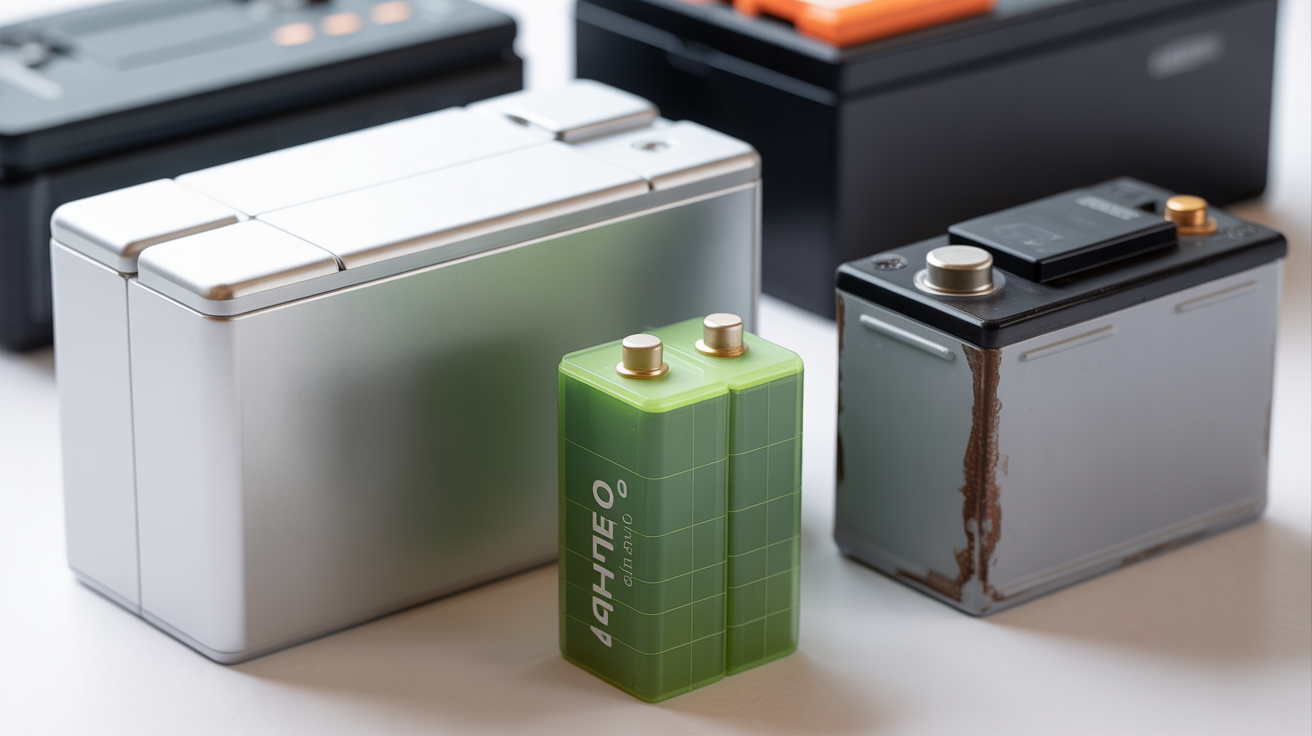
That's where LiFePO4 (lithium iron phosphate or LFP) steps in. LFP batteries have surged in popularity because they're cobalt-free, inherently safer (less prone to thermal runaway), and offer impressive cycle life, often 6,000+ cycles compared to 3,000-5,000 for NMC. The trade-off? Slightly lower energy density. But for residential and commercial storage where space isn't as constrained as it is in a car, LFP's safety and longevity win out.
Companies like Humless have championed LiFePO4 technology in their BESS offerings, prioritizing safety and reliability for homeowners and off-grid applications. The result is systems that can handle daily cycling for years without significant degradation.
Lead-Acid vs. Modern Battery Solutions
Lead-acid batteries are the old guard, mature, inexpensive, and familiar to anyone who's ever jumped a car battery. They've powered backup systems for decades, and their low upfront cost still attracts budget-conscious buyers.
But here's the catch: lead-acid batteries have poor cycle life (often 500-1,000 cycles), low energy density (30-50 Wh/kg versus 150-250 Wh/kg for Li-ion), and require regular maintenance. They're heavy, bulky, and simply can't compete with modern lithium solutions for applications demanding frequent cycling or compact installations.
If you're planning daily solar storage or need a system that fits in a closet rather than a garage, lead-acid falls short. Modern Li-ion and LFP batteries deliver 3-5 times the lifespan, dramatically better energy density, and maintenance-free operation. The higher upfront investment pays back through longer service life and superior performance.
Emerging technologies like sodium-ion batteries offer intriguing promise, they're safer, use abundant materials, and avoid supply chain bottlenecks. But they currently lag in energy density and commercial availability. For now, lithium-ion, especially LFP, remains the sweet spot for most energy storage needs.
Applications of Batteries and Energy Storage
Battery and energy storage systems aren't one-size-fits-all. They adapt to wildly different scenarios, from keeping your home online during a blackout to helping factories slash demand charges. Here's where they shine.
Residential Backup Power and Energy Independence
For homeowners, the appeal is immediate and visceral: lights stay on when the grid goes dark. But modern residential BESS go far beyond emergency backup. They enable energy independence by storing cheap off-peak or solar-generated power and using it during expensive peak hours, a strategy called peak shaving that can cut electricity bills by 20-40%.
Pair a BESS with rooftop solar, and you're no longer at the mercy of utility rate hikes or time-of-use pricing. You generate, store, and consume your own power. In states with net metering changes or unfavorable solar export rates, a battery maximizes self-consumption, ensuring every kilowatt-hour your panels produce benefits you directly.
And when storms roll through or wildfires trigger preemptive shutoffs, a properly sized system keeps refrigerators running, medical devices powered, and Wi-Fi online for days. Systems from providers like Humless are designed with residential resilience in mind, offering scalable capacities from a few kilowatt-hours for essential loads to whole-home backup.
Off-Grid and Remote Power Solutions
Off-grid living used to mean compromising on comfort, rationing power, running noisy generators, or going dark after sunset. Battery energy storage has changed that equation entirely. Modern BESS provide reliable, quiet, 24/7 power for cabins, remote homesteads, RVs, and properties where grid connection is cost-prohibitive.
Off-grid systems combine solar (or wind) generation with battery storage and often a backup generator for extended cloudy periods. The batteries smooth out the intermittent nature of renewables, storing surplus during the day and delivering consistent power at night. With proper sizing, you can run appliances, power tools, and electronics just as you would on-grid.
Portable power stations, compact BESS you can move between locations, have also exploded in popularity for camping, tailgating, mobile work sites, and emergency preparedness. These typically range from 500 Wh to several kWh and offer the same LiFePO4 chemistry found in larger home systems, just in a grab-and-go package.
Commercial and Industrial Energy Storage
Businesses face a different set of challenges: demand charges that penalize peak usage, expensive electricity during business hours, and the financial hit of downtime during outages. Battery energy storage tackles all three.
Demand response is a killer app for commercial BESS. Utilities charge industrial customers based on their highest 15-minute power demand in a billing period. A BESS can shave those peaks by discharging during high-load events, like when HVAC systems kick on or production lines ramp up, potentially saving thousands per month.
Large-scale BESS also participate in frequency regulation markets, providing grid services that earn revenue while stabilizing the electrical network. And for critical facilities, hospitals, data centers, manufacturing plants, battery storage ensures uninterrupted operation, avoiding costly downtime and protecting sensitive equipment.
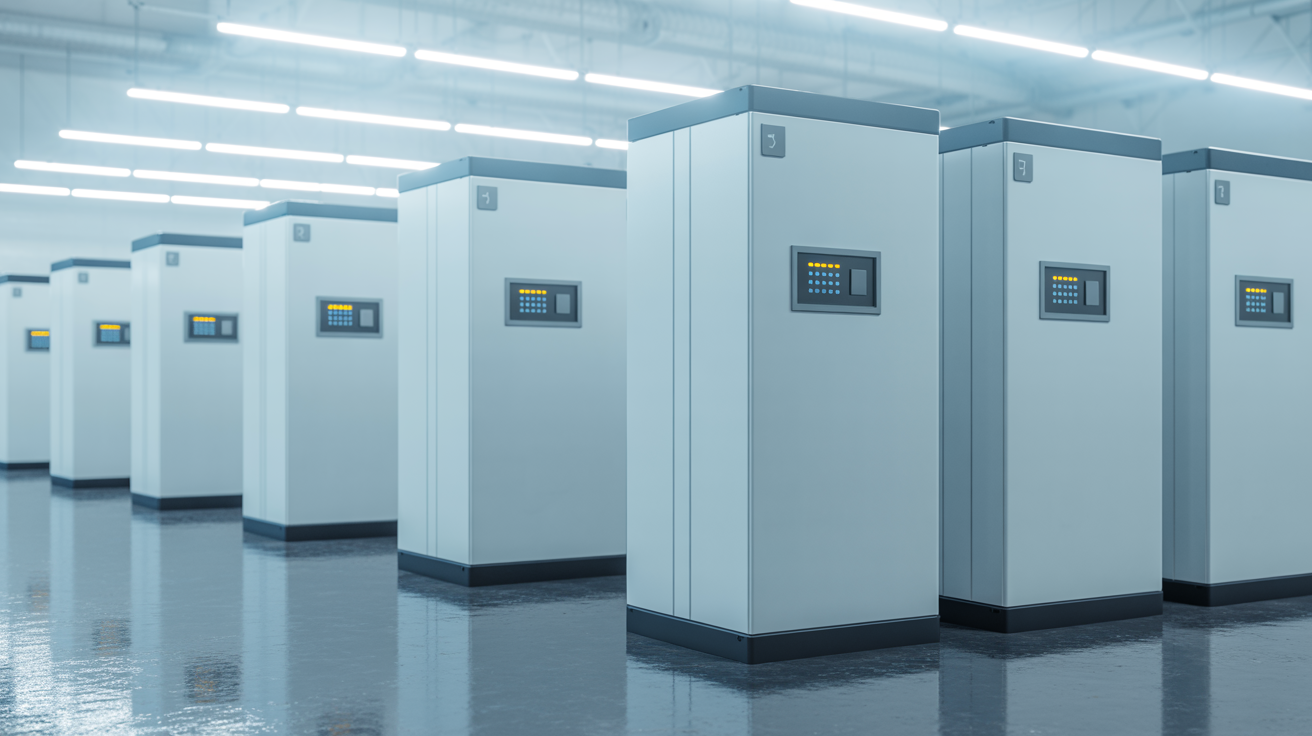
Scalability is key. Commercial systems often start at tens of kilowatt-hours and scale into the megawatt-hour range, with modular designs allowing expansion as energy needs grow.
Integration with Renewable Energy Sources
Renewables and batteries are a match made in energy heaven. Solar and wind generate clean power, but only when the sun shines or the breeze blows. Batteries store that energy for when it's actually needed, turning intermittent generation into reliable, dispatchable power.
Solar Battery Storage Systems
Solar battery storage is the most common pairing, and it's easy to see why. Rooftop solar panels crank out energy during midday, often exceeding household consumption. Without storage, that surplus either feeds the grid (often for minimal credit) or goes to waste.
Add a battery, and the calculus shifts. Excess solar charges the BESS, which then discharges in the evening when panels go dormant but demand peaks, dinner prep, laundry, kids on devices. You're using your own clean energy instead of buying grid power at premium rates.
This self-consumption model is especially valuable as net metering policies erode. California, Hawaii, and several other states have reduced export compensation, making on-site storage far more economical than selling power back for pennies.
Solar installers increasingly recommend BESS as part of every residential and commercial solar project. Systems like those from Humless integrate seamlessly with existing or new solar arrays, with intelligent controllers optimizing charge/discharge cycles to maximize savings and resilience.
For off-grid solar, batteries aren't optional, they're essential. They capture midday abundance and stretch it through the night, ensuring consistent power without fossil fuel backup.
Wind and Hybrid Energy Storage
Wind energy is inherently variable, often peaking at night when demand is low. Battery storage captures those overnight gusts and releases power during daytime or evening peaks, smoothing out wind's erratic nature.
Hybrid systems, combining solar, wind, and batteries, are the gold standard for reliability. Solar dominates daytime generation: wind picks up evenings and overnight: batteries balance both. This diversification reduces reliance on any single source and minimizes the need for oversized battery banks.
Utility-scale wind farms increasingly deploy BESS to firm up their output, making wind power dispatchable and more valuable to grid operators. For remote and off-grid sites, hybrid systems with battery storage deliver near-100% renewable reliability, even in challenging climates.
The flexibility of modern battery energy storage means it adapts to whatever renewable mix you throw at it, solar, wind, micro-hydro, or any combination.
Choosing the Right Battery and Energy Storage System
Shopping for a BESS can feel overwhelming. Specs, chemistries, certifications, it's a lot. But focus on a few critical factors, and the right choice becomes clear.
Capacity, Power Rating, and Scalability Considerations
Capacity (measured in kilowatt-hours, kWh) tells you how much energy the battery stores, think of it as the size of your gas tank. A 10 kWh battery can deliver 1 kW of power for 10 hours, or 2 kW for 5 hours. Determine your capacity needs by tallying up the essential loads you want to run during an outage and how long you need backup.
For daily solar cycling, consider your evening consumption. If you use 15 kWh from 6 PM to 6 AM, you'll want at least that much usable capacity (accounting for depth of discharge limits).
Power rating (in kilowatts, kW) is how fast the battery can deliver energy, the flow rate, not the tank size. A system might store 10 kWh but only output 5 kW at once. If you need to run high-draw appliances simultaneously, air conditioner, electric stove, EV charger, ensure the power rating supports it.
Scalability matters for future-proofing. Your energy needs may grow, adding an EV, expanding your home, installing more solar. Modular systems let you add battery modules without replacing the entire setup. Humless BESS, for instance, are designed with expansion in mind, allowing homeowners to start with a baseline system and scale up as budgets and needs evolve.
Safety Standards and Certifications
Battery safety isn't something to gloss over. Lithium batteries, while generally safe, can experience thermal runaway under certain conditions, overcharging, physical damage, manufacturing defects, leading to fires. Proper design, quality components, and third-party certifications mitigate these risks.
Look for UL certification (UL 9540 for energy storage systems, UL 1973 for batteries). UL testing validates that the system meets rigorous safety standards for thermal management, electrical protection, and fault tolerance. It's not just a nice-to-have, many jurisdictions require UL-listed equipment for permitting and insurance.
LiFePO4 chemistry adds an extra safety margin. Its thermal and chemical stability means it's far less prone to runaway than NMC or other lithium chemistries, making it ideal for residential installations where batteries may be near living spaces.
Also consider warranty and support. A 10-year warranty signals manufacturer confidence, but 24/7 technical support (like Humless offers) ensures you're not left in the dark if issues arise.
Future Trends in Battery and Energy Storage
The battery and energy storage landscape is evolving fast. What's on the horizon promises to make systems even safer, cheaper, and more accessible.
LiFePO4 adoption is accelerating. As concerns about cobalt supply chains and NMC fire risks grow, LFP's inherent safety and ethical advantage are driving rapid uptake, not just in storage, but in EVs too. Major automakers are shifting to LFP for entry and mid-range models, which in turn drives manufacturing scale and further cost declines.
Second-life EV batteries are emerging as a cost-cutting game-changer. When an EV battery drops to 70-80% of original capacity, it's no longer ideal for driving but still has thousands of cycles left for stationary storage. Repurposing these batteries for home or grid storage can cut costs by ~50%, making energy storage accessible to a broader audience while reducing e-waste.
Sodium-ion batteries are gaining traction as a safer, more sustainable alternative. They use abundant materials (no lithium, cobalt, or nickel), operate safely at zero volts, and avoid many supply chain bottlenecks. Energy density still lags lithium, but for stationary storage, where weight and space are less critical, sodium-ion could become a compelling budget option within a few years.
Costs continue their downward march. Industry projections suggest battery prices will fall another 30-40% by 2030, driven by manufacturing scale, material innovations, and competition. This trend enhances grid decentralization, empowering more homes and businesses to generate, store, and manage their own energy.
Software and AI are also transforming how BESS operate. Predictive algorithms optimize charge/discharge based on weather forecasts, utility rate schedules, and consumption patterns, squeezing every ounce of value from stored energy.
The result? A future where energy storage isn't a luxury or niche solution, but a standard component of every resilient, cost-effective energy system.
Conclusion
Batteries and energy storage have moved from the margins to the mainstream, reshaping how we generate, consume, and think about power. They're no longer just backup insurance, they're active participants in energy independence, cost savings, and a cleaner grid.
Whether you're a homeowner looking to ride out the next blackout, a solar installer maximizing renewable value for clients, or a business cutting demand charges and boosting resilience, the right battery energy storage system can transform your energy landscape. The key is matching capacity, power, and chemistry to your specific needs, and ensuring safety and scalability for the long haul.
With proven LiFePO4 technology, UL certifications, and 15+ years of expertise, Humless BESS offers solutions built for real-world reliability and seamless integration with solar, grid, wind, and generator sources. As costs fall and technologies advance, there's never been a better time to take control of your energy future.
The grid is evolving. Make sure you're ready.
Frequently Asked Questions
What is a battery energy storage system (BESS) and how does it work?
A BESS captures electrical energy when abundant or cheap and stores it in rechargeable batteries using an anode, cathode, and electrolyte. It releases power when needed, responding in under a second to stabilize grids, integrate renewables, and provide backup during outages.
Why is LiFePO4 battery technology becoming more popular for energy storage?
LiFePO4 (lithium iron phosphate) batteries are safer, cobalt-free, and offer 6,000+ cycle life compared to 3,000-5,000 for NMC. Their inherent thermal stability reduces fire risk, making them ideal for residential installations and applications prioritizing safety and longevity.
How can battery energy storage reduce electricity costs for homeowners?
Battery storage enables peak shaving by storing cheap off-peak or solar power and using it during expensive peak hours, cutting bills by 20-40%. With solar integration, homeowners maximize self-consumption and avoid unfavorable utility export rates.
What are demand charges and how do batteries help businesses save money?
Demand charges penalize businesses for peak 15-minute power usage in a billing period. Battery energy storage shaves these peaks by discharging during high-load events like HVAC startups, potentially saving thousands monthly while ensuring uninterrupted operations.
Can second-life EV batteries be used for home energy storage?
Yes. EV batteries at 70-80% original capacity still have thousands of cycles for stationary storage. Repurposing them for home or grid applications cuts costs by approximately 50%, making energy storage more accessible while reducing electronic waste.
What safety certifications should I look for when choosing a battery storage system?
Look for UL 9540 certification for energy storage systems and UL 1973 for batteries. These validate rigorous safety standards for thermal management, electrical protection, and fault tolerance, which many jurisdictions require for permitting and insurance approval.