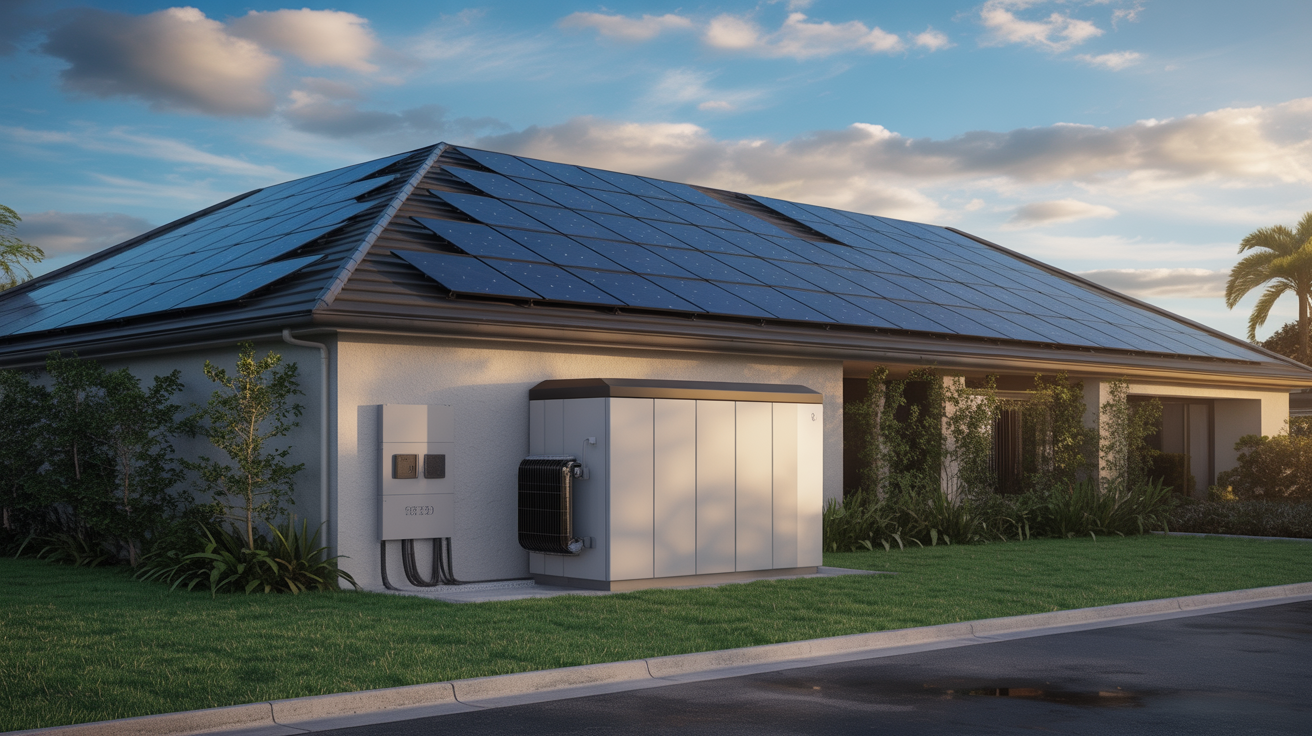

Power outages are no longer just occasional inconveniences, they're becoming more frequent, more prolonged, and more costly. Whether it's extreme weather, aging infrastructure, or grid instability, homeowners across the country are waking up to the reality that utility power isn't always reliable. Enter whole home battery backup: a quiet, clean solution that keeps your lights on, your food fresh, and your life running smoothly when the grid goes dark. Unlike the loud, fume-spewing generators of the past, modern battery systems offer seamless, automatic protection for your entire home, and they're getting more affordable and capable every year.
Key Takeaways
- Whole home battery backup systems provide automatic, seamless protection during power outages, switching to battery power in milliseconds to keep your entire household running without interruption.
- A quality whole home battery backup should offer 20-40+ kWh of storage capacity, sufficient power output (kW) for simultaneous heavy loads, and integration with solar panels or other renewable energy sources.
- Federal Investment Tax Credits (ITC) currently cover up to 30% of qualifying energy storage systems, with state and local rebates potentially reducing total installation costs from $10,000–$30,000+ to more manageable levels.
- Modern LiFePO4-based battery systems provide superior safety, cycle life, and reliability compared to older lithium-ion alternatives, with warranties typically covering 10+ years of operation.
- Whole home battery backup delivers long-term value through energy cost savings with time-of-use optimization, protection of home appliances and groceries during extended outages, and increased property resilience as grid instability grows more common.
What Is Whole Home Battery Backup?
A whole home battery backup is an energy storage system designed to power most or all of your house during a utility outage. Unlike essential-load systems that cherry-pick a few critical circuits, say, the fridge, a couple lights, and maybe the furnace, whole-home setups aim to keep your entire household running as if nothing happened.
At the heart of the system is a large-capacity battery bank, typically ranging from 20 to 40+ kWh of storage. That's paired with an inverter that converts the battery's DC electricity into the AC power your appliances need. Most installations also include either a transfer switch or a smart panel to manage how power flows to different circuits and loads.
These batteries charge from the grid, solar panels, or both. When an outage hits, the system detects the loss of utility power and switches over automatically, often in milliseconds, so your Wi-Fi router doesn't even blink. Companies like Humless have been pioneering this space since 2010, offering LiFePO4-based battery energy storage systems (BESS) that integrate seamlessly with solar, grid, and even generator sources for maximum flexibility and reliability.
Why Invest in a Whole-Home Backup Battery System?
The reasons to invest go beyond just keeping the lights on during a blackout. Sure, whole-home battery backup delivers quiet, clean power without the noise, fumes, or fuel runs of a traditional generator. But the benefits run deeper.
First, there's resilience. These systems can keep critical infrastructure running, HVAC for comfort, medical devices for health, internet for work and communication, and refrigeration so you don't lose hundreds of dollars of groceries. For families with specific needs, elderly relatives, home offices, or medical equipment, that peace of mind is priceless.
Second, many systems offer energy cost savings. If you pair your battery with solar panels, you can store free daytime solar energy and use it in the evening, slashing your utility bills. Even without solar, time-of-use rate optimization lets you charge the battery when electricity is cheap (late night) and discharge when it's expensive (peak afternoon hours).
Third, you're future-proofing your home. Grid instability isn't going away, and as energy storage technology matures and electricity rates climb, early adopters stand to benefit most. Plus, many whole-home battery systems are expandable, so you can start with what you need today and add capacity later.
How Whole Home Battery Backup Systems Work
Understanding the workflow helps demystify the technology. In normal operation, your battery charges from available sources, solar panels during the day, the grid during off-peak hours, or a combination of both. The system's controller monitors state of charge, energy flows, and load demand in real time.
When the utility power fails, the system's automatic transfer switch (ATS) or smart panel detects the outage within milliseconds and isolates your home from the grid. The inverter then draws power from the battery bank and supplies AC electricity to your home's circuits, essentially becoming your personal mini-utility.
Some advanced systems, like those from Humless, support smart load management. If your battery is running low during a prolonged outage, the controller can shed non-essential loads (like the pool pump or garage heater) to keep critical circuits alive longer. You can also manually prioritize which loads get power and when.
Once grid power is restored, the system reconnects seamlessly and begins recharging the battery. If you have solar panels, they'll top off the battery during daylight hours: otherwise, the grid recharges it overnight or during off-peak periods. The whole process is automatic, quiet, and requires zero intervention from you.
Key Features to Look for in a Whole-Home Backup Battery
Not all battery systems are created equal. Here's what to prioritize when shopping:
Storage Capacity (kWh): This determines how long your home can run on battery alone. A typical home uses 20–30 kWh per day, so if you want 24 hours of backup without recharging, look for 30+ kWh of storage. Larger households or those with electric heating may need 40+ kWh.
Power Output (kW): Capacity tells you how much energy you have: output tells you how fast you can use it. Make sure the system's continuous output can handle your simultaneous loads, AC units, electric ovens, and well pumps all draw heavy current. Also check surge ratings for motor-starting spikes.
Solar Compatibility: If you have (or plan to install) solar panels, ensure the battery can integrate smoothly. Some systems support DC-coupled solar (more efficient), while others are AC-coupled. Humless BESS units, for example, are designed to work with grid, solar, wind, and generator inputs for maximum versatility.
Expandability: Your needs may grow. Choose a platform that lets you add battery modules or stack additional units without replacing the core system.
Warranty and Certifications: Look for UL-certified equipment and robust warranties (10+ years is common). LiFePO4 chemistry, like that used by Humless, offers superior cycle life and safety compared to older lithium-ion formulations.
Smart Features: App-based monitoring, remote control, automatic firmware updates, and integration with smart home platforms can elevate the user experience.
Installation and Integration Considerations
Whole-home battery backup isn't a plug-and-play affair. Professional installation is typically required, especially when integrating with your electrical panel and utility connection.
First, you'll need to assess your electrical panel. Older homes with 100-amp service or outdated breaker boxes may require upgrades to support modern battery systems. A smart panel, a digitally controlled load center, can streamline the process by giving you granular control over which circuits receive backup power.
Next, decide on placement. Batteries are heavy and often wall-mounted or floor-standing. They need a climate-controlled environment (extreme heat or cold degrades performance), good ventilation, and proximity to the main panel to minimize wiring costs. Garage, basement, or utility room installations are most common.
Permitting and inspections are part of the process. Local codes vary, and your installer will handle pulling permits, ensuring the system meets National Electrical Code (NEC) standards, and scheduling final inspections.
If you're integrating with solar, coordination is key. The installer will configure the inverter(s), charge controllers, and monitoring systems to work as one cohesive platform. Companies like Humless simplify this with pre-integrated systems and 24/7 support, reducing headaches during commissioning.
Finally, plan for ongoing maintenance. Battery systems are low-maintenance, but periodic firmware updates, monitoring checks, and occasional cleaning keep things running smoothly.
Cost and Return on Investment
Let's talk numbers. A basic DIY battery setup might start around $2,500–$6,000 for smaller, portable units. But a professionally installed whole-home system, with 20–40 kWh of storage, inverter, smart panel, and integration, typically runs $10,000 to $30,000+, depending on capacity, brand, and complexity.
Several factors drive cost:
- Battery capacity: More kWh = higher price.
- Inverter size: Larger continuous and surge ratings cost more.
- Solar integration: Adding or tying into an existing solar array adds expense.
- Electrical work: Panel upgrades, trenching, and labor vary by region and home.
The good news? Incentives can offset a big chunk. The federal Investment Tax Credit (ITC) currently offers up to 30% back on qualifying energy storage systems, especially when paired with solar. State and local rebates, utility programs, and net metering policies can sweeten the deal further.
ROI depends on your use case. If outages are rare and you're purely buying for backup, payback is harder to quantify, but many homeowners value the peace of mind and home-value boost. If you're leveraging solar or time-of-use rates, energy savings can recoup costs over 7–15 years. And as grid electricity prices climb, that payback window shrinks.
For businesses and off-grid properties, the calculus is even more compelling: avoiding downtime, protecting inventory, and maintaining operations can justify the investment quickly.
Conclusion
Whole-home battery backup is more than a hedge against blackouts, it's a cornerstone of energy independence, resilience, and smart financial planning. Whether you're a homeowner tired of losing power, a solar installer advising clients, or an off-grid pioneer building your dream property, today's battery energy storage systems offer unprecedented flexibility, performance, and value. With proven reliability from industry leaders like Humless and falling costs buoyed by federal incentives, 2026 is an excellent time to take control of your energy future.
Frequently Asked Questions About Whole Home Battery Backup
What is whole home battery backup and how does it differ from a generator?
Whole home battery backup is an energy storage system that powers most or all of your house during outages using stored electricity converted by an inverter. Unlike generators, it operates quietly without fuel, fumes, or maintenance hassles, and switches over automatically in milliseconds to keep your entire home running.
How much battery capacity do I need for whole home battery backup?
Most homes need 20–40+ kWh of storage for full-house coverage. Since typical households use 20–30 kWh daily, aim for 30+ kWh for 24-hour backup. Larger homes or those with electric heating may require 40+ kWh to sustain critical loads throughout an outage.
Can whole home battery backup systems work with solar panels?
Yes. Battery systems charge from solar panels, the grid, or both. When paired with solar, you can store free daytime energy and use it at night, significantly reducing utility bills. Modern systems like LiFePO4-based units are designed for seamless solar integration, whether DC-coupled or AC-coupled.
How much does a whole home battery backup system cost?
Professional whole-home systems typically range from $10,000–$30,000+ depending on capacity, inverter size, and electrical work needed. The federal Investment Tax Credit offers up to 30% back on qualifying systems, and state/local rebates can further reduce costs. Basic portable units start around $2,500–$6,000.
Do whole home battery backup systems require professional installation?
Yes, professional installation is typically required, especially for panel integration and circuit management. Installers handle permitting, electrical upgrades if needed, smart panel integration, and ensure compliance with National Electrical Code standards for safety and performance.
What happens to my whole home battery backup during a power outage?
When utility power fails, the automatic transfer switch detects the outage within milliseconds and isolates your home from the grid. The inverter then supplies AC power from the battery bank to your home's circuits. Advanced systems can shed non-essential loads to extend runtime during prolonged outages.