If you're investing in a LiFePO4 battery system for your home, off-grid setup, or solar installation, you've probably heard that proper storage voltage matters, but what does that actually mean? Unlike older lead-acid batteries, lithium iron phosphate (LiFePO4) batteries don't need constant trickle charging. In fact, leaving them fully charged can do more harm than good. Whether you're storing a battery backup system seasonally or just keeping spare capacity on hand, understanding the sweet spot for storage voltage can be the difference between a battery that lasts 10+ years and one that fades prematurely. This guide breaks down everything you need to know about LiFePO4 battery storage voltage, from the chemistry behind it to practical tips for getting it right.
Key Takeaways
- LiFePO4 battery storage voltage should be maintained at 3.2V to 3.4V per cell (50-70% SOC, or roughly 13.2V-13.6V for a 12V pack) to minimize electrochemical stress and preserve long-term capacity.
- Storing LiFePO4 batteries at full charge (3.65V per cell) accelerates capacity degradation, while allowing voltage to drop below 2.5V per cell risks permanent internal damage—the optimal middle ground is key.
- Check your stored battery voltage monthly and keep it in a cool, dry environment between 50°F and 77°F (10°C to 25°C) to maximize longevity and prevent premature fade.
- LiFePO4 batteries have very low self-discharge rates (1-3% per month), so avoid continuous float charging; instead, charge to target voltage and disconnect from all loads and chargers.
- For different storage timeframes, adjust your approach: short-term (under 1 month) can tolerate 13.6V, medium-term (1-6 months) targets 13V-13.2V, and long-term (6+ months) should sit at 12.8V for optimal battery health.
Understanding LiFePO4 Battery Voltage Basics
Before diving into storage specifics, let's get familiar with the voltage landscape of LiFePO4 cells. Each individual cell has a nominal voltage of 3.2V to 3.25V, this is the working voltage you'll see during normal operation. When fully charged, a LiFePO4 cell peaks at 3.65V, and when it's time to stop discharging, the cutoff sits at 2.5V.
These numbers are critical because most battery systems use multiple cells in series. A 12V LiFePO4 battery pack, for instance, contains four cells in series (4S configuration). That means a fully charged 12V pack will read around 14.6V (4 × 3.65V), while the nominal voltage hovers around 12.8V to 13V during use.
Compared to lead-acid batteries, which operate at 12.6V when full and drop to 10.5V at cutoff, LiFePO4 chemistry holds a much flatter voltage curve. This gives you more consistent power output until the battery is nearly empty, but it also means voltage alone isn't always the best indicator of state of charge (SOC). That's where understanding storage voltage becomes even more important: you're not just looking at a number on a meter, you're managing the internal stress on the cells themselves.
Optimal Storage Voltage for LiFePO4 Batteries
So, what's the magic number? For long-term storage, you'll want to keep your LiFePO4 cells at 3.2V to 3.4V per cell, which translates to roughly 50-70% state of charge. For a standard 12V battery pack (four cells in series), that's about 13.2V to 13.6V.
Why this range? LiFePO4 chemistry is most stable when it's neither fully charged nor deeply discharged. At around 50-60% SOC, the electrochemical stress inside the cell is minimized, which slows capacity fade and preserves cycle life. Think of it like storing a spring: you don't want it fully compressed or fully extended, somewhere in the middle keeps the tension manageable.
If you're working with a battery energy storage system like those from Humless, many units include a storage mode or allow you to set a target SOC. This makes hitting that 50-70% sweet spot much easier. For DIY setups or standalone packs, you'll need to charge to the target voltage and then disconnect from the charger and any loads.
It's worth noting that short-term storage (a few weeks) can tolerate the higher end of this range, around 3.4V per cell or 70% SOC. But if you're putting a battery away for months, aim closer to 3.2V per cell (50%) to maximize longevity.
Why Storage Voltage Matters for Battery Longevity
You might be wondering: does a few tenths of a volt really make that much difference? Short answer: yes, especially over time.
Storing a LiFePO4 battery at full charge, 3.65V per cell, keeps the lithium ions highly intercalated in the cathode. This creates internal stress that accelerates degradation, even when the battery isn't being used. Over months or years, this can lead to noticeable capacity loss. Some studies suggest that a battery stored at 100% SOC can lose several percentage points of capacity annually, while one stored at 50% SOC loses a fraction of that.
On the flip side, letting a battery sit at very low voltage (below 2.5V per cell) can lead to copper dissolution and anode damage, especially in cheaper cells without robust battery management systems (BMS). In extreme cases, deeply discharged cells may become unrecoverable.
Temperature compounds the issue. A battery stored at high voltage in a hot garage will age much faster than one kept at moderate voltage in a cool basement. The chemistry doesn't sleep, reactions continue, just slower when conditions are right.
For homeowners and businesses relying on energy independence, this isn't just a technical detail. Proper storage voltage translates directly into lower replacement costs and more reliable backup power when you actually need it.
How to Achieve and Maintain Proper Storage Voltage
Getting your battery to the right storage voltage isn't complicated, but it does require a bit of intentionality. Here's a step-by-step approach:
1. Charge to the target SOC. Use a quality LiFePO4 charger and set the bulk/absorption voltage to 14.2V to 14.6V for a 12V pack. Monitor the charge until the pack reaches around 13.4V to 13.6V (closer to 60-70% SOC), then disconnect the charger. If your charger has a programmable cutoff, even better.
2. Disconnect all loads and chargers. Once you hit your target voltage, physically disconnect the battery from any devices, inverters, or charging sources. LiFePO4 batteries have very low self-discharge rates (typically 1-3% per month), so they'll hold that voltage for quite a while on their own.
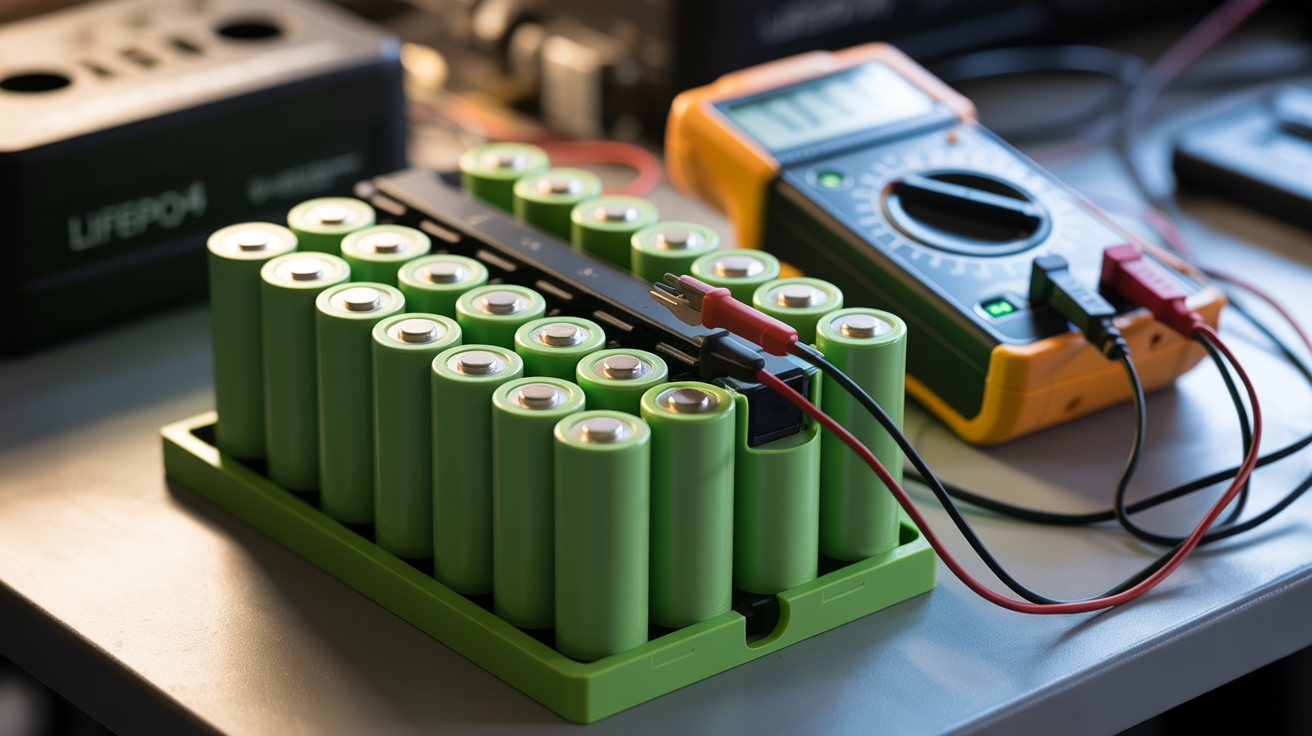
3. Check monthly. Set a calendar reminder to measure the pack voltage once a month. If it drops below 3.2V per cell (about 12.8V for a 12V pack), top it up to the target range again. This is especially important if you have an older BMS that draws a small quiescent current.
4. Store in a cool, dry place. Aim for a storage temperature between 50°F and 77°F (10°C to 25°C) if possible. Cooler is generally better for longevity, but avoid freezing. Keep the battery away from direct sunlight and moisture.
If you're using an integrated battery energy storage system with built-in monitoring (like many Humless BESS units), the BMS will often handle much of this for you, reporting SOC and cell voltages through an app or display.
Storage Voltage Guidelines for Different Timeframes
Not all storage scenarios are created equal. Here's how to adjust your approach based on how long you're putting the battery aside:
Short-Term Storage (Less Than 1 Month)
If you're only storing the battery for a few weeks, say, between camping trips or during a brief off-season, you can safely keep it at the higher end of the range: 3.3V to 3.4V per cell, or around 13.6V for a 12V pack. The slightly elevated voltage won't cause significant degradation over such a short period, and you'll have more usable capacity ready to go when you reconnect.
Medium-Term Storage (1–6 Months)
For seasonal storage, like a solar system that sits idle over winter, target the middle of the optimal range: 3.25V to 3.3V per cell (about 13V to 13.2V for a 12V pack). Check the voltage once a month and top up if it dips below 3.2V per cell. This balance minimizes aging while keeping enough charge to prevent deep discharge.
Long-Term Storage (More Than 6 Months)
If you're mothballing a battery for extended periods, aim for 3.2V per cell (right around 50% SOC, or 12.8V for a 12V pack). Store in the coolest practical location and check every 4–6 weeks. At this voltage and in cool conditions, a well-made LiFePO4 battery can sit for a year or more with minimal capacity loss.
Common Storage Voltage Mistakes to Avoid
Even seasoned users can slip up. Here are the pitfalls to watch out for:
Storing Fully Charged (3.65V per Cell)
Leaving your battery at 100% SOC is one of the most common mistakes. It's tempting, after all, you want maximum capacity when you need it, but it creates unnecessary electrochemical stress. Over time, this accelerates capacity fade and shortens the battery's lifespan. If you won't be using the battery for more than a week or two, dial it back to the 50-70% range.
Letting It Drop Below 2.5V per Cell
Deep discharge is the other extreme. If a battery sits unused for many months without any top-up, it can fall below the safe cutoff voltage, especially if the BMS draws a small standby current. Once cells drop below 2.5V, they risk permanent damage. Always set a reminder to check and recharge.
Using Float Charge for Extended Periods
With lead-acid batteries, a float charge keeps them topped off. But LiFePO4 batteries don't need it, their self-discharge rate is so low that continuous float charging is unnecessary and can actually keep the cells at high voltage longer than ideal. Charge to the target, then disconnect.
Ignoring Temperature
Storing a battery in a hot attic or uninsulated shed can dramatically accelerate aging, even at the right voltage. Whenever possible, choose a temperature-controlled environment. And remember: while LiFePO4 tolerates cold better than some chemistries, charging a cold battery (below freezing) can cause lithium plating, so warm it up first if you're topping up in winter.
Conclusion
Getting LiFePO4 battery storage voltage right isn't rocket science, but it does pay dividends. Store your cells at 3.2V to 3.4V per cell (50-70% SOC), check monthly, and keep them cool. Avoid the extremes, full charge and deep discharge, and your battery will reward you with years of reliable service. Whether you're an off-grid homeowner, a solar installer, or a business seeking energy resilience, these simple habits will help you get the most out of your investment and keep your power ready when you need it most.
Frequently Asked Questions About LiFePO4 Battery Storage Voltage
What is the optimal LiFePO4 battery storage voltage?
Store LiFePO4 batteries at 3.2V to 3.4V per cell, which translates to 50-70% state of charge. For a 12V pack, this means approximately 13.2V to 13.6V. This voltage range minimizes electrochemical stress and preserves capacity over months of storage.
How does storing a LiFePO4 battery at full charge affect its lifespan?
Storing at full charge (3.65V per cell) keeps lithium ions highly intercalated in the cathode, creating internal stress that accelerates degradation. Studies show batteries stored at 100% SOC can lose several percentage points of capacity annually, compared to minimal loss at 50% SOC.
Can you leave a LiFePO4 battery at full charge for storage?
No, you should avoid storing fully charged LiFePO4 batteries. While it's tempting for maximum capacity readiness, full charge creates unnecessary stress. If storing for more than a week or two, discharge to the 50-70% SOC range to extend battery lifespan significantly.
How often should I check my stored LiFePO4 battery voltage?
Check stored LiFePO4 battery voltage monthly. Set a calendar reminder to measure the pack voltage—if it drops below 3.2V per cell (about 12.8V for a 12V pack), top it up to the target range. This prevents deep discharge damage and maintains optimal storage conditions.
What happens if a LiFePO4 battery discharges below 2.5V per cell during storage?
Discharging below 2.5V per cell during storage risks copper dissolution, anode damage, and potentially unrecoverable cell degradation. This is especially problematic with cheaper cells lacking robust battery management systems. Always monitor voltage and prevent deep discharge.
What temperature range is best for storing LiFePO4 batteries?
Store LiFePO4 batteries between 50°F and 77°F (10°C to 25°C) for optimal longevity. Cooler conditions slow degradation reactions, while hot environments dramatically accelerate aging. Avoid freezing temperatures and direct sunlight, and never charge a cold battery below freezing.