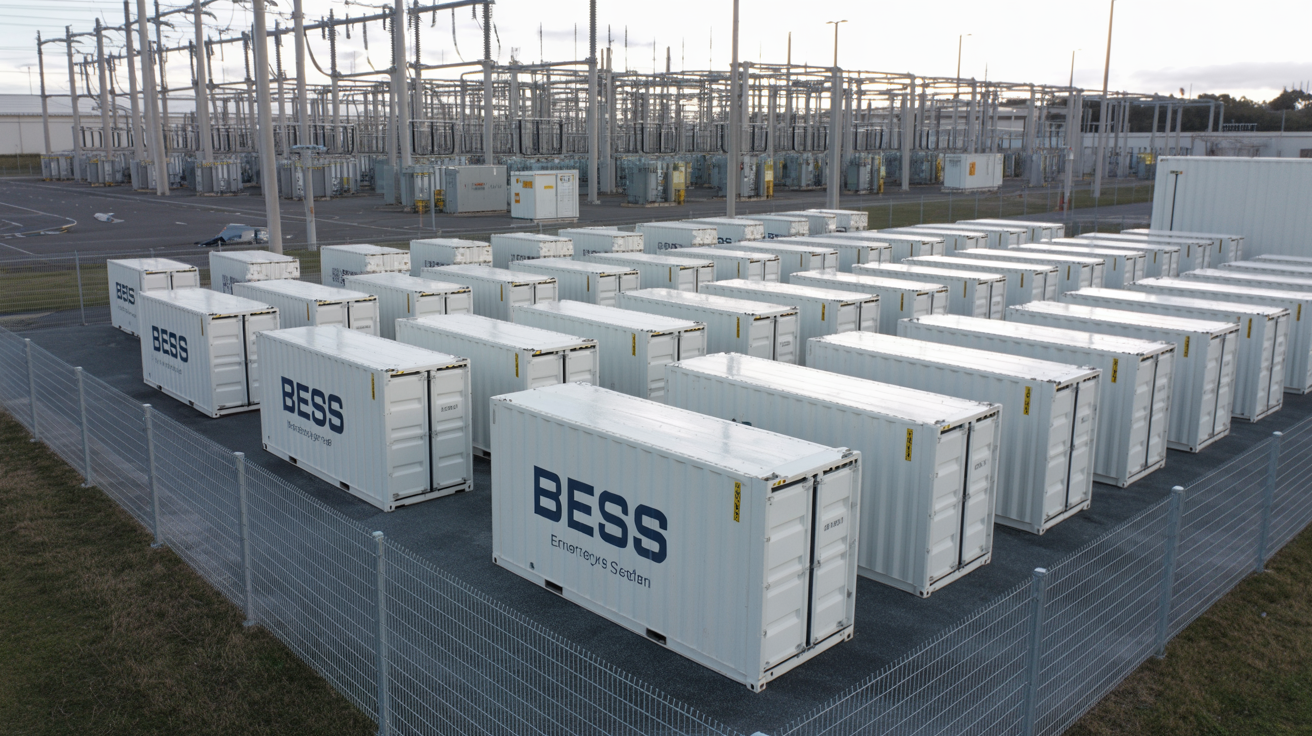
If you've been exploring energy independence, you've probably stumbled across the acronym BESS, Battery Energy Storage System. Maybe you're tired of utility bills creeping higher every month, or you're worried about the next power outage leaving your home in the dark. Either way, BESS batteries are quickly becoming the backbone of modern energy solutions for homeowners, businesses, and off-grid enthusiasts alike.
In 2026, battery energy storage systems have evolved far beyond simple backup power. They're intelligent, scalable, and capable of integrating with solar panels, wind turbines, and even the grid to give you real control over your energy usage. Whether you're looking to cut costs through smart time-of-use management, achieve full energy independence, or simply keep the lights on during an outage, understanding BESS technology is your first step.
This guide breaks down everything you need to know, from how these systems actually work to choosing the right battery chemistry, sizing your setup, and maintaining it for years of reliable performance.
Key Takeaways
- A BESS battery system intelligently stores excess solar or grid energy and releases it on demand, enabling peak shaving and time-of-use optimization that can reduce utility bills by $500 to $2,000 annually for typical households.
- LiFePO4 chemistry is the gold standard for BESS battery systems, offering 4,000 to 6,000+ charge cycles, superior safety, and 10 to 15 years of reliable daily use compared to older lead-acid technology.
- Proper sizing requires matching battery capacity (kWh) to your energy needs and power output (kW) to your peak loads; starting with a modular BESS system lets you expand capacity as solar panels, EV chargers, or off-grid requirements grow.
- BESS battery systems integrate seamlessly with solar panels, wind turbines, the utility grid, and backup generators through a unified Energy Management System that automatically optimizes when to charge, discharge, and which source to prioritize.
- Maintenance of modern BESS systems is minimal—monitor the app dashboard weekly, apply firmware updates, and perform basic physical inspections annually to ensure decades of performance and retain 80% capacity after 10+ years of use.
What Is a BESS Battery and How Does It Work?
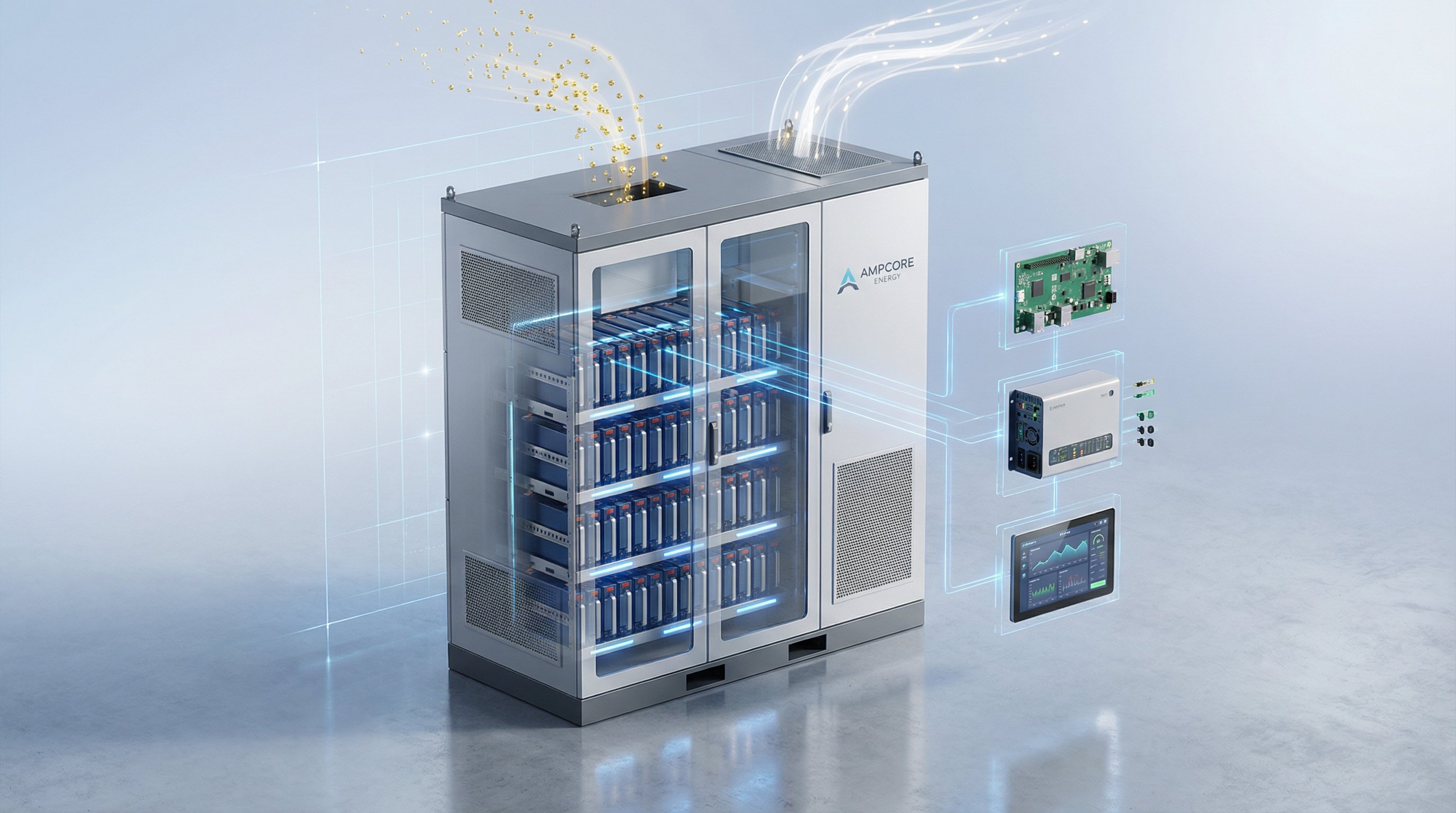
A Battery Energy Storage System (BESS) is exactly what it sounds like: a rechargeable battery setup designed to store electrical energy and release it when you need it most. Think of it as a reservoir for electricity. When you generate more power than you're using, say, from your rooftop solar panels on a sunny afternoon, the BESS captures that surplus. Later, when the sun sets or demand spikes, the stored energy flows back into your home or business.
The beauty of BESS technology lies in its flexibility. It doesn't just store energy: it actively balances supply and demand. During off-peak hours when electricity is cheaper or abundant, the system charges up. When rates climb or the grid goes down, it discharges to keep your operations running smoothly. This load-shifting capability is a game-changer for anyone looking to reduce costs or gain resilience.
But how does all this actually happen? Let's dig into the components and processes that make BESS systems tick.
Core Components of Battery Energy Storage Systems
A BESS isn't just a big battery sitting in your garage. It's an integrated system with multiple smart components working in harmony:
Battery cells and modules form the heart of the system. These rechargeable units store electrical energy through electrochemical reactions. Lithium-ion batteries, especially lithium iron phosphate (LiFePO4), dominate the market today because they pack serious energy density into a compact footprint, charge quickly, and last for thousands of cycles.
The Battery Management System (BMS) is like the brain. It constantly monitors each cell's voltage, temperature, current draw, and state of charge. If anything looks off, say a cell gets too hot or voltage drifts out of range, the BMS steps in to protect the system and extend its lifespan.
Power Conversion System (PCS) or Inverter handles the translation between DC (direct current) stored in batteries and AC (alternating current) used by your home appliances and the grid. This bidirectional converter makes it possible for energy to flow both ways, charging from solar or grid, then discharging when needed.
Energy Management System (EMS) is the strategic controller. It decides when to charge, when to discharge, and how to optimize performance based on electricity rates, usage patterns, and your preferences. It's what enables advanced features like peak shaving and time-of-use arbitrage.
Thermal Management System keeps temperatures in the sweet spot. Batteries perform best, and last longest, within a specific temperature range. Cooling fans, heat sinks, or liquid cooling systems prevent overheating during heavy use.
Grid Controller orchestrates the flow of electricity between your BESS, the utility grid, and your renewable energy sources. It ensures seamless transitions and compliance with grid standards.
Energy Flow and Charge-Discharge Cycles
Here's how energy moves through a BESS during a typical day:
Imagine it's noon and your solar panels are cranking out 8 kW, but your house is only using 2 kW. That extra 6 kW doesn't go to waste, it flows into your BESS, converted from AC to DC and stored in the battery modules. The BMS monitors each cell, the EMS logs the charge, and the thermal system keeps everything cool.
Come evening, the sun dips below the horizon and your panels stop producing. Your home's energy demand jumps to 5 kW as you cook dinner, run the AC, and fire up the TV. The EMS triggers a discharge cycle. Stored DC power flows through the inverter, converts to AC, and powers your home, no grid electricity needed.
If you're connected to the grid, the EMS can get even smarter. It might charge your BESS during overnight off-peak hours when rates are rock-bottom, then discharge during the afternoon peak when electricity costs three times as much. This kind of time-of-use optimization can slash your utility bills without changing your lifestyle.
And if the grid goes down? The system detects the outage instantly and switches to island mode, keeping your critical loads running until power returns. That's the resilience piece homeowners and businesses are increasingly counting on.
Types of BESS Battery Technologies
Not all batteries are created equal. The chemistry inside your BESS determines how long it'll last, how safe it is, how much power it can deliver, and even how well it handles extreme temperatures. In 2026, the BESS landscape is dominated by lithium-ion variants, but there are other players worth understanding.
LiFePO4 Batteries: The Gold Standard for Safety and Longevity
Lithium iron phosphate, commonly abbreviated as LiFePO4 or LFP, has emerged as the go-to chemistry for residential and commercial BESS installations, and for good reason.
Safety first. LiFePO4 batteries are inherently more stable than other lithium chemistries. They don't suffer from thermal runaway the way nickel-manganese-cobalt (NMC) cells can. That means lower fire risk, even under stress or abuse. For a homeowner installing a system in the garage or utility room, that peace of mind is invaluable.
Longevity second. LiFePO4 cells routinely deliver 4,000 to 6,000+ charge-discharge cycles before capacity drops to 80%. Translated into real-world use, that's 10 to 15 years of daily cycling, far exceeding older lead-acid technology and outlasting many NMC setups.
Temperature tolerance. LFP batteries handle heat better than most lithium chemistries, which matters if you're in Arizona or Texas where ambient temperatures soar.
Lower energy density trade-off. The one downside? LiFePO4 packs slightly less energy per pound than NMC. But for stationary applications like home or commercial BESS, where weight isn't a constraint, that trade-off is negligible compared to the safety and lifespan gains.
Companies like Humless have leaned heavily into LiFePO4 technology since 2010, building UL-certified systems that integrate seamlessly with solar, wind, and grid power while delivering industry-leading reliability.
Comparing Lithium-Ion and Other Battery Chemistries
Nickel-Manganese-Cobalt (NMC) lithium-ion batteries offer higher energy density, making them popular in electric vehicles and some grid-scale projects. They charge fast and pack a lot of power into a small space. But, they're more temperature-sensitive and typically have shorter lifespans than LFP. For BESS applications prioritizing longevity and safety, NMC often takes a back seat.
Lead-acid batteries were the original energy storage workhorses. They're cheap upfront, but cycle life is dismal, usually 500 to 1,000 cycles. They're heavy, require maintenance (especially flooded types), and don't handle deep discharges well. In 2026, lead-acid is mostly relegated to budget-conscious or legacy systems.
Flow batteries use liquid electrolytes stored in external tanks. They can scale capacity independently of power, offer extremely long lifespans, and handle deep discharges without degradation. The catch? They're bulky, expensive, and more complex to install. Flow batteries shine in utility-scale or long-duration storage applications but aren't practical for most homes or small businesses.
Sodium-sulfur and sodium-ion batteries are emerging as lower-cost, more abundant alternatives to lithium. They work well in certain grid applications but haven't yet matched lithium's performance and safety profile for residential BESS.
Bottom line: If you're choosing a BESS for your home or business in 2026, LiFePO4 is the safe, proven, long-lasting choice.
Key Benefits of BESS Battery Systems
Why are so many homeowners, solar installers, and businesses investing in BESS technology right now? Because the benefits stack up, financially, operationally, and environmentally.
Energy Independence and Grid Resilience
Let's start with the big one: control. A BESS gives you the power to decide where your electricity comes from and when you use it. If you've got solar panels, you're no longer at the mercy of net metering policies that undervalue the energy you send back to the grid. Instead, you store that surplus and use it on your own terms.
For off-grid property owners, a BESS is the foundation of true energy independence. Paired with solar or wind, it lets you live comfortably without ever connecting to utility infrastructure. No monthly bills. No rate hikes. No worrying about how far you are from the nearest power line.
Even if you're grid-tied, resilience matters. In 2026, extreme weather events, aging infrastructure, and grid congestion mean outages are more common than ever. A BESS with backup capability keeps your fridge running, your sump pump working, and your home office online when everyone else is in the dark. For businesses, that uptime can mean the difference between continuity and lost revenue.
The psychological benefit is real, too. Knowing you've got 10, 20, or 50 kWh of stored energy sitting ready gives you confidence that power interruptions won't derail your day, or your livelihood.
Cost Savings Through Peak Shaving and Time-of-Use Optimization
Here's where a smart BESS pays for itself.
Peak shaving works by reducing your demand from the grid during the most expensive hours. If your utility charges demand fees based on your highest usage spike, a BESS can cap that peak by supplying stored energy instead. Commercial and industrial customers can save thousands of dollars per month with this strategy alone.
Time-of-use (TOU) optimization takes advantage of variable electricity rates. Many utilities now charge different prices depending on the time of day. With a BESS, you charge your batteries when rates are low (overnight or mid-day with solar) and discharge when rates are high (evening peaks). The EMS handles this automatically, so you're always buying low and using high.
For a typical household with solar and a 10 kWh BESS, annual savings can range from $500 to $2,000 depending on local rates and usage patterns. Businesses with larger systems see proportionally bigger returns.
Plus, there's solar self-consumption. Without storage, excess solar energy is exported to the grid, often for pennies on the dollar compared to what you pay for imported electricity. A BESS captures that value, boosting your effective solar ROI by 20% to 40%.
And let's not forget incentives. Federal tax credits, state rebates, and utility programs can offset 30% or more of your BESS investment, accelerating payback and improving cash flow.
Environmentally, BESS systems enable higher renewable penetration. They smooth out the intermittency of solar and wind, reducing reliance on fossil-fuel peaker plants and cutting carbon emissions. If sustainability is part of your brand or personal values, a BESS is a tangible step toward a cleaner energy future.
Residential vs. Commercial BESS Applications
BESS technology scales beautifully from a single-family home to a sprawling industrial campus. But the priorities and configurations differ significantly depending on the application.
Home Energy Backup and Off-Grid Solutions
For homeowners, the primary drivers are usually backup power, bill reduction, and energy independence.
A typical residential BESS ranges from 5 kWh to 20 kWh of usable capacity. That's enough to power essential loads, fridge, lights, Wi-Fi, a few outlets, for several hours to a couple of days, depending on usage. Pair it with solar, and you can extend that runtime indefinitely as long as the sun's shining.
Installation is straightforward. Most systems are wall-mounted or floor-standing units that connect to your main electrical panel. A licensed electrician and, ideally, a certified solar installer handle the setup. Permitting and inspections vary by jurisdiction, but turnaround is usually measured in days or weeks, not months.
Off-grid homeowners need larger, more robust systems, often 20 kWh to 100+ kWh, to cover all loads across multiple days of cloudy weather or low wind. Battery banks are modular, so you can start smaller and expand over time. Companies like Humless specialize in scalable, modular BESS solutions that grow with your energy needs, whether you're powering a tiny home, a cabin, or a full-scale off-grid residence.
Portability is another consideration. Some homeowners invest in portable power stations, compact BESS units on wheels, that can move between locations, support RV trips, or serve as emergency backup during evacuations.
Commercial and Industrial Energy Storage Needs
Businesses approach BESS differently. Yes, backup power matters, especially for data centers, medical facilities, and manufacturing operations where downtime is costly, but the real value often lies in demand charge management and load shifting.
Commercial BESS installations typically start at 50 kWh and can scale into the megawatt-hour range for industrial sites. These systems integrate with building management systems, HVAC controllers, and real-time energy monitoring platforms to optimize performance minute by minute.
Peak demand reduction is a huge win. If a factory's monthly electric bill includes a $10,000 demand charge based on a 15-minute usage spike, a well-sized BESS can shave that peak and cut the charge in half, month after month.
Power quality and stability also matter more at the commercial scale. BESS systems with fast-response inverters can smooth voltage fluctuations, provide reactive power support, and even participate in grid services programs that pay you for stabilizing the local distribution network.
For businesses with sustainability goals, or those seeking LEED certification, a BESS demonstrates commitment to clean energy and can help meet renewable energy targets when paired with on-site solar or wind.
Scalability and modularity are critical. Commercial BESS platforms are designed for phased expansion, so you can start with one cabinet and add more as energy needs or budget allows. Humless systems, for instance, support seamless scaling while maintaining centralized control and monitoring.
How to Choose the Right BESS Battery for Your Needs
Choosing a BESS isn't like picking out a new appliance. There's no one-size-fits-all. Your ideal system depends on your energy profile, goals, budget, and site conditions. Here's how to narrow it down.
Capacity, Power Output, and Scalability Considerations
Capacity (kWh) tells you how much total energy the battery can store. Think of it as the size of your gas tank. A 10 kWh system can theoretically power a 1 kW load for 10 hours, or a 2 kW load for 5 hours. To size capacity, start by listing your critical loads and estimating how long you want backup power to last. A typical home uses 20–30 kWh per day, but during an outage, you might only need to cover 5–10 kWh of essentials.
Power output (kW) is how fast you can draw energy, like the diameter of the fuel line. A system with 5 kW of continuous output can run 5,000 watts of simultaneous load. If you want to power a whole-home AC unit, well pump, and kitchen appliances at once, you need enough output to handle that combined surge. Don't confuse capacity with power: a 20 kWh battery with only 3 kW output can't support high-demand loads even though it has plenty of stored energy.
Surge or peak power matters, too. Some appliances, like refrigerators, pumps, and power tools, have startup surges two or three times their running wattage. Make sure your BESS inverter can handle those momentary spikes.
Scalability is your future-proofing strategy. Maybe you start with one 10 kWh module today and add another next year when you install more solar panels or upgrade to an EV charger. Modular systems let you expand capacity without replacing the whole setup. Humless BESS platforms, for example, are designed with modularity in mind, stack and connect units as your needs grow, all controlled by a unified EMS.
Certifications, Warranties, and Safety Standards
A BESS is a significant investment. You want it built right, tested thoroughly, and backed by solid warranties.
UL certifications are non-negotiable. UL 9540 certifies complete energy storage systems, while UL 1973 covers the battery modules themselves. These standards test for electrical safety, thermal performance, fire resistance, and system integration. If a BESS doesn't carry UL marks, walk away, insurance and local codes may not even allow installation.
Fire and safety ratings matter, especially for indoor installations. Look for systems with built-in fire suppression, robust thermal management, and BMS protections that prevent overcharge, over-discharge, and short circuits. LiFePO4 chemistry inherently reduces fire risk, but quality engineering makes the difference.
Warranties typically cover two aspects: product defects (usually 5–10 years) and performance (often 10–15 years or a certain number of cycles, whichever comes first). Read the fine print. Does the warranty guarantee 80% retained capacity after 10 years? Is labor included, or just parts? Are there exclusions for improper installation or environmental conditions?
Cycle life ratings give you a sense of longevity. A 6,000-cycle rating means you can fully charge and discharge the battery 6,000 times before capacity drops to 80%. If you cycle daily, that's over 16 years of service.
Support and service are often overlooked. Does the manufacturer offer 24/7 technical support? Can they dispatch service techs if something goes wrong? Humless, with 15+ years in the energy storage business, provides around-the-clock support and a nationwide service network, critical when you're relying on your BESS for backup power or business continuity.
Finally, check for compatibility with your existing or planned renewable systems. Not all BESS units play nicely with every inverter, charge controller, or EMS. Integrated solutions from a single manufacturer (or certified compatible partners) reduce headaches and ensure warranty coverage.
Integrating BESS with Solar, Wind, and Grid Power
One of the most powerful features of modern BESS technology is its ability to integrate seamlessly with multiple energy sources, solar panels, wind turbines, the utility grid, and even backup generators. This multi-source capability is what transforms a simple battery into a comprehensive energy management platform.
Solar + BESS is the most common pairing, and it's easy to see why. During the day, your solar array generates power. Excess production flows into the BESS instead of being wasted or exported to the grid at unfavorable rates. Come evening, your home draws from stored solar energy rather than expensive grid power. The synergy is elegant: solar provides clean, renewable input: the BESS handles timing and availability. Systems like those from Humless are designed for plug-and-play solar integration, with built-in charge controllers and MPPT (maximum power point tracking) for optimal efficiency.
If you've already got a grid-tied solar system without storage, adding a BESS isn't as simple as just plugging in a battery, you may need an AC-coupled or DC-coupled retrofit depending on your inverter type. AC-coupled systems charge the battery using AC power from your existing solar inverter, adding flexibility but slightly lower round-trip efficiency. DC-coupled setups connect batteries directly to the solar array via a hybrid inverter, offering better efficiency and faster response times.
Wind + BESS follows a similar logic. Wind generation is notoriously variable, gusts at night, calm during the day. A BESS smooths that variability, capturing energy whenever the wind blows and dispatching it on demand. For off-grid or rural properties with good wind resources, a hybrid solar-wind-BESS system provides the most resilient and balanced energy supply.
Grid integration offers another layer of sophistication. With a grid-tied BESS, you can participate in time-of-use arbitrage, export stored energy during high-rate periods, and even enroll in demand response programs where utilities pay you to discharge your battery during peak grid stress. The EMS monitors real-time electricity prices and grid signals, automatically optimizing when to charge, discharge, or hold.
Backup generators round out the picture. Even with solar and storage, extended cloudy periods or high winter loads can deplete your BESS. A propane or diesel generator can recharge the battery bank and keep critical loads running. Modern BESS systems detect low battery states and can auto-start generators, then shut them down once the batteries are topped off, minimizing fuel use and noise.
The key to smooth multi-source integration is a smart, unified EMS that orchestrates all inputs and outputs. Humless systems, for example, manage solar, wind, grid, and generator sources from a single control interface, prioritizing renewables first, grid or generator second, and always ensuring your most critical loads stay powered.
Maintenance and Lifespan: What to Expect from Your BESS
One of the best things about modern lithium-based BESS technology? It's remarkably low-maintenance. Gone are the days of checking electrolyte levels and equalizing cells like you had to with flooded lead-acid batteries. But "low maintenance" doesn't mean "no maintenance," and understanding what to expect will help you maximize lifespan and performance.
Routine monitoring is your first line of defense. Most BESS systems come with app-based or web dashboards that display real-time stats, state of charge, power flow, cycle count, cell voltages, and temperatures. Make it a habit to glance at these metrics weekly. If you spot unusual behavior, like one cell consistently hotter than others or unexpected capacity drops, reach out to your installer or manufacturer's support team early. Humless, for instance, offers 24/7 monitoring and support, often catching issues before you even notice them.
Firmware and software updates keep your EMS and BMS running optimally. Manufacturers periodically release updates that improve efficiency, add features, or patch bugs. Some systems update over Wi-Fi automatically: others require a tech visit. Either way, staying current ensures you're getting the best performance and latest safety enhancements.
Physical inspection once or twice a year is smart. Check for dust buildup on vents and fans (clean gently with compressed air), inspect cables and connections for corrosion or looseness, and make sure the installation area stays within the recommended temperature range. Batteries perform best between 50°F and 80°F: prolonged exposure to extreme heat or cold accelerates degradation.
Thermal management system upkeep is mostly automatic, but if your BESS has cooling fans, they may need occasional cleaning or filter replacement. Follow the manufacturer's guidelines, usually in the user manual or available through support.
Calibration cycles help the BMS maintain accurate state-of-charge readings. Some systems recommend a full discharge and recharge every few months. This isn't always necessary with modern LiFePO4 and sophisticated BMS algorithms, but check your specific system's recommendations.
Expected lifespan: As mentioned earlier, LiFePO4 BESS units typically deliver 4,000 to 6,000+ cycles before capacity drops to 80% of original. If you cycle once per day, that's 11 to 16+ years of daily use. In practice, many users cycle less frequently, maybe every other day or only during outages and peak-shaving events, which extends calendar life even further. Humless systems, built on proven LiFePO4 technology since 2010, routinely exceed manufacturer ratings in real-world deployments.
Capacity fade is gradual and predictable. You won't wake up one day to a dead battery. Instead, over the years, a 10 kWh system might deliver 9.5 kWh, then 9 kWh, then 8.5 kWh. Performance warranties typically guarantee 80% capacity at end-of-warranty, meaning you'll still have most of your storage available a decade or more down the line.
End-of-life and recycling: When your BESS finally does reach end-of-life, lithium batteries are highly recyclable. Facilities can recover lithium, iron, phosphate, and other materials for reuse. Responsible manufacturers offer take-back or recycling programs. Always check local regulations and work with certified recyclers, never just toss a battery in the trash.
Bottom line: treat your BESS with a bit of care, keep an eye on the monitoring dashboard, and lean on your manufacturer's support when needed. Do that, and you'll enjoy clean, reliable energy storage for well over a decade.
Conclusion
Battery Energy Storage Systems have moved from niche technology to mainstream necessity. In 2026, they're the bridge between renewable generation and real-world energy demands, capturing sunshine and wind, shaving costly demand peaks, and keeping your lights on when the grid can't.
Whether you're a homeowner chasing energy independence, a solar installer looking to offer complete solutions, an off-grid property owner building a self-sufficient retreat, or a business seeking resilience and cost control, BESS technology delivers. The key is choosing the right chemistry (LiFePO4 for safety and longevity), sizing your system to match your loads and goals, and partnering with a manufacturer that stands behind their product with certifications, warranties, and responsive support.
Companies like Humless, pioneering energy storage since 2010, have spent over 15 years perfecting integrated BESS solutions that work seamlessly with solar, wind, grid, and generator power. Their UL-certified, modular systems scale with your needs and come backed by 24/7 support, because energy independence shouldn't mean going it alone.
As electricity rates climb, grid reliability falters, and renewable adoption accelerates, the question isn't whether you need a BESS, it's which system fits your life. Start by defining your goals, understanding your energy profile, and reaching out to trusted experts who can design a solution tailored to your situation. Your future self, and your utility bill, will thank you.
Frequently Asked Questions About BESS Batteries
What is a BESS battery and how does it work?
A BESS (Battery Energy Storage System) is a rechargeable battery setup that stores electrical energy and releases it when needed. It captures surplus electricity from solar panels or the grid during low-demand periods, then discharges stored power when demand increases or grid power is unavailable, balancing your energy supply and demand automatically.
How much money can I save with a BESS battery system?
Savings depend on your utility rates and usage patterns. Through peak shaving and time-of-use optimization, homeowners with solar and a 10 kWh BESS typically save $500–$2,000 annually. Commercial systems achieve larger returns by reducing demand charges, sometimes saving thousands monthly. Federal tax credits and state rebates can offset 30% or more of your investment.
What is the difference between LiFePO4 and other battery chemistries?
LiFePO4 (lithium iron phosphate) is the gold standard for BESS systems, offering superior safety, longer lifespan (4,000–6,000+ cycles), and better temperature tolerance than NMC or lead-acid alternatives. While LFP has slightly lower energy density per pound, this is negligible for stationary applications and far outweighed by safety and durability advantages.
How long do BESS batteries typically last?
Modern LiFePO4 BESS systems deliver 4,000 to 6,000+ charge-discharge cycles, equating to 10–16+ years of daily use. Capacity fades gradually—a 10 kWh battery might deliver 8 kWh after 10 years—but performance warranties typically guarantee 80% capacity retention, meaning most storage remains available well into the second decade.
Can I integrate a BESS battery with my existing solar panels?
Yes, BESS systems integrate seamlessly with solar panels. During the day, excess solar production charges your battery instead of being exported to the grid at low rates. In the evening, you draw from stored solar energy rather than expensive grid power. AC-coupled or DC-coupled retrofit options work with existing solar setups, though DC-coupled configurations offer better efficiency.
What certifications and safety standards should a BESS battery have?
Look for UL 9540 (complete energy storage systems) and UL 1973 (battery modules) certifications, which test for electrical safety, thermal performance, and fire resistance. LiFePO4 chemistry reduces fire risk inherently, but robust Battery Management Systems and thermal management are critical. Verify warranty coverage, cycle-life ratings, and 24/7 manufacturer support before purchasing.