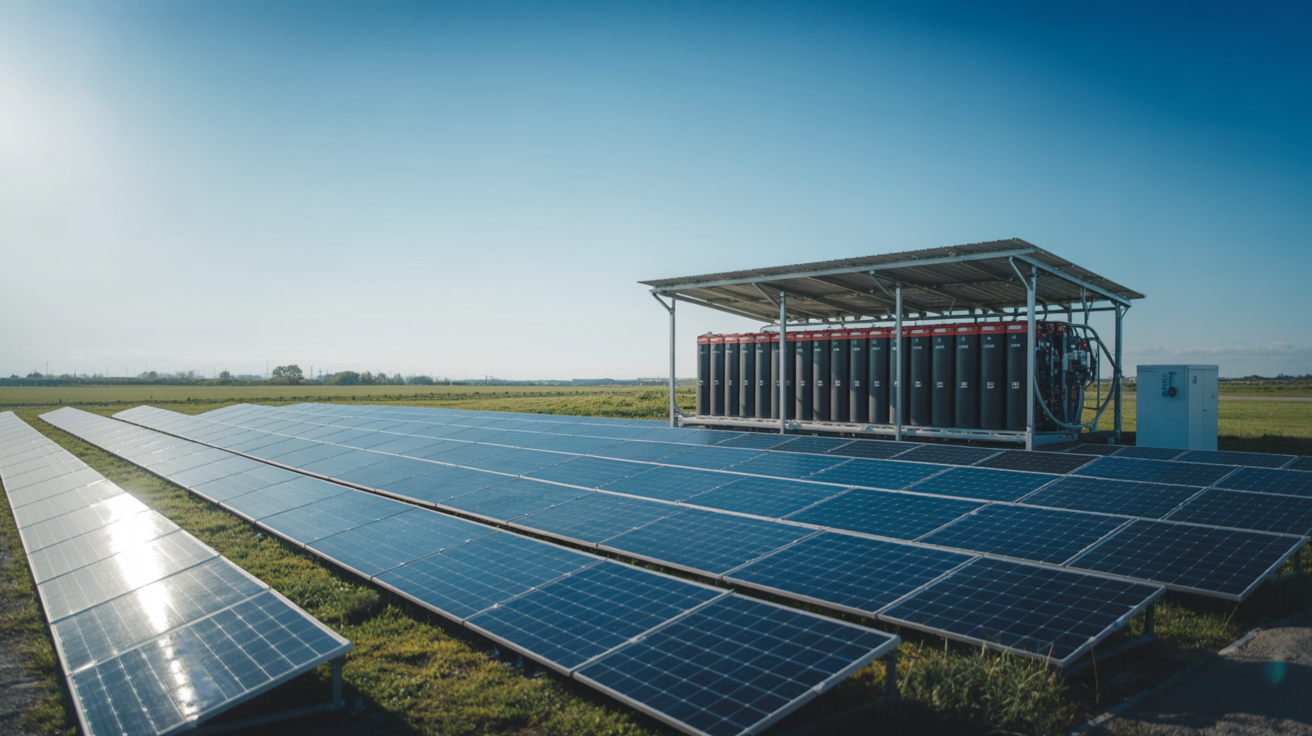
So you've got solar panels soaking up sunshine on your roof, congratulations. But here's the catch: what happens when the sun sets, a storm rolls in, or the grid goes down? Without a battery system, all that clean energy just flows back to the utility company, and you're left in the dark when you actually need it. That's where solar battery systems come in.
A battery system for solar panels isn't just a nice-to-have anymore. In 2026, it's become a cornerstone of true energy independence, offering homeowners and businesses the ability to store surplus solar energy, slash utility bills, and keep the lights on during outages. Whether you're an off-grid pioneer, a homeowner tired of rising electricity costs, or an installer helping clients future-proof their energy setup, understanding how these systems work, and which one fits your needs, can make all the difference.
In this guide, we'll walk through everything you need to know: how solar batteries work, why they matter, the main types available today, what to look for when choosing one, and how to size, install, and get a solid return on your investment. Let's immerse.
Key Takeaways
- A battery system for solar panels stores excess energy generated during the day for use at night, during outages, or cloudy periods, enabling true energy independence and backup power.
- Lithium-ion (LiFePO4) batteries are the gold standard for residential and commercial applications, offering 80-98% efficiency, 5-20+ year lifespans, and minimal maintenance compared to older lead-acid technology.
- Proper sizing of your battery system requires assessing daily energy consumption, identifying critical loads, and considering depth of discharge limits—modular systems allow you to start small and scale as needs grow.
- Grid-tied systems with battery backup provide flexibility and security by powering your home first, charging batteries second, and sending surplus energy to the grid, while off-grid systems deliver complete energy independence.
- A solar battery system typically costs $10,000–$20,000 installed but can generate ROI in 7-12 years through bill savings of 20-50% annually, federal tax credits, and increased home value.
- Professional installation by certified technicians is essential to ensure safety compliance, optimal performance, and warranty coverage for your long-term battery investment.
What Is a Battery System for Solar Panels?
A battery system for solar panels is essentially a rechargeable energy reservoir that captures and stores the excess electricity your solar array produces during the day. Instead of sending that surplus power back to the grid (or letting it go to waste in off-grid setups), the battery holds onto it so you can use it when the sun isn't shining, at night, on cloudy days, or during a blackout.
Think of it as a piggy bank for electrons. Your solar panels are the income, the battery is your savings account, and your home's electrical demands are your expenses. When production exceeds consumption, the battery charges. When you need more power than the panels can deliver in real time, the battery discharges to fill the gap. This cycle enables efficient energy management, reduces dependence on the utility grid, and can even eliminate it entirely in off-grid configurations.
For homeowners, this means lower energy bills and peace of mind. For businesses, it translates to operational continuity and protection against costly downtime. And for off-grid property owners, it's the key to reliable, around-the-clock power.
How Solar Panel System Batteries Work
The mechanics are straightforward but clever. Solar panels generate direct current (DC) electricity when sunlight hits their photovoltaic cells. In a DC-coupled system, this DC power flows directly into the battery for storage, no conversion needed, which boosts efficiency. In an AC-coupled system, the DC electricity first passes through an inverter to become alternating current (AC) for home use, and any excess is converted back to DC to charge the battery. AC-coupled setups are easier to retrofit into existing solar installations, while DC-coupled systems are more efficient for new builds.
Once stored, the battery's energy can be discharged whenever needed. A battery management system (BMS) monitors charge levels, temperature, and health, ensuring safe and optimal operation. Modern systems, especially those using lithium-ion technology like LiFePO4, integrate with smart inverters and mobile apps, giving you real-time visibility into energy flows, battery status, and usage patterns.
During the day, if your panels produce more than you're using, the surplus charges the battery. At night or during a power outage, the battery seamlessly powers your home, often without you noticing the switchover. Some advanced systems, like those from Humless, can pull from multiple sources, solar, grid, wind, even a generator, and intelligently manage which source to tap based on availability and cost.
Why You Need a Battery System for Your Solar Panels
Installing solar panels is a smart move, but pairing them with a battery system takes your energy strategy to the next level. Here's why it matters.
Energy Independence and Backup Power
Power outages are frustrating, costly, and sometimes dangerous. Whether it's a summer storm, wildfire-related blackout, or aging grid infrastructure failing, losing electricity disrupts daily life and can spoil food, halt home offices, and compromise medical equipment.
A solar panel system battery ensures you stay powered up when the grid goes down. Unlike standard grid-tied solar (which shuts off during outages for safety reasons), a battery-backed system can island your home, keeping essential circuits, or your entire house, running. For businesses, this means no lost revenue or data. For families, it's comfort and safety.
Beyond emergencies, batteries reduce your dependence on utility companies. You're no longer at the mercy of rate hikes, time-of-use pricing, or supply shortages. With enough storage capacity, you can go days, or indefinitely, in off-grid setups, without grid power.
Maximizing Solar Energy Usage
Solar panels produce the most energy midday, but most homes and businesses consume the most power in the morning and evening. Without a battery, that midday surplus either goes back to the grid (often at lower buyback rates than what you pay for electricity) or is wasted.
A battery captures that excess and shifts it to when you actually need it, after sunset, during breakfast, or on overcast afternoons. This load shifting maximizes self-consumption, meaning you use more of your own clean energy and buy less from the utility.
If your area has time-of-use (TOU) rates, where electricity costs more during peak hours, batteries let you store cheap (or free) solar energy and avoid expensive peak charges. Over time, this can slash your bills by 20-50% or more, depending on your usage and local rates. Plus, you're increasing the overall value of your solar investment by using every watt you generate.
Types of Battery Systems for Solar Panels
Not all solar batteries are created equal. The chemistry, design, and performance characteristics vary significantly between types. Here are the main players in 2026.
Lithium-Ion (LiFePO4) Battery Systems
Lithium-ion batteries, particularly lithium iron phosphate (LiFePO4), are the gold standard for residential and commercial solar storage today. They offer high efficiency (80-98% depth of discharge, or DoD, meaning you can safely use nearly all the stored energy), fast charging, compact size, and long lifespans of 5-20+ years or 3,000-10,000+ cycles.
LiFePO4 specifically is prized for its thermal stability and safety. Unlike some lithium chemistries, it's highly resistant to thermal runaway, making it ideal for home installations. These batteries also require minimal maintenance, no watering, no equalization cycles, and integrate beautifully with smart energy management systems.
The catch? Higher upfront cost. But when you factor in longevity, efficiency, and performance, lithium-ion systems like those from Humless deliver the best long-term value. Humless has been pioneering LiFePO4 battery energy storage systems (BESS) since 2010, offering UL-certified, modular, and scalable solutions backed by 24/7 support and 15+ years of proven reliability in real-world conditions.
Lead-Acid Battery Systems
Lead-acid batteries are the old guard, reliable, widely available, and affordable upfront. They come in two main types: flooded (which require regular maintenance like adding water) and sealed AGM or gel (maintenance-free).
They're bulkier, heavier, and have lower efficiency (50-80% DoD) and shorter lifespans (3-7 years or 500-1,500 cycles). They also charge more slowly and are sensitive to temperature extremes. That said, for budget-conscious projects with basic backup needs, like a small off-grid cabin, lead-acid can still work.
But as lithium-ion prices have dropped and performance has improved, lead-acid is quickly losing ground. If you're serious about energy independence and long-term savings, lithium is the smarter bet.
Other options include nickel-cadmium (durable but toxic and expensive) and flow batteries (scalable, 100% DoD, extremely long life, but large and costly, best for commercial or utility-scale projects). For most homeowners and small businesses, LiFePO4 hits the sweet spot.
Key Features to Consider When Choosing a Solar Battery System
Shopping for a solar battery can feel overwhelming, but focusing on a few core features will steer you right.
Storage Capacity and Power Output
Storage capacity (measured in kilowatt-hours, kWh) tells you how much energy the battery can hold. Think of it as the size of your gas tank. A 10 kWh battery can store 10 kilowatt-hours of electricity, enough to run a typical home for several hours or more, depending on usage.
Power output (measured in kilowatts, kW) is how fast the battery can deliver that energy. It's like your engine's horsepower. A battery with 5 kW continuous output can power 5,000 watts of appliances simultaneously, say, your fridge, lights, Wi-Fi, and a few outlets.
You need both to match your needs. A high-capacity battery with low power output might run your fridge for days but can't start your air conditioner. Conversely, high power with low capacity gives you a quick burst but runs out fast.
Assess your daily energy consumption (check past utility bills), identify critical loads for backup, and choose a battery, or battery bank, that covers your needs with a bit of headroom. Modular systems, like those from Humless, let you start small and scale up as your needs grow.
Safety Certifications and Warranty
Safety isn't negotiable. Look for batteries with UL certifications (like UL 1642, UL 1973, UL 9540) that verify rigorous testing for electrical, thermal, and mechanical safety. Humless systems, for example, carry multiple UL listings and are designed with built-in protections against overcharging, short circuits, and temperature extremes.
A strong warranty, ideally 10+ years or a specified number of cycles, signals manufacturer confidence. Read the fine print: does it cover capacity degradation? What's the threshold (e.g., 70% capacity retained)? What about labor and shipping for replacements?
Also consider customer support. A battery is a long-term investment. Companies like Humless offer 24/7 technical support, ensuring you're never left in the dark, literally or figuratively.
Battery System Integration: Grid-Tied vs. Off-Grid Solutions
How you integrate your battery depends on whether you're connected to the utility grid or going fully independent.
Grid-tied systems with battery backup are the most common setup in 2026. Your solar panels feed your home first, charge the battery second, and send any remaining surplus to the grid (often earning net metering credits). When the grid goes down, the battery kicks in automatically, powering critical loads or your entire home, depending on capacity. Once the grid returns, the system reconnects seamlessly.
This approach offers flexibility: you get backup power, maximize self-consumption, and can still lean on the grid when solar and battery aren't enough (like during extended cloudy stretches). It's ideal for homeowners who want security without cutting ties entirely.
Off-grid systems rely solely on solar, batteries, and sometimes a backup generator, no utility connection. This is the ultimate energy independence. You size your solar array and battery bank to cover 100% of your needs, often with 1-3 days of backup storage. Off-grid setups are perfect for remote properties, cabins, or anyone fed up with utility hassles.
Humless specializes in both configurations, offering BESS solutions that integrate seamlessly with solar, grid, wind, and generator inputs. Their systems intelligently prioritize renewable sources and switch between power inputs based on availability and cost, giving you true control over your energy mix.
The choice comes down to your location, budget, and goals. Grid-tied with battery backup offers peace of mind with flexibility. Off-grid delivers total independence but requires careful planning and sizing.
Sizing Your Solar Panel System Battery
Getting the size right is crucial. Too small, and you'll run out of juice when you need it most. Too large, and you're paying for capacity you'll never use.
Start by assessing your daily energy usage. Check your utility bills for average daily consumption in kilowatt-hours. For backup scenarios, list your critical loads, fridge, lights, communication devices, medical equipment, and estimate how many hours you'd need them to run during an outage.
Next, consider your solar output. How much excess energy do your panels generate on a typical sunny day? This surplus is what charges your battery. If your panels produce 30 kWh/day and you use 25 kWh, you have 5 kWh available for storage.
For grid-tied systems, a battery sized for 1 day's usage or your critical loads is often enough. For off-grid, aim for 1-3 days of backup to weather cloudy periods, plus a buffer.
Don't forget depth of discharge (DoD) limits. If a 10 kWh battery has 90% DoD, you can safely use 9 kWh. Factor this into your calculations.
Modular systems make sizing easier. Humless offers scalable battery banks, start with one unit and add more as your energy needs grow or as you expand your solar array. This flexibility is especially valuable for phased installations or evolving lifestyles.
When in doubt, consult a professional installer or use online calculators. Proper sizing ensures reliability, maximizes ROI, and avoids over- or under-investing.
Installation and Maintenance Best Practices
A quality battery system deserves a quality installation. DIY might seem tempting, but solar battery systems involve high-voltage DC electricity, complex wiring, and safety protocols. Hire a certified installer with experience in battery energy storage, it'll save you headaches, ensure code compliance, and often be required for warranty coverage.
During installation, placement matters. Batteries should be in a cool, dry, well-ventilated space, ideally indoors or in a climate-controlled garage. Extreme temperatures degrade performance and lifespan. Avoid direct sunlight, moisture, and areas prone to flooding.
Your installer will integrate the battery with your inverter, solar panels, and electrical panel, program settings (like backup loads and charge/discharge schedules), and test the system thoroughly. With modern systems like Humless BESS, this also includes connecting to monitoring apps so you can track performance in real time.
As for maintenance, lithium-ion batteries, especially LiFePO4, are remarkably low-effort. No watering, no equalization, no regular checkups. Just monitor via your app for any alerts, keep the area clean and ventilated, and ensure firmware updates are applied (often automatic).
Lead-acid batteries, by contrast, need regular water top-ups (for flooded types), terminal cleaning, and equalization charges.
Annual professional inspections are a good idea for any system, checking connections, firmware, and overall health. Humless backs its systems with 24/7 support, so if anything seems off, help is just a call away.
Proper installation and minimal ongoing care ensure your battery performs optimally for its full lifespan, protecting your investment and your energy independence.
Cost Considerations and Return on Investment
Let's talk money. A solar panel system battery typically costs between $10,000 and $20,000 installed, depending on capacity, brand, and installation complexity. Lithium-ion systems sit at the higher end but offer better performance and longevity.
Yes, it's a significant investment. But the return on investment (ROI) can be compelling, especially in 2026.
First, bill savings. By storing and using your own solar energy instead of buying from the grid, many homeowners save 20-50% or more on monthly electricity bills. In areas with high time-of-use rates, the savings accelerate. Over a 10-15 year lifespan, a battery can save thousands, sometimes tens of thousands, of dollars.
Second, incentives. Federal tax credits (like the Investment Tax Credit, currently covering 30% of solar and storage costs), state rebates, and utility incentives can slice thousands off the upfront price. Some regions offer additional perks for demand response programs, where your battery helps stabilize the grid in exchange for payments.
Third, increased home value. Homes with solar and battery storage sell faster and for more money. Buyers value energy independence and lower operating costs.
Fourth, avoided costs. Think about the price of a portable generator, fuel, and the hassle of outages. A battery eliminates those headaches and risks.
Lithium-ion systems, even though their higher upfront cost, deliver the best long-term value. Their efficiency, lifespan, and minimal maintenance mean lower total cost of ownership. Humless systems, with their modular design and 15+ years of field-proven reliability, exemplify this, pay once, enjoy decades of dependable power.
ROI timelines vary by usage, local rates, and incentives, but many homeowners see payback in 7-12 years, with the battery continuing to deliver value well beyond that.
Bottom line: a battery system isn't just an expense, it's an investment in security, savings, and sustainability.
Conclusion
Battery systems for solar panels have evolved from niche off-grid gear to mainstream must-haves for homeowners, businesses, and installers serious about energy resilience. In 2026, the technology is mature, affordable, and more capable than ever, capturing surplus solar energy, slashing utility bills, and keeping the lights on when the grid can't.
Whether you're aiming for total energy independence, reliable backup power, or simply smarter energy management, choosing the right battery system comes down to understanding your needs, picking proven technology (hello, LiFePO4), sizing appropriately, and working with experienced professionals.
Companies like Humless have spent 15+ years perfecting battery energy storage systems that seamlessly integrate solar, grid, wind, and generator inputs, offering UL-certified safety, modular scalability, and round-the-clock support. Their track record speaks to what's possible when engineering meets real-world demands.
So if you're ready to take control of your energy future, a solar panel system battery isn't just a good idea, it's the smartest move you can make. The sun's already doing its part. Now it's time to store that power and put it to work, on your terms.
Frequently Asked Questions About Solar Panel Battery Systems
What is a battery system for solar panels and why do I need one?
A battery system for solar panels stores excess electricity your solar array generates during the day for use when sunlight is unavailable. It enables energy independence, provides backup power during outages, and maximizes self-consumption by shifting daytime surplus to peak usage times, reducing your reliance on the utility grid.
How does a solar panel battery system work?
Solar panels generate DC electricity that either charges the battery directly (DC-coupled) or passes through an inverter to AC first (AC-coupled). A battery management system monitors charge levels and health. Stored energy discharges automatically when needed, powering your home during evening hours, cloudy days, or grid outages without manual intervention.
What's the difference between lithium-ion and lead-acid batteries for solar?
Lithium-ion (LiFePO4) offers 80-98% depth of discharge, 5-20+ year lifespans, minimal maintenance, and compact size, making it ideal for homes despite higher upfront cost. Lead-acid is cheaper but bulkier, less efficient (50-80% DoD), shorter-lived (3-7 years), and requires regular maintenance like water top-ups.
How much does a solar battery system cost, and what's the ROI?
Battery systems typically cost $10,000-$20,000 installed. ROI comes from bill savings (20-50% reduction via time-of-use rates), federal tax credits covering 30% of costs, increased home value, and avoided generator expenses. Most homeowners see payback in 7-12 years with savings continuing long after.
Can a solar battery system work during a power outage?
Yes. Battery-backed solar systems automatically island your home when the grid goes down, powering critical loads or your entire house depending on battery capacity. Unlike standard grid-tied solar (which shuts off for safety), battery systems provide seamless backup power during blackouts and emergencies.
What size battery system do I need for my home?
Assess your daily energy consumption from utility bills, identify critical loads during outages, and check solar surplus on typical sunny days. For grid-tied systems, size for 1 day's usage; for off-grid, aim for 1-3 days backup. Professional installers or online calculators help determine the right capacity without over- or under-investing.