
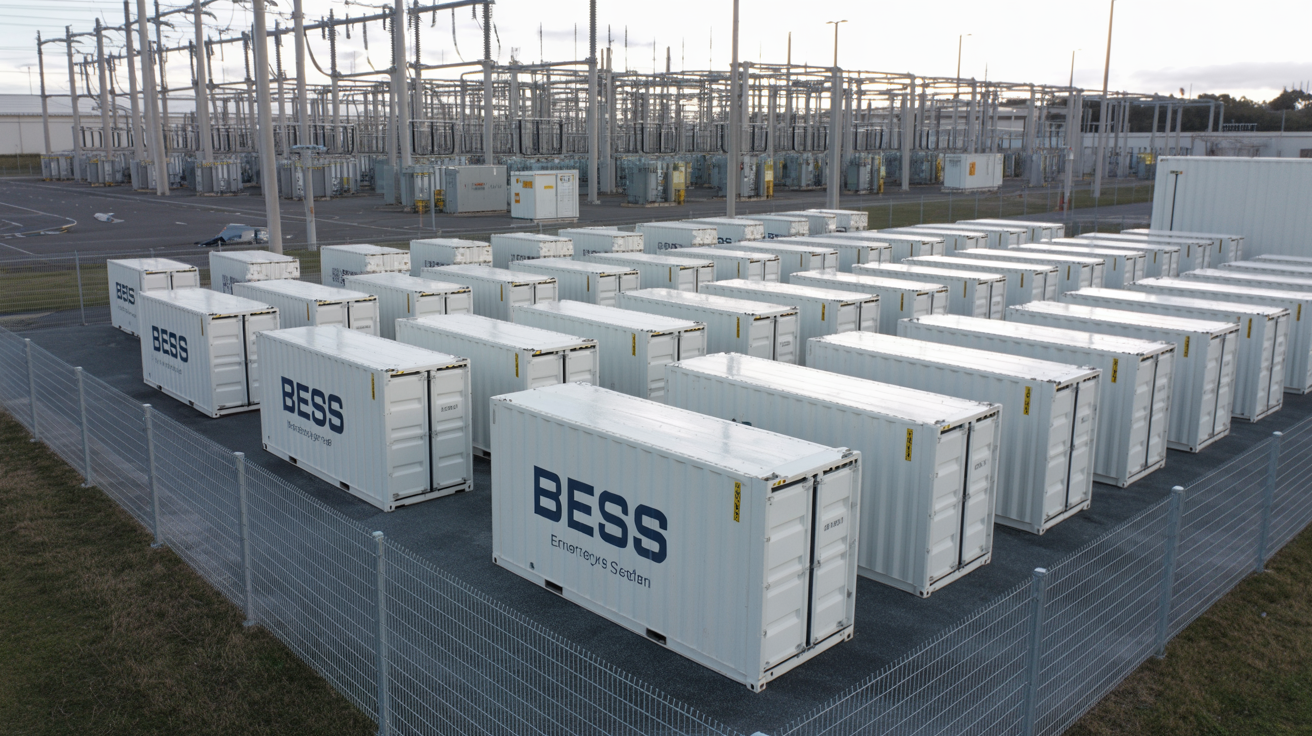
If you're considering a battery energy storage system (BESS) in 2026, you're probably wondering: What's this actually going to cost me?
It's a fair question, and one without a simple answer. Battery storage pricing varies wildly depending on whether you're powering a small home, running a business, or going completely off-grid. System size, chemistry, installation complexity, and even where you live can swing the price by thousands of dollars.
The good news? BESS costs have dropped dramatically over the past few years. Global average prices hit $117/kWh in 2025, and that downward trend shows no signs of stopping. Federal tax credits, state rebates, and improving technology are making energy independence more affordable than ever.
In this guide, we'll break down exactly what you can expect to pay for residential and commercial battery energy storage systems in 2026, from compact 5 kWh home units to large-scale commercial installations. We'll cover how battery chemistry impacts price, what hidden costs to watch for, and how to calculate your long-term ROI. Whether you're a homeowner seeking backup power or a business chasing energy savings, you'll walk away with a clear picture of what fits your budget and needs.
Key Takeaways
- Battery energy storage system prices have dropped significantly to an average of $117/kWh globally, with residential systems ranging from $10,000 to $50,000 depending on capacity and complexity.
- LiFePO4 lithium-ion chemistry dominates the market due to superior cycle life (4,000–6,000+ cycles), thermal stability, and 15+ year lifespan, making it the preferred choice for most home and business applications.
- Federal tax credits provide a 30% rebate on battery storage systems when paired with solar, potentially cutting costs by thousands, while state incentives can further reduce effective prices by thousands of dollars.
- Commercial BESS installations typically achieve 3–5 year payback through demand charge reduction and time-of-use arbitrage, with a standard 100 kWh system costing $25,000 to $50,000 installed.
- Installation, permitting, and integration costs add $2,000–$5,000 for residential systems and can represent 10–15% of commercial project costs, so budgeting for these hidden expenses is essential.
- The right battery energy storage system choice requires balancing your essential load needs, electricity rate patterns, integration with solar or generators, and available financial incentives for maximum ROI.
Understanding Battery Energy Storage System Costs
What Factors Influence BESS Pricing?
Battery energy storage system costs aren't one-size-fits-all. Several key factors drive the final price tag, and understanding them helps you make smarter purchasing decisions.
System size and capacity are the most obvious variables. A 10 kWh residential battery won't cost anywhere near what a 500 kWh commercial system does, but it's not just about multiplication. Larger systems benefit from economies of scale, meaning the per-kWh cost actually drops as capacity increases. A homeowner might pay $1,000/kWh for a small system, while a utility-scale project could hit $200/kWh or less.
Battery chemistry matters more than most people realize. Lithium-ion batteries (especially LiFePO4, or lithium iron phosphate) dominate the market today, typically running $300–$400 per kWh. Older lead-acid technology costs less upfront, around $150–$250 per kWh, but shorter lifespans and higher maintenance wipe out those initial savings pretty quickly.
Geographic location creates surprising price gaps. In 2025, Chinese systems averaged $73/kWh, European systems $177/kWh, and U.S. systems $219/kWh. These differences stem from manufacturing proximity, labor costs, permitting complexity, and regional supply chains.
Storage duration also impacts pricing. A system designed to discharge over two hours costs less than one built for four-hour or eight-hour duration, even at the same total capacity. Think of it like this: a sprint car and an endurance racer both have engines, but they're engineered, and priced, very differently.
Finally, integration requirements add layers of cost. A standalone battery is one thing: integrating it with solar panels, backup generators, or sophisticated energy management systems is another. Each connection point, monitoring system, and control interface adds to the bottom line, but also to the system's functionality and value.
Residential Battery Energy Storage System Prices
Residential BESS pricing in 2026 typically ranges from $700 to $1,200 per kWh installed, depending on capacity and complexity. Here's how costs break down across different home system sizes.
Small-Scale Home Systems (5-10 kWh)
For most homeowners, a 5–10 kWh system provides essential backup power for critical loads: refrigerator, lights, communication devices, and maybe a few outlets. A standard 10 kWh lithium system costs between $10,000 and $12,000 fully installed.
This tier suits urban and suburban homes with grid connection who want protection against outages without very costly. You won't power your entire house for days, but you'll keep essentials running through typical 4–8 hour blackouts.
Companies like Humless offer UL-certified residential systems in this range, designed to integrate seamlessly with existing solar installations or operate as grid-tied backup. The advantage of working with experienced manufacturers is proven reliability, when the lights go out, you want equipment that's been tested for 15+ years, not bleeding-edge tech that might fail when you need it most.
Mid-Size Residential Systems (10-20 kWh)
Stepping up to 10–20 kWh opens more possibilities. At this capacity, you're looking at $14,000 to $24,000 installed, or roughly $700–$1,200 per kWh depending on configuration.
Mid-size systems support whole-home backup for shorter durations or extended backup for essential circuits. They're popular with homeowners who have solar arrays and want to maximize self-consumption, storing excess daytime solar production for evening use rather than sending it back to the grid at unfavorable rates.
This range also suits households in areas with time-of-use electricity rates. You can charge your battery during cheap off-peak hours and discharge during expensive peak times, cutting monthly bills substantially. The payback equation gets much more interesting when you're not just buying backup power, you're actively arbitraging electricity prices.
Large Home and Off-Grid Systems (20+ kWh)
When you need 20 kWh or more, you're either powering a large home, running energy-intensive equipment, or going completely off-grid. These systems start around $20,000 and can easily exceed $50,000 for comprehensive 40–50 kWh installations.
Off-grid properties demand careful capacity planning. You'll need enough storage to bridge several consecutive cloudy days if you're solar-dependent, or to run between generator cycles if using a hybrid approach. The per-kWh cost drops slightly at this scale, maybe down to $650–$900/kWh, but total investment remains substantial.
That said, for remote properties without grid access, the alternative is running diesel generators constantly or paying tens of thousands to extend utility lines. Suddenly a $45,000 battery system with 15-year lifespan looks pretty reasonable. The key is matching capacity to realistic needs, not worst-case scenarios, oversizing costs money without proportional benefit.
Commercial Battery Energy Storage System Pricing
Commercial and industrial BESS installations operate at a different scale and economic model than residential systems. Typical commercial systems range from 50 kWh to 500 kWh, priced between $500 and $1,000 per kWh installed.
A standard 100 kWh commercial system costs $25,000 to $50,000. That might sound steep, but commercial applications often achieve payback in 3–5 years through demand charge reduction, time-of-use arbitrage, and participation in grid services programs.
Demand charges, where utilities bill businesses based on peak power consumption, create compelling economics for battery storage. A manufacturing facility that briefly spikes to high power draw might pay thousands in monthly demand charges. A properly sized battery can "peak shave" those spikes, keeping maximum demand below penalty thresholds and slashing monthly bills.
Larger installations achieve better economics. A 1 MW (1,000 kWh) lithium-ion system ranges from $200,000 to $1,000,000 depending on duration and specifications. The wide range reflects differences in discharge duration (2-hour vs. 4-hour systems), installation complexity, and whether the system participates in advanced grid services.
Commercial systems also face different regulatory and interconnection requirements than residential installations. Utilities scrutinize larger systems more carefully, and permitting processes can be lengthy and expensive. Budget 10–15% of total project cost for engineering, permitting, and utility interconnection fees.
The commercial BESS market has matured rapidly. What felt experimental five years ago is now standard practice for energy-intensive businesses, especially those in states with high electricity costs or robust clean energy incentives. California, New York, and Massachusetts lead in commercial deployments, but other states are catching up as technology costs decline and incentive programs expand.
How Battery Chemistry Affects BESS Price
Battery chemistry isn't just a technical detail, it fundamentally shapes system performance, lifespan, safety, and of course, price.
Lithium-ion batteries dominate the current market, typically costing $300–$400 per kWh. Within this category, several chemistries compete. Standard lithium nickel manganese cobalt (NMC) offers high energy density, great for packing maximum storage into minimum space. Lithium nickel cobalt aluminum (NCA) chemistry powers many electric vehicles and some stationary storage systems.
But for stationary energy storage, LiFePO4 (lithium iron phosphate) has emerged as the gold standard, especially for residential and commercial applications where safety and longevity matter more than maximum energy density.
LiFePO4 vs. Other Lithium-Ion Technologies
LiFePO4 costs roughly the same as other lithium-ion chemistries, around $300–$400 per kWh, but delivers distinct advantages that justify its market dominance in energy storage.
Cycle life is the big differentiator. Quality LiFePO4 cells handle 4,000–6,000+ charge-discharge cycles before degrading to 80% capacity. Standard NMC batteries typically manage 2,000–3,000 cycles. Over a 15-year system lifespan, that difference matters enormously. A battery that degrades faster either needs earlier replacement (expensive) or delivers less usable capacity in later years (reducing ROI).
Thermal stability gives LiFePO4 a critical safety edge. The chemistry is inherently more stable than NMC or NCA, with lower risk of thermal runaway, the chain reaction that causes lithium batteries to catch fire. For a system sitting in your garage or next to your business for 15 years, that peace of mind is worth something.
Discharge characteristics also favor LiFePO4. The chemistry maintains consistent voltage throughout the discharge cycle, providing stable power output until the battery is nearly depleted. Other chemistries show more voltage sag, which can complicate power management.
The tradeoff? LiFePO4 has slightly lower energy density, it takes more physical space to store the same amount of energy compared to NMC. For residential and commercial applications where space isn't at an absolute premium, this rarely matters. For electric vehicles where every pound and cubic inch counts, NMC or NCA might win. But for your home or business? LiFePO4's longevity, safety, and reliability make it the clear choice.
Lead-acid batteries still appear in budget systems and off-grid applications, costing $150–$250 per kWh. That upfront savings looks tempting until you factor in 3–7 year lifespan (vs. 15+ for lithium), 50% usable depth of discharge (vs. 80–95% for lithium), and regular maintenance requirements. Very few new installations choose lead-acid unless extreme budget constraints force the decision.
Installation Costs and Additional Expenses
The battery itself is just part of your total investment. Installation, integration, and permitting add layers of cost that can catch buyers off-guard if they're not prepared.
Labor and Permitting Fees
Professional installation typically costs $50 per kWh on top of equipment costs. For a 15 kWh residential system, that's $750 in labor, though actual quotes vary based on installation complexity, local labor rates, and how much electrical work your existing setup requires.
Simple installations in new construction or homes with modern electrical panels cost less. Older homes might need panel upgrades, additional circuit breakers, or even service entrance modifications to handle battery system integration. Those electrical upgrades can add $1,000–$3,000 to the project.
Permitting fees vary dramatically by jurisdiction. Some municipalities charge a few hundred dollars: others hit you with $1,500+ in fees for residential battery installations. Urban areas with strict building codes generally cost more. Rural areas might have simpler permitting but fewer experienced installers, which can drive up labor costs.
Inspection requirements add time and potentially cost. Most jurisdictions require electrical inspection before the system can operate. Some also require structural review if the battery is floor-mounted and weighs several hundred pounds, or fire department review for larger systems.
Budget $2,000–$5,000 for total installation, permitting, and inspection costs on typical residential systems. Commercial installations face higher permitting complexity and should budget 10–15% of total project cost for soft costs.
Integration with Solar, Grid, and Generators
A standalone battery is the simplest configuration, just battery, inverter, and connection to your electrical panel. Most installations are more complex.
Solar integration requires compatible inverters and charge controllers. Some modern systems use hybrid inverters that handle both solar input and battery charging, simplifying the design. Older solar installations might need additional equipment or inverter upgrades to communicate properly with battery systems. These compatibility upgrades can cost $1,500–$4,000.
Grid-tied systems need proper disconnect mechanisms and anti-islanding protection to prevent the battery from backfeeding into grid lines during outages (which could endanger utility workers). These safety systems are code-required but add cost.
Generator integration creates sophisticated hybrid systems where solar, battery, grid, and generator all work together seamlessly. The battery might charge from excess solar, discharge during peak rate periods, and call in the generator only when battery state of charge drops below a threshold during extended outages. This sophistication requires advanced control systems and careful engineering, typically adding $2,000–$5,000 to project costs.
Companies like Humless specialize in systems designed from the ground up for multi-source integration, solar, grid, wind, and generator inputs all managed through unified controllers. For complex installations, working with manufacturers who've solved integration challenges hundreds of times beats cobbling together components from multiple vendors and hoping they play nice together.
Financial Incentives and Long-Term ROI
The sticker price is only part of the BESS economic equation. Financial incentives dramatically improve project economics, and long-term savings often justify the upfront investment.
Federal Tax Credits and State Rebates
The federal Investment Tax Credit (ITC) remains the most significant incentive for residential and commercial energy storage in 2026. When paired with solar, battery systems qualify for the ITC, currently offering a 30% tax credit on total system cost including installation.
For a $15,000 residential battery system installed with solar, that's $4,500 back at tax time, cutting your effective cost to $10,500. The ITC applies to both new solar-plus-storage installations and batteries added to existing solar systems, as long as the battery is charged primarily by the solar array.
Standalone batteries (without solar) also qualify for the ITC under current rules, though the credit percentage may differ based on when the system is installed and current legislation.
State and utility incentives vary widely but can be substantial. California's Self-Generation Incentive Program (SGIP) has offered rebates of $200–$400 per kWh in recent years. New York's energy storage incentive programs, Massachusetts' SMART program, and similar state initiatives can cut system costs by thousands of dollars.
Some utilities offer their own incentives for residential battery installations, especially in areas where distributed storage helps defer costly grid infrastructure upgrades. Hawaii, Arizona, and parts of Texas have seen utility programs offering $1,000–$3,000 rebates for residential battery systems.
Payback periods depend heavily on your electricity rates and usage patterns. Commercial installations with high demand charges often achieve 3–5 year payback. Residential systems typically see 30–50% cost recovery over 10 years through energy bill savings, with full payback in 10–15 years depending on electricity rates and usage.
But that calculation focuses purely on financial return. The value of backup power during outages, keeping food fresh, medical equipment running, or businesses operational, is harder to quantify but very real. If a two-day outage costs you $5,000 in spoiled inventory or lost productivity, suddenly the battery system's ROI looks very different.
Time-of-use arbitrage offers clear savings. If your utility charges $0.45/kWh during peak hours and $0.12/kWh off-peak, storing 15 kWh daily and shifting that consumption saves roughly $150 per month, or $1,800 annually. At that rate, a $15,000 system pays for itself in 8–9 years purely through rate arbitrage, with backup power as a bonus.
Don't forget escalating electricity rates. Your utility probably raises rates 3–5% annually. The energy you store and shift today saves more money five years from now when rates are higher, improving long-term economics.
How to Choose the Right BESS for Your Budget
With prices ranging from $10,000 for basic residential systems to $1,000,000+ for large commercial installations, choosing the right BESS requires balancing capacity, chemistry, features, and budget.
Start with capacity planning. Calculate your essential loads, what absolutely must stay powered during an outage. A refrigerator draws 1–2 kWh daily: LED lighting is negligible: window AC units guzzle 1–2 kWh per hour. Add up your essentials and multiply by how many hours of backup you want. For most homes, 10–15 kWh provides 12–24 hours of essential load backup.
If you're targeting energy bill savings rather than just backup power, analyze your consumption patterns. Look at your utility bills to understand your time-of-use rate structure and identify where arbitrage opportunities exist. A solar installer or energy consultant can model potential savings based on your actual usage data.
Prioritize battery chemistry. LiFePO4's combination of longevity, safety, and performance justifies the investment for most residential and commercial applications. Cheaper chemistries might save $2,000 upfront but cost more over the system's lifetime through shorter lifespan and higher maintenance.
Consider scalability. Some systems allow modular expansion, start with 10 kWh and add another 10 kWh later if needs or budget change. This flexibility is valuable if you're uncertain about future requirements or want to spread the investment across multiple years. Humless offers modular systems that grow with your needs, from compact residential units to larger commercial configurations.
Integration matters. If you have solar (or plan to add it), ensure the battery system integrates cleanly. If you have a backup generator, look for systems with generator-charging capabilities and sophisticated energy management. Cobbling together incompatible components causes headaches and reduces system value.
Certification and support aren't optional. UL certification ensures the system meets safety standards. Warranty length matters, quality manufacturers offer 10+ year warranties because they're confident in their product. And 24/7 technical support makes the difference when something goes wrong at 10 PM during a winter storm.
Manufacturers with proven track records deserve premium consideration. A company that's been in the battery storage game since 2010 has survived the industry's growing pains, refined their designs through thousands of real-world installations, and built the infrastructure to support customers long-term. That's worth paying for.
Don't skimp on installation. The cheapest installer isn't always the best value. Experienced professionals who've installed dozens of battery systems complete projects faster, encounter fewer surprises, and deliver cleaner work that passes inspection the first time. Poor installation can void warranties or create safety issues.
Finally, run the numbers on incentives before making decisions. A $20,000 system that drops to $14,000 after federal tax credit and $10,000 after state incentives changes the budget equation significantly. Work with installers who know the incentive landscape and can help maximize available programs.
Conclusion
Battery energy storage system pricing in 2026 reflects a maturing industry with declining costs and expanding options. Residential systems typically range from $10,000 for basic 10 kWh units to $50,000+ for comprehensive off-grid installations, while commercial systems start around $25,000 for 100 kWh and scale into the hundreds of thousands for larger deployments.
The key factors driving your total investment are capacity needs, battery chemistry (with LiFePO4 emerging as the clear leader for most applications), installation complexity, and integration requirements. Federal tax credits and state incentives can cut effective costs by 30–50%, dramatically improving ROI.
As electricity rates rise and grid reliability faces increasing pressure, battery storage shifts from luxury to necessity for many homeowners and businesses. The upfront investment might seem substantial, but between utility bill savings, backup power value, and available incentives, the economics increasingly make sense, especially when you factor in 15+ year system lifespans and the energy independence that comes with controlling your own power supply.
Whether you're a homeowner seeking backup power, an off-grid property owner building energy independence, or a business looking to slash demand charges, the right BESS exists for your budget and needs. The question isn't whether battery storage makes sense, it's which system fits your specific situation best.
Frequently Asked Questions About Battery Energy Storage System Prices
What is the average cost of a residential battery energy storage system in 2026?
Residential battery energy storage systems typically cost $700–$1,200 per kWh installed. A standard 10 kWh lithium system runs $10,000–$12,000, while mid-size 10–20 kWh systems range $14,000–$24,000. Costs depend on capacity, chemistry, and installation complexity.
How much does a commercial battery energy storage system cost?
Commercial battery energy storage systems range $500–$1,000 per kWh installed. A 100 kWh system costs $25,000–$50,000, while larger 1 MW installations range $200,000–$1,000,000 depending on duration and specifications. Commercial systems typically achieve payback in 3–5 years through demand charge reduction.
Why do battery energy storage system prices vary by region?
Battery storage pricing varies dramatically by geography due to manufacturing proximity, labor costs, permitting complexity, and regional supply chains. In 2025, Chinese systems averaged $73/kWh, European systems $177/kWh, and U.S. systems $219/kWh, reflecting these regional differences.
Is LiFePO4 or lithium-ion better for battery energy storage systems?
LiFePO4 (lithium iron phosphate) is the gold standard for residential and commercial energy storage, costing roughly $300–$400 per kWh like other lithium-ion chemistries. It offers superior cycle life (4,000–6,000+ cycles vs. 2,000–3,000), better thermal stability, and 15+ year lifespan, justifying the investment over cheaper alternatives.
What hidden costs should I expect when installing a battery energy storage system?
Beyond equipment costs, budget $50/kWh for installation labor, $2,000–$5,000 for permitting and inspection, and additional costs for solar integration ($1,500–$4,000), grid-tied safety systems, or generator integration ($2,000–$5,000). Total soft costs typically add 15–25% to the project budget.
How do federal tax credits reduce battery energy storage system costs?
The federal Investment Tax Credit (ITC) offers 30% off total system costs when paired with solar. A $15,000 residential battery system installed with solar qualifies for a $4,500 tax credit, reducing effective cost to $10,500. Combined with state rebates, total incentives can cut costs by 30–50%.